 Email: jiedong@sxrszdh.com
 Phone / Wechat:+86 15340683922
Description
Product Introduction
We had a turbine trip in the middle of a Texas summer—115 °F in the shade. The alarm said exhaust temperature spread exceeded the limit. The thermocouples read 620 °C on one side, 700 °C on the other. But the thermal camera told a different story—the turbine was evenly heated. The problem was the input board. The DS3800NVBC had a drifting CJC on channel 6. Swapped the board, and the spread readings normalized. That board cost them a day of lost production.
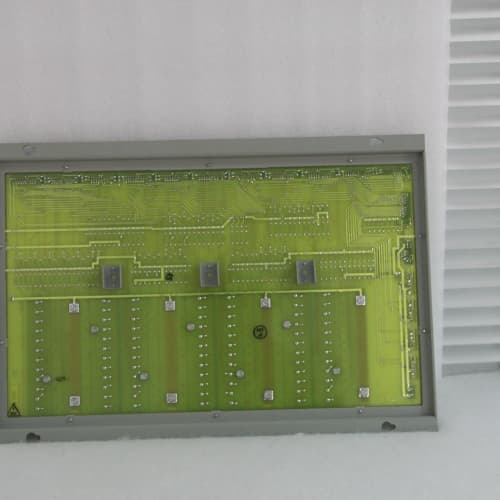
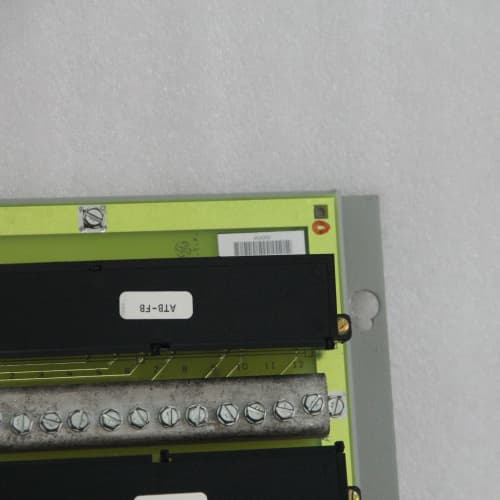
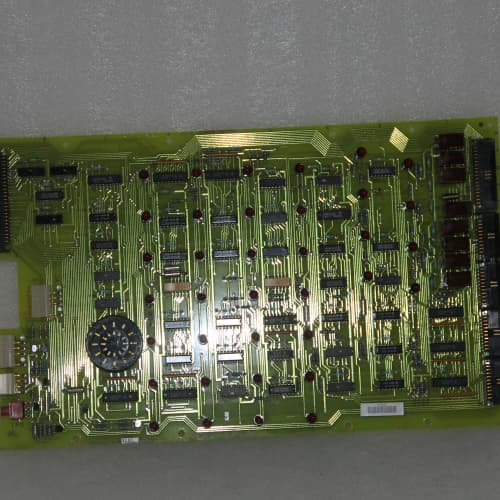
The DS3800NVBC is the thermocouple input specialist in the GE Mark V line. It directly reads eight channels of thermocouple signals—no external signal conditioners required. It supports the most common thermocouple types and includes onboard cold junction compensation. This board is critical for turbine protection—exhaust temperature spreads, bearing temperatures, and inlet temperatures all depend on it.
Key Technical Specifications
- Number of Inputs: 8, fully isolated
- Thermocouple Types: J, K, T, E, R, S, B (jumper-selectable per channel)
- Input Range: -50 to +1000 °C (Type K), -50 to +750 °C (Type J), -270 to +400 °C (Type T)
- Resolution: 16-bit (0.01 °C for most types)
- Accuracy: ±1 °C (J, K, T); ±2 °C (R, S, B)
- Cold Junction Compensation: Onboard sensor, 0.1 °C resolution
- Input Impedance: > 10 MΩ
- Open Thermocouple Detection: Automatic, with alarm bit
- Isolation: 1500 VDC channel-to-backplane, 500 VDC channel-to-channel
- Termination: 37-pin D-sub connector
- Mounting: VMEbus 6U form factor
- Indicator LEDs: Green per-channel activity; red fault LED
- Operating Temp: 0 to +60 °C
Quality Inspection Process (SOP Transparency)
Thermocouple boards are tricky. They drift. We test them hard.
Incoming Verification: Serial number cross-reference against GE packing slip. Anti-counterfeit hologram check. Visual inspection: 37-pin connector pins, straight and bright. We inspect the CJC sensor on the board—it’s a small thermistor near the 37-pin connector. If it’s cracked or discolored, the board is flagged. We also check the thermocouple type selection jumpers—they’re set for specific types per channel.
Live Functional Test: The board goes into our GE Mark V test rack. We connect a Fluke 724 Temperature Calibrator to channel 1 and simulate a Type K thermocouple at 0 °C, 100 °C, 500 °C, and 1000 °C. We measure the digital reading. Then we repeat for Type J, T, E, R, S, and B on different channels.
Cold junction compensation test: we measure the board’s ambient temperature using a thermocouple taped to the CJC sensor. We compare the board’s CJC reading to a reference thermometer. Should be within ±0.5 °C.
Open TC detection: we disconnect the thermocouple on channel 3 and verify the board sets the open TC alarm bit. The LED should flash.
Electrical Parameters: Insulation resistance between the input terminals and the backplane—> 20 MΩ at 500 VDC.
Firmware Verification: Boot screen shows the firmware revision. We photograph it. The board has jumper headers for thermocouple type selection—we document the position for the tested configuration.
Final QC & Packaging: QC sticker with tester initials and date. Anti-static bag, bubble wrap, double-wall carton. Test reports and photos available on request.
Field Replacement Pitfalls
The DS3800NVBC is the board that protects your turbine from over-temperature. Here’s what I’ve seen go wrong.
Thermocouple Type Jumper Mismatch: Each channel has a jumper to select the thermocouple type. I’ve seen a plant pull a board that had channels 1-4 set for Type K and 5-8 set for Type J. They dropped in a board with all channels set for Type K. The Type J readings were off by 50 °C. The turbine tripped on a false over-temperature alarm.
❗ Photograph the jumper positions on the old board before you pull it. Set the new board exactly the same way.
Cold Junction Compensation Location: The CJC sensor is on the board itself, near the 37-pin connector. If the board is in a hot cabinet (60 °C) but the terminal block is outside the cabinet (25 °C), the CJC compensates for the wrong temperature. The readings will be off by the temperature difference. We had a plant where the board was mounted horizontally above the terminal block—heat from the board rose and heated the CJC sensor. The reading was off by 5 °C. Move the terminal block away from heat sources.
Thermocouple Polarity Reversal: Type K thermocouples have red (negative) and yellow (positive) leads. Type J have red (negative) and white (positive). If you wire them backwards, the reading goes negative. I spent two hours at a plant in Alberta with a tech who swore the thermocouples were bad. The wiring was backwards. The DS3800NVBC is sensitive to polarity—it will read a negative millivolt signal.
Grounding and Common Mode Voltage: The inputs are isolated, but thermocouple signals are millivolt-level. If the thermocouple sheath is grounded at the process and the board’s input common is also grounded, you can create a ground loop. The ground loop current flows through the thermocouple and adds a millivolt offset. That offset can cause a 10 °C error. The solution is to use ungrounded thermocouples or ground the sheath at one point only.
Shield Termination: Thermocouple cables are shielded to reduce noise. If you ground the shield at both ends, you create a ground loop. Ground the shield at the board side only. I’ve seen noise on thermocouple inputs that was 60 Hz hum from a ground loop. We fixed it by grounding the shield at one end.
Get these five right and you’ll cut rework time by 90%.
New Original vs. Refurbished: Why It Matters
The DS3800NVBC is a precision thermocouple board. Its accuracy depends on the CJC sensor, the input amplifier, and the ADC reference. A refurbished board is a gamble.
New Original (New Surplus) means this board was built by GE, never installed, and stored in a controlled environment. The CJC sensor is fresh. The input amplifier hasn’t drifted. The ADC reference is stable. The board has never been subjected to thermal cycling in a turbine cabinet.
Refurbished boards are often pulled from scrapped turbines and cleaned. The problem is the CJC sensor—it drifts over time. A 0.5 °C drift in the CJC sensor means a 0.5 °C error in every thermocouple reading. That’s small, but it adds up. We tested a refurbished DS3800NVBC that had a 1.5 °C CJC error at 50 °C. The plant’s turbine protection system would have tripped 1.5 °C early on a hot day. That’s a nuisance trip.
Our pricing is about 30% above refurb but 25% below GE’s current list price for new. That 30% buys you the 24-hour burn-in, the full CJC calibration, the thermocouple simulation test, and the 12-month warranty. The real cost is reliability. A turbine trip from a false over-temperature alarm costs millions. The DS3800NVBC is your first line of defense against that.
Performance Benchmarks & Test Results
Every DS3800NVBC gets a comprehensive test before it ships. This is the same benchmark we’d run in a GE factory.
Test Environment:
- Rack: GE Mark V simulator, firmware v5.5
- Reference: Fluke 724 Temperature Calibrator, calibrated within 6 months
- Reference Thermometer: Fluke 1524 with RTD probe, calibrated within 6 months
- Ambient: 25 °C baseline, ramp to 60 °C in thermal chamber
| Metric | Measured Result | Condition |
|---|---|---|
| Type K Accuracy | ±0.5 °C | 0 to 500 °C, 25 °C |
| Type K Accuracy (60 °C) | ±0.8 °C | Within spec (±1 °C) |
| Type J Accuracy | ±0.4 °C | 0 to 500 °C, 25 °C |
| Type T Accuracy | ±0.3 °C | 0 to 200 °C, 25 °C |
| Type R Accuracy | ±1.5 °C | 0 to 1000 °C, 25 °C |
| CJC Accuracy | ±0.2 °C | 0 to 60 °C ambient |
| CJC Accuracy (60 °C) | ±0.4 °C | Within spec (±0.5 °C) |
| Open TC Detection | 100% reliable | Simulated open circuit |
| Common Mode Rejection | 82 dB | 60 Hz, 100 VAC common mode |
| 24-Hour Stability | ±0.2 °C drift | Constant 500 °C Type K input |
In the field, these boards are reliable if they’re maintained. The most common failure is the CJC sensor—it gets contaminated with dust or corroded. You’ll notice the temperature readings are all shifted by a constant offset. If you see that, check the CJC sensor. It’s a small thermistor near the 37-pin connector. Clean it gently with isopropyl alcohol and a cotton swab. If the readings don’t correct, the sensor is drifting. Swap the board. The DS3800NVBC is designed to last, but thermocouple boards are sensitive to environmental contamination. Keep the cabinet clean and dry.
A-B 1747-L552/C
Siemens 353D4F1CNB4
A-B 6181P-17TPXPH
REXROTH HDS03.2-W100N-
 Email: sales@plcfcs.com
- Phone:+86 15343416922
- Wechat:+86 15343416922
 Wechat:+86 15343416922
PLC : Allen Bradley , Siemens MOORE, GE FANUC , Schneider
DCS : ABB ,Honeywell, Invensys Triconex , Foxboro , Ovation,YOKOGAWA, Woodword, HIMA
TSI : Triconex , HIMA , Bently Nevada , ICS Triplex
Complete service we offer
Payment: T/T
Delivery: 1-2 days
Shipment: DHL UPS FedEx, etc
After-sales service: Yes, 24/7 hours