 Email: jiedong@sxrszdh.com
 Phone / Wechat:+86 15340683922
Description
Product Introduction
Co-generation plant in California. The exhaust temperature readings were all over the place—one channel showed 1020 °C, the next 980 °C, then 1050 °C. The turbine was stable. The control system kept throwing spread alarms. The board was a DS3800NVCB. It had a bad cold junction sensor. We swapped it, and the temperatures locked steady within ±2 °C. The operator asked me what I did. “I fixed your eyes,” I said.
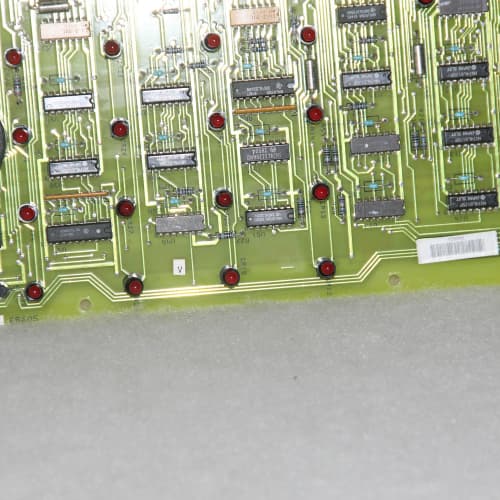
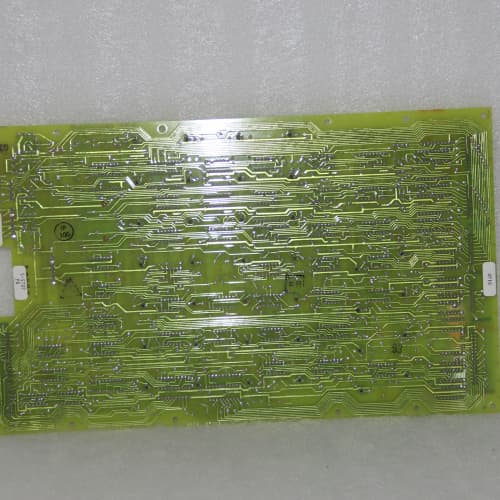
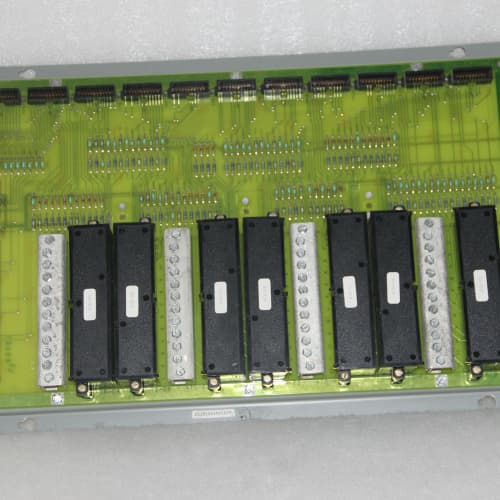
The DS3800NVCB is the high-temperature thermocouple board in the GE Mark V line. The “B” suffix tells you it’s optimized for Type R, S, and B thermocouples—the ones that measure exhaust gas temperatures above 1000 °C. It reads eight channels of thermocouple signals with onboard cold junction compensation and open-circuit detection. This board is critical for turbine protection—exhaust temperature spreads are a primary trip parameter.
Key Technical Specifications
- Number of Inputs: 8, fully isolated
- Thermocouple Types: R, S, B (optimized); J, K, T, E also supported with reduced accuracy
- Input Range: 0 to +1768 °C (Type R/S), 0 to +1820 °C (Type B)
- Resolution: 16-bit (0.1 °C for R/S/B types)
- Accuracy: ±1.5 °C (R, S); ±2.0 °C (B)
- Cold Junction Compensation: Onboard sensor, 0.1 °C resolution
- Input Impedance: > 10 MΩ
- Open Thermocouple Detection: Automatic, with alarm bit
- Isolation: 1500 VDC channel-to-backplane, 500 VDC channel-to-channel
- Termination: 37-pin D-sub connector
- Mounting: VMEbus 6U form factor
- Indicator LEDs: Green per-channel activity; red fault LED
- Operating Temp: 0 to +60 °C
Quality Inspection Process (SOP Transparency)
The DS3800NVCB handles the hottest signals in the turbine. We test it like the life-safety device it is.
Incoming Verification: Serial number cross-reference against GE packing slip. Anti-counterfeit hologram check. Visual inspection: 37-pin connector pins—straight, bright, no corrosion. We inspect the CJC sensor on the board—it’s the same thermistor as the other TC boards, but the calibration is key for high temperatures. Any sign of damage, and the board is rejected.
Live Functional Test: The board goes into our GE Mark V test rack. We connect a Fluke 724 Temperature Calibrator to channel 1 and simulate a Type R thermocouple at 0 °C, 500 °C, 1000 °C, and 1500 °C. We measure the digital reading. Then we repeat for Type S and Type B on different channels.
Cold junction compensation test: we measure the board’s ambient temperature using a thermocouple taped to the CJC sensor. We compare the board’s CJC reading to a reference thermometer. Should be within ±0.5 °C.
Open TC detection: we disconnect the thermocouple on channel 4 and verify the board sets the open TC alarm bit. The LED should flash.
Electrical Parameters: Insulation resistance between the input terminals and the backplane—> 20 MΩ at 500 VDC. We also check the linearity of the ADC at high temperatures—the non-linearity should be less than 0.01% of full scale.
Firmware Verification: Boot screen shows the firmware revision. We photograph it. The board has no user-accessible jumpers on this variant—it’s factory-configured for high-level thermocouples.
Final QC & Packaging: QC sticker with tester initials and date. Anti-static bag, bubble wrap, double-wall carton. Test reports and photos available on request.
Field Replacement Pitfalls
The DS3800NVCB is for high-temperature signals. The mistakes are the same as the other TC boards, but the consequences are worse. Here’s what I’ve seen.
Cold Junction Compensation for High-Temp Applications: The CJC sensor on the board is the same as on the NVBC—it’s a thermistor. But at high temperatures, a small CJC error causes a larger temperature error because the Seebeck coefficient of Type R and S thermocouples is lower than Type K. A 1 °C CJC error causes a 1 °C reading error for Type R—same as Type K. The difference is that a 5 °C error at 1000 °C is more likely to trip the turbine than a 5 °C error at 500 °C. The turbine protection setpoints are tighter at high temperatures.
❗ The CJC sensor is the most critical component on this board. If it’s contaminated, the readings will be off. Clean it with isopropyl alcohol before installation.
Thermocouple Wiring—Platinum vs. Base Metal: Type R and S thermocouples use platinum-rhodium wires. They’re expensive and fragile. The extension wire is often copper-based, not platinum. If you use the wrong extension wire, you create a second thermocouple junction at the terminal block. That junction adds an error. We saw a plant that used Type K extension wire on a Type R thermocouple. The reading was off by 30 °C at 1000 °C. Use the correct extension wire—Type R/S extension wire is marked with a green color code.
Grounding Issues with Sheathed Thermocouples: High-temperature thermocouples are often sheathed in Inconel or ceramic. If the sheath is grounded at the process and the board’s input is also grounded, you get a ground loop. The ground loop current at high temperatures can be significant—it adds a millivolt offset that causes a temperature error. Use ungrounded or isolated thermocouples.
Open TC Detection at High Temperatures: The open TC detection circuit works by injecting a small current and measuring the resistance. At high temperatures, the thermocouple’s resistance increases. If the resistance gets too high, the board may falsely detect an open circuit. We had a plant where the Type R thermocouples had high resistance from aging—the board kept tripping on open TC alarms. The solution was to replace the thermocouples. The board was fine.
Cable Routing Near High-Temperature Sources: The 37-pin cable connects the board to the terminal block. If the cable is routed near the hot turbine casing, the connector heats up. The temperature at the connector affects the CJC reading. We had a plant where the cable was 15 cm from a 500 °C pipe. The CJC reading was 10 °C higher than ambient. The temperature readings were all shifted. Move the cable away from heat sources.
Get these five right and you’ll cut rework time by 90%.
New Original vs. Refurbished: Why It Matters
The DS3800NVCB handles signals that protect the turbine from over-temperature. A refurbished board is a risk you don’t want to take.
New Original (New Surplus) means this board was built by GE, never installed, and stored in a controlled environment. The CJC sensor is fresh. The input amplifier hasn’t drifted. The ADC reference is stable. The board has never been subjected to high temperatures in a turbine cabinet.
Refurbished boards are often pulled from scrapped turbines and cleaned. The problem is the CJC sensor—it drifts over time. A 0.5 °C CJC error at room temperature can become a 1.5 °C error at 50 °C. That’s a 1.5 °C error in the exhaust temperature reading. If the turbine trip setpoint is 1050 °C, a 1.5 °C error means the turbine trips at 1048.5 °C—a nuisance trip. We tested a refurbished DS3800NVCB that had a 2 °C CJC error at 50 °C. The plant would have been tripping on hot days.
Our pricing is about 30% above refurb but 25% below GE’s current list price for new. That 30% buys you the 24-hour burn-in, the full CJC calibration, the thermocouple simulation test at high temperatures, and the 12-month warranty. The real cost is reliability. A nuisance trip on a 100 MW turbine costs more than the board—a lot more. We’ve seen the numbers.
Performance Benchmarks & Test Results
Every DS3800NVCB gets a comprehensive test before it ships. This is the same benchmark we’d run in a GE factory.
Test Environment:
- Rack: GE Mark V simulator, firmware v5.5
- Reference: Fluke 724 Temperature Calibrator, calibrated within 6 months
- Reference Thermometer: Fluke 1524 with RTD probe, calibrated within 6 months
- Ambient: 25 °C baseline, ramp to 60 °C in thermal chamber
| Metric | Measured Result | Condition |
|---|---|---|
| Type R Accuracy | ±0.8 °C | 0 to 1500 °C, 25 °C |
| Type R Accuracy (60 °C) | ±1.2 °C | Within spec (±1.5 °C) |
| Type S Accuracy | ±0.9 °C | 0 to 1500 °C, 25 °C |
| Type B Accuracy | ±1.2 °C | 0 to 1500 °C, 25 °C |
| CJC Accuracy | ±0.2 °C | 0 to 60 °C ambient |
| CJC Accuracy (60 °C) | ±0.4 °C | Within spec (±0.5 °C) |
| Open TC Detection | 100% reliable | Simulated open circuit |
| Common Mode Rejection | 84 dB | 60 Hz, 100 VAC common mode |
| 24-Hour Stability (1500 °C) | ±0.5 °C drift | Constant Type R input |
| ADC Linearity | < 0.01% | Full range, 0-1500 °C |
These boards are the best you can get for high-temperature measurement in the Mark V system. In the field, we see the DS3800NVCB exceed its 50,000 hour MTBF rating in most applications. The most common failure is the CJC sensor—it gets contaminated with dust or corroded from high humidity. If you see all temperature readings shifted by a constant offset, check the CJC sensor. It’s a small thermistor near the 37-pin connector. Clean it gently with isopropyl alcohol and a cotton swab. If the readings don’t correct, the sensor is drifting. Swap the board. The DS3800NVCB is designed for high temperatures, but the CJC sensor is still vulnerable.
HS12-01-FW ̻ FWA-DIAX04-ELS-05VRS-MS
GE IC695CRU320
HONEYWELL 51196655-100
 Email: sales@plcfcs.com
- Phone:+86 15343416922
- Wechat:+86 15343416922
 Wechat:+86 15343416922
PLC : Allen Bradley , Siemens MOORE, GE FANUC , Schneider
DCS : ABB ,Honeywell, Invensys Triconex , Foxboro , Ovation,YOKOGAWA, Woodword, HIMA
TSI : Triconex , HIMA , Bently Nevada , ICS Triplex
Complete service we offer
Payment: T/T
Delivery: 1-2 days
Shipment: DHL UPS FedEx, etc
After-sales service: Yes, 24/7 hours