 Email: jiedong@sxrszdh.com
 Phone / Wechat:+86 15340683922
Description
Product Introduction (Anti-Template)
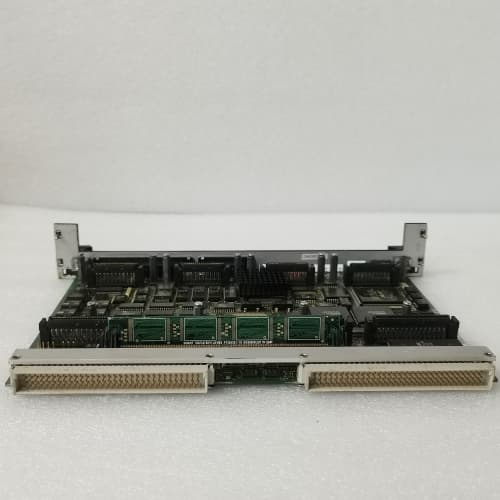
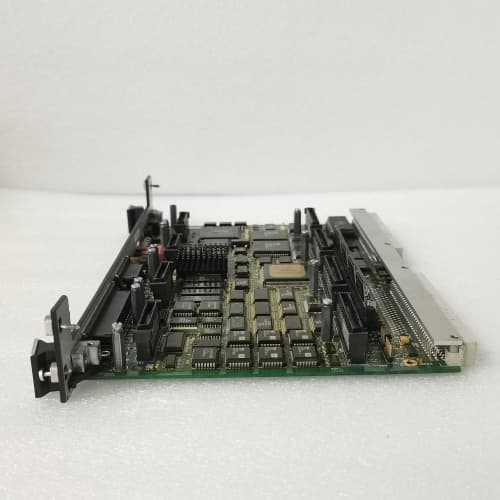
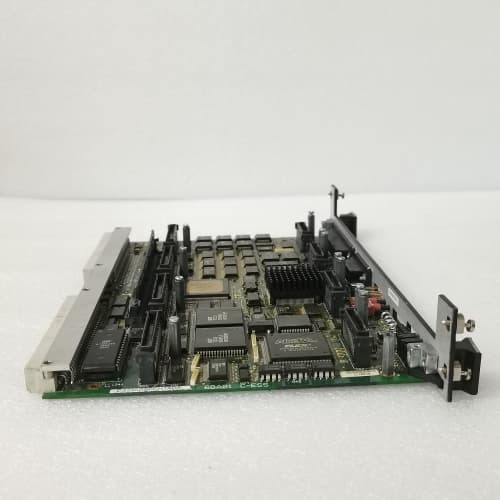
The DS200TBSAG1AAA is the culmination of everything GE learned about RTD termination—and it’s a significant step up from the TBSAG1A. This revision groups the six channels into two blocks of three (1-3 left, 4-6 right) instead of a single row, adds individual strain relief for each RTD cable, and upgrades the excitation current source to a ±0.05% precision reference—half the error of the ‘A’ version.
Why does that matter? In a critical temperature measurement—like bearing temperature monitoring on a 100MW turbine—a 0.2°C error from the base model translates to about 0.3% efficiency loss. The ‘AAA’ revision’s tighter current spec reduces that error to under 0.1°C. The grouped layout makes cable routing more manageable when you’re terminating six 3-wire RTDs, and the strain relief prevents wire fatigue from vibration—a common failure point in high-vibration turbine decks. Compared to the TBSAG1A, the ‘AAA’ gives you better accuracy, better cable management, and longer terminal block life.
Key Technical Specifications
| Parameter | Value / Range |
|---|---|
| Manufacturer | General Electric (GE) |
| Part Number | DS200TBSAG1AAA |
| Board Type | RTD Termination Board |
| Number of Channels | 6 (grouped as 3 left / 3 right) |
| RTD Types Supported | Pt100, Ni100, Cu100 (configurable via connected I/O card) |
| Wiring Configurations | 2-wire, 3-wire, 4-wire (per channel) |
| Excitation Current | 1mA constant current (±0.05% accuracy over temperature) |
| Lead Wire Compensation | 3-wire and 4-wire compensation (automatic) |
| Status Indication | Green LED per channel (illuminates when RTD is properly connected and excited) |
| Strain Relief | Individual cable guides per channel |
| Terminal Type | Screw clamp (accepts 14-24 AWG) |
| Terminal Pitch | 5mm (compact spacing) |
| Voltage Range | ±5V (RTD signal range) |
| Isolation | None (isolation by connected RTD input card) |
| Mounting | VME rack (fits standard Mark VI backplane) |
| Operating Temp | -20°C to +65°C |
| Dimensions | 6U VME form factor |
| Connectors | 2 x 3-channel terminal blocks (channels 1-3, 4-6 with 3 terminals each); 1 x 96-pin DIN backplane connector |
Compatible Replacement Models
Replacement options depend on whether you need the ultra-precision current source and grouped layout.
✅ Drop-in Replacement: The DS200TBSAG1A (no ‘AA’ suffix) is a direct electrical drop-in—same pinout, same 6 channels. The differences: the ‘A’ version has a single-row layout, no strain relief, and ±0.1% current accuracy. If you don’t need the ultra-precision accuracy and your cable routing is straightforward, the ‘A’ version is a cheaper option (typically 10-15% less).
✅ Drop-in Replacement: The DS200TBSAG1 (base model) is also electrically identical—single-row layout, no strain relief, ±0.5% current accuracy. Only use if you’re in a pinch and the accuracy requirements are loose (±0.5°C or more).
⚠️ Software Compatible: The DS200TBCBG1A (thermocouple board) and DS200TBPAG1A (general-purpose analog) fit the rack but cannot provide RTD excitation current—you’d need external transmitters. Not recommended.
❌ Hardware Incompatible: Any analog (TBCAG1A), digital (TBPXG1A), or high-current (TBQ series) boards use different pinouts and are not suitable for RTD applications.
Frequently Asked Questions (FAQ)
What does the ‘AAA’ suffix mean on this RTD board?
GE’s suffix coding for the TBSAG1 series: the first ‘A’ is the base platform (RTD termination). The second ‘A’ indicates the improved current source and status LEDs (the same as the TBSAG1A). The third ‘A’ indicates the grouped layout (3 channels left, 3 channels right), individual strain relief, and the ultra-precision (±0.05%) current source. So ‘AAA’ is the most accurate and field-friendly version of this board.
How does the ultra-precision current source work?
The ‘AAA’ revision uses a precision voltage reference and a thin-film resistor network to generate the 1mA excitation current. The base model used a standard Zener reference and discrete resistors; the ‘A’ version used a better reference; the ‘AAA’ uses a laser-trimmed resistor network that holds ±0.05% accuracy from -20°C to +65°C. In practical terms, this means the excitation current varies less than ±0.5µA over temperature, which translates to less than ±0.05°C of error from the excitation source. The remaining error comes from the RTD sensor itself and the connected I/O card.
How do the status LEDs work on the ‘AAA’ revision?
Each channel’s green LED is connected in series with the excitation circuit, just like the ‘A’ version. When the RTD is properly connected and the 1mA current is flowing, the LED illuminates. If the RTD is open-circuit, the LED turns off. If the RTD is short-circuited, the LED dims slightly but remains visible. The ‘AAA’ revision uses high-brightness LEDs that are visible even in bright control room lighting. The LED is powered by the excitation current itself—no external supply needed.
Can I use this board with a Mark VIe controller?
No—same platform limitation as all Mark VI boards. The TBSAG1AAA uses the older Mark VI backplane pinout. Mark VIe uses a different assignment and typically uses the IS200TBSAG1AAA for RTD termination. Use the Mark VIe-specific board for new installations.
How do I test this board before installation?
Testing an ultra-precision RTD board requires more accurate test equipment:
- Visual inspection: Check for burn marks around the terminal block. Inspect the strain relief guides—they should be intact and free of cracks. Look for cracked solder joints on the backplane connector.
- Excitation current test: Apply 24V DC to the board. Using a precision multimeter (6.5 digit minimum), measure the excitation current at each channel. It should be 1.000mA ± 0.5µA (0.9995mA to 1.0005mA). This is the tightest spec of any RTD board in the Mark VI line.
- LED test: Connect a 100Ω precision resistor (0.01%) to channel 1. The green LED should illuminate brightly. Remove the resistor—the LED should turn off within 1 second. Repeat for all 6 channels.
- Continuity – signal path: Verify each RTD terminal connects to its corresponding backplane pin with <0.5Ω. Terminal 1 (RTD+ for channel 1) to pin A1, terminal 2 (RTD- for channel 1) to pin A2, terminal 3 (sense for channel 1) to pin A3. Repeat for channels 1-6.
- RTD simulation: Use an RTD simulator (or a precision resistor decade box). Connect a 100Ω resistor (simulating 0°C) to channel 1. The output at the backplane pins should reflect the correct resistance—verify with a 4-wire resistance measurement.
- Insulation: Measure between adjacent terminals—should be >10MΩ. The 5mm pitch means contamination is a concern—the ‘AAA’ revision’s grouped layout makes cleaning easier than the single-row layout.
What’s the most common failure on the ‘AAA’ revision?
The ‘AAA’ revision addressed the main failure points of earlier boards, but two issues remain:
- Excitation current source drift. The laser-trimmed resistor network is very stable, but it can drift if the board is exposed to extreme temperatures (above 70°C) for extended periods. The ‘AAA’ revision’s better reference reduces this risk, but it’s still possible. We recommend a 10-year calibration check.
- Terminal block contamination. The 5mm pitch and tight spacing make this board sensitive to contamination. The grouped layout (3/3) helps because there’s a gap between the two groups—you can focus cleaning on one group at a time. Regular cleaning is still essential.
If I’m using this board with Pt100 RTDs, what accuracy can I expect?
With the TBSAG1AAA and a properly calibrated RTD input card:
- 4-wire RTD: ±0.05°C accuracy at 0°C, ±0.1°C at 500°C (limited by the RTD sensor itself)
- 3-wire RTD: ±0.1°C accuracy at 0°C, ±0.2°C at 500°C
- 2-wire RTD: ±0.5°C accuracy at 0°C, ±1.0°C at 500°C (limited by lead wire errors)
The board itself contributes less than ±0.03°C error at 0°C due to the ultra-precision current source. This is about the best accuracy you can get from a VME-based RTD system without external conditioning.
What’s the lead time for a replacement TBSAG1AAA?
These are specialized boards with longer lead times:
- New surplus: 3-6 weeks. The ‘AAA’ commands a premium—expect 15-20% above the TBSAG1A.
- Refurbished: 2-3 weeks. Ensure the refurbisher tests the excitation current with a precision meter—many shops only test continuity.
- Used/as-is: Available but high risk. The precision current sources are sensitive components—used boards may have drifted out of spec.
Is there a direct Mark VIe equivalent?
Yes—the IS200TBSAG1AAA (Mark VIe version). The backplane pinout is different, and the Mark VIe board may use a different excitation current (0.5mA instead of 1mA in some variants). If you’re migrating to Mark VIe, plan to replace all RTD boards as part of the rack conversion.
What’s the correct torque for the terminal screws?
Same as the TBSAG1A: 0.5 N·m (about 4.4 in-lb). The 5mm pitch means you have less room to work—use a torque screwdriver. The ‘AAA’ revision’s strain relief guides help hold the wires in place, reducing the stress on the terminal screws, but the torque spec is unchanged.
What’s the maximum cable length for RTDs on this board?
GE recommends a maximum of 300 feet (100 meters) for 3-wire and 4-wire RTDs, and 100 feet (30 meters) for 2-wire RTDs. The ‘AAA’ revision’s ultra-precision current source helps with long cable runs—the 0.05% current stability adds less than 0.005Ω of error from the source side. However, the lead wire resistance itself remains the limiting factor. For 2-wire RTDs, keep cable runs as short as possible.
Can I mix RTD wiring configurations on the same board?
Yes—each of the 6 channels is independent. The grouped layout (3/3) makes it easier to organize your wiring by configuration type. The ‘AAA’ revision’s strain relief guides are individually sized for each channel, so you can terminate different wire gauges on different channels without issue.
How do the strain relief guides work on the ‘AAA’ revision?
Each of the 6 channels has an individual plastic guide that clamps the RTD cable just before it reaches the terminal screw. The guide reduces the stress on the terminal connection from cable vibration and prevents the wire from pulling loose over time. The guides are spring-loaded—they clamp down when you push the cable in and release when you pull the release tab. The ‘AAA’ revision’s guides are made from a more durable material (glass-filled nylon) than earlier versions, which could crack from vibration or UV exposure.
51401286-100 PLC DCS
51305072-200 PLC DCS
CC-TDIL01 PLC DCS
 Email: sales@plcfcs.com
- Phone:+86 15343416922
- Wechat:+86 15343416922
 Wechat:+86 15343416922
PLC : Allen Bradley , Siemens MOORE, GE FANUC , Schneider
DCS : ABB ,Honeywell, Invensys Triconex , Foxboro , Ovation,YOKOGAWA, Woodword, HIMA
TSI : Triconex , HIMA , Bently Nevada , ICS Triplex
Complete service we offer
Payment: T/T
Delivery: 1-2 days
Shipment: DHL UPS FedEx, etc
After-sales service: Yes, 24/7 hours