 Email: jiedong@sxrszdh.com
 Phone / Wechat:+86 15340683922
Description
Product Introduction (Anti-Template)
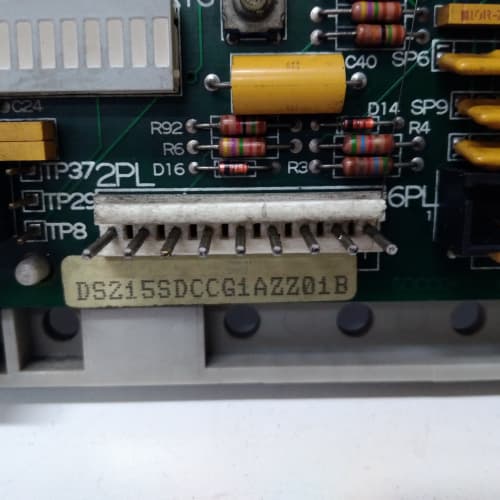
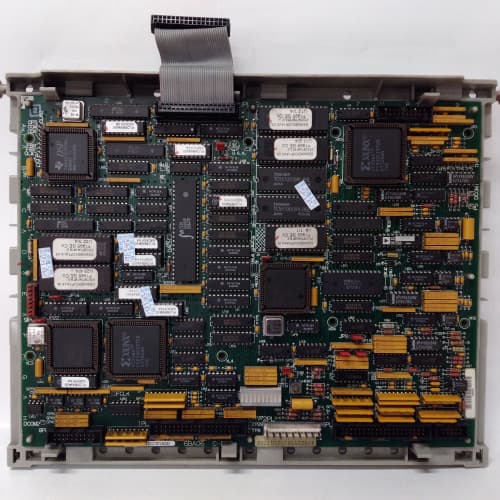
RTD signals are different from thermocouples—they need a precision current source and careful lead-wire compensation, especially in 3-wire configurations where you’re trying to cancel out the resistance of long cable runs. The DS200TBSAG1 is GE’s termination board for RTD inputs in the Mark VI system, and it’s built around that specific requirement: on-board constant current excitation and dedicated wiring terminals for 2-, 3-, and 4-wire RTDs.
The ‘SA’ in the part number tells you this is for RTD (Resistance Temperature Detector) applications, as opposed to ‘BG’ for thermocouples or ‘PA’ for general-purpose analog. The board handles six channels of RTD input—less than the 24 channels on a thermocouple board, but RTDs require more signal conditioning and higher accuracy. The base model (no suffix) uses a 1mA constant current source for excitation and supports Pt100, Ni100, and Cu100 RTD types. Compared to using a standard analog input board with external RTD transmitters, the TBSAG1 gives you better accuracy (about 0.2°C vs. 0.5°C) because the excitation and measurement are done on the same board with matched components.
Key Technical Specifications
| Parameter | Value / Range |
|---|---|
| Manufacturer | General Electric (GE) |
| Part Number | DS200TBSAG1 |
| Board Type | RTD Termination Board |
| Number of Channels | 6 (RTD inputs) |
| RTD Types Supported | Pt100, Ni100, Cu100 (configurable via connected I/O card) |
| Wiring Configurations | 2-wire, 3-wire, 4-wire (per channel) |
| Excitation Current | 1mA constant current (onboard) |
| Lead Wire Compensation | 3-wire and 4-wire compensation (automatic) |
| Terminal Type | Screw clamp (accepts 14-24 AWG) |
| Terminal Pitch | 5mm (compact spacing) |
| Voltage Range | ±5V (RTD signal range) |
| Isolation | None (isolation by connected RTD input card) |
| Mounting | VME rack (fits standard Mark VI backplane) |
| Operating Temp | -20°C to +65°C |
| Dimensions | 6U VME form factor |
| Connectors | 6-channel terminal block (6 rows of 3 terminals each); 1 x 96-pin DIN backplane connector |
Compatible Replacement Models
Replacement options depend on your RTD type and wiring configuration needs.
✅ Drop-in Replacement: The DS200TBSAG1A (if available) would be the ‘A’ revision with improved terminals. As of this writing, the base model is the only version. The DS200TBSAG1 is the only RTD termination board in this family.
⚠️ Software Compatible: The DS200TBCBG1A (thermocouple board) fits the rack and is software-compatible in terms of channel mapping, but it does NOT provide RTD excitation current. You would need to add external RTD transmitters, which defeats the purpose of using an RTD board.
⚠️ Software Compatible: The DS200TBPAG1A (general-purpose analog) fits the rack but does NOT provide RTD excitation or lead compensation. You would need to use external RTD transmitters with 4-20mA outputs.
❌ Hardware Incompatible: The DS200TBCAG1A (general-purpose analog board) uses a different pinout and is not suitable for RTD applications.
❌ Hardware Incompatible: Any digital or high-current output board (TBQ series) uses different pinouts and is not suitable for RTD applications.
Frequently Asked Questions (FAQ)
What’s the difference between RTD termination and thermocouple termination?
RTDs (Resistance Temperature Detectors) require a precision constant current source to measure resistance, and the resistance change is converted to temperature. Thermocouples generate a small voltage (millivolts) that changes with temperature—they don’t need excitation current. The TBSAG1 provides the 1mA excitation current for each of its 6 channels. A thermocouple board like the TBCBG1A has no excitation current and is designed for the very low voltage signals from thermocouples (mV range). You cannot plug an RTD into a thermocouple board—the impedance mismatch will cause incorrect readings or no signal at all.
How does lead-wire compensation work on this board?
RTDs are low-resistance devices (Pt100 is about 100Ω at 0°C). The resistance of the copper lead wires can be significant (0.2-0.5Ω per 100 feet of 20 AWG wire), which could cause errors of up to 1-2°C. The TBSAG1 supports 3-wire and 4-wire RTDs, which use additional leads to measure the resistance of the lead wires and subtract it from the total measurement. In 3-wire mode, the board measures the voltage across the RTD and the voltage drop in the two lead wires, then calculates the RTD resistance. This cancels out the effect of the lead wire resistance. In 4-wire mode, the board uses separate excitation and sense wires, giving the highest accuracy (no lead wire error at all). The TBSAG1 handles this automatically—you just wire the RTD correctly and the connected RTD input card does the math.
Can I use this board with a Mark VIe controller?
No—same platform limitation as all Mark VI boards. The TBSAG1 uses the older Mark VI backplane pinout. Mark VIe uses a different assignment and typically uses the IS200TBSAG1 for RTD termination. If you plug a Mark VI RTD board into a Mark VIe rack, the RTD signals will map incorrectly and the excitation current may not work correctly. Use the Mark VIe-specific board for new installations.
How do I test this board before installation?
Testing an RTD board requires checking the excitation current and signal path:
- Visual inspection: Check for burn marks around the terminal block. Look for cracked solder joints on the backplane connector. The 5mm pitch is compact—inspect for any solder bridges.
- Excitation current test: Apply 24V DC to the board (via the backplane or external power). Measure the excitation current at each channel’s terminal block. It should be 1mA ± 1% (0.99mA to 1.01mA). If the current is outside this range, the onboard current source is faulty.
- Continuity – signal path: Verify each RTD terminal connects to its corresponding backplane pin. Terminal 1 (RTD+ for channel 1) to pin A1, terminal 2 (RTD- for channel 1) to pin A2, terminal 3 (sense for channel 1) to pin A3. Repeat for channels 1-6.
- Continuity – sense lines: Verify the sense lines (if used) connect correctly. For 3-wire and 4-wire configurations, the sense terminals should show <0.5Ω to the backplane pins.
- RTD simulation: Use an RTD simulator or a precision resistor decade box. Connect a 100Ω resistor (simulating 0°C for Pt100) to channel 1. The output at the backplane pins should reflect the correct resistance value. You can verify this with a multimeter or a connected I/O card.
- Insulation: Measure between adjacent terminals—should be >10MΩ. The 5mm pitch means contamination is more critical than on wider-pitch boards.
What’s the most common failure on this board?
Two issues specific to RTD boards:
- Excitation current source failure. The onboard 1mA current sources are small ICs. They can fail due to voltage spikes on the backplane or incorrect wiring (e.g., shorting an RTD channel to ground). If the current source fails, the RTD channel will read an incorrect value or no value at all. Test the excitation current during bench checks.
- Terminal block contamination. The 5mm pitch on the TBSAG1 means any dust or moisture between terminals can cause leakage. This is especially problematic for RTDs because the signal is resistance-based—a leakage path effectively adds a parallel resistor to the RTD, reducing the measured resistance and giving a lower temperature reading. Regular cleaning is essential.
If I’m using this board with Pt100 RTDs, what accuracy can I expect?
With the TBSAG1 and a properly calibrated RTD input card, you can expect:
- 4-wire RTD: ±0.1°C accuracy at 0°C, ±0.2°C at 500°C
- 3-wire RTD: ±0.2°C accuracy at 0°C, ±0.4°C at 500°C (depending on lead wire match)
- 2-wire RTD: ±1.0°C accuracy at 0°C, ±2.0°C at 500°C (due to lead wire error)
The board itself contributes about ±0.05°C error due to the excitation current accuracy and trace resistance. The majority of error comes from the connected RTD input card and the RTD sensor itself.
What’s the lead time for a replacement TBSAG1?
These boards are moderately available:
- New surplus: 2-4 weeks. RTD boards are less common than general-purpose analog boards but more common than high-current boards.
- Refurbished: 1-2 weeks. Ensure the refurbisher tests the excitation current—some only test continuity and assume the current source is fine.
- Used/as-is: Available, but the excitation current sources are wear items. Inspect the board carefully.
Is there a direct Mark VIe equivalent?
Yes—the IS200TBSAG1 (Mark VIe version). The Mark VIe board may use a different excitation current (sometimes 0.5mA instead of 1mA) and a different backplane pinout. If you’re migrating to Mark VIe, plan to replace all RTD termination boards as part of the rack conversion.
What’s the correct torque for the terminal screws?
GE spec for the TBSAG1 is 0.5 N·m (about 4.4 in-lb)—standard for most Mark VI termination boards. The 5mm pitch means you have less room to work than on 7.5mm pitch boards. Use a torque screwdriver—over-torquing can strip the small brass inserts or crack the terminal block.
What RTD types does this board support?
The TBSAG1 supports:
- Pt100 (100Ω at 0°C, most common)
- Ni100 (100Ω at 0°C, Nickel-based)
- Cu100 (100Ω at 0°C, Copper-based)
The RTD type is determined by the connected RTD input card (like the DS200TBSAG1A or DS200TCSAG1). The termination board is passive (aside from the current source) and passes the signal through unchanged. Your control software must be configured for the correct RTD type for each channel.
Can I mix RTD wiring configurations on the same board?
Yes—each of the 6 channels is independent. You can wire channel 1 as a 4-wire RTD, channel 2 as a 3-wire RTD, and channel 3 as a 2-wire RTD. The connected RTD input card must be configured to match the wiring configuration per channel. The TBSAG1 provides the necessary terminal connections for all three wiring types on each channel (RTD+, RTD-, and sense). Just wire what you need and leave the unused terminals empty.
What’s the maximum cable length for RTDs on this board?
GE recommends a maximum of 300 feet (100 meters) for 3-wire and 4-wire RTDs, and 100 feet (30 meters) for 2-wire RTDs. The limiting factor is the lead wire resistance relative to the RTD’s resistance. For a 3-wire Pt100 at 300 feet of 20 AWG copper wire (total loop resistance about 10Ω), the board’s compensation can handle it. For 2-wire configurations, the lead wire resistance adds directly to the RTD reading, so shorter lengths are better. If you need longer cable runs, use 4-wire RTDs.
51304485-100 PLC DCS
FF-SB12E04K-S2 PLC DCS
51195156-300 PLC DCS
 Email: sales@plcfcs.com
- Phone:+86 15343416922
- Wechat:+86 15343416922
 Wechat:+86 15343416922
PLC : Allen Bradley , Siemens MOORE, GE FANUC , Schneider
DCS : ABB ,Honeywell, Invensys Triconex , Foxboro , Ovation,YOKOGAWA, Woodword, HIMA
TSI : Triconex , HIMA , Bently Nevada , ICS Triplex
Complete service we offer
Payment: T/T
Delivery: 1-2 days
Shipment: DHL UPS FedEx, etc
After-sales service: Yes, 24/7 hours