 Email: jiedong@sxrszdh.com
 Phone / Wechat:+86 15340683922
Description
Product Introduction (Anti-Template)
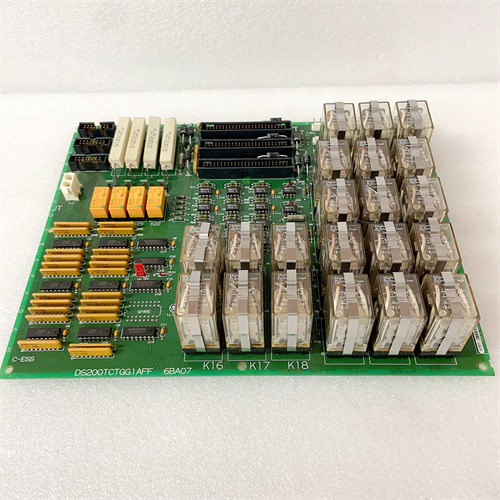
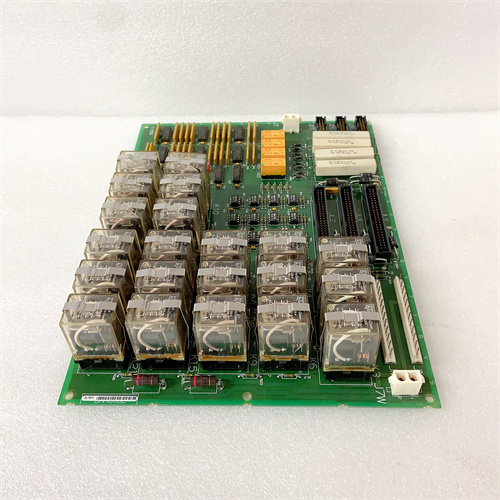
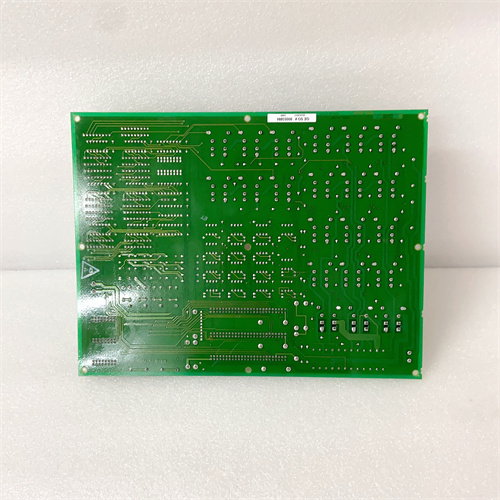
When 40A isn’t enough—and for some applications it isn’t—you need the DS200TBQEG1B. This is the absolute maximum current board GE makes for the Mark VI system: 60A continuous on a single channel. It’s built for the loads that define the turbine’s electrical limits: main generator field breakers that pull 55-58A during actuation, exciter field contactors, and emergency dump valves that need to open fast under heavy current.
The trade-off for 60A is that you get one channel—that’s it. The board dedicates its entire 6U footprint to a single output, with bus bars that are twice the width of the 40A boards, a 20mm terminal pitch (the widest in the Mark VI line), and a terminal block that accepts 4-6 AWG wire. The ‘B’ suffix indicates this is the thermal-upgraded version with 4oz copper traces and a 150°C-rated terminal block—essential when you’re running 60A continuously. Compared to the TBQDG1A (2 channels, 40A), the TBQEG1B gives you a single channel with 50% more current capacity. If you have a 60A generator breaker, this is the board that terminates it.
Key Technical Specifications
| Parameter | Value / Range |
|---|---|
| Manufacturer | General Electric (GE) |
| Part Number | DS200TBQEG1B |
| Board Type | Extreme-High-Current Single-Channel Output Termination Board |
| Number of Channels | 1 (ultra-heavy-duty output) |
| Voltage Compatibility | 24, 48, or 125 VDC |
| Current Rating | 60A per channel (continuous) |
| Termination per Channel | 2 independent bus bar terminals (redundant wiring) |
| Fuse Protection | None (external protection via connected I/O card or upstream panel) |
| Status Indication | None |
| Terminal Type | Heavy-duty bus bar clamp (accepts 4-6 AWG) |
| Terminal Pitch | 20mm (maximum spacing for heat dissipation) |
| Bus Bar Width | 20mm (twice the width of 40A boards) |
| Wire Range | 4-8 AWG (6 AWG recommended) |
| Bus Bar Material | Tinned copper with 150°C rated insulator |
| Thermal Design | 4oz copper traces; dedicated ground plane heat sinking; thermal-relief vias |
| Solder Alloy | SN96 (high thermal cycling tolerance) |
| Isolation | None (passive; isolation by connected I/O cards) |
| Mounting | VME rack (fits standard Mark VI backplane) |
| Operating Temp | -20°C to +70°C (derate above 45°C) |
| Dimensions | 6U VME form factor |
| Connectors | 1-channel bus bar terminal block (dual terminals); 1 x 96-pin DIN backplane connector (extra-heavy-duty pins) |
Compatible Replacement Models
Replacement options are extremely limited—the 60A rating is unique in the Mark VI line.
✅ Drop-in Replacement: There is no exact equivalent in the Mark VI line—the TBQEG1B is unique. The DS200TBQEG1 (base model, no ‘B’ suffix) is a direct electrical drop-in—same pinout, same 1 channel, same 60A rating. The difference: the base model uses a 130°C-rated terminal block, runs about 8°C hotter at full load, and has no thermal enhancements. The ‘B’ revision is the version you want for long-term reliability.
⚠️ Software Compatible: The DS200TBQDG1A (2 channels, 40A) fits the rack and is software-compatible, but it cannot handle 60A loads. If your load is under 40A, you could downgrade—but you lose the wider bus bars and 60A capacity. Not recommended for any application that could see current spikes above 40A.
❌ Hardware Incompatible: The DS200TBQCG1A (4 channels, 20A) and lower-current boards use different pinouts and are not designed for 60A loads—they’ll fail immediately.
❌ Hardware Incompatible: The DS200TBQDG1 (2 channels, 40A) uses a different backplane pinout for the high-current pins. Forcing a 40A board into a 60A slot will result in trace damage.
Frequently Asked Questions (FAQ)
Why does this board only have 1 channel?
At 60A, the copper traces on the board need to be at least 18mm wide (nearly 3/4 of an inch) to handle the current without overheating. The terminal block needs 20mm pitch for clearance and heat dissipation. The bus bars are 20mm wide—twice the width of the 40A boards. One channel is the absolute limit in the 6U VME form factor. If GE had tried to put 2 channels on this board, the board would be dangerously hot, the traces would delaminate, and the terminal block would melt. One channel is the safe limit for 60A.
What is the actual current capacity of this board?
GE rates the TBQEG1B for 60A continuous. The board can handle higher currents for short durations—typically up to 80A for 1 second, 70A for 10 seconds—but continuous operation above 60A will cause thermal damage. The limiting factor is the bus bar, which is rated for 60A continuous at 70°C ambient. If you need to carry current above 60A, you’ll need external bus bars or a separate contactor panel—the board itself is not designed for sustained loads above its rating.
What wire gauge should I use with this board?
GE recommends 4-6 AWG for the TBQEG1B. The terminal block accepts 4-8 AWG, but at 60A continuous:
- 6 AWG is the minimum—rated for about 75A chassis wiring, giving you 20% margin. Use this for cable runs under 10 feet.
- 4 AWG is recommended for longer cable runs (over 10 feet) or if ambient temperature exceeds 40°C.
- 8 AWG is not recommended for 60A—it will run hot and the insulation will degrade over time.
The bus bar terminals are designed for 4-6 AWG stranded copper wire. Use ring terminals or compression lugs for a reliable connection—the bus bar clamp will accept bare wire, but we recommend lugs to prevent strand spreading.
Can I use this board with a Mark VIe controller?
No—same platform limitation as all Mark VI boards. The TBQEG1B uses the older Mark VI backplane pinout. Mark VIe uses a different assignment and typically uses the IS200TBQEG1B for this application. The board physically fits but signals map incorrectly—use the Mark VIe-specific board for new installations.
How do I test this board before installation?
Testing a 60A board requires heavy-duty test equipment and careful attention to thermal performance:
- Visual inspection: Check for burn marks around the bus bar terminals. Inspect the solder joints on the backplane connector—the high-current pins should be bright. The bus bar terminals should be clean and free of corrosion. Look for any discoloration on the PCB around the bus bar area.
- Continuity – primary path: Verify the “A” bus bar terminal shows <0.03Ω to the backplane pin. The low resistance is critical for 60A operation.
- Continuity – redundant path: Verify the “B” bus bar terminal shows <0.03Ω to the same backplane pin.
- Cross-check: Measure resistance between “A” and “B” terminals—should be <0.015Ω.
- Insulation: Measure between the bus bar and ground—should be >10MΩ. The 20mm pitch provides excellent spacing, but even so, keep the board clean—contamination at 125V DC can arc across.
- Load test: This is mandatory for a 60A board. Apply 60A using a heavy-duty DC power supply and a suitable load (e.g., a bank of power resistors). Measure voltage drop from terminal to backplane—should be <0.1V at 60A. Monitor the bus bar temperature—at 25°C ambient, it should stabilize below 65°C. If it exceeds 80°C, the board has excess resistance and needs repair.
What’s the most common failure on this board?
Two issues specific to the 60A design:
- Bus bar terminal overheating. At 60A, any loose connection generates significant heat—about 2-3W per contact. The ‘B’ revision uses a 150°C-rated insulator to handle this, but if the terminal screws aren’t torqued to the correct spec (2.0 N·m, about 17.7 in-lb), the contact resistance increases and the bus bar can reach 90-100°C. Use a torque wrench, not a screwdriver.
- Solder joint cracking on the backplane connector. At 60A, the high-current pins generate about 0.7W of heat per pin. The TBQEG1B uses extra-heavy-duty pins and SN96 solder to handle the thermal cycling, but it’s still a wear item. Inspect the backplane connector annually—if you see dull or dark solder joints, the board needs attention.
If I’m using this board in a SIL-rated safety application, what’s the recommended maintenance interval?
For SIL-2 and SIL-3 applications (IEC 61508), we recommend:
- Visual inspection: Every 3 months (check bus bar terminals, look for discoloration, inspect solder joints)
- Thermal check: Every 3 months (measure bus bar temperature at full load—should be below 70°C at 25°C ambient)
- Torque verification: Every 3 months (re-torque bus bar terminal screws to 2.0 N·m)
- Continuity check: Every 6 months (verify both the ‘A’ and ‘B’ paths)
- Load test: Annually (verify 60A capability and voltage drop within spec)
The extreme current means frequent inspections are non-negotiable. The TBQEG1B runs at the thermal limit of the Mark VI platform—if your plant has high ambient temperatures (above 40°C), consider quarterly inspections or forced-air cooling.
What’s the correct torque for the bus bar terminal screws?
GE spec for the TBQEG1B is 2.0 N·m (about 17.7 in-lb)—the highest torque specification of any Mark VI board. The larger M6 bus bar terminal screws require this torque for low contact resistance at 60A. Use a torque wrench, not a torque screwdriver. At 2.0 N·m, you’ll feel solid resistance. Do not exceed 2.0 N·m—the bus bar insert can strip above this torque. The bus bar terminals are not field-replaceable on this board—stripping a screw means scrapping the board.
What’s the lead time for a replacement TBQEG1B?
These are the least common boards in the entire Mark VI line:
- New surplus: 8-16 weeks. The 60A rating makes them extremely specialized—expect to pay a premium, often 60-80% above the TBQDG1A.
- Refurbished: 4-8 weeks. Ensure the refurbisher tests at full 60A current—some only test at 20A and assume the board is fine. Verify the thermal performance is within spec.
- Used/as-is: Extremely high risk. The board’s thermal stress means used boards often have degraded bus bar terminals or cracked solder joints. Only buy as-is if you have a full test bench and thermal imaging capability.
Is there a direct Mark VIe equivalent?
Yes—the IS200TBQEG1B (Mark VIe version). But the backplane pinout is different, and the Mark VIe board may have different thermal management features (some variants use active cooling or temperature sensing). If you’re migrating to Mark VIe, plan to replace all 60A boards as part of the rack conversion. For existing Mark VI systems, the TBQEG1B is your only option for 60A loads.
Can I use this board with 125V DC at 60A?
Yes—the TBQEG1B is rated for 125V DC at 60A continuous, but this is the absolute maximum for the board. At these levels:
- Power dissipation in the bus bar terminals is about 4-5W per contact
- The bus bar will reach 65-70°C in a 25°C ambient environment
- You must use 4 AWG wire to minimize IR heating
- The rack must have forced-air cooling—natural convection is insufficient at 60A
- The board should be mounted in a section of the rack with the best airflow (not in a stagnant corner)
We’ve used these boards at 125V DC / 60A in large generator field breaker applications. Thermal management is critical—the ‘B’ revision’s 150°C-rated terminal block helps, but you’re running near the limits of what’s possible in a VME form factor. Regular thermal monitoring (every 3 months) is essential—if you see the bus bar exceeding 80°C, investigate immediately.
What’s the difference between the TBQEG1B and the TBQEG1 (base model)?
The base TBQEG1 (no suffix) uses a 130°C-rated bus bar insulator, standard 3oz copper traces, and SN63 solder. The TBQEG1B uses a 150°C-rated insulator, 4oz copper traces, and SN96 solder. The ‘B’ revision runs about 8°C cooler at 60A and has about 30% longer service life in high-temperature environments. In a 125V DC / 60A application, the ‘B’ revision is not optional—it’s required for reliable operation. The base model will fail prematurely in that environment.
How much heat does this board generate at 60A?
At 60A continuous, the board dissipates about 5-6W in the bus bar contacts and traces. In a 6U VME card with forced-air cooling, that heat raises the board temperature. The ‘B’ revision’s improved thermal design keeps the bus bar temperature at about 65°C at 25°C ambient (versus 73°C on the base model). At 45°C ambient (common in turbine enclosures), the ‘B’ revision runs at about 85°C—still within spec, but very close to the limit. If your ambient exceeds 45°C, consider additional cooling or derating the current to 50A.
51401437-301 PLC DCS
FF-SB12E04K-S2 PLC DCS
J-DIM00 PLC DCS
 Email: sales@plcfcs.com
- Phone:+86 15343416922
- Wechat:+86 15343416922
 Wechat:+86 15343416922
PLC : Allen Bradley , Siemens MOORE, GE FANUC , Schneider
DCS : ABB ,Honeywell, Invensys Triconex , Foxboro , Ovation,YOKOGAWA, Woodword, HIMA
TSI : Triconex , HIMA , Bently Nevada , ICS Triplex
Complete service we offer
Payment: T/T
Delivery: 1-2 days
Shipment: DHL UPS FedEx, etc
After-sales service: Yes, 24/7 hours