 Email: jiedong@sxrszdh.com
 Phone / Wechat:+86 15340683922
Description
Product Introduction (Anti-Template)
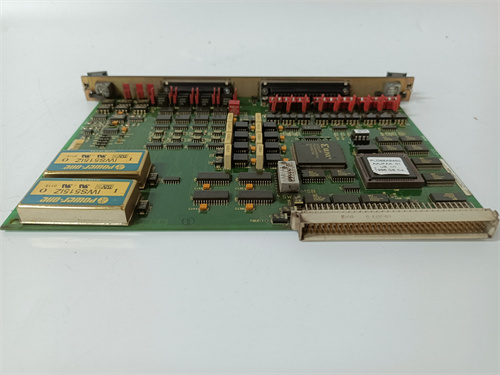
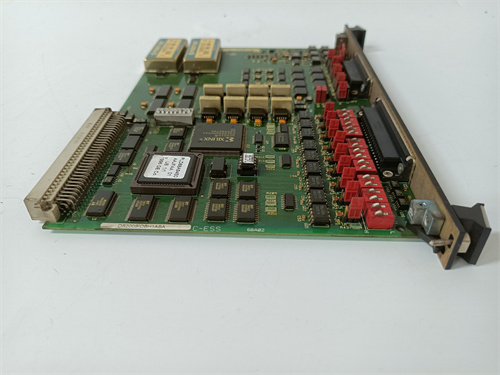
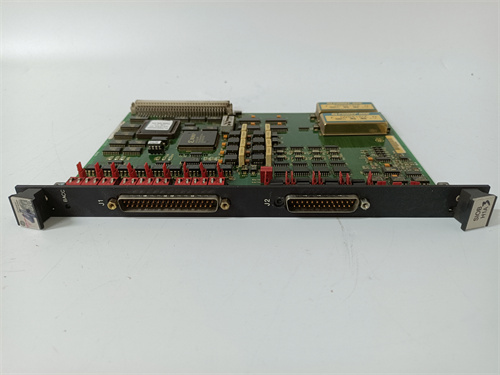
The DS200SVMAG1A fixes the one thing that annoyed field engineers about the original SVMAG1—the lack of a hardware watchdog. That base model would occasionally lock up its output stage during power sags, leaving the valve stuck in whatever position it was in. This ‘A’ revision adds a dedicated timer that resets the output to a safe state (typically 0% or 4mA) if the controller stops communicating for more than 100ms.
For a board that’s nearly identical to its predecessor in every other way, that single feature makes a world of difference. We’ve seen installations where upgrading from the SVMAG1 to the SVMAG1A eliminated nuisance trips caused by output latch-ups. The board still handles four LVDT inputs and one servo output, just like the original, but the watchdog gives you a failsafe that wasn’t there before. Compared to the later SVMAG1B, this ‘A’ revision uses a slightly different output op-amp (LM12 vs. LM14)—not a major difference, but worth noting if you’re mixing board revisions in the same rack.
Key Technical Specifications
| Parameter | Value / Range |
|---|---|
| Manufacturer | General Electric (GE) |
| Part Number | DS200SVMAG1A |
| Board Type | Servo Valve Interface / I/O |
| Analog Inputs | 4 channels (LVDT/RVDT, 0-10V, 4-20mA, configurable) |
| Servo Outputs | 1 channel (±10V or 4-20mA, 500Ω minimum load) |
| Watchdog Timer | 100ms timeout (resets output to safe state) |
| Input Power | 24 or 48 VDC (isolated, 250mA max) |
| Mounting | VME rack (standard Mark VI backplane) |
| Bus Speed | 10 MHz (VME backplane) |
| A/D Converter | 16-bit resolution |
| Operating Temp | 0°C to +55°C |
| Storage Temp | -40°C to +85°C |
| Isolation | 1000Vrms (field to logic) |
| Status LEDs | 4: Power, Fault, Communications Active, Watchdog Enabled |
| Firmware | Version 4.0 or later required for full watchdog functionality |
Compatible Replacement Models
Replacement options depend on whether you need the watchdog feature or can live without it.
✅ Drop-in Replacement: The DS200SVMAG1B is a direct drop-in. Hardware pins match. The ‘B’ revision improves the output stage’s thermal performance by about 15% (runs cooler) and uses a different op-amp that’s more tolerant of short circuits. Same firmware works. If you’re buying new surplus, the ‘B’ is actually the better choice—it’s a later production run with fewer known issues. Price difference is usually negligible (5-10% more for the ‘B’).
✅ Drop-in Replacement: The base DS200SVMAG1 (no suffix) is physically identical and will work in the same slot. The only difference: no watchdog timer. If your system already has software-based timeout handling in the controller, you can downgrade to the non-‘A’ version without functional issues. But verify your ladder logic includes a timeout check—if the controller relies solely on the hardware watchdog, you’ll need to add that logic or stick with the ‘A’.
⚠️ Software Compatible: The DS200SVIAG1A (from the newer SVIAG1 series) fits the rack but requires a full firmware reload and I/O remapping. The SVIAG1 series uses a different memory map—inputs at 0x1200 instead of 0x1000. Budget 3-4 hours for the firmware update, I/O re-mapping, and loop tuning. Not recommended for a quick replacement.
❌ Hardware Incompatible: The DS200SVIAG1ACB (six-input) is a different board. It has six inputs vs. four and uses a different pin assignment—pins 18-20 on the ACB are active signals that are ground or reserved on the SVMAG1A. Forcing the ACB into a slot configured for the SVMAG1A will short the +12V supply.
Frequently Asked Questions (FAQ)
What’s the actual difference between the SVMAG1 and the SVMAG1A?
The A suffix on GE boards typically means “Added capability.” In this case, GE added a hardware watchdog timer. Here’s what it does: the controller sends a “heartbeat” signal to the board every 50ms. If the board doesn’t see that heartbeat for 100ms, it assumes the controller has crashed or the communications link is down. The watchdog then forces the servo output to a safe state—default is 0V (or 4mA if you’re configured for current) to close the valve. The base SVMAG1 lacks this—if the controller locks up, the board holds whatever output it last commanded, which could leave a valve partially open. Not ideal.
Can I disable the watchdog if I don’t want it?
Yes. There’s a jumper on the board (J1, near the backplane connector). Placing the jumper across pins 2-3 disables the watchdog. We’ve seen some engineers do this during commissioning to simplify troubleshooting—the watchdog would sometimes trip during normal power fluctuations, making it hard to isolate the real issue. But once you’re up and running, re-enable it. To be frank, the watchdog saves more problems than it causes. If you’re experiencing nuisance trips, the issue is usually noisy power, not the watchdog itself.
How do I test the watchdog function on the bench?
This is a smart test to run before installing the board. Here’s the procedure:
- Power up the board with 24VDC. Verify the Watchdog LED is lit (amber).
- Connect a function generator to the board’s heartbeat input pin (pin 14 on the backplane). The board expects a 5V square wave at 50Hz.
- Stop the square wave signal. The board’s Watchdog LED should start flashing after 100ms, and the servo output should drop to 0V (or 4mA).
- Resume the square wave. The board should recover and restore the output to its commanded value within 50ms.
- If the output doesn’t drop, the watchdog circuit is faulty—common failure point is the capacitor on the timing circuit (C7). Replace the capacitor or avoid that board.
What’s the most common failure on the SVMAG1A?
The watchdog timer capacitor (C7—a 10µF tantalum). Tantalums dry out over time, and when they do, the timing circuit drifts. Instead of tripping at 100ms, it might trip at 50ms or even 5ms—causing nuisance resets. We’ve seen this happen in plants where ambient temperatures stay above 40°C. If you’re buying a used SVMAG1A, ask the seller to confirm the watchdog timing is within spec (100ms ± 5ms). If they can’t, budget for replacing C7 yourself—it’s a $2 part and a 15-minute soldering job.
Can I use the SVMAG1A with a Mark VIe controller?
No. The Mark VIe uses a PCIe backplane, not VME. The board won’t physically fit. If you’re migrating to Mark VIe, you need the IS200SVOAH1A (or similar) servo interface designed for that platform. That’s a full rack replacement—not a board swap.
What’s the lead time for a replacement SVMAG1A?
New surplus units are becoming rare. GE stopped production years ago. We’re seeing:
- New surplus: 4-8 weeks if you can find one. Prices have climbed 20-25% above original list in the last year.
- Refurbished: 1-2 weeks. Insist on a test report that validates both the watchdog function and the output linearity.
- Used/untested: Avoid. The SVMAG1A’s watchdog circuit is sensitive to aging capacitors—untested boards have a high failure rate.
If I’m replacing a base SVMAG1 with the SVMAG1A, do I need to change anything in my logic?
No—and that’s the beauty of the ‘A’ revision. The watchdog is entirely hardware-based. Your ToolboxST configuration stays the same. The only change is that the board will now monitor the controller’s heartbeat. If you already have software-based timeout logic in your ladder, you can keep it—the hardware watchdog is just an additional layer of protection. If you’ve been running without a timeout (risky), the SVMAG1A gives you that safety net for free.
How do I verify a used SVMAG1A isn’t actually a re-labeled SVMAG1?
We’ve seen this trick from unscrupulous sellers. They take a base SVMAG1, change the label, and sell it as an ‘A’ variant. Run these checks:
- Label quality: Genuine ‘A’ labels have a slightly different font on the suffix—the ‘A’ is bold, the rest is regular. Counterfeit labels often use uniform font.
- Watchdog LED: The SVMAG1A has a fourth LED labeled “WD” (Watchdog). The base SVMAG1 has only three LEDs. If your board has three LEDs, it’s not an ‘A’—regardless of what the label says.
- Resistor R23: On the ‘A’ version, R23 is populated (22kΩ). On the base SVMAG1, that spot is empty. Pop the board out and look for R23 near the backplane connector. If it’s missing, you’re holding a base model.
OTCL8800F00
OTCP10327V00
OTCL20400S(L20400S03) PLC DCS
 Email: sales@plcfcs.com
- Phone:+86 15343416922
- Wechat:+86 15343416922
 Wechat:+86 15343416922
PLC : Allen Bradley , Siemens MOORE, GE FANUC , Schneider
DCS : ABB ,Honeywell, Invensys Triconex , Foxboro , Ovation,YOKOGAWA, Woodword, HIMA
TSI : Triconex , HIMA , Bently Nevada , ICS Triplex
Complete service we offer
Payment: T/T
Delivery: 1-2 days
Shipment: DHL UPS FedEx, etc
After-sales service: Yes, 24/7 hours