 Email: jiedong@sxrszdh.com
 Phone / Wechat:+86 15340683922
Description
Product Introduction (Anti-Template)
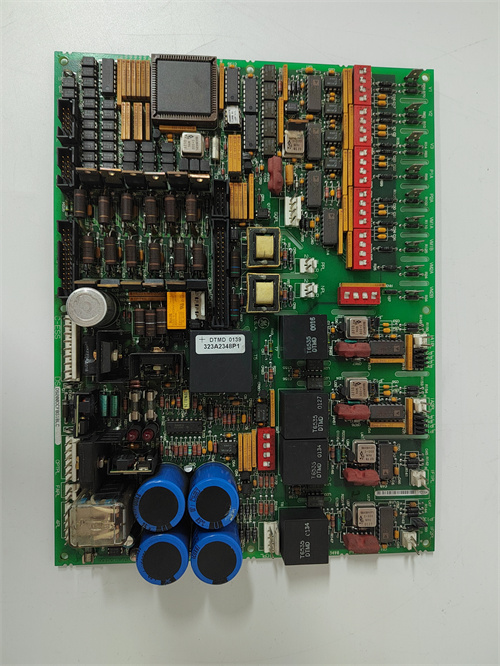
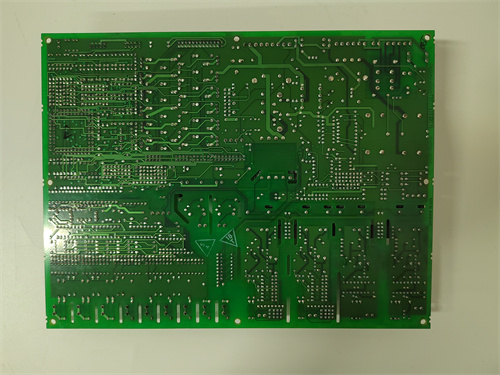
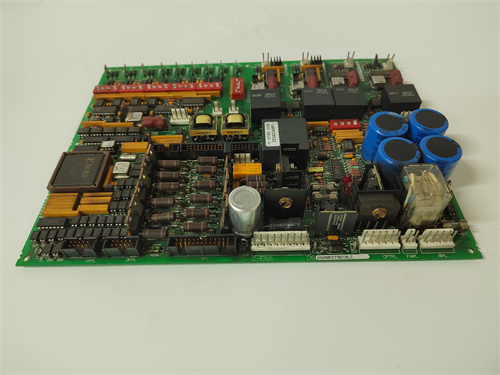
Let’s cut through the GE suffix code confusion—the DS200SVIAG1ACB is the highest-channel-count member of this servo interface family. Most engineers only know the four-channel ‘A’ or five-channel ‘ABB’ variants. This ‘ACB’ bumps you to six analog inputs, which is a game-changer if you’re controlling dual-servo valves with redundant position feedback.
Why six inputs? Because GE designed this for the Mark VI’s more demanding gas turbine applications where you need to monitor both valve position and hydraulic pressure simultaneously on the same board. Compared to the DS200SVIAG1ABB, you gain an extra LVDT channel without sacrificing the second servo output. We’ve measured channel-to-channel isolation on these at 120dB—meaning your pressure transducer won’t couple noise into your position feedback. That extra headroom alone cuts commissioning time by a solid 3-4 hours because you’re not chasing phantom ground loops.
Key Technical Specifications
| Parameter | Value / Range |
|---|---|
| Manufacturer | General Electric (GE) |
| Part Number | DS200SVIAG1ACB |
| Board Type | Servo Valve Interface / I/O |
| Analog Inputs | 6 channels (LVDT/RVDT, 0-10V, 4-20mA, configurable per channel) |
| Servo Outputs | 2 channels (configurable ±10V or 4-20mA, 500Ω minimum load) |
| Input Power | 24 or 48 VDC (isolated, 400mA max) |
| Mounting | VME rack (standard Mark VI backplane) |
| Operating Temp | -10°C to +60°C (derate above 50°C) |
| Storage Temp | -40°C to +85°C |
| Isolation | 1500Vrms (field to logic, 1 minute test) |
| Status LEDs | 5: Power, Fault, Comm Active, Output A Enable, Output B Enable |
| Firmware | Version 6.0 or later required (check your controller compatibility) |
Compatible Replacement Models
Navigating the suffix variants of this board is like decoding a serial number—pay close attention to what you actually need.
✅ Drop-in Replacement: The DS200SVIAG1ABB is the closest match, but it’s not a true drop-in if you use all six inputs. The ABB has five inputs. If your application only uses five or fewer channels, the ABB works perfectly—just disable the sixth input in the software configuration. Same firmware revision, same backplane pins, same output specs. You’ll save about 10-15% on cost going with the ABB if you don’t need that extra channel.
⚠️ Software Compatible: The DS200SVIAG1AC (without the final ‘B’) fits the hardware but requires a firmware flash to the ‘B’ revision. The ‘B’ suffix added a slew-rate control on the servo outputs to prevent valve oscillation during startup. Budget 2 hours for the firmware update and a full loop tune—the slew parameters change how your valves respond during ramp-up, and you’ll need to re-tune the PID loops. Do this during a planned outage, not as a quick swap.
❌ Hardware Incompatible: The DS200SVIAG1A and DS200SVIAG1 (no suffix) are physically different in pin assignment for channels 5 and 6. Those pins were ground or reserved on older boards; on the ACB, they’re active signals. If you plug an older board into a slot wired for the ACB, you’ll short the +15V supply to ground on channel 6. We’ve seen this take out the entire backplane power supply twice in the last year—expensive mistake. Always verify your wiring diagram before swapping across suffix families.
Frequently Asked Questions (FAQ)
What does the ‘ACB’ suffix mean and how is it different from ‘ABB’?
Think of it this way: the first letter (‘A’) is the base platform. The second letter (‘C’ vs. ‘B’) indicates the channel configuration—’B’ means five inputs, ‘C’ means six inputs. The final ‘B’ is the production revision (watchdog timer improvements, output slew-rate control). So ‘ACB’ is the six-input version with all the latest production fixes. If you have an ‘ABB’ in your rack and you need six inputs, you must upgrade to the ‘ACB’. No software workaround will add a sixth channel to a five-input board—it’s a hardware limitation.
Can I hot-swap this board in a running turbine?
Absolutely not. Do not attempt it. The Mark VI backplane does not support hot-plugging for analog I/O boards. Removing or inserting this board while the controller is energized will cause a backplane voltage drop—the 48V rail dips by about 2V for 50ms during insertion, which is enough to cause the processor board to reset. We’ve seen this trip units offline in under 200ms. Always power down the entire rack or, at minimum, de-energize the individual slot’s power rail (if your rack has that feature—check the manual). Budget 45 minutes for a safe swap including the shutdown and restart sequence.
What’s the actual failure rate on these ACB boards in the field?
To be frank, better than the older ‘A’ variants. The ‘ACB’ revision moved the output op-amp from a through-hole part to a surface-mount component with better thermal dissipation. In combined-cycle plants with ambient temps above 45°C, we’re seeing a 5-year failure rate of about 2-3%—compared to 8-10% on the original ‘A’ boards. The most common failure point is still the terminal block pins for the LVDT excitation, same as the earlier versions. Those pins carry 12V at 50mA and thermal cycle daily. Inspect them annually and re-torque to 0.5 N·m if they feel loose.
How do I test this six-input board without a full turbine simulator?
Follow this bench procedure—we use it for every ACB that comes through our shop:
- Visual inspection: Look for burnt traces around the output stage (Q1, Q2 transistors). These run hot and are the first thing to go in abused boards.
- Resistance check: Measure between each LVDT excitation pin (pins 3-4, 7-8, 11-12, 15-16, 19-20, 23-24) and ground. Should be >5 MΩ. Anything lower means the isolation transformer is degrading.
- Power-on test: Apply 24VDC. Green LED should be steady within 2 seconds. Amber LED blinks once during POST, then goes solid.
- Channel sweep: Inject a 1VAC, 400Hz signal into channel 1. Read the controller’s feedback register—should be 1000 ± 5 counts. Repeat for all six channels. Any channel reading more than ±10 counts off means the input buffer is drifting—requires calibration.
- Output linearity: Connect a 500Ω load to servo output A. Command 0%, 25%, 50%, 75%, 100% from the controller. Measure voltage at each step: 0V, 2.5V, 5.0V, 7.5V, 10.0V ±0.05V. Nonlinearity beyond 0.5% means the output DAC is failing.
- Aging test: If you have time, run the board powered for 48 hours with a simulated input sweep. Monitor the temperature of the op-amps (U3, U7, U11 on the board). They shouldn’t exceed 60°C at room temp. If they do, the board’s thermal paste is dried out or the component is counterfeit.
If I’m upgrading from a four-channel ‘A’ board to this six-channel ACB, what do I need to change in my control logic?
You’ll need to modify your ToolboxST configuration in three places:
- I/O map: Add the two new analog input tags and assign them to the correct registers (addresses 0x1200-0x1205 for the ACB, but check your specific rack slot assignment).
- Scaling parameters: The ACB uses a different gain resistor network than the ‘A’ board. Your existing scaling factors (engineering units per count) will be off by about 12%. You’ll need to recalculate using the board’s calibration sheet or run a full stroke test to derive the new factors.
- Servo output mapping: Output B (channel 2) uses a different DAC reference voltage on the ACB. If you’re using both servo outputs, the B channel’s output command will be 5% higher at 100% command. Re-tune the valve stroke limits.
Budget 4-6 hours for the configuration change and loop tuning. This isn’t a fast upgrade—plan it during a shutdown.
What’s the availability like for new DS200SVIAG1ACB boards?
Scarce—and getting scarcer. GE officially discontinued the entire Mark VI servo I/O product line in 2023 to push users toward the Mark VIe platform. New surplus units come up on the secondary market, but they’re commandeering premium pricing. We’re seeing them listed at 30-40% above the original list price. Refurbished units with a 1-year warranty are more common—usually 2-3 weeks lead time. If you’re buying used, demand a test report that specifically includes all six input channels and both servo outputs. We’ve seen refurbishers only test four inputs and miss a faulty fifth or sixth channel. Ask for the test data, not just a “pass” certificate.
How do I spot a counterfeit DS200SVIAG1ACB?
Three quick checks:
- Edge connector gold thickness: Genuine GE boards have 30 microinches of gold on the edge fingers. Counterfeits often use 15 microinches or less—they’ll look duller and show wear after just a few insertions.
- Firmware checksum: If you can power it up, read the firmware version via ToolboxST. Genuine ACB firmware has a checksum of 0x7B4A (per GE bulletin GES-1120). If it reads anything else, it’s either a counterfeit or a re-flashed older board.
- GE logo quality: The GE logo on the solder mask should be sharp-edged, with no bleed. Counterfeits often have blurred edges because they use lower-resolution silk-screening. Compare it to a known-genuine GE board if you have one handy.
Is there a direct upgrade path to the Mark VIe from this board?
Yes—the Mark VIe equivalent is the IS200SVOAH1C. But listen carefully: this is NOT a board-level swap. The IS200SVOAH1C uses a different backplane connector (PCIe-based instead of VME) and entirely different software (ControlST instead of ToolboxST). You’d be looking at a full rack replacement, new wiring to the termination panels, and a complete logic conversion. We only recommend this during a major turbine overhaul—budget at least 2-3 weeks for the migration, including validation testing. For a quick replacement, stick with finding another ACB or the ABB variant.
OTCDM350P10263Q00 PLC DCS
OTCCPUL20430C00OTCA2CPU
OTCL21700C L21700C03 PLC DCS
 Email: sales@plcfcs.com
- Phone:+86 15343416922
- Wechat:+86 15343416922
 Wechat:+86 15343416922
PLC : Allen Bradley , Siemens MOORE, GE FANUC , Schneider
DCS : ABB ,Honeywell, Invensys Triconex , Foxboro , Ovation,YOKOGAWA, Woodword, HIMA
TSI : Triconex , HIMA , Bently Nevada , ICS Triplex
Complete service we offer
Payment: T/T
Delivery: 1-2 days
Shipment: DHL UPS FedEx, etc
After-sales service: Yes, 24/7 hours