 Email: jiedong@sxrszdh.com
 Phone / Wechat:+86 15340683922
Description
Product Introduction (Anti-Template)
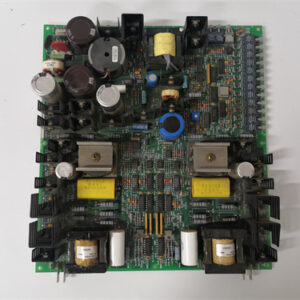
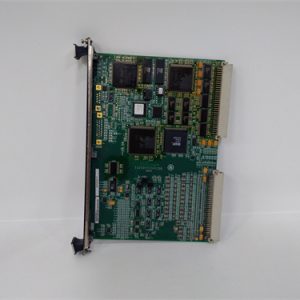
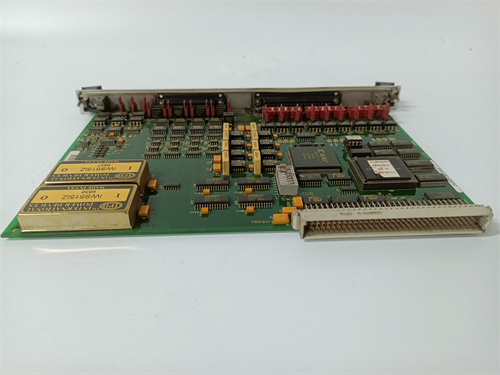
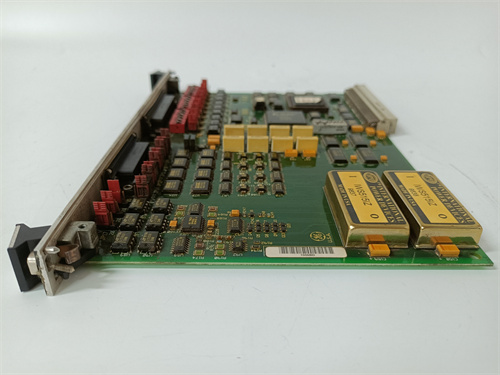
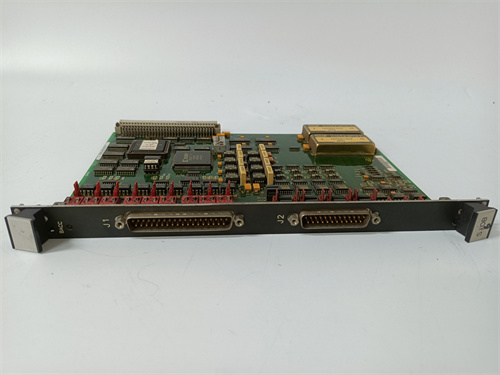
Here’s the thing about the DS200SVMAG1—it’s the foundation of GE’s Mark VI servo control line, and it’s been in the field for over two decades. This board translates your turbine’s digital commands into precise analog signals that position fuel and steam valves. Without it, your controller is just talking to itself.
What makes this model different from the SVIAG1 variants you might know? The ‘SVMA’ prefix indicates it’s part of GE’s earlier Mark VI servo interface generation—pre-dating the SVIAG1 series by about five years. The core function is similar, but the pin assignments and firmware architecture are distinct. Compared to the later SVIAG1A, this board uses a different A/D converter (16-bit vs. 14-bit) and runs on a slower 10MHz bus speed. That matters if you’re retrofitting into a modern rack. We’ve seen mixing these generations cause scan time mismatch errors—the controller polling the SVMAG1 at 50ms intervals while expecting data at 20ms.
Key Technical Specifications
| Parameter | Value / Range |
|---|---|
| Manufacturer | General Electric (GE) |
| Part Number | DS200SVMAG1 |
| Board Type | Servo Valve Interface / I/O |
| Analog Inputs | 4 channels (accepts LVDT/RVDT, 0-10V, 4-20mA) |
| Servo Outputs | 1 channel (configurable ±10V or 4-20mA) |
| Input Power | 24 or 48 VDC (isolated, 250mA max) |
| Mounting | VME rack (standard Mark VI backplane) |
| Bus Speed | 10 MHz (VME backplane) |
| A/D Converter | 16-bit resolution |
| Operating Temp | 0°C to +55°C |
| Storage Temp | -40°C to +85°C |
| Isolation | 1000Vrms (field to logic) |
| Status LEDs | 3: Power, Fault, Communications Active |
| Firmware | Version 3.0 or later required for most installations |
Compatible Replacement Models
Replacement options for this older board require careful consideration of your system’s age and firmware.
✅ Drop-in Replacement: The DS200SVMAG1A and DS200SVMAG1B are the direct successors. Hardware pins match. The ‘A’ revision added a watchdog timer; the ‘B’ revision improved the output stage’s thermal performance. If you have the base SVMAG1 (no suffix), you can drop in the ‘A’ or ‘B’ variant with no hardware changes—just verify your firmware version supports the new watchdog features. Expect a 10-15% price bump for the later revisions.
⚠️ Software Compatible: The DS200SVIAG1A (from the newer SVIAG1 series) fits the physical slot but requires a complete firmware reload and recalibration. The pin assignments for the LVDT excitation are identical, but the data registers in memory moved. You’ll need to update your ToolboxST I/O map to point to the new register addresses. Budget 3-4 hours for the firmware update, I/O re-mapping, and full loop tuning. Do not attempt this without a full system backup—we’ve seen blown configuration files from mismatched board families.
❌ Hardware Incompatible: The DS200SVIAG1ACB (six-input variant) and the DS200SLCCG1 (communications board) are not replacements. The SVIAG1ACB has six inputs vs. four and uses a different backplane connector arrangement—pins 18 and 19 changed from ground to signal lines on the newer boards. Forcing it into a slot configured for the SVMAG1 will short the +12V supply. The SLCCG1 handles LAN communications, not servo logic—it will power up but won’t respond to servo commands.
Frequently Asked Questions (FAQ)
What’s the difference between the DS200SVMAG1 and the DS200SVIAG1 series?
This is the most common confusion we see. The SVMAG1 is the older generation—think of it as version 1.0 of GE’s servo I/O. The SVIAG1 series is version 2.0. The physical boards look similar, but:
- Bus speed: SVMAG1 runs at 10MHz. SVIAG1 runs at 20MHz.
- A/D converter: SVMAG1 uses 16-bit. SVIAG1 uses 14-bit (yes, lower resolution—but faster).
- Firmware architecture: Different memory maps. They’re not directly interchangeable without a software update.
If you’re replacing a failed SVMAG1, find another SVMAG1 or an SVMAG1A. Jumping to the SVIAG1 series is possible but requires the full software migration we outlined above.
Can I hot-swap this board in a running system?
No—and this is critical. The Mark VI backplane does not support hot-plugging for these older servo boards. Removing or inserting the SVMAG1 while power is applied will cause a backplane voltage transient—the 24V rail dips by about 1.5V for 30-40ms. That’s enough to cause the CPU board to reset or, worse, corrupt the configuration memory. We’ve seen this happen twice—both times the turbine tripped offline. Always power down the rack before swapping. If your facility has a redundant controller setup, you can fail over to the secondary rack while doing maintenance on the primary. Budget 60 minutes for the shutdown, swap, and restart sequence.
What are the common failure modes on this board?
Three things tend to fail on the SVMAG1:
- Output stage transistors (Q1 and Q2 on the board). These drive the servo valve and run hot—especially if your valve has low impedance (under 100Ω). They’re rated for 1A continuous, but we’ve seen them fail at 0.8A when ambient temps exceed 45°C. Symptom: the valve starts oscillating or doesn’t move at all.
- LVDT excitation capacitor (C5—a 47µF electrolytic). This capacitor filters the 3.5V excitation voltage for the LVDTs. When it dries out, the excitation voltage drops to 2.8V or becomes noisy, causing position feedback jitter. You’ll see the valve position fluctuating even when the command is stable.
- Backplane connector pins—specifically pins 12 and 13 (the +24V supply). These carry the board’s main power and are prone to fretting corrosion from thermal cycling. If the pins look tarnished or have a black ring around them, plan on cleaning them with a contact cleaner or replacing the connector.
How should I bench-test a used DS200SVMAG1 before installing it?
Follow this practical test sequence:
- Visual inspection: Look for bulging capacitors (C5, C8, C12—all electrolytics). If any are domed, the board needs a recap before it goes into service.
- Resistance check: Measure between the +24V supply pins (12, 13) and ground. Should be >2 kΩ. Less than that indicates a shorted tantalum capacitor—common on older boards.
- Power-on test: Apply 24VDC to pins 12 (+) and 13 (-). The green LED should illuminate within 1 second. The amber LED should blink once then go steady.
- Input simulation: Apply 1VAC, 400Hz to LVDT input 1 (pins 1 and 2). Read the feedback register in ToolboxST. It should be 1000 ± 10 counts. Repeat for all four channels. Any channel off by more than 20 counts needs calibration.
- Output test: Connect a 500Ω resistor between servo output (pin 20) and ground. Command 50% from the controller—measure 5.0V ± 0.1V. Ramp to 0%, 100% and check linearity.
- Burn-in: Run the board powered for 24 hours with inputs connected. Monitor the temperature of Q1 and Q2—they shouldn’t exceed 65°C at room temperature. If they hit 70°C or more, the thermal paste underneath is degraded.
What’s the lead time if I order a replacement today?
The SVMAG1 has been discontinued for years. Your options:
- New surplus: Rare, but they surface every month or two. Expect 3-6 weeks lead time. Prices have climbed 25-30% above original list.
- Refurbished: More common. 1-2 weeks typical lead time. Insist on a test report that confirms all four inputs and the output were validated. We’ve seen refurbishers only test two inputs and skip the output linearity check.
- Used/untested: Avoid unless you have a full test bench. The cost savings aren’t worth the risk—a failed board in a running turbine costs more in downtime than the board itself.
If I upgrade to a newer board, what’s involved?
Moving from the SVMAG1 to the SVIAG1ACB (or similar) requires:
- Firmware update: The newer boards require Mark VI software version 5.0 or higher. If you’re on 4.x, you’ll need to upgrade the entire controller firmware—a 4-6 hour job.
- I/O mapping: The registers moved. Your existing logic expects data at addresses 0x1000-0x1003 for inputs. The SVIAG1ACB uses 0x1200-0x1205. You’ll need to modify every logic block that references those addresses.
- Scaling recalibration: The gain resistors are different. Your engineering unit scaling (steam pressure per volt, etc.) will be off by 8-15%. Full stroke calibration is required.
- Wiring verification: If you’re jumping to the six-input ACB, verify you have the additional wiring for channels 5 and 6. If not, you’re paying for channels you can’t use.
Budget a full day for the migration and testing. Only do this during a planned outage—not as an emergency fix.
Can I use this board with a Mark VIe controller?
No—and this is important. The Mark VIe platform uses a completely different backplane architecture (PCIe-based). The DS200SVMAG1 uses the older VME bus. They’re physically incompatible—the board won’t even fit in a Mark VIe rack. If you’re migrating to Mark VIe, you need the IS200SVOAH1A (or similar) servo interface board designed for that platform. That’s a full system upgrade, not a board swap.
How do I verify this board’s firmware version without installing it?
If you have access to a Mark VI rack on the bench, you can power the board and read the firmware via ToolboxST. But if you only have the board in hand, check the label on the EPROM chip (U1 on the board—near the backplane connector). The label should have a GE part number like 123X4567G001. The last three digits indicate the firmware revision. For the SVMAG1, acceptable revisions are G001 through G007. If you see G008 or higher, that’s actually SVMAG1B firmware—it will still work but requires a later controller revision. If there’s no label, assume the board has older firmware and factor that into your migration time.
OTCCPUL8820C04
OTCL20752C03 PLC DCS
OTC24V100-0638 PLC DCS
OTCI/OL20424C00L2042C01
 Email: sales@plcfcs.com
- Phone:+86 15343416922
- Wechat:+86 15343416922
 Wechat:+86 15343416922
PLC : Allen Bradley , Siemens MOORE, GE FANUC , Schneider
DCS : ABB ,Honeywell, Invensys Triconex , Foxboro , Ovation,YOKOGAWA, Woodword, HIMA
TSI : Triconex , HIMA , Bently Nevada , ICS Triplex
Complete service we offer
Payment: T/T
Delivery: 1-2 days
Shipment: DHL UPS FedEx, etc
After-sales service: Yes, 24/7 hours