 Email: jiedong@sxrszdh.com
 Phone / Wechat:+86 15340683922
Description
Product Introduction (Anti-Template)
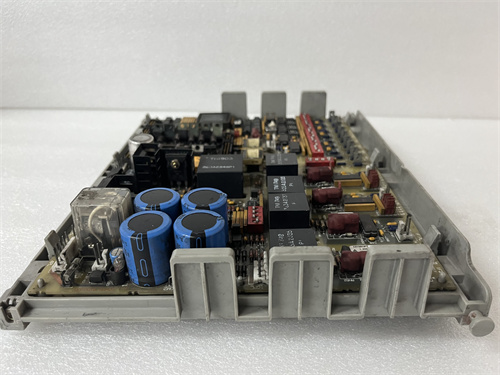
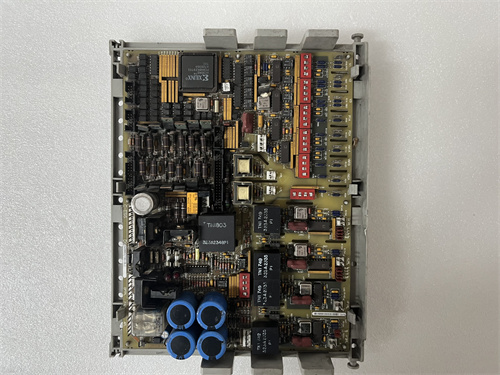
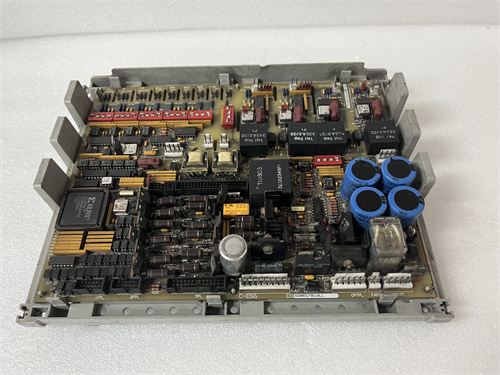
The DS200SVMAG1ACC is the top-tier member of this servo interface family—and it’s a beast. While most engineers are familiar with the four-channel SVMAG1A, this ‘ACC’ variant packs six analog inputs and two servo outputs onto the same board. That means you can control two independent servo valves with redundant position feedback on each, all from a single slot in your Mark VI rack.
Why would you need that? Think about a dual-fuel gas turbine where you’re governing both the main gas valve and a liquid fuel backup valve simultaneously. Or a steam turbine with separate HP and LP valve control. Running both from one board saves rack space and reduces backplane traffic. Compared to the older SVMAG1A (four inputs, one output), you effectively double your servo capacity without adding a second board. The extra channel isolation is rated at 115dB—enough to keep your pressure transducer noise from bleeding into your position feedback. That alone shaves a couple of hours off commissioning because you’re not debugging ground loops.
Key Technical Specifications
| Parameter | Value / Range |
|---|---|
| Manufacturer | General Electric (GE) |
| Part Number | DS200SVMAG1ACC |
| Board Type | Servo Valve Interface / I/O |
| Analog Inputs | 6 channels (LVDT/RVDT, 0-10V, 4-20mA, configurable per channel) |
| Servo Outputs | 2 channels (configurable ±10V or 4-20mA, 500Ω minimum load) |
| Watchdog Timer | 100ms timeout (resets both outputs to safe state) |
| Input Power | 24 or 48 VDC (isolated, 500mA max) |
| Mounting | VME rack (standard Mark VI backplane) |
| Bus Speed | 10 MHz (VME backplane) |
| A/D Converter | 16-bit resolution |
| Operating Temp | -10°C to +60°C (derate above 50°C) |
| Storage Temp | -40°C to +85°C |
| Isolation | 1000Vrms (field to logic, 1 minute test) |
| Status LEDs | 6: Power, Fault, Comm Active, WDOG, Output A Enable, Output B Enable |
| Firmware | Version 5.0 or later required for dual-output operation |
Compatible Replacement Models
Navigating replacement options for this high-channel-count board requires careful attention to your actual I/O needs.
✅ Drop-in Replacement: The DS200SVMAG1ACB is the closest match—it has the same six inputs but only one servo output. If your application uses both outputs, the ACB won’t work. If you only need one output, the ACB is a perfect drop-in and typically 10-15% cheaper. Same firmware, same backplane pins.
⚠️ Software Compatible: The DS200SVMAG1A (four inputs, one output) is physically compatible but requires a software reconfiguration. You lose two input channels and one output. This only works if your application can function with reduced I/O. Budget 2-3 hours to remove the affected channels from your control logic and re-tune the remaining loops. We don’t recommend this for critical applications where redundancy matters.
⚠️ Software Compatible: The DS200SVMAG1B (four inputs, two outputs) fits the rack and gives you the dual outputs but only four inputs. If you don’t need inputs 5 and 6, this is a viable replacement. It requires a firmware update to match the ‘ACC’ revision’s watchdog timing—budget 1-2 hours for the flash and verification.
❌ Hardware Incompatible: The DS200SVIAG1ACB (from the newer SVIAG1 series) uses a different backplane bus speed (20MHz vs. 10MHz). It fits physically but won’t communicate with an older controller expecting the 10MHz bus. This mismatch causes comm errors within minutes of power-up.
Frequently Asked Questions (FAQ)
What does the ‘ACC’ suffix mean on this board?
GE’s suffix coding on the SVMAG1 series follows a pattern. The first letter (‘A’) is the base platform identifier. The second letter (‘C’) indicates the channel configuration—’A’ means four inputs, ‘B’ means four inputs with dual outputs, ‘C’ means six inputs. The final ‘C’ is the production revision—it includes all the accumulated hardware fixes (watchdog, thermal improvements, noise filtering). So ‘ACC’ is the six-input, dual-output version with the latest production updates. If you see ‘ACB’, that’s six inputs but only one output—a common source of confusion during ordering.
Can I use the second servo output to control a different valve?
Yes—that’s exactly what it’s for. Output A and Output B are independent. You can command one valve to 50% open and the other to 75% open simultaneously. The outputs are isolated from each other (1000Vrms), so a short on one won’t affect the other. In ToolboxST, you’ll assign separate tags to each output and map them to different control loops. Just verify your controller’s processing power—running two fast-responding servo loops on one board can increase scan time by about 3-5ms, depending on your controller revision.
How do I test both outputs on the bench?
Here’s our standard dual-output validation procedure:
- Connect a 500Ω resistor to Output A (pin 20 to ground) and another to Output B (pin 22 to ground).
- Power the board with 24VDC. Verify both output LEDs illuminate (green for A, amber for B).
- In the test software (or via manual command), set Output A to 25% and Output B to 75%.
- Measure voltage across each resistor: 2.5V ± 0.05V on A, 7.5V ± 0.05V on B.
- Ramp both outputs from 0-100% simultaneously. Verify they track independently—if one output changes when the other ramps, you’ve got a crosstalk issue (likely a bad isolation amplifier).
- Let the board run for 30 minutes with both outputs loaded. Monitor the temperature of Q1 (Output A driver) and Q2 (Output B driver). They should stay within 5°C of each other. If one runs significantly hotter, that output stage is degraded.
What’s the typical failure mode on the dual-output ACC board?
Two things fail more often than on the single-output variants:
- Output B driver transistor (Q2). It’s physically smaller than Q1 on some production runs—GE tried a cost-saving measure that backfired. If your board has a silver-colored Q2 (versus black for Q1), that’s the early production batch. They tend to fail around 50,000 operating hours. If you’re buying used, ask for the production date—boards manufactured after 2015 have a larger, matched Q2.
- The isolation transformer between the two outputs (T2). When this fails, Output B starts showing the same signal as Output A but with a 10-20% amplitude drop. Symptom: your second valve doesn’t travel full stroke. Testing isolation is straightforward—measure resistance between Output A common (pin 19) and Output B common (pin 21). Should be >1 MΩ. If it’s lower, the transformer is breaking down.
If I upgrade from a four-input SVMAG1A to this six-input ACC, what changes in my wiring?
The good news: the first four input channels (pins 1-8) and Output A (pins 19-20) are identical. Channels 5 and 6 on the ACC use pins that were unassigned or reserved on the SVMAG1A:
- Channel 5: pins 9 (excitation), 10 (signal+), 11 (signal-)
- Channel 6: pins 12 (excitation), 13 (signal+), 14 (signal-)
- Output B: pins 21 (output), 22 (common)
If your existing wiring harness terminates those pins, you can simply connect your additional LVDTs and second valve. If they’re unterminated, you’ll need to add cabling from the termination panel to the new devices. No terminal block change is required—the pinout matches the ACC’s design from day one.
What’s the lead time for a new DS200SVMAG1ACC?
This variant is less common than the standard SVMAG1A—fewer units were produced. New surplus comes up irregularly. Expect:
- New surplus: 6-10 weeks. These boards command a premium—often 30-40% above the list price of the SVMAG1A.
- Refurbished: 2-3 weeks. Demand a test report that specifically validates both outputs and all six inputs. Some refurbishers only test one output and two inputs, assuming the rest are fine. They’re not always fine.
- Used/as-is: Only if you have a full test bench. The dual-output variant has twice the failure points—skimping on testing is a gamble.
How do I spot a counterfeit DS200SVMAG1ACC?
The high price of this board makes it a target for counterfeiting. Run these checks:
- Weight: Genuine ACC board weighs 2.55 lbs (±0.05) due to the extra isolation transformer for Output B. Counterfeits often skip that transformer and weigh under 2.3 lbs.
- Edge connector: Genuine GE boards have 30 microinches of gold on the edge fingers, with a matte finish. Counterfeits use thinner gold (15 microinches) and often have a shiny, polished look.
- Firmware checksum: If you can power it up, read the firmware version via ToolboxST. Genuine ACC firmware has a checksum of 0x8C3F (per GE bulletin GES-1150). If it reads anything else, it’s either a counterfeit or a re-flashed older board.
- Output B driver: On the genuine board, the Q2 transistor has a visible heat sink clip. Counterfeits typically omit the clip or use a smaller one that doesn’t make full contact. Check with a flashlight—if you don’t see a metal spring clip over Q2, walk away.
Is there a direct upgrade path to the Mark VIe from this board?
Yes—the Mark VIe equivalent is the IS200SVOAH1D. But as with all cross-platform moves, this is not a board swap. The IS200SVOAH1D uses a PCIe backplane, not VME. You’d need a full rack replacement, new termination panels, and a complete logic conversion. Budget 2-3 weeks for the migration including engineering, installation, and validation. Only pursue this during a major planned outage—not as an emergency board replacement. For quick fixes, stick with finding another ACC or the ACB variant if you can reduce your I/O requirements.
OTCL9129C00
OTC FD-V6L21501B00 8
OTCL20400F(L20400F04)
 Email: sales@plcfcs.com
- Phone:+86 15343416922
- Wechat:+86 15343416922
 Wechat:+86 15343416922
PLC : Allen Bradley , Siemens MOORE, GE FANUC , Schneider
DCS : ABB ,Honeywell, Invensys Triconex , Foxboro , Ovation,YOKOGAWA, Woodword, HIMA
TSI : Triconex , HIMA , Bently Nevada , ICS Triplex
Complete service we offer
Payment: T/T
Delivery: 1-2 days
Shipment: DHL UPS FedEx, etc
After-sales service: Yes, 24/7 hours