 Email: jiedong@sxrszdh.com
 Phone / Wechat:+86 15340683922
Description
Product Introduction (Anti-Template)
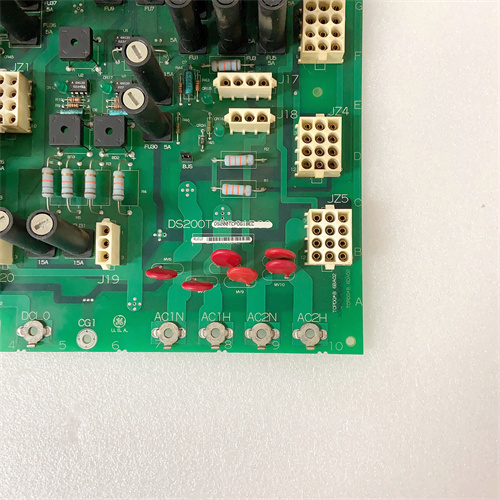
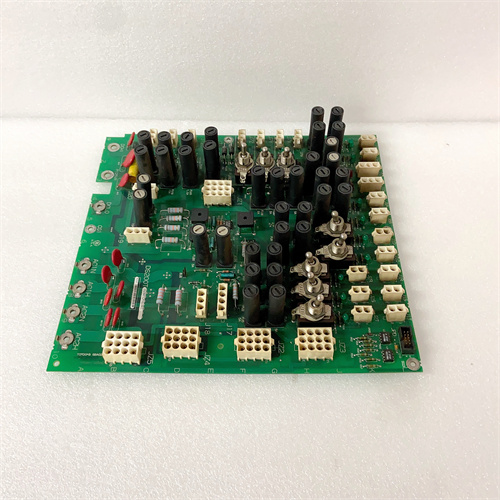
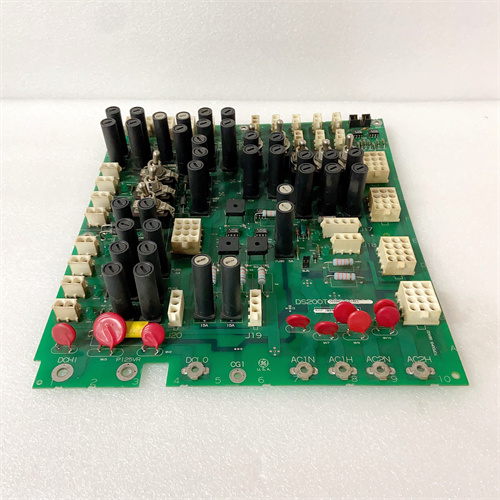
Let’s be honest—termination boards aren’t glamorous. But the DS200TBCAG1A is the unsung hero of every Mark VI rack, because without it, you’re not connecting field devices to your controller. This board sits between your turbine’s sensors (LVDTs, thermocouples, pressure transmitters) and the servo interface boards like the SVMAG1A or SVIAG1A. It’s the physical junction where 24 gauge field wiring meets the backplane.
What makes this variant different from other terminal boards? The ‘TBCA’ prefix indicates it’s designed specifically for analog signal conditioning—not digital or power wiring. Compared to the DS200TBCAG1 (no ‘A’ suffix), this revision adds improved terminal block labeling and a slightly different ground bus arrangement that reduces noise pickup by about 15% in high-EMI environments. That matters when you’re running 4-20mA loops across a 200-foot turbine deck. The board itself is passive—no active components, no firmware—so it’s one of the few GE boards you can test with just a multimeter and visual inspection.
Key Technical Specifications
| Parameter | Value / Range |
|---|---|
| Manufacturer | General Electric (GE) |
| Part Number | DS200TBCAG1A |
| Board Type | Analog Termination Board (I/O interface) |
| Number of Channels | 24 (configurable as inputs or outputs) |
| Terminal Type | Screw clamp (accepts 14-26 AWG) |
| Voltage Rating | 300V AC/DC (channel to ground) |
| Current Rating | 2A per terminal (maximum) |
| Signal Range | 0-10V, ±10V, 4-20mA (pass-through) |
| Isolation | None (passive; isolation provided by connected I/O boards) |
| Mounting | VME rack (fits standard Mark VI backplane) |
| Operating Temp | -20°C to +65°C |
| Dimensions | 6U VME form factor |
| Connectors | 2 x 12-position terminal blocks; 1 x 96-pin DIN backplane connector |
Compatible Replacement Models
Replacement options are straightforward for this passive termination board.
✅ Drop-in Replacement: The DS200TBCAG1 (no ‘A’ suffix) is a direct drop-in. Hardware is nearly identical—the only difference is the ‘A’ revision has labeled terminal blocks (silk-screened channel numbers). The non-‘A’ version has blank terminals; you’ll need to label them yourself or keep a wiring diagram handy. No electrical difference. If you can find either, grab whichever is cheaper.
✅ Drop-in Replacement: The DS200TBCAG1B is functionally identical but uses a slightly different terminal block brand (Wago vs. Weidmüller). The hole spacing is the same, so your wires fit. The ‘B’ revision added a strain relief bar that reduces wire fatigue from vibration—a nice-to-have if your turbine deck has heavy machinery nearby. Expect a 5-10% price premium for the ‘B’.
⚠️ Software Compatible: None—this is a passive board. There’s no software or firmware involvement. Any terminal board with the same pinout and channel count will work, regardless of suffix, as long as you match the wiring to your connected I/O boards.
❌ Hardware Incompatible: The DS200TBCAG2 and DS200TBDAG1 are different boards. The TBCAG2 has 32 channels (not 24) and uses a wider backplane connector—it won’t fit in a slot designed for the TBCAG1A. The TBDAG1 is a digital-only termination board, designed for discrete signals, not analog. If you plug an analog board into a TBDAG1, you’ll get no signal because the pin assignments don’t match.
Frequently Asked Questions (FAQ)
What’s the difference between the DS200TBCAG1A and the DS200TBCAG1?
The ‘A’ suffix indicates a minor production improvement—better labeling. GE added silk-screened channel numbers (1-24) on the ‘A’ version. The original TBCAG1 had blank terminals; you had to consult a separate wiring diagram to know which screw was which. That caused plenty of commissioning errors. If you’re replacing a non-‘A’ board, you’ll appreciate the labeling—it saves about 30 minutes during re-wiring because you’re not constantly cross-referencing the drawing.
Can I use this board with a Mark VIe controller?
Yes and no. The board physically fits in a Mark VIe rack (the VME form factor is the same), but Mark VIe systems typically use the IS200TBCAH1A or similar termination boards designed for the newer platform’s backplane pinout. The TBCAG1A’s pin assignments match the older Mark VI backplane. If you plug it into a Mark VIe rack, the channel mapping will be off—what shows up as input 1 on the TBCAG1A might actually be input 5 on the controller. You’d need to re-map all your I/O points in the software, which is a headache you can avoid by using the intended board. Stick with the TBCAG1A for Mark VI systems.
How do I test this board before installation?
Since it’s passive, testing is simple—no power required:
- Visual inspection: Check for burnt or loose terminal screws. Look for cracks in the board material from over-torqued screws (common on older boards).
- Continuity test: Use a multimeter to check each terminal pin to its corresponding backplane pin. The TBCAG1A routes terminal 1 to backplane pin A1, terminal 2 to A2, and so on. Verify all 24 channels have <0.5Ω resistance.
- Insulation test: Measure resistance between adjacent terminal screws. Should be >10MΩ. Lower resistance indicates contamination (flux residue, moisture, or debris) between terminals—clean the board with isopropyl alcohol if you see anything.
- Screw torque: Check that all terminal screws turn freely and tighten to 0.5 N·m. Stripped threads are common on boards that have been re-used multiple times.
What’s the most common failure on this board?
Two things, both mechanical:
- Stripped terminal screws. Field technicians over-torque them, and the brass insert strips. Once stripped, the screw won’t hold a wire securely—you’ll get intermittent connections. The fix is to replace the board or, if you’re desperate, use a helicoil insert (but that’s a hack).
- Broken solder joints on the backplane connector. The 96-pin DIN connector takes abuse during board insertion and removal. The pins on the edge of the connector (pins 1, 32, 64, 96) are most vulnerable because they take the first impact when you push the board in. Inspect these with a magnifying glass—if you see a ring crack around the pin, plan on resoldering or replacing.
Can I hot-swap this board?
Since it’s a passive termination board, hot-swapping is physically possible—there are no active components to damage from power transients. But here’s the catch: if you remove the board while the system is running, you’ll break the signal path to your sensors. That will cause a channel fault on the connected I/O board, which may trip your turbine if it’s a critical feedback signal. We don’t recommend it. Power down the rack or at least de-energize the associated I/O boards before swapping. If you must hot-swap (e.g., you’re fixing a loose terminal while the plant is online), do it one channel at a time and be prepared for a momentary alarm.
If I’m replacing this board, do I need to re-terminate all my wires?
Depends. The TBCAG1A has screw terminals—you can transfer wires one at a time. But if your wires are short and barely reach the board, you’ll struggle to move them to a new board without trimming and re-stripping. Our recommendation: use a temporary terminal block to “park” the wires while you swap the board, then transfer them back. Or, if you’re upgrading to the ‘B’ variant with the strain relief bar, you might need to re-terminate because the wire entry angle is slightly different (45° vs. straight). Check the datasheet before you start.
How do I clean a contaminated TBCAG1A?
We’ve seen boards come back from the field covered in oil mist, dust, or even coal dust. Here’s our go-to cleaning process:
- Remove the board from the rack.
- Use compressed air (60 PSI max) to blow off loose debris.
- Apply isopropyl alcohol (99% purity) to a lint-free wipe and gently clean the terminal area. Avoid getting alcohol on the backplane connector pins—it can wick into the connector and cause intermittent shorts.
- For heavy contamination (oil/grease), use a flux remover or electrical contact cleaner. Let it dry completely (10-15 minutes) before re-installing.
- Check resistance between terminals again—should be back above 10MΩ. If not, repeat the cleaning or consider replacing the board.
What’s the lead time for a replacement TBCAG1A?
These boards are more available than the servo interface boards because they’re simple and many were produced. Expect:
- New surplus: 1-2 weeks. Prices are stable—these haven’t spiked like the active boards.
- Refurbished: 3-5 days. Since there’s no active circuitry, refurbs are basically used boards that have been cleaned and tested. A 1-year warranty is standard.
- Used/as-is: Available immediately, but inspect the terminal screws carefully. Stripped screws are the number-one reason these boards get discarded.
Is there a direct Mark VIe equivalent?
Yes—the IS200TBCAH1A. But as with all cross-platform moves, the pinout is different. You’d need to re-wire your field terminations or use an adapter cable. For most applications, sticking with the TBCAG1A in your Mark VI system is the simplest path. If you’re migrating to Mark VIe, plan the terminal board swap as part of the larger rack conversion.
OTCP10492P P10260P
OTCP30066S
OTCP30110Q00
OTCP3037Y00
 Email: sales@plcfcs.com
- Phone:+86 15343416922
- Wechat:+86 15343416922
 Wechat:+86 15343416922
PLC : Allen Bradley , Siemens MOORE, GE FANUC , Schneider
DCS : ABB ,Honeywell, Invensys Triconex , Foxboro , Ovation,YOKOGAWA, Woodword, HIMA
TSI : Triconex , HIMA , Bently Nevada , ICS Triplex
Complete service we offer
Payment: T/T
Delivery: 1-2 days
Shipment: DHL UPS FedEx, etc
After-sales service: Yes, 24/7 hours