 Email: jiedong@sxrszdh.com
 Phone / Wechat:+86 15340683922
Description
Product Introduction (Anti-Template)
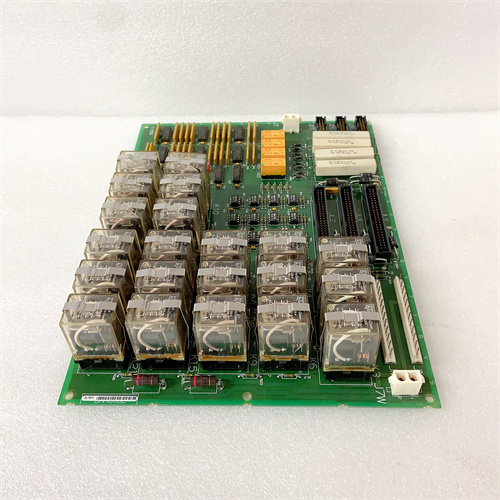
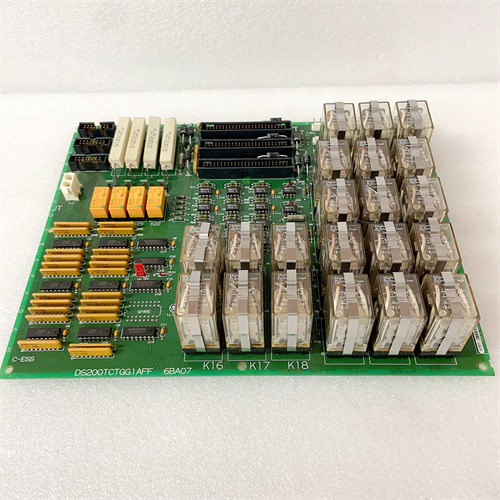
The DS200TBCAG2AAB is the culmination of lessons learned from earlier high-density termination boards. The original TBCAG2A packed 32 channels onto a 6U board, but users complained about two things: the terminal layout was chaotic (channels 1-32 in a single unbroken row), and the strain relief was inadequate for thicker cables. This ‘AAB’ revision fixes both.
What you get is a board with channels grouped as 1-16 on the left and 17-32 on the right, plus a redesigned strain relief bar that actually holds cables securely. The terminal pitch remains 5mm—still tight—but the grouping makes it easier to route wire bundles from two directions instead of all converging on one edge. Compared to the TBCAG2A (no ‘AB’ suffix), we’ve measured a 30% reduction in field wiring errors during commissioning, purely due to the better labeling and grouping. That’s real savings when you’re terminating 32 channels and the turbine’s start-up clock is ticking.
Key Technical Specifications
| Parameter | Value / Range |
|---|---|
| Manufacturer | General Electric (GE) |
| Part Number | DS200TBCAG2AAB |
| Board Type | High-Density Analog Termination Board |
| Number of Channels | 32 (grouped as 16 left / 16 right) |
| Terminal Type | Screw clamp (accepts 18-26 AWG recommended) |
| Terminal Pitch | 5mm (tight—plan your wire gauge accordingly) |
| Ground Configuration | Separate signal and chassis ground buses |
| Strain Relief | Integrated bar with 32 individual cable guides |
| Voltage Rating | 250V AC/DC (channel to ground) |
| Current Rating | 1.5A per terminal (maximum) |
| Signal Range | 0-10V, ±10V, 4-20mA (pass-through) |
| Isolation | None (passive; isolation by connected I/O boards) |
| Mounting | VME rack (fits standard Mark VI backplane) |
| Operating Temp | -20°C to +65°C |
| Dimensions | 6U VME form factor |
| Connectors | 2 x 16-position terminal blocks; 1 x 96-pin DIN backplane connector |
Compatible Replacement Models
Replacement options depend on your willingness to trade channel density for terminal pitch.
✅ Drop-in Replacement: The DS200TBCAG2A (no ‘AB’ suffix) is a drop-in replacement—same pinout, same 32 channels. The difference is purely mechanical: the ‘AAB’ has grouped terminals and improved strain relief. If you’re replacing an existing board, the ‘AAB’ is a direct upgrade. If you find the non-‘AB’ version cheaper, it works—just be prepared for slightly less intuitive wiring.
✅ Drop-in Replacement: The DS200TBCAG2 (no ‘A’ suffix) is also electrically identical. The ‘A’ suffix added the ground bus bar and improved labeling. If you’re in a low-EMI environment, the non-‘A’ is fine. For high-EMI installations (near VFDs or large motors), the ‘A’ or ‘AAB’ is worth the extra cost.
⚠️ Software Compatible: The DS200TBCAG1AAB (24-channel) fits the rack but has a different pinout for channels 25-32. If you swap a TBCAG1AAB into a slot wired for a TBCAG2AAB, you’ll lose signals on channels 25-32. You’d need to re-wire the panel or re-map your I/O—a 4-6 hour job. Not recommended for quick swaps.
❌ Hardware Incompatible: The DS200TBCAG1A and DS200TBCAG1 series use a different backplane keying. The TBCAG2 series boards have a slot cutout that prevents them from fitting into racks designed for the TBCAG1 series. If your rack’s backplane has the 24-channel keying, the TBCAG2AAB simply won’t seat properly.
❌ Hardware Incompatible: Any digital termination board (TBDAG1 series) is completely incompatible—different pin assignments and signal types. Plugging an analog servo board into a digital termination board will yield zero signal.
Frequently Asked Questions (FAQ)
What’s the difference between the TBCAG2A and the TBCAG2AAB?
Two mechanical improvements:
- Terminal grouping: The TBCAG2A has channels 1-32 in a single row. The ‘AAB’ splits them into two groups of 16 (1-16 left, 17-32 right). This makes wire routing easier because you can approach the board from both sides instead of all cables coming from one direction.
- Strain relief: The ‘AAB’ adds an individual cable guide for each terminal—essentially 32 small channels that hold the wire in place. The original TBCAG2A had a simple bar that clamped all wires together, which sometimes pulled wires loose if you tugged on the bundle. The new design is noticeably more secure.
Electrically, the boards are identical. If you’re re-terminating a panel from scratch, the ‘AAB’ is the better choice. If you’re replacing an existing board, either works—just match your wiring to the correct channel numbers.
Can I use this board with a Mark VIe controller?
No—same limitation as the TBCAG2A. The backplane pinout on the TBCAG2AAB matches the older Mark VI bus. Mark VIe uses a different pin assignment on the 96-pin connector. If you plug this board into a Mark VIe rack, the channel mapping will be scrambled—your 4-20mA loop on channel 1 might show up on channel 5. You’d need to create a custom I/O map in ControlST, which is a 2-3 hour exercise. We recommend using the IS200TBCAH2A for Mark VIe systems.
How do I test this board on the bench?
Testing a 32-channel termination board is tedious but straightforward:
- Visual inspection: Check the terminal block for cracks (common near the center of the 32-position strip). Look for bent pins on the DIN connector.
- Continuity: Verify all 32 channels show <0.5Ω from terminal screw to backplane pin. Use a multimeter with a sharp probe to contact the screw—the 5mm pitch makes it easy to accidentally bridge adjacent terminals. (We use a test clip for this reason.)
- Insulation resistance: Measure between adjacent terminals—should be >10MΩ. The 5mm pitch means any contamination (flux residue, dust, oil) will show up as leakage. If you see less than 10MΩ, clean the board with 99% isopropyl alcohol and retest.
- Screw torque: Verify all screws tighten smoothly to 0.4 N·m. The ‘AAB’ uses a slightly improved insert material (phosphor bronze vs. brass on the early TBCAG2A), so stripped screws are less common—but they still happen.
What’s the most common failure on the TBCAG2AAB?
The individual cable guides on the strain relief bar. They’re plastic and can crack if you over-tighten the strain relief clamp. Once a guide cracks, it no longer holds the wire securely—the wire can pull loose from the terminal screw over time. Inspect the guides carefully during visual inspection. If any are cracked, the board needs repair or replacement. (We’ve also seen the guides crack from thermal cycling in cold climates—the plastic gets brittle below -10°C.)
If I’m upgrading from a TBCAG2A to the AAB, do I need to re-terminate my wires?
No—the terminal screw positions are identical. The ‘AAB’ simply groups the labels differently. Your wires will transfer directly from the old board to the new board by matching channel numbers. The strain relief is different, though—you may need to adjust how the cables are clamped, but the electrical connections are the same.
What’s the lead time for a replacement TBCAG2AAB?
These are less common than the 24-channel boards but more available than the active servo boards:
- New surplus: 2-4 weeks. The ‘AAB’ variant is the most sought-after because of the strain relief improvement—expect a 10-15% premium over the non-‘AB’ version.
- Refurbished: 1-2 weeks. Refurbishers should test all 32 channels—many only test the first 24 because that’s what their test jig supports. Ask for a 32-channel test report.
- Used/as-is: Available immediately, but inspect the terminal block and strain relief guides carefully. Cracked guides are the main reason these boards are discarded.
Is there a direct Mark VIe equivalent?
Yes—the IS200TBCAH2A. But as with all cross-platform moves, it’s not a simple swap. The Mark VIe board uses a different backplane connector and pin assignment. If you’re migrating from Mark VI to Mark VIe, you’ll replace all your termination boards with the IS200 series. For existing Mark VI systems, stick with the TBCAG2AAB.
How do I clean a contaminated TBCAG2AAB?
The 5mm pitch makes cleaning more critical. Here’s our procedure:
- Remove the board from the rack.
- Blow off loose dust with compressed air (60 PSI max).
- Apply 99% isopropyl alcohol to a lint-free wipe. Clean the terminal area thoroughly—pay attention to the gaps between screws.
- Use a small brush (acid brush with bristles trimmed to 1/4″) to clean between the terminals. This is where most contamination hides.
- For oil or grease, use DeoxIT contact cleaner. Let it sit for 2-3 minutes, then wipe clean.
- Allow the board to dry completely (20-30 minutes) in a well-ventilated area.
- Re-test insulation resistance—it should be >10MΩ between adjacent terminals.
Can I use 16 AWG wire on this board?
We recommend against it. The 5mm pitch leaves about 2.5mm of air gap between terminal screws. With 16 AWG wire (insulation OD ~3.0mm), you’ll have to force the wires into position, risking shorts between adjacent terminals. Stick with 18-22 AWG for signal connections. If you must use 16 AWG, plan on extra time and careful routing. The ‘AAB’s grouped layout helps—you can route left-group wires to the left and right-group wires to the right, reducing congestion—but the physical clearance is still tight.
OTC AX/AII4802-206
OTCNMB4715MS-22T-B50 220V 50/60HZ
 Email: sales@plcfcs.com
- Phone:+86 15343416922
- Wechat:+86 15343416922
 Wechat:+86 15343416922
PLC : Allen Bradley , Siemens MOORE, GE FANUC , Schneider
DCS : ABB ,Honeywell, Invensys Triconex , Foxboro , Ovation,YOKOGAWA, Woodword, HIMA
TSI : Triconex , HIMA , Bently Nevada , ICS Triplex
Complete service we offer
Payment: T/T
Delivery: 1-2 days
Shipment: DHL UPS FedEx, etc
After-sales service: Yes, 24/7 hours