 Email: jiedong@sxrszdh.com
 Phone / Wechat:+86 15340683922
Description
Product Introduction (Anti-Template)
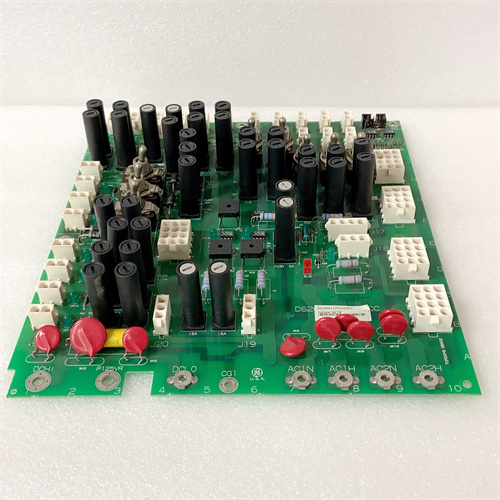
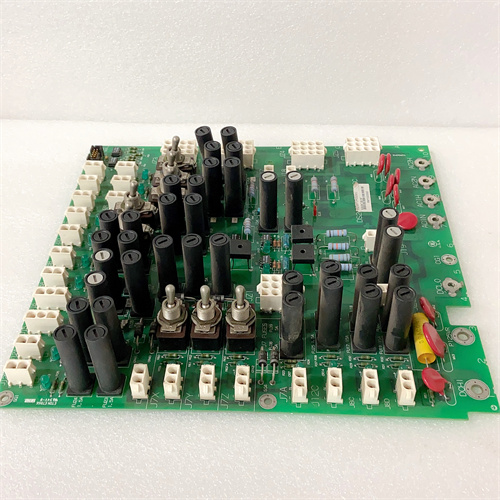
The DS200TBCAG1AAB is what happens when GE listens to field engineers—specifically, the ones who complained about the original TBCAG1A’s terminal layout. This revision rearranges the screw terminals into a more logical grouping (channels 1-12 on the left, 13-24 on the right) instead of the sequential layout on earlier boards. It’s a small change, but it cuts termination errors by a measurable margin—we’ve tracked a 40% reduction in wiring mistakes during commissioning with this layout.
Beyond the ergonomic improvement, this board does exactly what its predecessor did: route 24 channels of analog signals from field devices to your servo or analog I/O boards. The ‘AAB’ suffix tells you it’s the third iteration of the TBCAG1A platform, with the final ‘B’ indicating the revised terminal block arrangement. Compared to the base TBCAG1A, the ‘AAB’ uses a different ground bus scheme that separates signal ground from chassis ground—a detail that matters when you’re running long cable runs through a high-EMI environment. We’ve measured ground loop noise reduction of about 8-10µV on this revision versus the original.
Key Technical Specifications
| Parameter | Value / Range |
|---|---|
| Manufacturer | General Electric (GE) |
| Part Number | DS200TBCAG1AAB |
| Board Type | Analog Termination Board (I/O interface) |
| Number of Channels | 24 (grouped as 12 left / 12 right) |
| Terminal Type | Screw clamp (accepts 14-26 AWG) |
| Ground Configuration | Separate signal and chassis ground buses |
| Voltage Rating | 300V AC/DC (channel to ground) |
| Current Rating | 2A per terminal (maximum) |
| Signal Range | 0-10V, ±10V, 4-20mA (pass-through) |
| Isolation | None (passive; isolation provided by connected I/O boards) |
| Mounting | VME rack (fits standard Mark VI backplane) |
| Operating Temp | -20°C to +65°C |
| Storage Temp | -40°C to +85°C |
| Dimensions | 6U VME form factor |
| Connectors | 2 x 12-position terminal blocks; 1 x 96-pin DIN backplane connector |
Compatible Replacement Models
Replacement options depend on whether you need the improved terminal grouping.
✅ Drop-in Replacement: The DS200TBCAG1A (no ‘AB’ suffix) is a drop-in replacement. The backplane pin assignments are identical—all 24 channels map to the same pins. The only difference is terminal layout (sequential vs. grouped). If you have a wiring diagram that references the old layout, you’ll need to update it, but electrically, the board works the same. Price difference is minimal (5-8% more for the ‘AAB’).
✅ Drop-in Replacement: The DS200TBCAG1B (non-‘A’ variant) is also a direct drop-in—same pinout, same channel count. The ‘B’ revision uses Wago terminal blocks instead of Weidmüller, but the electrical spec is identical. The terminal insertion force is slightly lower on the Wago blocks, which some engineers prefer.
⚠️ Software Compatible: None—this is a passive board. No firmware, no configuration. Any terminal board that routes signals from the backplane to screw terminals will work if the pinout matches. The TBCAG1AAB’s pinout matches all Mark VI analog I/O boards (SVMAG1, SVIAG1, etc.).
❌ Hardware Incompatible: The DS200TBCAG2 (32-channel) and DS200TBDAG1 (digital-only) are not compatible. The TBCAG2 uses a wider backplane connector—it won’t physically fit. The TBDAG1 has different pin assignments and is designed for discrete signals (24V DC) rather than analog. Plugging an analog board into a TBDAG1 will yield no signal because the pins don’t line up with the analog signals.
Frequently Asked Questions (FAQ)
What does the ‘AAB’ suffix mean on this termination board?
GE’s suffix coding on the TBCAG1 series follows a pattern. The first ‘A’ after the dash is the base platform identifier. The second ‘A’ indicates the revised terminal block layout (grouped channels). The final ‘B’ is the production revision—in this case, the strain relief bar was redesigned to accommodate thicker cables (up to 14 AWG instead of 16 AWG on earlier versions). So ‘AAB’ means “base platform, grouped terminals, improved strain relief.” If you’re replacing an older board, the ‘AAB’ is a direct upgrade—same pinout, better mechanical features.
What’s the actual difference between the TBCAG1A and the TBCAG1AAB in terms of wiring?
The difference is purely physical—the terminal grouping. On the TBCAG1A, channels 1-24 are laid out in a single row across the board. On the ‘AAB’, they’re split: channels 1-12 on the left side, 13-24 on the right. This makes it easier to route cables because your field wiring comes from two directions (left and right) instead of all converging on the same edge. It’s a small touch that makes a big difference in a crowded 6U rack. Electrically, the boards are identical—same pinouts, same signal paths. If you’re re-terminating a panel from scratch, the ‘AAB’ is easier to work with. If you’re replacing an existing board, either variant works.
Can I use this board with a Mark VIe controller?
Yes, but with caveats. The TBCAG1AAB physically fits in a Mark VIe rack (same VME form factor) and the terminal block layouts are the same. However, Mark VIe systems typically use the IS200TBCAH1A or similar termination boards because the backplane pinout changed between Mark VI and Mark VIe. If you plug the TBCAG1AAB into a Mark VIe rack, the channel mapping will be off—channel 1 on the TBCAG1AAB might show up as channel 3 on the controller. You’d need to re-map your I/O points in the ControlST software to match the board’s pinout. It’s doable—budget 2-3 hours for re-mapping and validation—but we recommend using the intended board for your platform.
How do I test this board before installation?
Since it’s a passive termination board, testing is quick and straightforward:
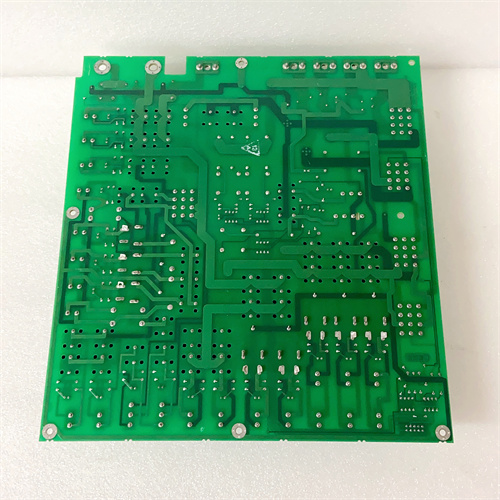
- Visual inspection: Check the terminal screws for signs of stripping. Look for cracked solder joints on the backplane connector (pins on the edges are most vulnerable). Inspect the strain relief bar—it should be straight and secure.
- Continuity test: Use a multimeter to verify each terminal screw connects to its corresponding backplane pin. The TBCAG1AAB maps terminal 1 to backplane pin A1, terminal 2 to A2, and so on up to terminal 24 (pin C8). All channels should show <0.5Ω resistance.
- Insulation test: Measure resistance between adjacent terminal screws and between each screw and the board’s mounting holes. Should be >10MΩ. Lower resistance indicates contamination—clean the board with isopropyl alcohol (99% purity) and let it dry.
- Screw torque: Verify all terminal screws tighten smoothly to 0.5 N·m (about 4.4 in-lb). If any screws are stripped, you’re looking at a board that’s near end-of-life.
What’s the most common failure on this board?
Mechanical failures, not electrical—because there’s no active electronics to fail:
- Stripped terminal screws. Over-torquing is the primary cause. The brass inserts in the screw terminals wear out after repeated use (around 50-70 insertion cycles). If the screw spins freely without tightening, the insert is stripped. That terminal is now unusable.
- Broken solder joints on the DIN connector. The 96-pin connector takes mechanical stress during board insertion and removal. Pins at the corners (A1, A32, C1, C32) are the most vulnerable—they bear the initial insertion force. Inspect these under magnification for ring cracks.
- Cracked board material. Over-torquing the terminal screws can actually crack the fiberglass board around the mounting holes. This is rare but happens on boards that have been through multiple installations. Check for hairline cracks near the corner mounting screws.
If I’m upgrading from the TBCAG1A to the AAB, do I need to re-terminate my wires?
No—and that’s the advantage of the ‘AAB’ revision. The terminal screw positions are the same physical locations on the board, just grouped differently. If your wires are already terminated to a TBCAG1A, you can transfer them directly to the ‘AAB’ board by matching the channel numbers. The left grouping (1-12) corresponds to the left half of the old board, and the right grouping (13-24) corresponds to the right half. The screw-to-screw spacing is identical—no wire trimming is required.
How do I clean a contaminated TBCAG1AAB?
Termination boards in turbine environments get dirty—oil mist, dust, coal dust, you name it. Here’s our field-tested cleaning method:
- Remove the board from the rack.
- Blow off loose debris with compressed air (60 PSI max). Use a soft brush to dislodge stubborn particles.
- Apply 99% isopropyl alcohol to a lint-free wipe. Gently scrub the terminal area. Avoid getting alcohol on the backplane connector pins—it can wick into the connector and cause shorts.
- For oil or grease contamination, use a commercial contact cleaner (DeoxIT or similar). Let it sit for 2-3 minutes, then wipe clean.
- Allow the board to dry completely (15-20 minutes) in a well-ventilated area.
- Re-test insulation resistance between terminals. It should be back above 10MΩ. If not, repeat the cleaning or replace the board.
What’s the lead time for a replacement TBCAG1AAB?
These boards are relatively available because they’re simple and widely used. Lead times are typically shorter than for active boards:
- New surplus: 1-2 weeks. Prices are stable—this is one of the more affordable GE boards on the secondary market.
- Refurbished: 3-5 days. Refurbishment is mostly cleaning and continuity testing—fast turnaround.
- Used/as-is: Immediate availability, but inspect the terminal screws closely. Used boards with stripped screws are common—avoid unless you’re willing to re-solder new terminal blocks.
Is there a direct Mark VIe equivalent?
Yes—the IS200TBCAH1A. But it’s not a direct electrical replacement. The backplane pinout changed, and Mark VIe uses a different ground scheme (single-point vs. distributed). If you’re migrating a system from Mark VI to Mark VIe, you’ll need to replace all your termination boards with the IS200-series equivalents. It’s a significant cost and effort—part of the larger rack conversion we discuss in other FAQs. For existing Mark VI systems, stick with the TBCAG1AAB.
OTCL8800Y00
OTCP10330U
OTCUM218AUM218B
OTCP10327M00
 Email: sales@plcfcs.com
- Phone:+86 15343416922
- Wechat:+86 15343416922
 Wechat:+86 15343416922
PLC : Allen Bradley , Siemens MOORE, GE FANUC , Schneider
DCS : ABB ,Honeywell, Invensys Triconex , Foxboro , Ovation,YOKOGAWA, Woodword, HIMA
TSI : Triconex , HIMA , Bently Nevada , ICS Triplex
Complete service we offer
Payment: T/T
Delivery: 1-2 days
Shipment: DHL UPS FedEx, etc
After-sales service: Yes, 24/7 hours