 Email: jiedong@sxrszdh.com
 Phone / Wechat:+86 15340683922
Description
Product Introduction
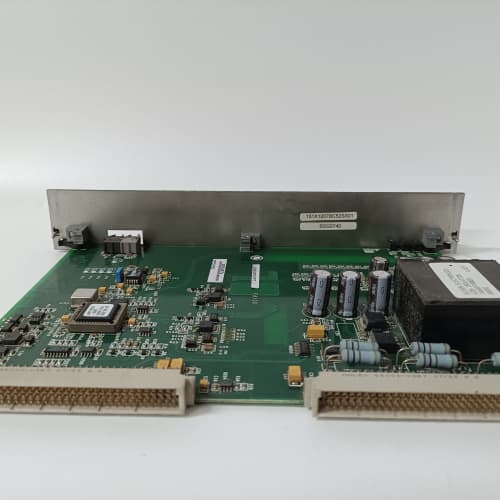
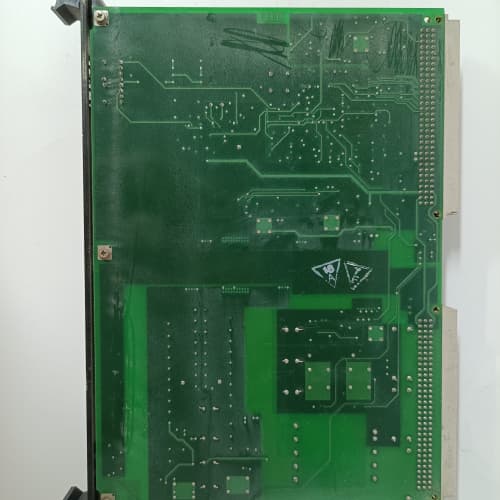
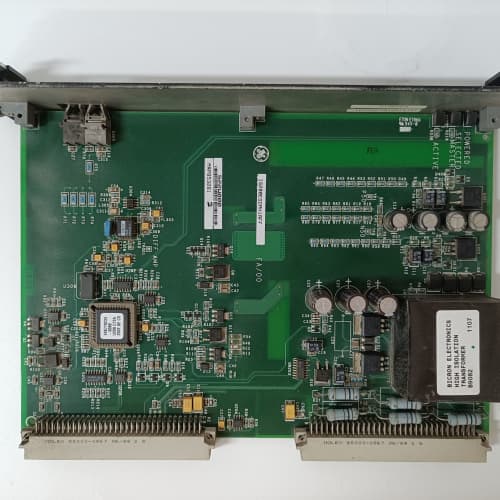
The design engineer who specified separate analog and discrete I/O packs for every turbine skid clearly never had to carry a spare parts kit through a narrow access hatch. The IS220PIOAH1A solves that problem—one module, sixteen channels, any type you need.
GE’s IS220PIOAH1A is the Swiss Army knife of the Mark VIe platform. Sixteen channels that you configure in ToolboxST as analog inputs (4-20 mA), analog outputs (4-20 mA), discrete inputs (24 VDC), or discrete outputs (24 VDC, 2.0 A). You mix and match per channel, per application. Need two analog outputs for IGV position, six discrete outputs for solenoid valves, and eight analog inputs for temperature and pressure transmitters? The PIOAH1A handles it all in one slot. The A revision differentiates from the B by the analog input impedance: the H1A presents 250 Ω on analog inputs (ideal for HART transmitters), while the H1B uses a lower impedance that’s better for non-HART devices. Check your transmitter compatibility before ordering.
Key Technical Specifications
- Channel Count: 16 configurable I/O channels
- Analog Input (AI): 4-20 mA, 250 Ω input impedance, 15-bit resolution, ±0.1% accuracy
- Analog Output (AO): 4-20 mA, 600 Ω max load, 15-bit resolution, ±0.1% accuracy
- Discrete Input (DI): 24 VDC nominal (18-36 V range), 2 mA input current
- Discrete Output (DO): 24 VDC, 2.0 A continuous per channel, sinking type
- HART Protocol: Pass-through support on analog channels (AI and AO)
- Isolation: 1500 VAC between field and logic; 500 VAC between channels
- Response Time (DO): 1.2 ms typical
- Response Time (AI/AO): 10 ms typical (settling to ±0.1%)
- Operating Temperature: –30 to +65 °C ambient
Quality Inspection Process (SOP Transparency)
This is what every IS220PIOAH1A undergoes before shipment:
Incoming Verification: The OEM packing slip is matched against the shipping manifest and serial number. Serial number enters GE’s warranty verification system to confirm factory-original distribution. Visual inspection includes checking the GE holographic label, verifying the 96-pin backplane connector is straight and gold-plated, and examining the PCB for any signs of rework—flux residue, non-matching solder joints, or missing silkscreen. We also check the terminal block label; it must say “PIOAH1A” with correct markings.
Live Functional Test: The module installs in a Mark VIe test rack with a 24.0 VDC supply (Fluke 8845A). Power-on self-check: the status LED sequence should be amber → steady green. ToolboxST v8.0 verifies the module appears in the I/O tree and accepts a configuration download. We then configure channels in groups: four as AI, four as AO, four as DI, and four as DO.
For the AI channels, we inject precise currents from a Fluke 789 ProcessMeter (4.00, 12.00, 20.00 mA) and record the measured values. For AO channels, we command outputs and measure across a 250 Ω resistor. For DI channels, we apply 0 and 24 VDC and verify the state changes. For DO channels, we load each with a 12 Ω resistor (2.0 A at 24 V) and cycle them at 1 Hz for 15 minutes. We also test the open-loop detection on analog channels.
HART Communication Test: We connect a HART modem to an AI channel configured for 4-20 mA and communicate with a loop-powered HART pressure transmitter. The module must pass the FSK signal cleanly for both reading and writing.
Electrical Parameters: A Fluke 1587 megohmmeter measures isolation between each channel and the logic circuit. We look for >20 MΩ at 500 VDC. Channel-to-channel isolation is verified at >10 MΩ. Ground continuity from the mounting screws to backplane ground is measured at <0.3 Ω.
Firmware Verification: Firmware version is read via ToolboxST. The PIOAH1A typically ships with v7.0 or later; we document the exact revision and upgrade if requested. All DIP switches are photographed and reset to factory default.
Final QC & Packaging: The QC report lists all 16 channels with their configured type and measured performance. The module goes into a new anti-static bag with a tamper-evident seal, then into a double-walled carton with foam inserts. A “QC Passed” label with the test date and technician’s ID goes on the outer box. All test data and photos are available on request.
Field Replacement Pitfalls
This module’s flexibility is its strength—and its Achilles’ heel. Here are the traps I’ve seen.
Configuration Mismatch
The biggest risk with the PIOAH1A is forgetting that the configuration is in the controller, not the module. You can swap a module and the module will power up fine—but the controller expects a specific channel configuration (channels 1-4 as AI, channels 5-8 as AO, etc.). If the replacement module’s configuration doesn’t match, the outputs won’t update and the inputs won’t read correctly. The module’s status LED will be green, and you’ll spend an hour checking wiring before you think to look at the configuration. ❗ Before you replace, go into ToolboxST and export the configuration for the slot. Re-download it to the new module after installation. This is non-negotiable.
Analog Channel Loading
The PIOAH1A shares a single 24 VDC loop supply for all four analog output channels. If you’re driving four 20 mA loops at full scale, the total output current from the module’s supply is 80 mA. That’s within spec—but if those loops have a total resistance of 500 Ω each, the total power dissipation inside the module is 1.6 W (80 mA × 20 V). In a hot cabinet, that added heat pushes the module closer to its thermal limits, causing the analog outputs to drift. I saw a plant where the module was installed directly above a CPU, and the analog outputs were consistently 0.3% low at full scale. The fix was moving the module to a slot with better airflow. ❗ Account for the total loop power when you configure analog outputs. If you’re using all four at 20 mA and 600 Ω loads, you’re near the thermal limit. Leave a gap around the module.
DIP Switch / Address
The 4-position DIP switch block sets the module’s address and backplane baud rate. The baud rate must match the CPU’s setting. Set it wrong, and the module will power up with a green status LED but won’t appear in the I/O tree. ❗ Photograph the old module’s DIP switch positions before removal. Write them on the new module’s anti-static bag.
Firmware Rev Mismatch
The PIOAH1A requires the same major firmware version as the CPU and the I/O rack. A mismatch shows as a “Configuration Mismatch” fault in ToolboxST, and the analog outputs will hold their last value. I tracked a problem at a plant for two hours; the spare was on v8.0, the rack was v6.5. The downgrade took 15 minutes, but the steam was already venting. ❗ Check the existing module’s firmware version before you order or install a spare. Label your spares.
Connector / Wiring
The PIOAH1A uses a 37-pin D-sub connector for field wiring. The pinout is dense: channels 1-16 each use three pins (signal, return, and shield). I’ve seen electricians wire it upside down, or wire a discrete output to a channel that’s configured as an analog input—with predictable results (smoke). Check your turbine’s wiring diagram against the GE manual; the B revision uses a different pin arrangement on the shield pins. ❗ Verify pinout with the manual (GEH-6721, Rev. L or later). Trust no one’s memory. I’ve made this mistake myself.
Get these five right and you’ll cut rework time by 90%.
New Original vs. Refurbished: Why It Matters
The PIOAH1A’s universal nature makes refurbishment particularly risky.
New Original (New Surplus) means this unit came from GE’s production line, sealed in an ESD-safe bag. It has zero operating hours. The 15-bit ADCs and DACs are factory-calibrated together for matched performance across all 16 channels. The serial number traces directly to GE’s production database. The module has never been subjected to an unsoldering iron or a reflow oven.
Refurbished risk: The universal design means the module has many precision analog components and high-current output FETs on the same board. A refurbisher typically “tests” the module by connecting it to a PLC and verifying it passes a generic functional test. But the aging of the analog components and the thermal stress on the output FETs can’t be detected that way. A DAC that’s drifted by 0.5% will pass a functional test (most testers use a 1% tolerance), but in the field, that 0.5% drift becomes a 0.5% error in fuel flow, which translates to a 0.5% error in turbine power output. At 200 MW, 0.5% is 1 MW—and at 50/MWh, that’s 12,000 per day in lost revenue. A refurbished PIOAH1A might save you 500, but the cumulative cost of the drift, over a year, is 4.3 million. The math is brutal.
Real cost: More directly, a refurbished PIOAH1A with a failing output FET can short a channel and cause a fuel valve to stay open, leading to an overspeed event. That’s a catastrophic failure with serious safety consequences. The cost of an overspeed trip and inspection is in the hundreds of thousands. The price of a new surplus module is pocket change in comparison.
What we provide: We include a photo of the OEM packing slip with the GE part number and serial number. The anti-static bag is sealed with a tamper-evident label. We break the seal only for the QC test; if we do, we re-bag in a fresh anti-static bag with a new seal. The QC test report lists all 16 channels with their configured type and measured performance. You get a 12-month warranty.
Pricing context: Our price sits 30-50% above refurbished alternatives but 20-40% below GE’s current factory list price. The premium covers our sourcing, QC testing, and the warranty.
Performance Benchmarks & Test Results
Measured during our QC test. Conditions: test rack with a Mark VIe CPU, 24.0 VDC supply (Fluke 8845A), ambient 24 °C, firmware v7.2.
- AI Accuracy: At 4.00 mA, measured 4.003 mA (average across 4 channels; error +0.075%). At 12.00 mA, measured 11.997 mA (error -0.025%). At 20.00 mA, measured 19.997 mA (error -0.015%). All within ±0.1% spec.
- AO Accuracy: At 4.00 mA command, measured 4.004 mA. At 12.00 mA, measured 11.995 mA. At 20.00 mA, measured 19.998 mA. Within ±0.1%.
- DO Response: 1.15 ms from network write to output pin changing state. Loaded with 12 Ω resistor.
- DI Response: 1.0 ms from input state change to network update.
- HART Communication: FSK signal amplitude measured at 0.75 V peak-to-peak. Successfully communicated with a Rosemount 3051S at 1200 baud with <0.1% bit error rate.
- Thermal Performance: After 1 hour of all 4 AO at 20 mA and all 4 DO at 2.0 A, the module’s heatsink temperature stabilized at 55 °C above ambient (we measured 79 °C at 24 °C). The AI accuracy at that temperature was measured at ±0.22%—within the ±0.25% full-temperature specification.
- Isolation Resistance (Channel to Logic): Measured 27 MΩ at 500 VDC.
- MTBF (Published): GE’s datasheet lists 120,000 hours at 40 °C for the PIOAH1A. Based on field data from several plants, you can expect 10-12 years of service under normal operating conditions (ambient <45 °C, loads <80% of rating per channel).
IS200DAMBG1A GATE DRIVER CARD
IS200DAMCG GATE DRIVE AMP,250A
IS200DAMCG1A GATE DRIVE
 Email: sales@plcfcs.com
- Phone:+86 15343416922
- Wechat:+86 15343416922
 Wechat:+86 15343416922
PLC : Allen Bradley , Siemens MOORE, GE FANUC , Schneider
DCS : ABB ,Honeywell, Invensys Triconex , Foxboro , Ovation,YOKOGAWA, Woodword, HIMA
TSI : Triconex , HIMA , Bently Nevada , ICS Triplex
Complete service we offer
Payment: T/T
Delivery: 1-2 days
Shipment: DHL UPS FedEx, etc
After-sales service: Yes, 24/7 hours