 Email: jiedong@sxrszdh.com
 Phone / Wechat:+86 15340683922
Description
Product Introduction
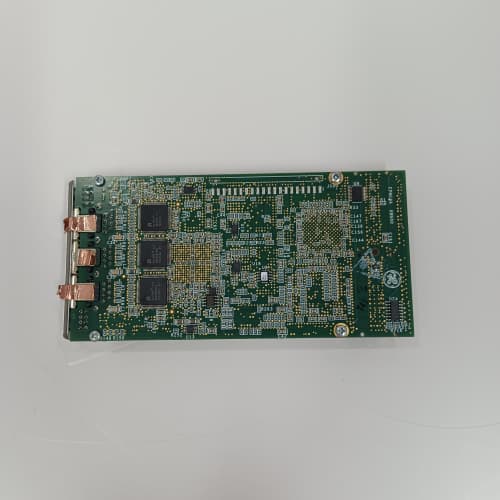
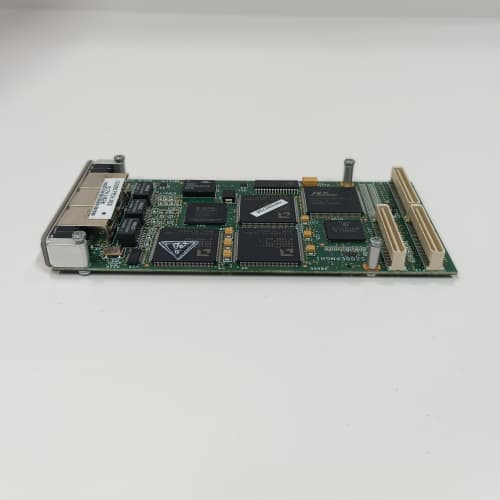
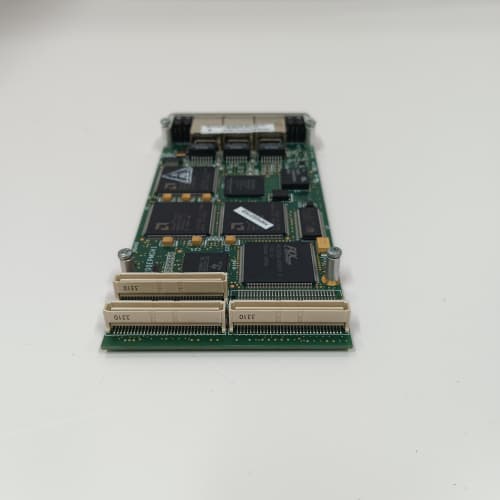
The GE IS200VTURH1BAC is a VMEbus turbine speed monitoring module from the Mark VIe Speedtronic series, purpose-built for critical speed measurement and overspeed protection in gas and steam turbine applications. This board interfaces with magnetic pickups (variable reluctance) or proximity probes to measure turbine shaft speed, acceleration, and overspeed conditions—the most critical protection function in any turbine control system. The “BAC” suffix indicates a heavy conformal coated board with enhanced moisture, chemical, and contaminant resistance for harsh environments, combined with the enhanced H1B revision features.
What sets the H1BAC revision apart is its triple-redundant speed measurement architecture, dedicated overspeed trip logic, 0.5 ms response time for trip execution (twice as fast as H1A), enhanced diagnostic coverage including frequency tracking and signal quality monitoring, and the thicker urethane or acrylic conformal coating that provides superior protection in harsh environments. The board features three independent speed input channels with automatic sensor fault detection, voting logic for fault-tolerant speed measurement, and a dedicated hardware-based overspeed trip that operates independently of software. For system integrators requiring the highest integrity speed monitoring and overspeed protection with advanced diagnostics and enhanced environmental protection in aggressive environments, this board is the direct OEM solution.
Key Technical Specifications
| Parameter | Value |
|---|---|
| Speed Inputs | 3 independent channels (redundant) |
| Sensor Types | Magnetic pickup (variable reluctance), proximity probe |
| Input Signal Range | 20 mV to 100 V peak (magnetic), 0–24 V (proximity) |
| Frequency Range | 0.5 Hz to 25 kHz (30–1,500,000 RPM typical) |
| Speed Resolution | 0.05 RPM at 3,600 RPM |
| Acceleration Measurement | Continuous per-channel monitoring |
| Overspeed Trip | Dedicated hardware trip output (independent of software) |
| Trip Response Time | <0.5 ms from detection to trip output |
| Voting Logic | 2oo3 (two-out-of-three) or 1oo3 (software selectable) |
| Sensor Fault Detection | Open-circuit, short-circuit, low signal, no signal |
| Signal Quality Monitoring | Frequency tracking, amplitude monitoring |
| Speed Setpoints | 4 per channel (alert, danger, overspeed, acceleration) |
| Digital Outputs | 2 dedicated overspeed trip relays (Form C), 2 alarm relays |
| Conformal Coating | Heavy urethane/acrylic, MIL-I-46058C compliant, thickness 0.05–0.13 mm |
| Operating Temperature | 0 to +55°C (ambient) |
| Storage Temperature | −40 to +85°C |
| Humidity Resistance | 95% RH non-condensing, continuous |
| Chemical Resistance | Resists mild acids, alkalis, and solvents |
| Power Draw | 5 VDC @ 0.85 A typical (4.25 W) |
| Firmware | Requires Mark VIe Toolkit v6.0 or higher |
| Connectors | Front panel 37-pin D-sub (speed inputs), 9-pin (relay outputs) |
Key Selling Points & Differentiators
- Heavy Conformal Coating for Extreme Environments: The “BAC” suffix provides a thicker, more robust coating (0.05–0.13 mm) that protects against high humidity, salt fog, and chemical exposure. This is the preferred variant for offshore platforms, coastal installations, desalination plants, and chemical processing facilities where airborne contaminants are a serious concern.
- Enhanced Trip Response: <0.5 ms from detection to trip output—twice as fast as H1A, providing an extra margin of safety for overspeed events.
- Triple-Redundant Architecture: Three independent speed input channels with voting logic—ensures uninterrupted speed measurement even with a single sensor failure.
- Hardware Overspeed Trip: Dedicated hardware-based trip output that operates independently of software and the main processor—provides the highest level of integrity for overspeed protection.
- Expanded Frequency Range: 0.5 Hz to 25 kHz—supports very low-speed measurements for startup monitoring and very high-speed applications.
- Improved Low-Speed Detection: 20 mV sensitivity vs. 50 mV on H1A—better detection during startup and low-speed conditions.
- Enhanced Diagnostic Coverage: Signal quality monitoring including frequency tracking and amplitude monitoring for predictive maintenance.
- Live Test Verified: Every board undergoes a 48-hour burn-in with all 3 channels exercised across the full frequency range. We log speed accuracy, trip response time, voting logic behavior, and diagnostic detection thresholds. Coated boards are visually inspected for complete coverage, thickness consistency, and absence of bubbles, voids, or pinholes.
- 90-Day Warranty: Covers functional defects. If it fails under normal operating conditions, we replace it. No restocking fee for verified returns.
- OEM Traceability: All units come from audited surplus channels with original GE anti-static bags and serialized labels. No clones, no pull-and-refurbish from unknown sources.
- Configuration Backup Service (Free): Upon request, we extract and archive your existing board’s firmware version, speed setpoints, and configuration before shipment.
Frequently Asked Questions (FAQ)
Q: What does the “BAC” suffix mean on IS200VTURH1BAC?
A: The “BAC” indicates heavy conformal coating combined with the H1B enhanced revision. Specifically, it means the board has a thicker urethane or acrylic conformal coating (0.05–0.13 mm) applied to the entire PCB assembly for maximum moisture, chemical, and contaminant protection, along with all H1B enhancements (faster trip response, expanded frequency range, signal quality monitoring, expanded setpoints). The coating progression is: H1A (non-coated, standard speed monitoring); H1B (non-coated, enhanced diagnostics and speed); H1BAA/BAB (coated H1B); and H1BAC (heavy coated H1B). Electrically and functionally they are identical in terms of speed monitoring and trip functionality. The coating adds protection; the H1B enhancements add diagnostics, speed, and capability.
Q: What is the difference between IS200VTURH1BAB and IS200VTURH1BAC?
A: The BAB has standard acrylic coating (0.02–0.05 mm); the BAC has heavy urethane/acrylic coating (0.05–0.13 mm). The BAC provides significantly more protection against humidity, salt spray, and chemical exposure. If your cabinet is in a coastal area, offshore platform, or chemical processing environment, the BAC is strongly recommended. In a moderate humidity environment, BAB is sufficient.
Q: What is the difference between IS200VTURH1B and IS200VTURH1BAC?
A: The H1B is non-coated with enhanced diagnostics and speed; the H1BAC has the same H1B enhancements plus heavy conformal coating. The coating protects against humidity, salt fog, and chemical vapors. If your cabinet is in a coastal area, offshore platform, or harsh environment, the BAC variant is strongly recommended. In a clean, climate-controlled room, the H1B is sufficient and costs less. If your existing board is coated, you must replace it with a coated board (BAC, BAA, or BAB) because the uncoated version will fail faster in that environment.
Q: What is the difference between IS200VTURH1A and IS200VTURH1BAC?
A: The H1BAC is a significant upgrade over H1A: twice as fast trip response (<0.5 ms vs. <1 ms), expanded frequency range (0.5–25 kHz vs. 1–20 kHz), improved low-speed sensitivity (20 mV vs. 50 mV), expanded setpoints (4 vs. 2 per channel), enhanced diagnostic coverage including signal quality monitoring, and heavy conformal coating. The H1BAC also requires Mark VIe Toolkit v6.0 or higher vs. v5.0 for H1A. If you need faster response, better low-speed detection, advanced diagnostics, or environmental protection, choose the H1BAC.
Q: Does the heavy coating affect speed measurement accuracy, trip response time, or diagnostics?
A: Good question. The coating adds about 0.1 mm to the board thickness, which does not affect VME slot fitment—clearances are designed for it. Speed measurement accuracy, trip response time, diagnostic coverage (including signal quality monitoring), and setpoint performance are identical to the non-coated H1B. The coating does not affect the electrical characteristics of the analog or digital circuitry—it only provides environmental protection. Do not remove the coating or scrape it off—it voids the warranty and compromises protection.
Q: What types of speed sensors does this board support?
A: The VTURH1BAC supports two sensor types:
- Magnetic pickup (variable reluctance): Generates a sine wave proportional to speed. Requires no external excitation. Input range 20 mV to 100 V peak (improved low-end sensitivity).
- Proximity probe: Requires external signal conditioner (typically 24 VDC, provides a voltage output proportional to speed). Input range 0–24 V.
Each channel is software configurable for sensor type and sensitivity. The improved low-end sensitivity (20 mV vs. 50 mV) provides better detection during startup and low-speed conditions.
Q: Why is the hardware overspeed trip important?
A: The hardware overspeed trip operates entirely outside of the software and main processor. Even if the VPRO processor crashes or the software locks up, the VTURH’s dedicated hardware will detect an overspeed condition and assert the trip output within 0.5 ms. This is a fundamental safety requirement for turbine control systems—you cannot rely on software alone for overspeed protection.
Q: What is the voting logic and why is it important?
A: The VTURH1BAC uses 2oo3 voting logic—the board compares the three speed readings and requires at least two of three channels to agree on the speed value. This prevents a single failed sensor from causing a false trip or missing a genuine overspeed event. You can also configure 1oo3 voting (any single channel triggers a trip) for applications where sensor redundancy is not required. We recommend 2oo3 for most turbine applications.
Q: What is the signal quality monitoring feature?
A: The H1BAC continuously monitors the frequency and amplitude of each speed signal. If the signal quality degrades—for example, the amplitude drops, the frequency becomes unstable, or noise appears—the board flags a diagnostic warning before it causes a measurement error or false trip. This enables predictive maintenance and prevents unexpected sensor failures.
Q: Is this board hot-swappable?
A: No. The Mark VIe VME backplane does not support live insertion. You must de-energize the rack, ground yourself, and wait 30 seconds for bulk capacitors to discharge. The VTURH handles critical protection I/O—pulling it while powered could cause inadvertent trips or damage to sensors. Don’t risk it.
Q: What is the typical lead time for this part?
A: We stock these on the shelf—usually ship within 24 hours of order placement and payment confirmation. For international orders, add 3–5 days for customs. If you need expedited (overnight air), we can do that, but you’ll need to coordinate with our logistics team for the cut-off time.
Q: Does this board work with the newer Mark VIeS (SIL-rated) cabinets?
A: To be direct: no. The IS200VTURH1BAC is not SIL-certified. It’s meant for standard Mark VIe industrial control. The SIL-rated systems use the IS220VTURH (with additional redundancy, diagnostic coverage, and separate safety shutdown path). Mixing them violates your site’s safety integrity level. If you’re in a SIL environment, we can source the correct variant but it will have a different model number.
Q: What’s your return policy if this doesn’t solve my speed monitoring or overspeed protection issue?
A: If the board is electrically functional (passes our QC test) but doesn’t correct your fault, we’ll accept a return within 30 days provided the board shows no physical damage and the connectors are intact. We do charge a 15% restocking fee if the fault was due to sensor wiring issues, configuration errors, or toolkit compatibility problems. We’ll work with you over the phone or email to diagnose the problem before we ship—our goal is to get you running, not to ship boxes back and forth.
DS200TCDAF1BCI SOFTWARE PROM SET
DS200TCDAH1B DIG. I/O BD. CONF. COAT
DS200TCDAP1BCJ SOFTWARE PROM SET
 Email: sales@plcfcs.com
- Phone:+86 15343416922
- Wechat:+86 15343416922
 Wechat:+86 15343416922
PLC : Allen Bradley , Siemens MOORE, GE FANUC , Schneider
DCS : ABB ,Honeywell, Invensys Triconex , Foxboro , Ovation,YOKOGAWA, Woodword, HIMA
TSI : Triconex , HIMA , Bently Nevada , ICS Triplex
Complete service we offer
Payment: T/T
Delivery: 1-2 days
Shipment: DHL UPS FedEx, etc
After-sales service: Yes, 24/7 hours