 Email: jiedong@sxrszdh.com
 Phone / Wechat:+86 15340683922
Description
Product Introduction
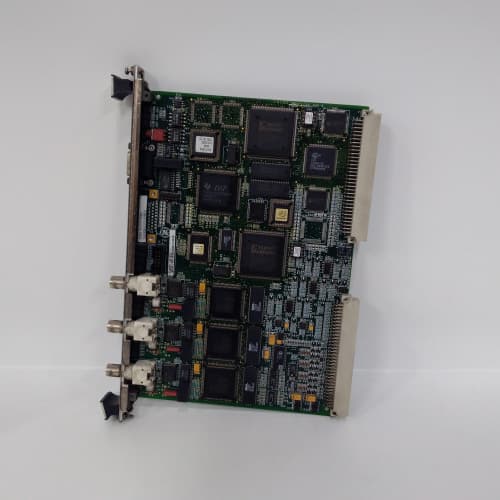
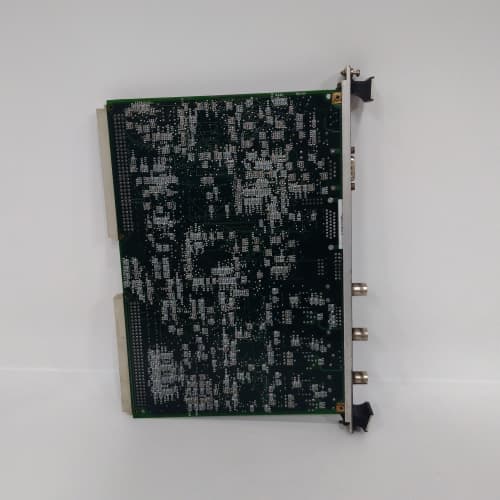
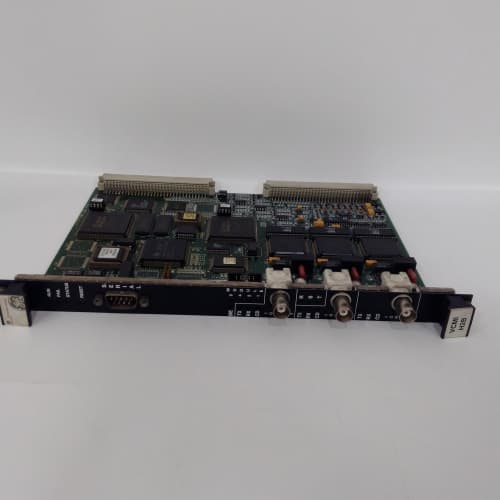
The GE IS200VRTDH1B is a VMEbus RTD input module from the Mark VIe Speedtronic series, purpose-built for precision temperature measurement in turbine control applications. This board interfaces with platinum RTD sensors (typically Pt100) to monitor bearing temperatures, exhaust gas temperatures, cooling water inlet/outlet, and other critical thermal parameters required for turbine protection and performance optimization.
What sets the H1B revision apart is its 16-channel capacity, software-configurable excitation current, and built-in lead resistance compensation for accurate 3-wire and 4-wire measurements. The module delivers 16-bit resolution with better than ±0.1°C accuracy across the industrial temperature range, with built-in diagnostic channels for open-circuit and short-circuit detection. For system integrators maintaining Mark VIe cabinets, this board is the direct OEM solution for reliable temperature acquisition—no external signal conditioners or custom wiring required.
Key Technical Specifications
| Parameter | Value |
|---|---|
| Input Channels | 16 differential RTD inputs |
| Sensor Types | Pt100 (DIN/IEC 60751), Ni120 (selectable) |
| Wiring Support | 3-wire and 4-wire (software selectable per channel) |
| Input Range | −200 to +850°C (Pt100) |
| Resolution | 16-bit (0.01°C typical) |
| Accuracy | ±0.1°C at 25°C ambient, ±0.2°C over full temperature range |
| Excitation Current | 0.5 mA or 1.0 mA (software selectable) |
| Lead Resistance Compensation | Up to 20 Ω per lead (3-wire) |
| Input Protection | Series resistors and TVS diodes, withstands 30 VDC continuous |
| Open/Short Detection | Per-channel diagnostics |
| Scan Rate | 200 ms typical for all 16 channels (12.5 ms per channel) |
| Operating Temperature | 0 to +55°C (ambient) |
| Storage Temperature | −40 to +85°C |
| Power Draw | 5 VDC @ 0.5 A typical (2.5 W) |
| Firmware | Requires Mark VIe Toolkit v5.0 or higher |
| Connectors | Front panel 50-pin D-sub (two 25-pin channels) |
Key Selling Points & Differentiators
- High Channel Density: 16 RTD inputs on a single VME slot—reduces chassis space requirements compared to alternative modules.
- Software-Configurable: Excitation current, wiring mode, and sensor type are selectable via the Mark VIe Toolkit—no DIP switches or jumpers to misconfigure.
- Built-In Diagnostics: Per-channel open-circuit and short-circuit detection provides early warning of sensor or wiring faults before they affect turbine control.
- Lead Compensation: 3-wire and 4-wire support with up to 20 Ω lead resistance compensation eliminates measurement errors caused by long cable runs.
- Live Test Verified: Every board undergoes a 48-hour burn-in with all 16 channels exercised across simulated temperature ranges. We log accuracy, noise, and diagnostic detection thresholds.
- 90-Day Warranty: Covers functional defects. If it fails under normal operating conditions, we replace it. No restocking fee for verified returns.
- OEM Traceability: All units come from audited surplus channels with original GE anti-static bags and serialized labels. No clones, no pull-and-refurbish from unknown sources.
- Configuration Backup Service (Free): Upon request, we extract and archive your existing board’s firmware version and configuration before shipment.
Frequently Asked Questions (FAQ)
Q: What is the difference between IS200VRTDH1B and earlier VRTD variants?
A: The H1B revision has improved input filtering and slightly better noise rejection compared to H0 variants. The H1B also supports both Pt100 and Ni120 sensors, whereas some earlier versions were Pt100-only. Functionally they are interchangeable for Pt100 applications. If you’re using Ni120 sensors, you need the H1B or newer.
Q: What is the difference between IS200VRTDH1A and H1B?
A: The H1B has improved lead resistance compensation (up to 20 Ω vs. 15 Ω on H1A) and slightly better channel-to-channel isolation. For most applications, they are interchangeable. If you have long cable runs (over 100 meters), the H1B is recommended for better accuracy.
Q: Can this board support 2-wire RTD sensors?
A: No. The IS200VRTDH1B is designed for 3-wire and 4-wire sensors only. 2-wire sensors lack lead compensation and would produce unacceptable errors unless you calibrate each channel individually—which is not supported by the board’s firmware. If you must use 2-wire sensors, you’ll need an external transmitter or a different RTD module.
Q: How do I know which excitation current to select—0.5 mA or 1.0 mA?
A: Use 0.5 mA for standard Pt100 sensors with lead resistance up to 10 Ω per lead. Use 1.0 mA for applications with longer lead runs or where you need better signal-to-noise ratio. However, higher current causes self-heating in the sensor—about 0.05°C per mA. For high-accuracy applications, use 0.5 mA and keep lead resistance low. We’ve seen technicians randomly select 1.0 mA and wonder why their temperature readings drifted.
Q: Is this board hot-swappable?
A: No. The Mark VIe VME backplane does not support live insertion. You must de-energize the rack, ground yourself, and wait 30 seconds for bulk capacitors to discharge. We’ve seen field crews try to pull a VRTD while the cabinet was still on auxiliary power—it corrupted the calibration data on the board. Don’t risk it.
Q: How do I know if my RTD sensor or wiring is faulty?
A: The VRTD H1B performs automatic open-circuit and short-circuit detection on each channel. If a channel shows a value outside the valid range (e.g., below −200°C or above +850°C), the board flags it as a fault. In the Mark VIe Toolkit, you’ll see a diagnostic alarm. Common causes: broken sensor wire, loose terminal connection, or moisture in the junction box.
Q: What is the typical scan rate for all 16 channels?
A: The board scans all 16 channels in approximately 200 ms (12.5 ms per channel). If you need faster updates, you can reduce the number of active channels in software—the scan rate scales linearly. For critical protection channels (e.g., bearing temp), we recommend dedicating separate channels and keeping the scan rate under 100 ms per channel.
Q: What is the typical lead time for this part?
A: We stock these on the shelf—usually ship within 24 hours of order placement and payment confirmation. For international orders, add 3–5 days for customs. If you need expedited (overnight air), we can do that, but you’ll need to coordinate with our logistics team for the cut-off time.
Q: Does this board work with the newer Mark VIeS (SIL-rated) cabinets?
A: To be direct: no. The IS200VRTDH1B is not SIL-certified. It’s meant for standard Mark VIe industrial control. The SIL-rated systems use the IS220VRTD (with additional redundancy and diagnostic coverage). Mixing them violates your site’s safety integrity level. If you’re in a SIL environment, we can source the correct variant but it will have a different model number.
Q: What’s your return policy if this doesn’t solve my temperature reading issue?
A: If the board is electrically functional (passes our QC test) but doesn’t correct your fault, we’ll accept a return within 30 days provided the board shows no physical damage and the connectors are intact. We do charge a 15% restocking fee if the fault was due to sensor wiring issues or configuration errors. We’ll work with you over the phone or email to diagnose the problem before we ship—our goal is to get you running, not to ship boxes back and forth.
DS200DENCF1ACF SOFTWARE PROM SET
DS200DENCF1ACG SOFTWARE PROM SET
DS200DENCF1ACH SOFTWARE PROM SET
 Email: sales@plcfcs.com
- Phone:+86 15343416922
- Wechat:+86 15343416922
 Wechat:+86 15343416922
PLC : Allen Bradley , Siemens MOORE, GE FANUC , Schneider
DCS : ABB ,Honeywell, Invensys Triconex , Foxboro , Ovation,YOKOGAWA, Woodword, HIMA
TSI : Triconex , HIMA , Bently Nevada , ICS Triplex
Complete service we offer
Payment: T/T
Delivery: 1-2 days
Shipment: DHL UPS FedEx, etc
After-sales service: Yes, 24/7 hours