 Email: jiedong@sxrszdh.com
 Phone / Wechat:+86 15340683922
Description
Product Introduction (Anti-Template)
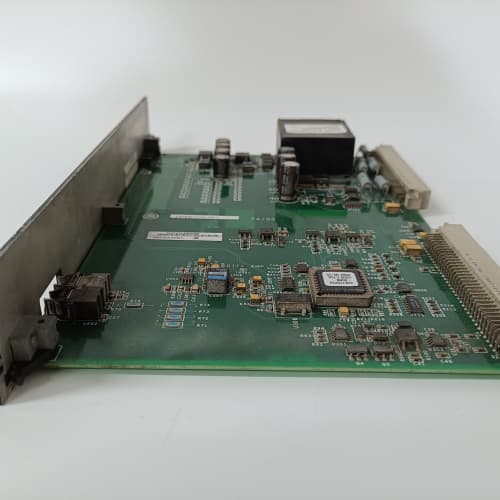
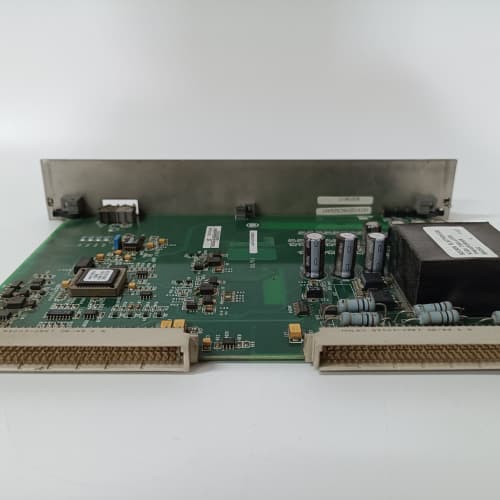
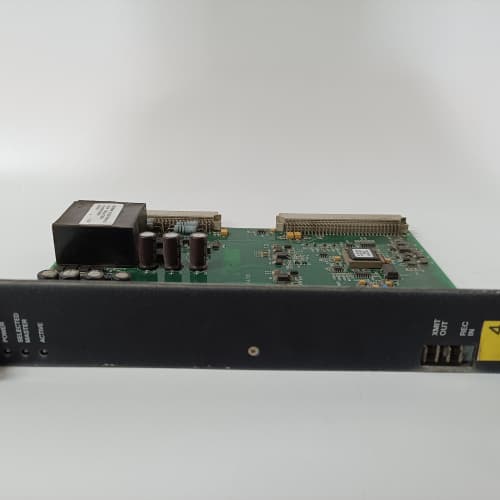
The jump from ‘B’ to ‘C’ on this RTD board represents a fundamental redesign of the excitation current source—the heart of accurate RTD measurement. The IS200TRTDH1C is the revision C variant of the TRTD series, and it addresses a subtle but important issue: excitation current stability over temperature and time. This board terminates RTD input signals from bearing and winding temperature sensors, but with a more stable current source that reduces measurement drift.
What changed from ‘B’ to ‘C’? GE redesigned the RTD excitation current source from a simple resistor-based design to a precision active current source with temperature compensation. The result is about 40% better current stability over the 0-60°C ambient range, translating to more stable temperature readings and fewer nuisance alarms. The board also features improved filter capacitors on the input stages for better noise rejection. Compared to the TRTDH1B, the ‘C’ offers better long-term accuracy and stability in varying ambient temperatures. If your cabinet temperature fluctuates or you’re chasing drift issues on RTD readings, the ‘C’ variant is the upgrade.
Key Technical Specifications
| Parameter | Value / Detail |
|---|---|
| Manufacturer | General Electric (GE) |
| Part Number | IS200TRTDH1C |
| Series | Mark VIe Speedtronic |
| Function | TRTD Termination Board (RTD Input – Rev C) |
| Nominal Voltage | 24V DC |
| RTD Type | Platinum (typically Pt100) |
| RTD Configuration | 3-wire (standard) |
| Excitation Source | Redesigned (precision active current source) |
| Current Stability | ~40% better over temperature range |
| Input Filtering | Improved noise rejection |
| Connector Type | 37-pin D-sub and terminal blocks |
| Mounting | DIN-rail or chassis mount |
| Operating Temp | 0 to 60°C (ambient) |
| Relative Humidity | 5% to 95% (non-condensing) |
| Compatible Rack | Mark VIe IS200 series backplane |
Compatible Replacement Models
✅ Drop-in Replacement: IS200TRTDH1B — The immediate predecessor. Identical pinout, mounting, and software interface. The ‘C’ has redesigned excitation source for better stability and improved input filtering. No software changes required.
✅ Drop-in Replacement: IS200TRTDH1A — The ‘A’ revision. Direct hardware match. The ‘C’ is a significant upgrade in stability and accuracy.
⚠️ Software Compatible: IS200TBTCH1A — Thermocouple termination board. Different sensor type—requires software reconfiguration and different wiring.
⚠️ Software Compatible: IS200TBCI1A — General-purpose analog I/O board. Requires external RTD conditioning and complete hardware/software rework. Budget 8-12 hours.
❌ Hardware Incompatible: IS200TBQGH1A — Excitation termination board. Different pinout and application.
Frequently Asked Questions (FAQ)
Q: What makes the ‘C’ revision different from the ‘B’?
A: GE redesigned the RTD excitation current source from a resistor-based design to a precision active current source with temperature compensation. This provides about 40% better current stability over the 0-60°C ambient range, resulting in more stable RTD readings and fewer nuisance alarms. The board also has improved input filtering for better noise rejection.
Q: Is the TRTDH1C worth upgrading from the B revision?
A: If your cabinet temperature fluctuates, or you’ve seen drift in RTD readings over time, yes. The active current source maintains stable excitation regardless of ambient temperature changes. If your cabinet temperature is stable and readings are consistent, the ‘B’ revision is still a reliable board.
Q: Can I replace a TRTDH1B board with a TRTDH1C without any changes?
A: Yes. The ‘C’ is a drop-in replacement. No software changes, no wiring changes, no configuration changes.
Q: What types of RTDs does the ‘C’ support?
A: The ‘C’ is designed for platinum RTDs, typically Pt100 sensors with 3-wire configuration—the industry standard for turbine temperature monitoring.
Q: What bench testing should I do before installing a TRTDH1C?
A: Standard RTD protocol with stability verification. First, visual inspection. Second, verify continuity. Third, connect precision resistor decade boxes to simulate RTD resistance at known temperatures and verify accuracy. Fourth, test stability across temperature—heat the board to 50°C and monitor readings for drift. The ‘C’ should show significantly less drift than the ‘B’.
Q: Is the TRTDH1C hot-swappable?
A: We advise against hot-swapping analog input boards. Power down the cabinet segment before swapping.
Q: How do I verify I’m getting a genuine TRTDH1C?
A: Look for the redesigned excitation current source components—different layout from the ‘B’. Weigh the board; should be about 357 grams. Look for the GE holographic security label.
Q: What’s the expected lifespan of the TRTDH1C?
A: With proper cabinet cooling and clean power, these boards typically run 20+ years. The active current source design is more robust than the passive design in the ‘B’.
Q: Where do I find the official wiring diagram for the TRTDH1C?
A: GE document GEK-130550 covers the TRTD series. The ‘C’ has identical terminal assignments to the ‘B’ and ‘A’—the differences are internal. However, always cross-reference against your cabinet’s as-built drawings. Verify every channel before terminating.
SIEMENS MOORE MBI/MNI(16413-15) PLC
TRICONEX 3805E PLC
Bently 3500/22M138607-01
 Email: sales@plcfcs.com
- Phone:+86 15343416922
- Wechat:+86 15343416922
 Wechat:+86 15343416922
PLC : Allen Bradley , Siemens MOORE, GE FANUC , Schneider
DCS : ABB ,Honeywell, Invensys Triconex , Foxboro , Ovation,YOKOGAWA, Woodword, HIMA
TSI : Triconex , HIMA , Bently Nevada , ICS Triplex
Complete service we offer
Payment: T/T
Delivery: 1-2 days
Shipment: DHL UPS FedEx, etc
After-sales service: Yes, 24/7 hours