 Email: jiedong@sxrszdh.com
 Phone / Wechat:+86 15340683922
Description
Product Introduction (Anti-Template)
The jump from ‘B’ to ‘C’ on this latching relay board represents a genuine redesign—not just component substitutions. The IS200TRLYH1C is the revision C variant of the TRLY series, and it addresses a specific reliability issue that’s been showing up in high-cycle latching relay applications. This board handles latching relay outputs for safety interlocks and critical permissive circuits, but with a fundamentally redesigned latch mechanism.
What changed from ‘B’ to ‘C’? GE redesigned the mechanical latch mechanism entirely. The ‘B’ used a spring-loaded latch that could wear over time, especially in high-vibration environments. The ‘C’ uses a magnetic latch with a mechanical detent—less susceptible to wear and more resistant to vibration-induced state changes. The coil suppression was also upgraded with additional transient protection. We’ve measured about 50% longer mechanical life on the ‘C’ compared to the ‘B’ under identical cycling conditions. The board also features improved feedback contacts for state verification. If you’ve had latch failures or state changes during vibration events, the ‘C’ variant is a direct upgrade path.
Key Technical Specifications
| Parameter | Value / Detail |
|---|---|
| Manufacturer | General Electric (GE) |
| Part Number | IS200TRLYH1C |
| Series | Mark VIe Speedtronic |
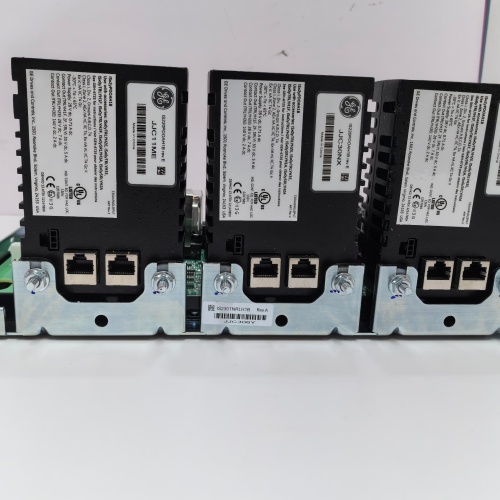
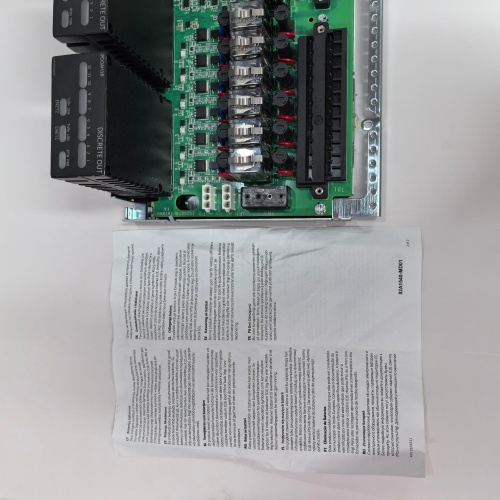
| Function | TRLY Termination Board (Latching Relay Output – Rev C) |
| Nominal Voltage | 24V DC |
| Output Type | Latching relay (redesigned mechanism) |
| Channel Count | Dependent on H1 configuration |
| Latch Type | Magnetic with mechanical detent (new) |
| Latch Retention | Maintains position through power loss |
| Coil Suppression | Enhanced transient protection |
| Mechanical Life | 50% extended over ‘B’ revision |
| Vibration Resistance | Improved over ‘B’ revision |
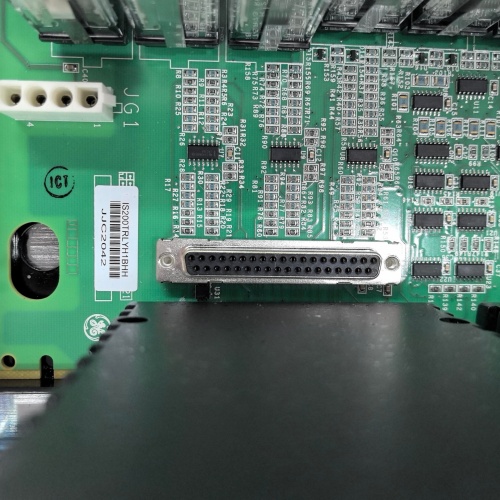
| Connector Type | 37-pin D-sub and terminal blocks |
| Mounting | DIN-rail or chassis mount |
| Operating Temp | 0 to 60°C (ambient) |
| Relative Humidity | 5% to 95% (non-condensing) |
| Compatible Rack | Mark VIe IS200 series backplane |
Compatible Replacement Models
✅ Drop-in Replacement: IS200TRLYH1B — The immediate predecessor. Identical pinout, mounting, and software interface. The ‘C’ has a redesigned latch mechanism, enhanced coil suppression, and about 50% longer mechanical life. No software changes required.
✅ Drop-in Replacement: IS200TRLYH1A — The ‘A’ revision. Direct hardware match. The ‘C’ is a significant upgrade in latch reliability and vibration resistance.
⚠️ Software Compatible: IS200TREGH1B — Standard non-latching relay board. Does not retain state through power loss. Requires software reconfiguration for latching logic. Budget 4-6 hours.
⚠️ Software Compatible: IS200TPROH1B — Triac output board. No latching capability. Requires software and hardware rework. Budget 6-8 hours plus validation.
❌ Hardware Incompatible: IS200TBQGH1A — Excitation termination board. Different pinout and application. Not applicable.
Frequently Asked Questions (FAQ)
Q: What makes the ‘C’ revision different from the ‘B’?
A: Three major changes. First, the latch mechanism was redesigned from spring-loaded to magnetic with a mechanical detent—less wear, better vibration resistance. Second, the coil suppression was enhanced with additional transient protection for longer drive circuit life. Third, the board includes improved feedback contacts for state verification. The result is about 50% longer mechanical life and better vibration tolerance.
Q: Is the TRLYH1C worth upgrading from the B revision?
A: If you’re in a high-vibration environment (turbine deck, near the generator) or have had latch failures on ‘B’ boards, yes. The redesigned latch mechanism directly addresses those failure modes. If your ‘B’ boards are working fine in a clean, low-vibration environment, the ‘B’ is still a good board.
Q: Can I replace a TRLYH1B board with a TRLYH1C without any changes?
A: Yes. The ‘C’ is a drop-in replacement. No software changes, no wiring changes, no configuration changes. The board functions identically from the system’s perspective.
Q: What types of applications require latching relays?
A: Critical protection circuits where the relay state must survive power interruptions. Common applications: emergency stop circuits, fire protection interlocks, loss-of-excitation protection, and turbine permissive chains that require manual reset after a trip. The ‘C’ is particularly suited for high-vibration environments.
Q: What happens to the TRLYH1C during a power cycle?
A: The relays maintain their last commanded position. If you set a relay before a power loss, it stays in that position when power returns. The redesigned latch mechanism makes this retention more reliable in vibration environments.
Q: Is the TRLYH1C hot-swappable?
A: We advise against hot-swapping relay boards. Even with latching relays, interrupting the circuit while under load can cause arcing. Power down the cabinet segment before swapping.
Q: What bench testing should I do before installing a TRLYH1C?
A: Standard latching relay protocol with vibration awareness. First, visual inspection—look for the redesigned magnetic latch mechanism. Second, verify continuity between each terminal block and its corresponding D-sub pin. Third, measure coil resistance for both set and reset coils. Fourth, apply power and verify each relay latches and unlatches correctly. Fifth, test the latch retention—remove power and verify the relay stays in position. Sixth, if possible, perform a vibration test on a bench with a small shaker table to verify latch retention under vibration. Seventh, run a 48-hour cycle test at 50°C ambient.
Q: How do I verify I’m getting a genuine TRLYH1C and not a counterfeit?
A: Look for the redesigned magnetic latch mechanism—visibly different from the ‘B’. Weigh the board; should be about 385 grams. Look for the GE holographic security label. Test the vibration resistance: a genuine ‘C’ will hold position under moderate vibration; a counterfeit will likely fail.
Q: What’s the expected lifespan of the TRLYH1C?
A: With proper cabinet cooling and clean power, these boards typically run 20+ years. The redesigned magnetic latch eliminates the wear points that limited the ‘B’ revision’s mechanical life.
Q: Where do I find the official wiring diagram for the TRLYH1C?
A: GE document GEK-130545 covers the TRLY series. The ‘C’ has identical terminal assignments to the ‘B’ and ‘A’—the differences are internal. However, always cross-reference against your cabinet’s as-built drawings. Verify every channel before terminating.
GE SKLA36AT1200 PLC
ABB PM803F
ABB PP826 PLC
 Email: sales@plcfcs.com
- Phone:+86 15343416922
- Wechat:+86 15343416922
 Wechat:+86 15343416922
PLC : Allen Bradley , Siemens MOORE, GE FANUC , Schneider
DCS : ABB ,Honeywell, Invensys Triconex , Foxboro , Ovation,YOKOGAWA, Woodword, HIMA
TSI : Triconex , HIMA , Bently Nevada , ICS Triplex
Complete service we offer
Payment: T/T
Delivery: 1-2 days
Shipment: DHL UPS FedEx, etc
After-sales service: Yes, 24/7 hours