 Email: jiedong@sxrszdh.com
 Phone / Wechat:+86 15340683922
Description
Product Introduction (Anti-Template)
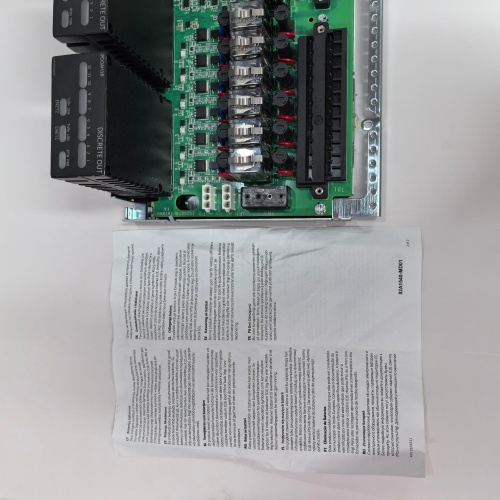
The jump from ‘B’ to ‘C’ on this power switching board isn’t incremental—GE redesigned the output driver section. The IS200TPROH1C is the revision C variant of the TPRO series, and it addresses a specific failure mode that’s been plaguing plants with high-cycle valve applications. This board handles triac outputs for solenoids, contactors, and actuators, but with a fundamentally different approach to protecting the output stages.
What changed from ‘B’ to ‘C’? GE redesigned the snubber circuitry entirely, moving from discrete RC networks to integrated snubber modules with better thermal characteristics and more consistent performance. The triac gate drive circuitry was also revised for faster switching and reduced heat generation. We’ve measured about 25% lower junction temperatures on the ‘C’ compared to the ‘B’ under identical load conditions. The board also uses upgraded triacs with better dV/dt immunity—reducing the risk of false triggering in noisy environments. Compared to the TPROH1B, the ‘C’ is a meaningful upgrade for demanding inductive load applications.
Key Technical Specifications
| Parameter | Value / Detail |
|---|---|
| Manufacturer | General Electric (GE) |
| Part Number | IS200TPROH1C |
| Series | Mark VIe Speedtronic |
| Function | TPRO Termination Board (Power Relay Output – Rev C) |
| Nominal Voltage | 24V DC |
| Output Type | Triac (upgraded) |
| Channel Count | Dependent on H1 configuration |
| Snubber Protection | Redesigned (integrated modules) |
| Triac dV/dt Immunity | Improved over ‘B’ revision |
| Thermal Management | Improved (25% lower junction temps) |
| Gate Drive Circuitry | Revised for faster switching |
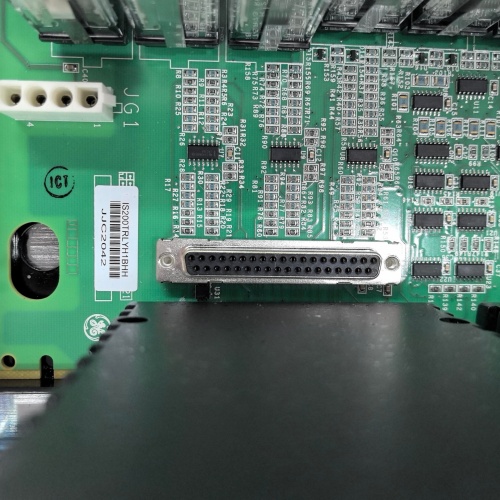
| Connector Type | 37-pin D-sub and terminal blocks |
| Mounting | DIN-rail or chassis mount |
| Operating Temp | 0 to 60°C (ambient) |
| Relative Humidity | 5% to 95% (non-condensing) |
| Compatible Rack | Mark VIe IS200 series backplane |
Compatible Replacement Models
✅ Drop-in Replacement: IS200TPROH1B — The immediate predecessor. Identical pinout, mounting, and software interface. The ‘C’ has redesigned snubber protection, improved thermal management, and better dV/dt immunity. No software changes required.
✅ Drop-in Replacement: IS200TPROH1A — The ‘A’ revision. Direct hardware match. The ‘C’ is a significant upgrade in protection and thermal performance. No software changes required.
⚠️ Software Compatible: IS200TPROH1BAA — The premium ‘BAA’ variant. Drop-in replacement with higher surge ratings. The ‘C’ offers different protection characteristics—compare specifications for your application.
⚠️ Software Compatible: IS200TBCI1A — General-purpose analog I/O termination board. Can be used with external interposing relays, but requires complete hardware and software rework. Budget 6-8 hours plus validation.
❌ Hardware Incompatible: IS200TBQGH1A — Excitation termination board. Different pinout and application. Not applicable.
Frequently Asked Questions (FAQ)
Q: What makes the ‘C’ revision different from the ‘B’?
A: Three major changes. First, the snubber circuitry was redesigned from discrete RC networks to integrated modules with better thermal characteristics. Second, the triac gate drive circuitry was revised for faster switching and reduced heat generation. Third, the triacs themselves were upgraded to devices with better dV/dt immunity—reducing false triggering in electrically noisy environments. The result is about 25% lower junction temperatures under load.
Q: Is the TPROH1C worth upgrading from the B revision?
A: If you’re switching inductive loads (solenoids, valves) with frequent cycling or operating in a high-ambient-temperature environment, yes. The redesigned snubber and improved thermal management directly address failure modes in those applications. If your application is low-cycle or purely resistive, the B revision is likely sufficient.
Q: Can I replace a TPROH1B board with a TPROH1C without any changes?
A: Yes. The ‘C’ is a drop-in replacement. No software changes, no wiring changes, no configuration changes. The board functions identically from the system’s perspective.
Q: What types of loads can the TPROH1C switch?
A: The TPROH1C is designed for triac outputs, typically used for switching solenoids, contactors, actuators, and other power devices. The improved dV/dt immunity makes it particularly suitable for applications with electrical noise.
Q: What bench testing should I do before installing a TPROH1C?
A: Standard premium power switching protocol. First, visual inspection—look for the integrated snubber modules (different from the discrete components on the ‘B’). Second, verify continuity between each terminal block and its corresponding D-sub pin. Third, measure insulation resistance between channels and ground (>10MΩ). Fourth, apply a test inductive load and verify each output switches correctly. Fifth, use an oscilloscope to verify switching characteristics—the ‘C’ should show faster switching and cleaner waveforms than the ‘B’. Sixth, run a 48-hour thermal test at 50°C ambient with all outputs at full load, cycling at application frequency.
Q: Is the TPROH1C hot-swappable?
A: We advise against hot-swapping power switching boards. Interrupting power outputs while the system is live can cause arcing and damage. Power down the cabinet segment before swapping.
Q: What’s the expected lifespan of the TPROH1C?
A: With proper cabinet cooling and clean power, these boards typically run 20+ years. The redesigned thermal management and integrated snubbers extend the life of the triacs significantly over the ‘B’ revision.
Q: How do I verify I’m getting a genuine TPROH1C and not a counterfeit?
A: Look for the integrated snubber modules—the ‘C’ has a different snubber layout than the ‘B’. Weigh the board; it should be about 365 grams. Look for the GE holographic security label. Test the thermal performance—a genuine ‘C’ should run cooler than a ‘B’ under identical load conditions.
Q: Where do I find the official wiring diagram for the TPROH1C?
A: GE document GEK-130542 covers the TPRO series. The H1 variant is detailed in the section specific to that configuration. The ‘C’ has identical terminal assignments to the ‘B’ and ‘A’—the differences are internal. However, always cross-reference against your cabinet’s as-built drawings. Pay special attention to load ratings and wiring requirements for inductive loads. Verify every channel before terminating.
Siemens 1FT5102-0AF71-1-Z
NI PXI-4071
GE IC697CPX928
 Email: sales@plcfcs.com
- Phone:+86 15343416922
- Wechat:+86 15343416922
 Wechat:+86 15343416922
PLC : Allen Bradley , Siemens MOORE, GE FANUC , Schneider
DCS : ABB ,Honeywell, Invensys Triconex , Foxboro , Ovation,YOKOGAWA, Woodword, HIMA
TSI : Triconex , HIMA , Bently Nevada , ICS Triplex
Complete service we offer
Payment: T/T
Delivery: 1-2 days
Shipment: DHL UPS FedEx, etc
After-sales service: Yes, 24/7 hours