 Email: jiedong@sxrszdh.com
 Phone / Wechat:+86 15340683922
Description
Product Introduction (Anti-Template)
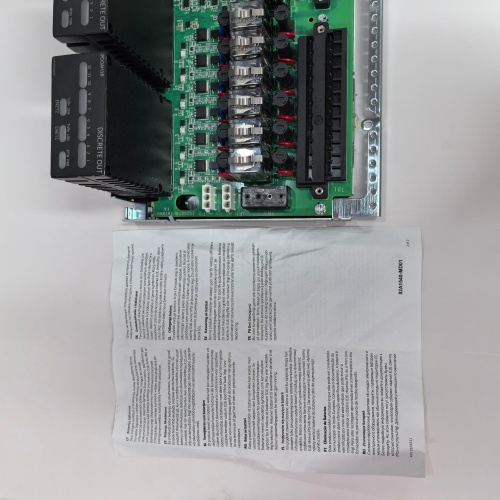
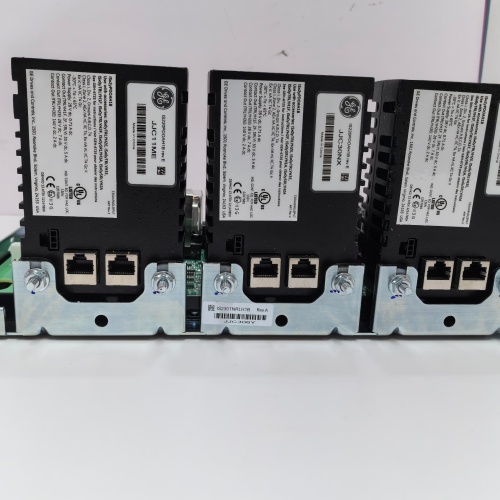
Thermocouple monitoring is one thing—acting on it is another. The IS200TCATH1A is GE’s TCAT (Terminal Board Thermocouple with Alarm) variant, and it adds a layer of protection that the standard TBC boards don’t offer. This board doesn’t just terminate thermocouple signals; it includes four dedicated alarm outputs that can trigger protective actions without waiting for the controller to process the data.
The ‘H1A’ designation indicates this is the alarm-equipped version of the thermocouple termination board. The alarm outputs are hardwired relays that can be configured to trip at specific temperature thresholds—adding a layer of redundancy to your turbine protection system. The thermocouple input section is similar to the TBTCH1A, with ±1.0°C cold junction compensation, but the addition of the alarm logic makes this board a better fit for critical temperature monitoring points. Compared to the standard TBC series, the TCAT gives you hardware-level protection independent of the Mark VIe controller’s scan cycle. That’s the difference between catching an over-temp condition in the next 50ms versus waiting for the next control cycle.
Key Technical Specifications
| Parameter | Value / Detail |
|---|---|
| Manufacturer | General Electric (GE) |
| Part Number | IS200TCATH1A |
| Series | Mark VIe Speedtronic |
| Function | TCAT Termination Board (Thermocouple with Alarm) |
| Nominal Voltage | 24V DC |
| Thermocouple Types | J, K, T (configurable via jumpers) |
| Input Channels | 8 differential thermocouple inputs |
| Alarm Outputs | 4 dedicated relay outputs (configurable) |
| Cold Junction Compensation | ±1.0°C accuracy |
| Common Mode Rejection | 100dB at 50Hz |
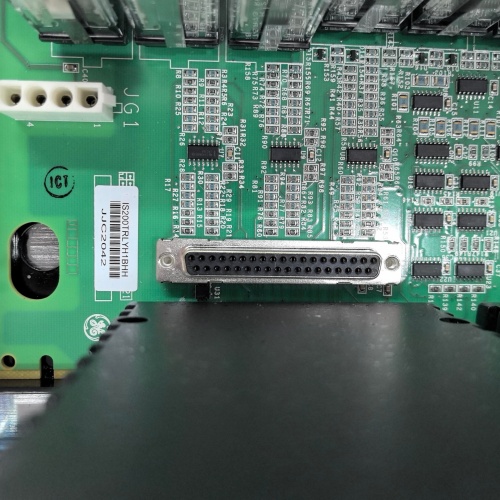
| Connector Type | 37-pin D-sub and terminal blocks |
| Mounting | DIN-rail or chassis mount |
| Operating Temp | 0 to 60°C (ambient) |
| Relative Humidity | 5% to 95% (non-condensing) |
| Compatible Rack | Mark VIe IS200 series backplane |
Compatible Replacement Models
✅ Drop-in Replacement: IS200TCATH1 — The base revision without the ‘A’ suffix. Identical pinout, mounting, and software interface. The ‘A’ revision has minor component updates and improved relay contact ratings. No software changes required.
⚠️ Software Compatible: IS200TBTCH1A — The standard thermocouple board without alarms. Fits the same slot and connector, but you lose the alarm outputs. You can replicate the alarm logic in the Mark VIe software, but you lose the hardware-level redundancy. Budget 4-6 hours for software reconfiguration and validation.
⚠️ Software Compatible: IS200TBTCH1B — The standard thermocouple board with improved accuracy but no alarms. Same considerations as above. Requires software rework and loses hardware-based protection.
❌ Hardware Incompatible: IS200TBQGH1A — Excitation termination board. Completely different application and pinout. Not applicable.
Frequently Asked Questions (FAQ)
Q: What makes the TCAT different from the standard TBC thermocouple boards?
A: The TCAT includes four dedicated alarm outputs that can trip protective circuits without waiting for the Mark VIe controller to process the data. These are hardware-level relays that trigger based on threshold settings. The standard TBC boards only provide the thermocouple inputs—all protection logic must be handled in the software.
Q: Can I use a TCAT board for applications that don’t require alarms?
A: Yes. The alarm outputs can be left unconnected. The board functions as a standard thermocouple termination board with ±1.0°C accuracy. You’re paying for the alarm capability, so you might as well use it, but it works fine without.
Q: What are the alarm outputs rated for?
A: The relay outputs are typically rated for 5A at 250V AC or 5A at 30V DC. Verify the specific rating on your board against your plant’s protection circuit requirements. The ‘A’ revision improved the contact material to handle higher inrush currents. To be honest, we’ve seen some plants exceed the rating and weld the contacts—always use an interposing relay if you’re switching heavy loads.
Q: How do the alarm thresholds get set?
A: The thresholds are configured via jumpers or DIP switches on the board—not through software. That’s intentional; it keeps the protection hardware-independent of the controller. Refer to the GE documentation for specific jumper configurations. Some variants also allow remote threshold adjustment via an external potentiometer.
Q: Can the alarm outputs be configured as normally open or normally closed?
A: Yes. The board typically has jumpers for each output to select NO or NC operation. This gives you flexibility in how you integrate with your existing protection circuits. Default is normally open for most variants.
Q: Does the TCAT provide any redundancy for the alarm outputs?
A: No, the four outputs are independent but not redundant. If one relay fails, you lose that protection channel. For critical applications, consider using multiple TCAT boards or combining with software-based protection in the Mark VIe for redundancy. We’ve seen some plants use two TCAT boards in a voting configuration.
Q: What happens if the 24V power supply to the TCAT fails?
A: The relays will de-energize. If they’re configured as normally open, that means your protection circuit will not trip—which could be a safety issue. For fail-safe operation, configure the critical alarm outputs as normally closed. Then a power failure will cause the protection circuit to trip (fail-safe). This is standard practice for turbine protection.
Q: Is the TCAT’s thermocouple accuracy the same as the standard TBC boards?
A: The TCATH1A has ±1.0°C accuracy, which matches the TBTCH1A. It’s not as accurate as the later B, C, or premium variants. The ‘A’ revision on the TCAT is primarily about relay upgrades, not thermocouple measurement improvements. If you need better temperature accuracy, consider the TCATH1B or TCATH1C (if they exist) or use a TBC board for measurement and a separate alarm module.
Q: What bench testing should I do before installing a TCAT?
A: Standard thermocouple board protocol plus relay testing. First, visual inspection. Second, verify thermocouple type jumper settings. Third, inject calibrated millivolt signals and verify output via the Mark VIe diagnostic. Fourth, test each alarm output by applying a temperature that exceeds the threshold—verify the relay changes state and that the contact continuity is correct. Fifth, test the fail-safe behavior: remove the 24V supply and verify the relays go to their de-energized state (useful for confirming your NO/NC configuration). Sixth, run a 24-hour stability test at 50°C ambient.
Q: Can I hot-swap a TCAT board?
A: We don’t recommend it. The relay outputs have mechanical contacts that could arc if you remove power while they’re energized. Power down the cabinet segment, wait for the capacitors to discharge, then swap. The board also needs thermal stabilization for accurate thermocouple readings.
Q: How do I verify I’m getting a genuine TCATH1A and not a counterfeit?
A: Check the relay contact markings—genuine GE boards use specific relay part numbers. Weigh the board; it should be about 370 grams due to the relays. Look for the GE holographic security label. Test the relay operation: counterfeit boards often use cheaper relays with poor contact resistance.
Q: Where do I find the official wiring diagram for the TCATH1A?
A: GE document GEK-130534 covers the TCAT series. Section 2 covers the thermocouple input wiring, and section 3 covers the alarm output connections. Pay close attention to the relay output terminals—they’re typically grouped separately from the thermocouple terminals. Miswiring a relay output to a thermocouple input is a common error.
A-B 1756-L73 PLC
FANUC A06B-0590-B004
HARMONIC FHA-32C-50-H-C1024-SP
ABB REF620E_F
 Email: sales@plcfcs.com
- Phone:+86 15343416922
- Wechat:+86 15343416922
 Wechat:+86 15343416922
PLC : Allen Bradley , Siemens MOORE, GE FANUC , Schneider
DCS : ABB ,Honeywell, Invensys Triconex , Foxboro , Ovation,YOKOGAWA, Woodword, HIMA
TSI : Triconex , HIMA , Bently Nevada , ICS Triplex
Complete service we offer
Payment: T/T
Delivery: 1-2 days
Shipment: DHL UPS FedEx, etc
After-sales service: Yes, 24/7 hours