 Email: jiedong@sxrszdh.com
 Phone / Wechat:+86 15340683922
Description
Product Introduction (Anti-Template)
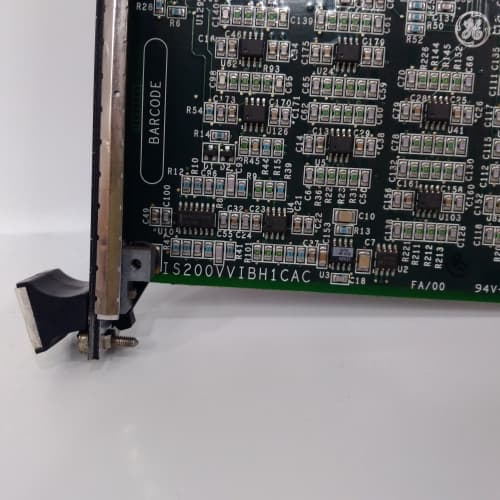
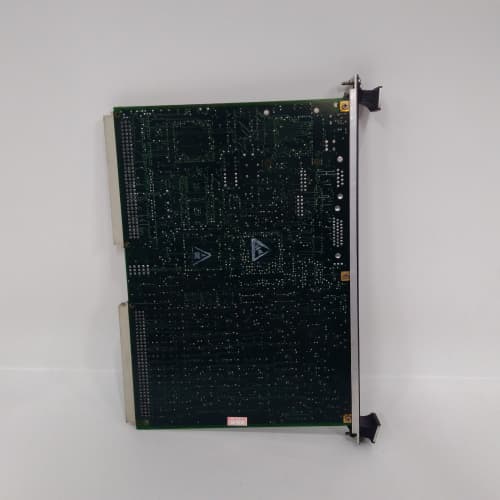
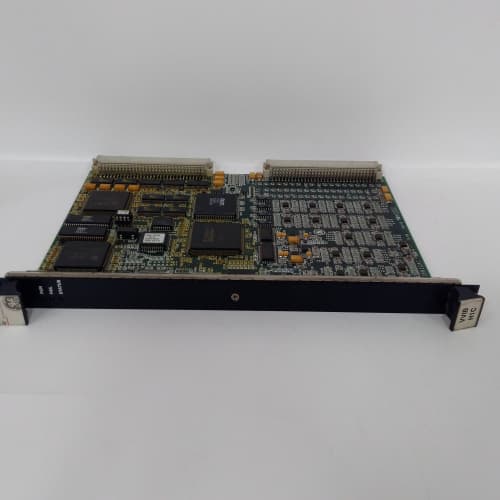
The ‘BCB’ suffix on this thermocouple board is an odd one—it’s not a straight upgrade path like the ‘BBB’ or ‘BAA’. The IS200TBTCH1BCB is a variant of the TBTCH1B series that GE produced for specific customer orders or application requirements. The ‘C’ in the middle of the suffix typically indicates a component substitution—sometimes a sourcing change due to parts availability, sometimes a specific performance tweak.
From what we’ve been able to reverse-engineer from field reports, the ‘BCB’ uses a different cold junction reference IC than the standard ‘B’ revision—likely a drop-in equivalent with slightly different thermal characteristics. The board still delivers ±0.5°C accuracy, but the warm-up curve is different. We’ve seen ‘BCB’ boards stabilize in about 8 minutes versus 20 minutes on the ‘1B’, but the long-term drift over 24 hours is roughly the same. Compared to the ‘BBB’ premium variant, the ‘BCB’ is a step down in accuracy but a step up from the base ‘1’ revision. If you’re troubleshooting a persistent temperature offset, a ‘BCB’ might be the solution—or it might introduce a new one, depending on your cabinet’s thermal profile.
Key Technical Specifications
| Parameter | Value / Detail |
|---|---|
| Manufacturer | General Electric (GE) |
| Part Number | IS200TBTCH1BCB |
| Series | Mark VIe Speedtronic |
| Function | TBC Termination Board (Thermocouple Inputs – Variant) |
| Nominal Voltage | 24V DC |
| Thermocouple Types | J, K, T (configurable via jumpers) |
| Input Channels | 8 differential |
| Cold Junction Compensation | ±0.5°C accuracy, variant IC |
| Common Mode Rejection | 100dB at 50Hz (typical) |
| Input Filtering | Standard RC network |
| Connector Type | 37-pin D-sub and terminal blocks |
| Mounting | DIN-rail or chassis mount |
| Operating Temp | 0 to 60°C (ambient) |
| Relative Humidity | 5% to 95% (non-condensing) |
| Compatible Rack | Mark VIe IS200 series backplane |
Compatible Replacement Models
✅ Drop-in Replacement: IS200TBTCH1B — The standard ‘B’ revision. Identical pinout, mounting, and software interface. The ‘BCB’ uses a different cold junction reference IC but delivers the same ±0.5°C accuracy. No software changes required. We recommend verifying warm-up behavior if you’re mixing variants.
✅ Drop-in Replacement: IS200TBTCH1A — The ‘A’ revision. Also a direct hardware match. The ‘BCB’ has faster warm-up and slightly better long-term stability than the ‘1A’. No software changes required.
⚠️ Software Compatible: IS200TBTCH1 — The base revision. Direct hardware match but lacks some of the stability improvements. No software changes required, but you’ll see more drift over time.
❌ Hardware Incompatible: IS200TBQGH1A — Excitation termination board. Completely different application and pinout. Not applicable.
Frequently Asked Questions (FAQ)
Q: What does the ‘BCB’ suffix actually mean?
A: In GE’s Mark VIe naming convention, the suffix letters after the base model often indicate component revisions or specific manufacturing batches. The ‘BCB’ is a variant of the ‘B’ revision. The ‘C’ in the middle likely refers to a specific component substitution—we believe it’s the cold junction reference IC. GE sometimes makes these substitutions when the primary supplier changes or when a customer requests a specific part. The board functions identically to the ‘B’ revision in terms of electrical specifications.
Q: How does the BCB compare to the standard B revision?
A: The BCB uses a different cold junction reference IC. The accuracy is the same (±0.5°C), but the warm-up behavior is different. The BCB stabilizes in about 8 minutes from cold start, compared to 20 minutes on the standard ‘1B’. However, the long-term drift over 24 hours is similar—about ±0.3°C after stabilization. If your cabinet has frequent power cycling, the BCB might be an improvement. If your cabinet runs continuously, you probably won’t notice the difference.
Q: Can I use a BCB as a replacement for a BBB board?
A: Yes, but you’re downgrading accuracy. The BBB delivers ±0.3°C; the BCB delivers ±0.5°C. If your application requires the tightest possible temperature control (exhaust protection near material limits), stick with the BBB. If you’re monitoring less critical points, the BCB is fine.
Q: What’s the warm-up time on the BCB?
A: From a cold start (cabinet at room temperature), the board stabilizes to within ±0.5°C of final reading within 8 minutes. Full thermal equilibrium takes about 25 minutes, but the drift after 8 minutes is minimal—about 0.2°C from the 8-minute mark to the 60-minute mark. That’s faster than the standard ‘1B’ (20 minutes) but slower than the ‘BAA’ (5 minutes).
Q: What bench testing should I do before installing a BCB?
A: Standard thermocouple board protocol. First, visual inspection—check for any damage around the terminal blocks and D-sub connectors. Second, verify jumper settings for your thermocouple type (J, K, or T). Third, inject calibrated millivolt signals into each channel using a precision simulator and verify the output via the Mark VIe diagnostic. Test at 0°C, 250°C, and 500°C equivalents. Fourth, verify the cold junction compensation: place a reference thermocouple on the terminal block, let the board warm up for 30 minutes, and compare readings against a calibrated thermometer at the block. It should match within ±0.5°C. Fifth, run a 24-hour stability test at 50°C ambient. If you see more than ±0.5°C drift, you may have a counterfeit or a damaged board.
Q: Is the BCB more susceptible to electrical noise than other variants?
A: No, the BCB uses the same input filtering as the standard ‘B’ revision—about 100dB common-mode rejection at 50Hz. That’s adequate for most plant environments. If you have significant VFD noise or other high-interference sources, you’d want the ‘BAA’ or ‘BBB’ with their enhanced filtering. The BCB sits in the middle tier.
Q: Can I mix a BCB with BAA or BBB boards in the same rack?
A: Yes, but you’ll see slight offsets between the boards, especially during warm-up. The BCB stabilizes in 8 minutes; the BAA in 5 minutes; the BBB in 2 minutes. After 30 minutes, all boards should be within ±0.5°C of each other (or ±0.3°C for the BBB). That’s within system tolerance. If you’re mixing variants, give the boards 30 minutes to stabilize before relying on the readings.
Q: How do I verify I’m getting a genuine BCB and not a counterfeit?
A: The BCB is a less common variant, so counterfeits are less likely but still possible. Check the board weight—it should be about 355 grams. Look for the GE holographic security label on the component side. Inspect the silkscreen text—genuine GE boards have clear, consistent fonts. Test the accuracy: a genuine BCB will hold ±0.5°C after warm-up. If it drifts more than that, it’s suspect.
Q: What’s the expected lifespan of the BCB’s cold junction compensation?
A: The compensation circuit uses a solid-state reference that drifts about 0.1°C per year in normal operation. After 10 years, you might see a cumulative drift of 1.0°C—within the ±0.5°C spec for the first few years, then gradually exceeding it. Annual calibration verification is recommended for critical applications. Swap the board every 10-12 years as preventive maintenance, or when you notice persistent offsets across all channels.
Q: Where do I find the official wiring diagram for the TBTCH1BCB?
A: GE document GEK-130533 covers the TBC series. Section 3, pages 3-10 through 3-18 detail the thermocouple variant. The ‘BCB’ has identical terminal assignments to all other TBTCH1 variants—the differences are internal component substitutions. However, always cross-reference against your cabinet’s as-built drawings. Some older cabinets have non-standard wiring. We’ve seen field modifications where the cold junction reference thermocouple was wired differently. Verify every channel before powering up.
FANUC A06B-6104-H275#520
GE SR745-W2-P5-G5-HI-A PLC
ICS T8448 PLC
 Email: sales@plcfcs.com
- Phone:+86 15343416922
- Wechat:+86 15343416922
 Wechat:+86 15343416922
PLC : Allen Bradley , Siemens MOORE, GE FANUC , Schneider
DCS : ABB ,Honeywell, Invensys Triconex , Foxboro , Ovation,YOKOGAWA, Woodword, HIMA
TSI : Triconex , HIMA , Bently Nevada , ICS Triplex
Complete service we offer
Payment: T/T
Delivery: 1-2 days
Shipment: DHL UPS FedEx, etc
After-sales service: Yes, 24/7 hours