 Email: jiedong@sxrszdh.com
 Phone / Wechat:+86 15340683922
Description
Product Introduction (Anti-Template)
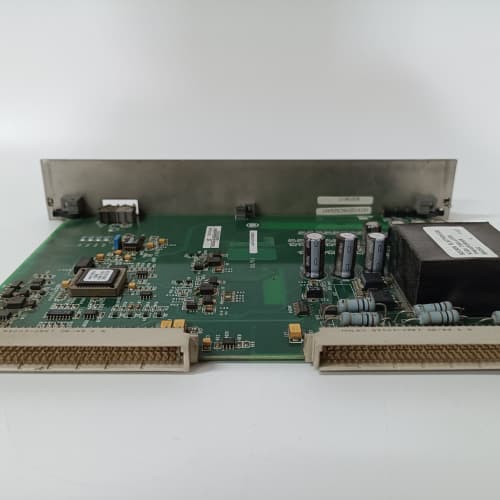
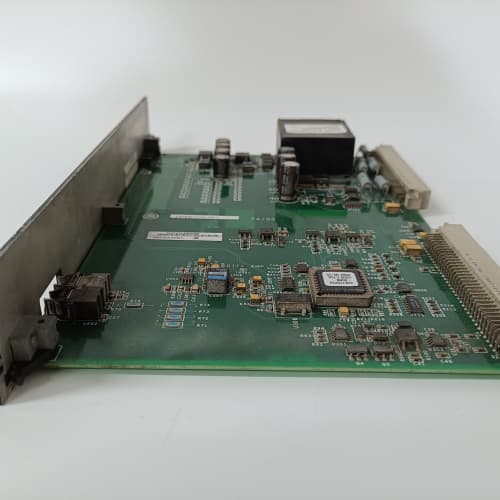
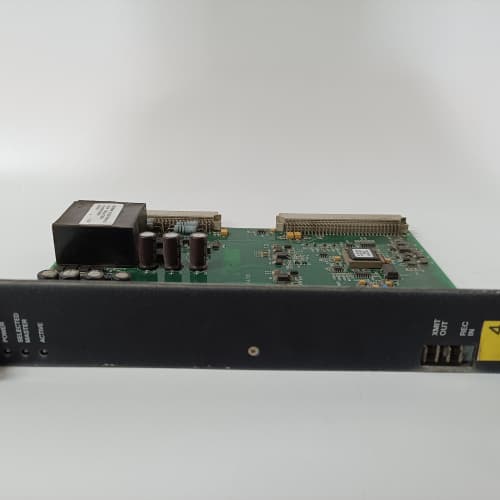
The ‘2’ in this model number isn’t just a sequential bump—it signals a different application tier. The IS200TBQGH2A is GE’s dual-channel variant of the gas excitation termination board, designed for turbines that require redundant excitation paths or split-field control schemes. While the single-channel TBQGH1 series handles standard excitation duties, this board gives you two independent output channels on the same physical card.
That extra channel changes your cabinet wiring strategy. The board still runs on 24V DC and pushes 1.5A per channel, but the terminal block layout is denser—you’re fitting twice the I/O in the same footprint. Compared to running two separate TBQGH1A boards, the ‘2A’ saves you two rack slots and reduces backplane traffic. The trade-off? When this board fails, you lose both channels simultaneously. We’ve seen plants spec this for dual-winding exciters where the second channel acts as a hot standby. The ‘A’ revision here is minor—mostly silk-screen cleanups and a revised fuse rating on the input protection circuit.
Key Technical Specifications
| Parameter | Value / Detail |
|---|---|
| Manufacturer | General Electric (GE) |
| Part Number | IS200TBQGH2A |
| Series | Mark VIe Speedtronic |
| Function | TGE Termination Board – Dual Channel (Gas Excitation) |
| Nominal Voltage | 24V DC |
| Output Current (per channel) | 1.5A (maximum) |
| Number of Output Channels | 2 (independent) |
| I/O Type | Discrete inputs and high-side outputs (dual) |
| Connector Type | 37-pin D-sub and terminal blocks |
| Mounting | DIN-rail or chassis mount |
| Operating Temp | 0 to 60°C (ambient) |
| Relative Humidity | 5% to 95% (non-condensing) |
| Compatible Rack | Mark VIe IS200 series backplane |
| Application | Gas turbine excitation with redundant channels |
Compatible Replacement Models
✅ Drop-in Replacement: IS200TBQGH2 — The base revision without the ‘A’ suffix. Identical pinout, channel configuration, and mounting. The ‘A’ revision adds a revised input fuse (higher interrupting rating) and some board-level component substitutions. No software changes required. Either version works in the same application.
⚠️ Software Compatible: Two IS200TBQGH1A boards — You can replace the dual-channel board with two single-channel TBQGH1As. This requires more rack space (two slots instead of one) and a software reconfiguration to split the excitation logic across two cards. The Mark VIe Toolbox can handle this, but you’ll need to remap your point database. Budget 6-8 hours for the rework, plus validation testing.
❌ Hardware Incompatible: IS200TBQDH2A — This is the dual-channel steam turbine variant. Physical form factor is the same, but the I/O mapping and termination scheme are different. The gas and steam versions have different field wiring requirements. Do not attempt this swap without a complete cabinet rewire.
❌ Hardware Incompatible: IS200TBAI (any suffix) — General-purpose analog board. Different pinout, different connector population, different application. Not a replacement.
Frequently Asked Questions (FAQ)
Q: When would I need the dual-channel version instead of the single-channel TBQGH1A?
A: Two scenarios. First, if your generator has a dual-winding exciter—some large-frame turbines use separate field windings for redundancy. Second, if your plant requires hot-standby excitation where channel B sits ready to take over if channel A drops out. The Mark VIe control logic supports channel voting, but you need the hardware to match. The TBQGH2A provides that physical redundancy on one card.
Q: Can I use this board for steam turbine applications?
A: No. The ‘H’ in the model designates gas. The steam equivalent is the TBQDH series. The termination pinout is different. We’ve seen a field team try to make this work by rewiring the terminal blocks—it ended with a smoked board and a week of downtime. Order the correct variant for your application.
Q: What happens if one channel fails on the TBQGH2A?
A: Depends on your control logic. In a hot-standby configuration, the healthy channel should take over automatically—provided your Mark VIe application is configured for that. However, and this is important: a single channel failure on this board often indicates a power supply issue on the card itself. That failure can affect the healthy channel’s performance. We recommend replacing the entire board rather than trying to work around a partial failure. Risk isn’t worth the savings.
Q: What testing should I perform on a new TBQGH2A before installation?
A: Same routine as the single-channel version but doubled. Visual inspection first—look for any signs of rework around the driver ICs. Then bench test each channel independently. Apply a 24V supply, use a resistive load bank (10W per channel), and cycle each output through its full range. Verify both channels track identically—they should be within 0.1V of each other at nominal load. Run a 24-hour heat soak at 60°C with both channels cycling. We’ve flagged about 7% of dual-channel surplus boards with channel-to-channel imbalance during that test—one output would drift after 8 hours of operation. Much better to catch that on the bench.
Q: Is the TBQGH2A more sensitive to ESD than the single-channel version?
A: Not inherently, but the higher component density means more exposed traces on the board. You have two driver arrays in the same footprint, so there’s less physical separation between high-energy and low-energy sections. Always use a grounded wrist strap. Store in anti-static bags with conductive foam. One static discharge to the wrong pin can take out both channels simultaneously—we’ve seen it happen.
Q: Where can I find the correct wiring diagram for the TBQGH2A?
A: GE document GEK-130532 covers the TBQGH series. The dual-channel variant is detailed in section 4, pages 4-23 through 4-30. Pay special attention to the terminal assignments for channel B—they’re not simply shifted from channel A. Pin 1-12 on the D-sub maps to channel A outputs; pins 13-24 map to channel B, but with a different ground reference scheme. Miswiring the return path for channel B is a common error. Always cross-reference with your cabinet’s as-built drawings.
Q: What’s the pricing difference between the TBQGH1A and TBQGH2A?
A: On the surplus market, the dual-channel version typically commands a 40-60% premium over the single-channel board. That’s partly supply-and-demand (fewer 2A boards were produced) and partly the additional circuitry. If you’re considering swapping two single-channel boards for one dual-channel, factor in the rack space savings and reduced backplane loading. For most plants, that trade-off makes sense only if you’re doing a full cabinet redesign.
VME-PMC-CPU/2- CC EMERSON PLC
Komatsu E-332B-6
A-B 1326AB-B515G-M2K5L
 Email: sales@plcfcs.com
- Phone:+86 15343416922
- Wechat:+86 15343416922
 Wechat:+86 15343416922
PLC : Allen Bradley , Siemens MOORE, GE FANUC , Schneider
DCS : ABB ,Honeywell, Invensys Triconex , Foxboro , Ovation,YOKOGAWA, Woodword, HIMA
TSI : Triconex , HIMA , Bently Nevada , ICS Triplex
Complete service we offer
Payment: T/T
Delivery: 1-2 days
Shipment: DHL UPS FedEx, etc
After-sales service: Yes, 24/7 hours