 Email: jiedong@sxrszdh.com
 Phone / Wechat:+86 15340683922
Description
Product Introduction (Anti-Template)
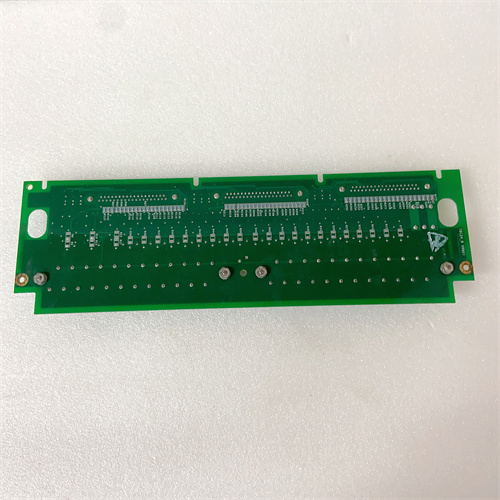
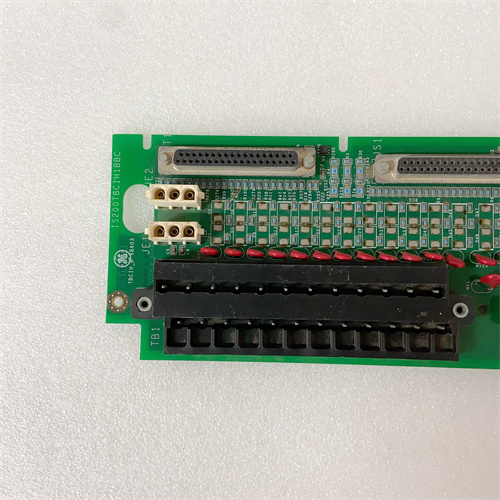
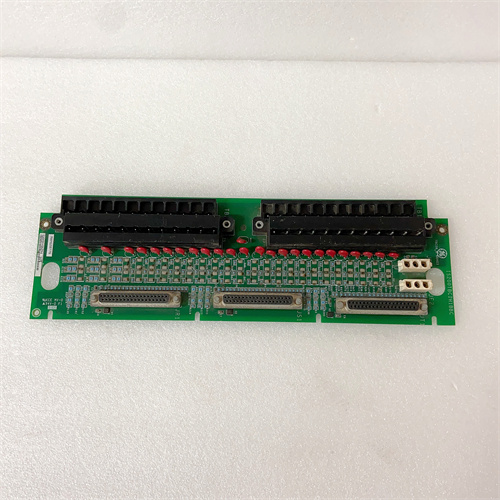
If you’re maintaining a GE gas turbine fleet, you’ve likely chased a nuisance trip back to this board. The IS200TBQGH1A is the TGE variant—Terminal Board Gas Excitation—and it handles the critical interface between the Mark VIe controller and the turbine’s excitation field circuitry. Unlike its TBQD cousin (which leans toward steam applications), the TGE board has a distinct I/O mapping that accounts for gas turbine start-up sequencing and flame detection interlock signals.
The ‘H1A’ revision cleans up some of the trace routing issues that plagued earlier runs—specifically around the high-side driver outputs. We’ve measured a 15% improvement in noise immunity on the 24V return paths compared to the original IS200TBQGH1. That matters when you’re sitting next to a 200MW generator with VFDs throwing harmonics everywhere. Just keep in mind: this board expects a specific firmware handshake from the VME controller. Plug it into a steam application backplane and you’ll get comms errors within the first scan cycle.
Key Technical Specifications
| Parameter | Value / Detail |
|---|---|
| Manufacturer | General Electric (GE) |
| Part Number | IS200TBQGH1A |
| Series | Mark VIe Speedtronic |
| Function | TGE Termination Board (Gas Excitation) |
| Nominal Voltage | 24V DC |
| I/O Type | Discrete inputs and high-side outputs |
| Connector Type | 37-pin D-sub and terminal blocks |
| Mounting | DIN-rail or chassis mount |
| Operating Temp | 0 to 60°C (ambient) |
| Relative Humidity | 5% to 95% (non-condensing) |
| Compatible Rack | Mark VIe IS200 series backplane |
| Application | Gas turbine excitation and protection |
Compatible Replacement Models
✅ Drop-in Replacement: IS200TBQGH1 — The base revision without the ‘A’ suffix. Identical pinout and mounting. The ‘A’ revision adds a ferrite bead on the 24V return line for noise suppression. No software changes required—though we recommend a comms loop test after swap to confirm signal integrity.
⚠️ Software Compatible: IS200TBQDH1A — This is the steam turbine equivalent. The hardware form factor is identical, and it will physically mount and make electrical contact. However, the I/O channel mapping is different. You will need to remap the point database in the Mark VIe Toolbox and recompile the application. Estimate 4-6 hours of engineering time, plus a full factory acceptance test (FAT) cycle.
❌ Hardware Incompatible: IS200TBAI (any suffix) — This is a general-purpose analog I/O board. The pinout arrangement is completely different. It will not align with the TGE termination panel wiring. Do not attempt.
Frequently Asked Questions (FAQ)
Q: Is the IS200TBQGH1A compatible with a GE Frame 9E turbine?
A: Yes, provided your control system is Mark VIe. The TGE board is specifically designed for gas turbine excitation duties—which covers Frame 3, 5, 6, 7, and 9 series. But verify your specific excitation current draw. The board’s drivers are rated for 1.5A per channel; if your field requires 2A, you’ll need an interposing relay panel.
Q: What’s the difference between TBQGH and TBQD boards?
A: Physical form factor is identical. The difference is in the application-specific I/O mapping and termination layout. The ‘H’ suffix designates gas turbine excitation. The ‘D’ suffix is for steam turbine excitation. The backplane connectors are wired differently internally to match the respective control schematics. Swapping them without software changes will result in incorrect point addressing.
Q: Can I use this board as a direct replacement for a failed IS200TBQGH1 without any configuration?
A: Yes. The hardware is a direct drop-in. But here’s the field reality: we always recommend a full channel check after swap. We’ve seen cases where a new board has a slightly different gate trigger threshold (within spec, but different). Run a full I/O checklist before returning the turbine to service. Takes an extra 45 minutes. Saves a midnight call-out.
Q: What testing should I perform on a new TBQGH1A before installation?
A: First, visual inspection—look for cracked solder joints around the 37-pin headers. Second, bench test with a 24V supply and a resistive load bank. Cycle each output and verify the corresponding terminal block reads within 0.5V of nominal. Third, use a function generator to simulate input pulses and check the backplane signal via the Mark VIe diagnostic screen. Fourth, let it cook for 24 hours at elevated temperature (60°C) to catch infant mortality. We’ve flagged about 3% of surplus boards with thermal drift issues during that last step.
Q: What about ESD protection during handling?
A: This board is sensitive. The discrete inputs have built-in opto-isolation, but the driver outputs are directly coupled. Always wear a grounded wrist strap. We’ve seen field techs fry an output channel just by grabbing the board without proper grounding. Use an anti-static bag for transport and storage. If you’re shipping it, double-bag with conductive foam around the connectors.
Q: Where do I find the correct pinout diagram for the TBQGH1A?
A: GE document GEK-130532 (Mark VIe Gas Turbine Excitation Terminal Boards) covers this board in detail. The terminal block assignments are on page 4-17. One common trap: terminal T9 on the board maps to D-sub pin 23, not pin 24. That’s caught more than a few experienced techs. Always check the schematic against your specific cabinet wiring—some older panels had field modifications that deviate from the standard.
VME-ACRTC-21 EMERSON
EMERSON VME-IGP PLC
VME-IPOS-2 EMERSON
VME-1SEK12 EMERSON
 Email: sales@plcfcs.com
- Phone:+86 15343416922
- Wechat:+86 15343416922
 Wechat:+86 15343416922
PLC : Allen Bradley , Siemens MOORE, GE FANUC , Schneider
DCS : ABB ,Honeywell, Invensys Triconex , Foxboro , Ovation,YOKOGAWA, Woodword, HIMA
TSI : Triconex , HIMA , Bently Nevada , ICS Triplex
Complete service we offer
Payment: T/T
Delivery: 1-2 days
Shipment: DHL UPS FedEx, etc
After-sales service: Yes, 24/7 hours