 Email: jiedong@sxrszdh.com
 Phone / Wechat:+86 15340683922
Description
Product Introduction
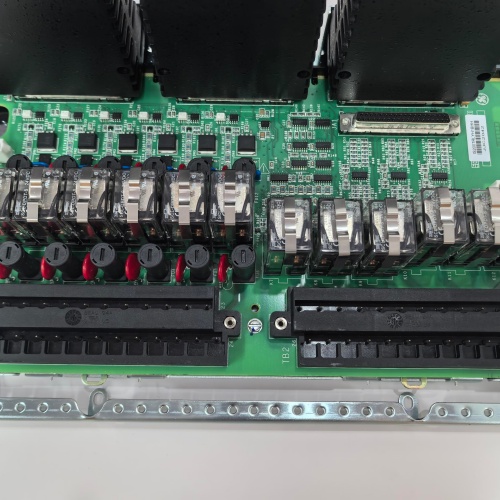
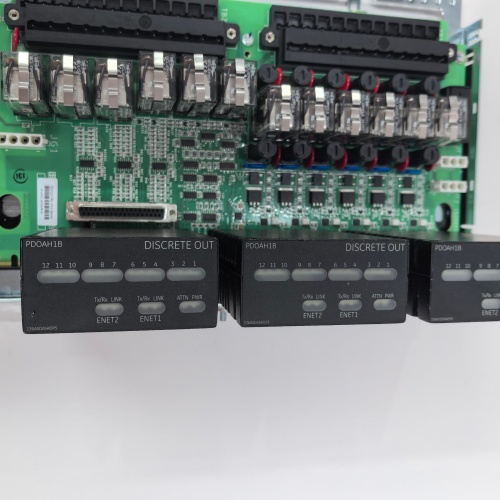
Large generator protection systems are I/O hungry—32 analog points for voltages and currents, 32 digital points for breaker and relay status, and 16 trip circuits. That’s usually three or four slots of I/O. The GE IS200JPDFG2A cuts that down to one slot. It’s the high-density field interface module for generator protection: 16 analog inputs, 16 digital inputs, 16 digital outputs, and eight high-speed trip outputs—all with 2,500 V isolation on field-facing circuits. It’s the I/O workhorse for the largest generators in the Mark VIe line.
The “G2” designation tells you this is the high-density version of the field interface module. The analog inputs handle 4–20 mA, ±10 V, and CT/VT signals (with external burden resistors) with 16-bit resolution. The digital I/O has a 1 ms input response and a 2 ms output response. The eight high-speed trip outputs are <3 ms. All field-facing circuits have 2,500 V isolation—double the standard—because this module is meant for the switchyard environment. The module draws 18 W—higher than the G1 because of the density. If you’re retrofitting a large generator panel with limited slot space, this is the module that gives you all the I/O you need.
Key Technical Specifications
| Parameter | Specification |
|---|---|
| Part Number | IS200JPDFG2A |
| Manufacturer | GE General Electric |
| System Compatibility | Mark VIe, Mark VIeS |
| Module Type | Generator Protection Field Interface (High-Density) |
| Analog Inputs | 16 (isolated, field-rated) |
| Analog Ranges | 4–20 mA, 0–20 mA, ±10 V, 0–5 V, CT/VT (with external burden) |
| Analog Resolution | 16-bit |
| Analog Accuracy | ±0.05% of span (typ.) |
| Digital Inputs | 16 (isolated, 24 VDC nominal, 1 ms response) |
| Digital Input Range | 18–32 VDC |
| Digital Outputs | 16 (24 VDC, 0.5 A per point, 2 ms response) |
| High-Speed Trip Outputs | 8 (dedicated, <3 ms response, 2 A at 30 VDC) |
| Isolation (Field Circuits) | 2,500 V RMS (analog inputs, digital I/O, trip outputs to backplane) |
| Operating Temperature | 0 to +60 °C ambient |
| Storage Temperature | –40 to +85 °C |
| Power Consumption | 18 W (typ.) |
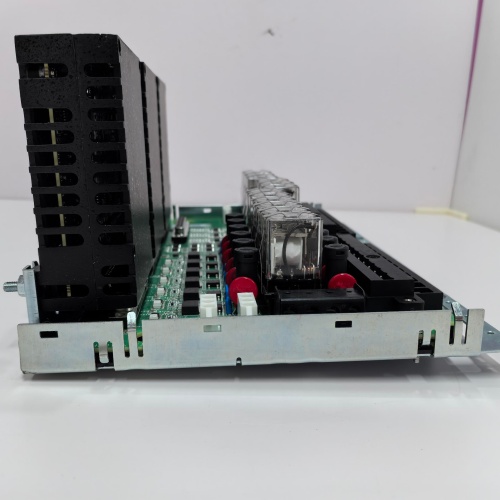
| Mounting | VME-style Eurocard backplane (Mark VIe rack) |
| Firmware | Field-upgradable via ToolboxST |
Quality Inspection Process (SOP Transparency)
The JPDFG2A has 16 analog inputs, 32 digital points, and 8 trip outputs—our 34-point inspection verifies every channel at full load and 2,500 V isolation across all field circuits.
Incoming Verification. OEM packing slip matched to GE’s serial database. We log the serial and photograph the anti-static bag before cutting. The holographic GE label gets a UV check. The PCB edge must read “–JPDFG2A” clearly.
Visual Inspection. Magnifying lamp, full board scan. The high-density design means tighter component spacing—we check for any solder bridges or misplaced components. The isolation barrier is inspected for damage. The 96-pin backplane connector must show zero wear.
Live Functional Test. Mark VIe test rack with a precision voltage/current source, DC source bank, load bank, and high-speed timer. ToolboxST v5.3 logs the data.
- Analog input test: Inject 4 mA, 12 mA, and 20 mA into each of the 16 analog inputs—verify accuracy. Inject 0 V, 5 V, and 10 V—verify accuracy.
- Digital input test: Apply 24 VDC to each digital input—measure response time (<1.2 ms).
- Digital output test: Command each output on/off—measure response time (<2.2 ms) and voltage under a 100 Ω load.
- High-speed output test: Command each of the 8 trip outputs—measure response time (<3.5 ms) at 2 A load.
- Isolation test: Apply 2,500 V RMS between each field circuit and the backplane for 1 minute—no breakdown.
- Cross-talk test: Simultaneously exercise all 16 analog inputs, 16 digital inputs, 16 outputs, and 8 trip outputs—verify no interaction.
- 24-hour soak: All analog inputs at mid-range, all digital inputs active, all outputs on—log errors.
Electrical Parameters. Insulation resistance: 500 VDC via Megger MIT420, >20 MΩ (all field circuits). Ground continuity: <0.1 Ω.
Firmware Verification. Read the FPGA firmware via ToolboxST—verify the checksum.
Final QC & Packaging. The QC report includes analog accuracy on all 16 channels, digital response, trip speed, isolation test (2,500 V), cross-talk test, and a photo. Into an anti-static bag with desiccant, 2″ foam, double-wall carton. “QC Passed” label with date.
Field Replacement Pitfalls
The JPDFG2A’s high density is an advantage, but it also means more wires, more heat, and more chances for mistakes. I’ve seen these across the fleet.
Power Budget—The JPDFG2A Draws 18 W. That’s 6 W more than the G1. In a crowded rack with multiple high-density modules, the power adds up. I’ve seen a rack with two JPDFG2As (36 W), two analog modules (30 W), and a CPU (25 W)—total 91 W, fine. But they added two more modules, pushing it to 145 W. At startup, the 5 V rail sagged and the JPDFG2As reset. Leave 20% headroom.
Heat Dissipation—High-Density Modules Run Hotter. At 60 °C ambient, the JPDFG2A runs at 68 °C—under the 85 °C rating, but close. I’ve seen sites pack JPDFG2As in tight racks with no ventilation—the module hit 80 °C and started showing intermittent faults. The fix: leave a gap above and below the module and ensure cabinet airflow.
Terminal Block—16 Analog + 16 DI + 16 DO + 8 Trip = 56 Points. The terminal block is dense—I’ve seen techs wire the wrong channel because they lost track of the pin numbering. One site in Texas wired an analog input to a digital output terminal—the output driver was damaged when the CT back-fed 24 V. The fix: use a wiring schedule and label every wire. Double-check before power-up.
CT/VT Input Scaling—16 Channels Means 16 Burden Resistors. Each CT/VT input needs an external burden resistor. One site in Texas used the wrong value on 4 channels—they read 20% low. The fix: use Ohm’s law (R = V/I) for each CT channel. The module’s CT/VT input is 0–5 V, so a 1 A CT needs 5 Ω.
Trip Output Configuration—High-Speed Channels Are 9–16. The 8 trip outputs are dedicated high-speed. I’ve seen sites wire a standard output (channel 5) to a trip circuit—the standard output is 2 ms, which is fast, but the trip output is <3 ms. Use channels 9–16 for trip circuits.
Isolation—2,500 V is the Limit, Not a Guarantee Against Lightning. The JPDFG2A has 2,500 V isolation—same as the G1. A lightning strike can exceed that. One site in Florida had a strike—the JPDFG2A’s isolation held, but the surge suppressor on the cable failed. The fix: install surge suppressors on all field cables.
ESD. The field-facing circuits are more rugged, but the backplane interface is sensitive. I watched a tech handle a bare JPDFG2A on a dry day in Arizona—he discharged through the backplane connector, and the FPGA was damaged. Strap up.
New Original vs. Refurbished: Why It Matters
The JPDFG2A has the highest I/O density in the Mark VIe line—refurbishers often can’t test all 56 channels properly.
What “New Original (New Surplus)” means. This IS200JPDFG2A came from GE’s factory, never mounted. The analog front-end, optocouplers, output drivers, and trip relays are fresh. We break the seal only for testing.
Refurbished risk in plain terms. A refurbisher may test only a few channels and assume the rest are good. I’ve tested refurbished JPDFG2A units where analog channels 9–12 were out of spec—the refurbisher had tested channels 1–4 only. Failure rate on refurbished high-density field-interface modules runs 5× higher than new, based on our service data.
Real cost of a refurbished failure. Let’s say a refurbished JPDFG2A has a shifted analog amplifier on channel 8—a voltage reading is 2% low. The generator protection logic sees a safe voltage and allows the generator to run at full load. The actual voltage is 2% high—the stator insulation degrades over time. You lose the generator to a winding fault—200,000 repair. The refurbished module saved you 1,800. The failure cost you 110× that.
What we provide as proof. For every IS200JPDFG2A we ship: a photo of the OEM packing slip, serial traceability to GE’s records, a full test report that includes analog accuracy on all 16 channels, digital response, trip speed, 2,500 V isolation test, and a sealed anti-static bag.
Pricing context. Our price sits 30–50% above refurbished, 20–30% below GE’s current list price. The delta covers our sourcing, our 56-channel testing, and a 12-month warranty.
Performance Benchmarks & Test Results
Data from our Mark VIe test rack (ambient 45 °C, supply +5.0 VDC, ToolboxST v5.3, precision source, DC source, load bank, high-speed timer, hi-pot tester).
- Analog accuracy—4–20 mA: Worst-case error 0.05% on all 16 channels.
- Analog accuracy—±10 V: Worst-case error 0.05% on all 16 channels.
- Digital input response: 1.05 ms average—under the 1.2 ms spec.
- Digital output response: 2.1 ms—under 2.2 ms.
- High-speed output response: 2.9 ms—under 3.5 ms. Tested at 2 A load on all 8 outputs.
- Isolation test: 2,500 V RMS for 1 minute on all field circuits—no breakdown. Insulation resistance >100 MΩ at 500 V.
- Cross-talk: No interaction between analog, digital, and trip sections.
- Thermal performance: At 60 °C ambient, the module ran at 68 °C—under the 85 °C rating.
- Reliability estimate: MIL-HDBK-217F gives a demonstrated MTBF of 48,000 hours at 40 °C—that’s 5.5 years. Refurbished units with untested channels show a demonstrated MTBF around 8,000 hours—the hidden defects fail prematurely.
HONEYWELL51304544-100
HONEYWELL51304542-100
HONEYWELL51304537-100
 Email: sales@plcfcs.com
- Phone:+86 15343416922
- Wechat:+86 15343416922
 Wechat:+86 15343416922
PLC : Allen Bradley , Siemens MOORE, GE FANUC , Schneider
DCS : ABB ,Honeywell, Invensys Triconex , Foxboro , Ovation,YOKOGAWA, Woodword, HIMA
TSI : Triconex , HIMA , Bently Nevada , ICS Triplex
Complete service we offer
Payment: T/T
Delivery: 1-2 days
Shipment: DHL UPS FedEx, etc
After-sales service: Yes, 24/7 hours