 Email: jiedong@sxrszdh.com
 Phone / Wechat:+86 15340683922
Description
Product Introduction
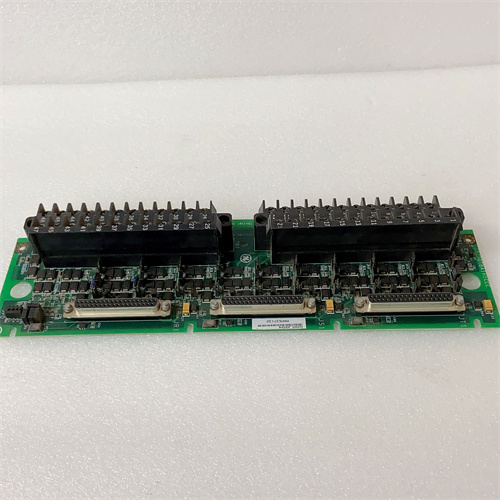
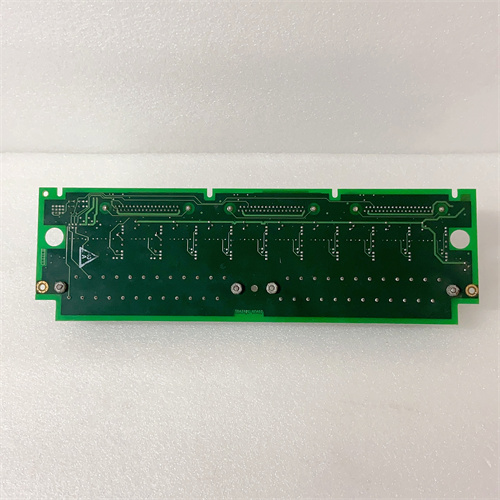
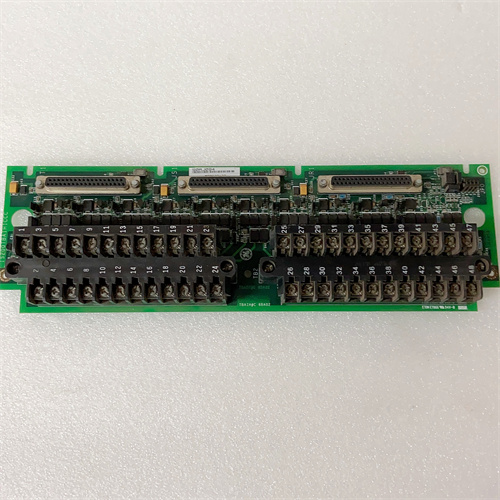
The GE IS200ACLAH1A functions as the Analog Current Loop Adapter (ACLA) module within the Mark VIe control platform, providing high-accuracy analog current loop interface for 4-20 mA field devices. This module interfaces with the Mark VIe controller via ISBus communication and offers 8 analog inputs and 8 analog outputs, specifically designed for 4-20 mA current loop signals commonly used in turbine and generator control systems.
The primary differentiator is the dedicated 4-20 mA current loop interface with 16-bit resolution and ±0.1% accuracy—the ACLA provides precise measurement and control for critical turbine parameters such as valve position feedback, pressure transmitters, temperature transmitters, and actuator commands.
Key Technical Specifications
| Parameter | Value |
|---|---|
| Model Number | IS200ACLAH1A |
| Manufacturer | GE Energy (now GE Vernova) |
| Series | Mark VIe |
| Function | Analog Current Loop Adapter – 4-20 mA Interface |
| Input Voltage | 24 V DC ±10% (via UPL or external supply) |
| Typical Current Draw | 300 mA at 24 V |
| Analog Inputs | 8 channels, 4-20 mA |
| Analog Input Resolution | 16-bit (0.0015% of full scale) |
| Analog Input Accuracy | ±0.1% of full scale at 25°C, ±0.3% over full temperature range |
| Analog Input Impedance | 250 Ω |
| Analog Outputs | 8 channels, 4-20 mA |
| Analog Output Resolution | 16-bit (0.0015% of full scale) |
| Analog Output Accuracy | ±0.1% of full scale at 25°C, ±0.3% over full temperature range |
| Analog Output Drive | 24 V loop power, 1000 Ω max loop resistance |
| Loop Power Supply | +24 V DC, 200 mA total (for external transmitters) |
| Diagnostic Reporting | Per-channel status, open-circuit detection, out-of-range detection (via ISBus) |
| Communication | ISBus (500 kbps) |
| Operating Temperature | -25 to +60°C (ambient, forced air recommended above 50°C) |
| Storage Temperature | -40 to +85°C |
| Mounting | DIN-rail mount (standard 35 mm) |
| Terminals | Spring-clamp (push-in), accepts 0.5-2.5 mm² (24-12 AWG) |
| LED Status | Power, ISBus Active, Fault, Analog Input 1-8 Status, Analog Output 1-8 Status |
Key Selling Points & Differentiators
- Dedicated 4-20 mA Interface: 8 analog inputs and 8 analog outputs specifically designed for 4-20 mA current loop signals—avoids the signal integrity issues of multi-purpose analog modules.
- High Accuracy: 16-bit resolution with ±0.1% accuracy—ensures precise measurement and control of critical turbine parameters.
- Integrated Loop Power: +24 V loop power supply for 2-wire transmitters—eliminates the need for external loop power supplies.
- Comprehensive Diagnostics: Per-channel status, open-circuit detection, and out-of-range detection—enables rapid fault identification.
- High Output Drive: Drives up to 1000 Ω loop resistance—supports long cable runs and multiple devices on the same loop.
- Full Live Test Certification: Each unit undergoes a 24-hour burn-in with full 4-20 mA simulation on all 16 channels, accuracy verification, and ISBus communication testing. We log the MAC ID, calibration data, and diagnostic baselines for traceability.
- Direct Drop-In Replacement: Form-fit-function compatible with IS200ACLAH1 and earlier ACLA revisions. Existing wiring and terminal assignments remain unchanged.
- 90-Day Warranty: Includes technical support and cross-ship replacement within 24 hours if the module fails to provide 4-20 mA interface, accuracy degrades, or diagnostics report false faults.
Frequently Asked Questions (FAQ)
Q1: What types of devices can the ACLA interface with?
The ACLA is specifically designed for 4-20 mA current loop devices: (1) Pressure transmitters, (2) Temperature transmitters, (3) Flow transmitters, (4) Level transmitters, (5) Valve position feedback, (6) Actuator commands, (7) Current-to-pressure (I/P) converters, and (8) Positioners. The module provides 8 inputs for reading field devices and 8 outputs for driving actuators and positioners.
Q2: What’s the difference between the IS200ACLAH1A and a general-purpose analog module?
The ACLA is specifically designed for 4-20 mA current loops with dedicated 250 Ω input impedance, 24 V loop power, and ±0.1% accuracy. General-purpose analog modules typically support both current and voltage signals but may have lower accuracy, different impedance, and lack integrated loop power. The ACLA provides better signal integrity for 4-20 mA applications.
Q3: The ACLA shows an open-circuit detection on channel 3—what does that mean?
Open-circuit detection indicates that the module is not detecting current flow on channel 3. For 4-20 mA inputs, this typically means: (1) The transmitter is not connected, (2) The transmitter is not powered (check loop power), (3) The wiring is broken, (4) The transmitter has failed. For 4-20 mA outputs, open-circuit detection indicates that the loop is not completed—check the wiring to the actuator. Access the diagnostic data in ToolboxST to identify the specific condition. Investigate the transmitter, wiring, and power supply.
Q4: What’s the maximum loop resistance for the analog outputs?
The analog outputs can drive up to 1000 Ω loop resistance at 20 mA. This means you can run long cable lengths or multiple devices on the same loop. For example, with 1.5 mm² cable (approximately 12 Ω per 100 meters), you can run up to 800 meters (1000 Ω / 12 Ω per 100 m). The loop power is 24 V, so the total loop resistance (including the cable and the device’s input resistance) must not exceed 1000 Ω.
Q5: Can I use the ACLA’s loop power for 2-wire transmitters?
Yes. The ACLA provides +24 V loop power for each input channel (200 mA total). For 2-wire transmitters, connect the transmitter’s + terminal to the loop power output and the – terminal to the analog input. The module provides the power and measures the current. For 4-wire transmitters (externally powered), you can disable the loop power and connect only the signal wires. The loop power can also be used for external devices (e.g., indicators) as long as the total current does not exceed 200 mA.
Q6: The ACLA shows an out-of-range detection on an analog input—what could be the cause?
An out-of-range detection indicates that the current is outside the 4-20 mA range (typically below 3.2 mA or above 20.8 mA). Possible causes: (1) The transmitter is in fault mode (many transmitters output 3.6 mA for under-range or 21 mA for over-range), (2) The transmitter is not powered, (3) The transmitter has failed, (4) There is a wiring issue. Access the diagnostic data in ToolboxST to identify the specific condition. Investigate the transmitter, wiring, and power supply. The out-of-range detection can be used to generate an alarm or trip.
Q7: What’s the typical lead time for the IS200ACLAH1A, and do you recommend stocking spares?
The IS200ACLAH1A is a commonly stocked module—we maintain 8-12 units in inventory. Standard lead time for orders of 1-10 units is 1-2 business days for shipping after QC verification. For critical 4-20 mA applications, we recommend stocking one spare ACLA per site. If you have a fleet of 10+ turbines, a 10% spare ratio is standard practice. For volume orders, contact our support line for expedited delivery and pricing options.
Controller70-80PC
XYCOM 94321-002 8320 PLC
XYCOM 94687-002
 Email: sales@plcfcs.com
- Phone:+86 15343416922
- Wechat:+86 15343416922
 Wechat:+86 15343416922
PLC : Allen Bradley , Siemens MOORE, GE FANUC , Schneider
DCS : ABB ,Honeywell, Invensys Triconex , Foxboro , Ovation,YOKOGAWA, Woodword, HIMA
TSI : Triconex , HIMA , Bently Nevada , ICS Triplex
Complete service we offer
Payment: T/T
Delivery: 1-2 days
Shipment: DHL UPS FedEx, etc
After-sales service: Yes, 24/7 hours