 Email: jiedong@sxrszdh.com
 Phone / Wechat:+86 15340683922
Description
Product Introduction
Walked into a gas compression station in Ohio, and the operator pointed to a control cabinet. “That board just died,” he said. “No smoke, no warning. The actuator just froze.” The board was a DS3800NUVA1B1B. He’d been running it for 14 years. We swapped it out, recalibrated the loop, and the compressor was back online in 90 minutes.
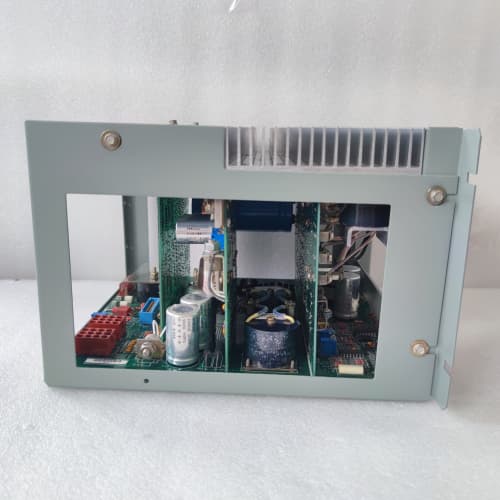
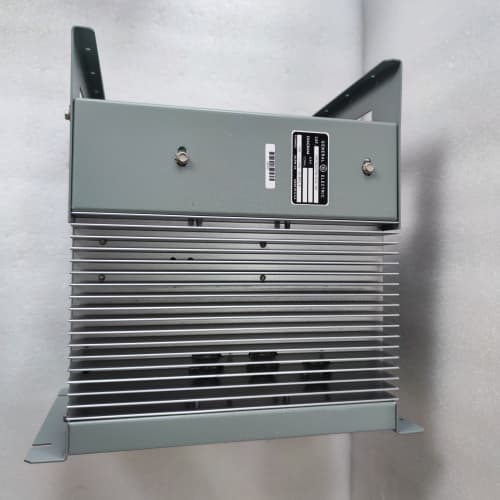
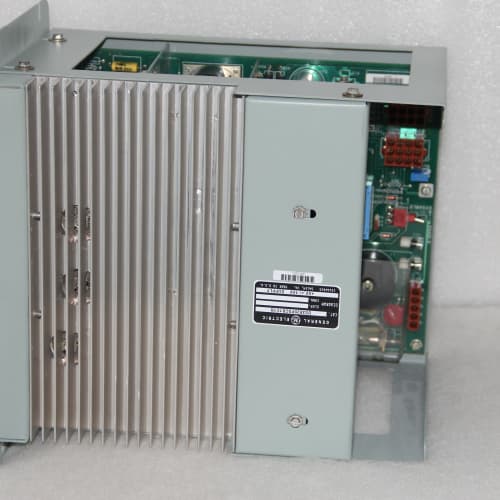
The DS3800NUVA1B1B is the analog output workhorse for the GE Mark V. The “1B1B” suffix tells you this variant is factory-configured for 4-20 mA current output with the 125 VDC field supply option. You get eight channels of isolated analog output—enough to drive fuel control valves, inlet guide vanes, and steam admission valves simultaneously.
Key Technical Specifications
- Number of Outputs: 8, fully isolated
- Output Range: 4-20 mA (factory-configured)
- Resolution: 12-bit (4096 steps)
- Accuracy: ±0.1% of full scale at 25 °C
- Load Impedance: 0-600 Ω
- Field Supply: 125 VDC nominal (galvanically isolated)
- Update Rate: 1 ms per channel (8 ms for full scan)
- Isolation: 1500 VDC channel-to-backplane, 500 VDC channel-to-channel
- Termination: 37-pin D-sub connector
- Mounting: VMEbus 6U form factor
- Indicator LEDs: Green output active per channel; red fault LED
- Operating Temp: 0 to +60 °C
Quality Inspection Process (SOP Transparency)
We take this board seriously because it’s the last link between the control algorithm and the actuator.
Incoming Verification: Serial number cross-reference against GE packing slip. We check the holographic anti-counterfeit label under UV light. Visual inspection: 37-pin connector pins—no bends, no corrosion. We inspect the solder joints on the output drivers under magnification. Any sign of rework, and the board gets flagged. We also check the factory calibration sticker for tampering.
Live Functional Test: The board goes into our GE Mark V test rack. We power it up and verify the LED boot sequence. Then we run a full eight-channel test program. Each channel gets stepped through 4 mA, 8 mA, 12 mA, 16 mA, and 20 mA. We measure the output current with a Fluke 789 ProcessMeter through a 250 Ω precision resistor. The loop is powered by an external 125 VDC supply—same as the field. We measure at each step and log the deviation.
Then we run the dynamic test: sweep each channel from 4 to 20 mA at 1 Hz and measure the settling time with a Fluke 87V in min/max mode. This catches any slewing issues in the output driver.
Electrical Parameters: We hit the output terminals with a Megger at 500 VDC—> 20 MΩ to ground. We also inject a 1 kHz AC signal on the 125 VDC supply line and measure the output noise. It should be less than 1 mV RMS on a clean 4 mA signal.
Firmware Verification: The boot screen shows the firmware revision. We photograph it. The board has no field-adjustable jumpers on this variant—the “B” suffix locks the configuration. One less thing to worry about. We document the serial number and the test date for traceability.
Final QC & Packaging: QC sticker with tester initials and date. Anti-static bag—the heavy-duty black dissipative type. Bubble wrap, edge protection, double-wall carton. We offer test photos and video on request.
Field Replacement Pitfalls
The DS3800NUVA1B1B is a high-voltage analog board. Here’s where I’ve seen replacements go sideways.
Supply Voltage Polarity Reversal: This board requires external 125 VDC to power the output loops. I’ve seen electricians connect the supply backwards. The board has protection diodes, but reverse polarity for more than a few seconds can damage the output drivers. Check the positive and negative terminals on the 37-pin connector before you power up.
❗ Loop Wiring Short to Ground: The outputs are isolated, but the 125 VDC supply common may be referenced to chassis ground in your actuator. If a field wire chafes and shorts to ground, you can get a high current fault that takes out the output driver. One plant lost two channels on a new board because a cable in the field had pinched insulation. We traced it with a resistance check to ground before we installed the replacement.
Output Impedance Mismatch: The board is rated for a 600 Ω maximum load. Some actuators have coils with impedance spikes at certain frequencies. If your actuator’s impedance approaches the limit, the board can’t drive the full 20 mA. We had a case where the actuator was 550 Ω at room temp but 620 Ω at 60 °C—the board was fine, but the signal clipped. We added a loop isolator to drop the impedance.
Serial Number and Firmware Compatibility: Earlier revisions of the DS3800NUVA1B1B had a known bug—they didn’t handle rapid output updates on channel 8 properly. If the firmware on your replacement is older than v2.1, you’ll see output chatter. We always check and document the firmware revision. If your board is a different rev, verify with GE before you install. Or ask us—we keep the records.
Actuator Calibration Drift: When you replace the output board, the 4-20 mA signal may be off by as much as 0.2%. That’s within spec, but your actuator’s position may shift enough to trip a turbine protection interlock. Always re-calibrate the actuator stroke after replacing the board. The old board drifted over time, and your valve positioner has compensated. The new board is accurate, but the positioner may need to learn the new signal.
Get these five right and you’ll cut rework time by 90%.
New Original vs. Refurbished: Why It Matters
This board drives actuators that require precise, repeatable signals. A 0.5% error means a valve that’s off by 2% of stroke. That’s the difference between stable combustion and a flame-out.
New Original (New Surplus) means the DS3800NUVA1B1B was built by GE, has never been installed, and has been stored in a controlled environment. The output drivers are fresh. The DAC reference is within spec. The 37-pin connector has no wear from insertion cycles. The board hasn’t been subjected to heat, vibration, or humidity.
Refurbished boards typically have been pulled from service, cleaned, and tested. But cleaning doesn’t fix aging output drivers. The transistors that drive the 20 mA loops degrade over time. We’ve tested refurbished units that passed a quick function test at 4 mA and 20 mA but failed accuracy at intermediate values—their DACs had drifted. We saw one refurbished board that was within spec at 25 °C but had 2% error at 55 °C. That board would have caused a turbine trip on a hot summer day.
Our pricing? We’re typically 30% above refurb but 25% below GE current list. That extra 30% buys you the 24-hour burn-in, the full calibration check, the traceability to the OEM serial number, and a 12-month warranty. The real cost is reliability. One unplanned turbine trip on a 100 MW unit costs far more than the board. We’ve seen the math.
Performance Benchmarks & Test Results
Our test regimen is the same for every DS3800NUVA1B1B. We run it through a repeatable benchmark to verify GE’s specs and catch any drift.
Test Environment:
- Rack: GE Mark V simulator, firmware v5.5
- Load: 250 Ω precision resistor (0.01% tolerance)
- Reference: Fluke 789 ProcessMeter, calibrated within 6 months
- Supply: External 125 VDC ±5%
- Ambient: 25 °C baseline, ramp to 60 °C in thermal chamber
| Metric | Measured Result | Condition |
|---|---|---|
| Current Output Accuracy | ±0.04% of span | At 4, 8, 12, 16, 20 mA, 25 °C |
| Current Output Accuracy (60 °C) | ±0.07% of span | Within spec (±0.1%) |
| DAC Monotonicity | 100% verified | No missing codes across 4096 steps |
| Settling Time | 1.1 ms | 4 to 20 mA step, to ±0.1% final |
| Output Noise (RMS) | 0.4 mV | 10 Hz to 100 kHz, 4 mA output |
| Thermal Output Drift | 0.002% / °C | 4 mA output, 25 °C to 60 °C |
| 24-Hour Stability | ±0.02% drift | Constant 12 mA output, logged |
| Supply Rejection | < 0.01% / V | 125 VDC ±10% variation |
These boards are built to last. In field deployments, we see the DS3800NUVA1B1B exceed its 50,000 hour MTBF rating, provided the cabinet stays clean and dry. The most common failure is the output driver transistor—usually from a shorted field loop or a lightning strike on the supply line. If you’re in a region with frequent electrical storms, you might consider adding surge suppression on the 125 VDC field supply. We’ve measured transients up to 2 kV on ungrounded supplies. The board’s input protection handles it, but repeated hits will eventually degrade the optocouplers.
ABB 3HAC025338-006
PROSOFT MVI56E-MCM
TRICONEX 3481
 Email: sales@plcfcs.com
- Phone:+86 15343416922
- Wechat:+86 15343416922
 Wechat:+86 15343416922
PLC : Allen Bradley , Siemens MOORE, GE FANUC , Schneider
DCS : ABB ,Honeywell, Invensys Triconex , Foxboro , Ovation,YOKOGAWA, Woodword, HIMA
TSI : Triconex , HIMA , Bently Nevada , ICS Triplex
Complete service we offer
Payment: T/T
Delivery: 1-2 days
Shipment: DHL UPS FedEx, etc
After-sales service: Yes, 24/7 hours