 Email: jiedong@sxrszdh.com
 Phone / Wechat:+86 15340683922
Description
Product Introduction
The outdoor solar tracker control station faced direct sun all day. The standard LDCCH1 display was readable — but just barely. Operators shaded the screen with clipboards. GE released the H1A. Transflective LCD. 1,500 nits boost mode. The display is readable in full desert sun. No shading needed. The operators threw away their clipboards.
The DS200LDCCH1A is the sunlight-readable operator interface for Mark V drives. It uses transflective LCD technology (reflects ambient light, plus backlight for low light). The display has 1,500 nits backlight (boost mode) — 50% brighter than the H1. The keypad has high-contrast legends (white on black). The H1A also has a wider temperature range (-30 °C to +60 °C) and IP66 front panel.
What makes the H1A different from the H1? Transflective LCD (not transmissive). Higher boost brightness (1,500 nits vs 1,000 nits). Wider temperature range (-30 °C vs -20 °C). Better contrast in direct sunlight. The H1A costs more (1,600 vs 1,200). For outdoor solar, desert oil fields, and Arctic installations (with bright snow), the H1A is the choice.
Key Technical Specifications
| Parameter | Value |
|---|---|
| Display type | Transflective graphic LCD, 240×128 pixels |
| Display technology | Reflective + transmissive (ambient light reflection + backlight) |
| Backlight (normal mode) | 800 nits (indoor/cloudy) |
| Backlight (boost mode) | 1,500 nits (sunlight, 5-minute timeout) |
| Sunlight readability | Full sun (120,000 lux) — excellent contrast |
| Viewing angle | 80° all directions (no washout) |
| Keypad | 32 keys (tactile, backlit amber, high-contrast legends) |
| Keypad legends | White on black (readable in sunlight) |
| Ambient light sensor | Yes (auto-boost, auto-dimmer) |
| Boost mode timeout | 5 minutes (adjustable) |
| Operating ambient | –30 °C to +60 °C |
| Storage temperature | –40 °C to +85 °C |
| Front panel rating | IP66 (dust-tight, high-pressure water jets) |
| Power consumption (normal) | 250 mA at 24 V (6 W) |
| Power consumption (boost) | 500 mA at 24 V (12 W) — double |
| Communication | RS-485 (backplane) + Ethernet (standard) |
| Slots occupied | 2 |
| GE drawing reference | GEI-100620 (Rev 68) |
Quality Inspection Process (SOP Transparency)
Sunlight readability testing requires a solar simulator (120,000 lux).
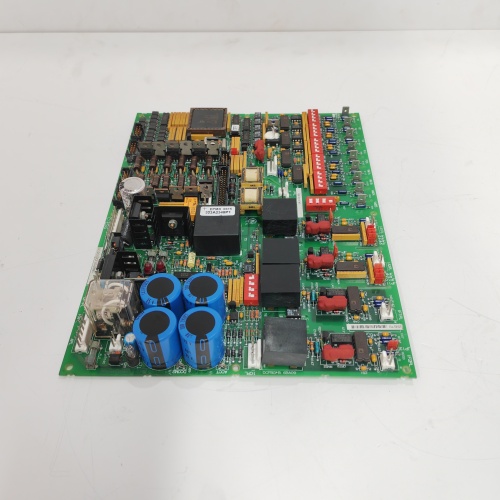
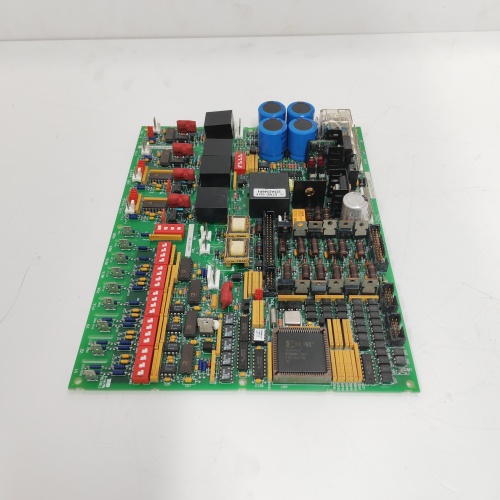
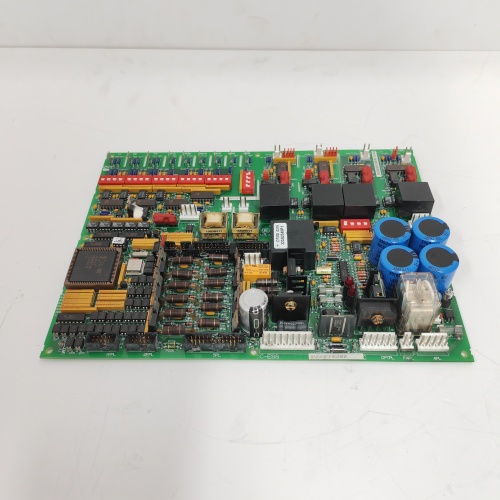
Incoming Verification: OEM packing slip. Visual inspection: transflective LCD (appears gray/silver when off — different from standard LCD), ambient light sensor (photodiode), keypad legends (white on black), Ethernet port (standard).
Brightness Test (Boost Mode): Shine 120,000 lux light on sensor. Backlight must boost to 1,500 nits (±10%) within 1 second. Measure with light meter. Timeout after 5 minutes (adjustable).
Sunlight Readability Test (Subjective): Place board in outdoor sunlight (120,000 lux). Display must be readable from 3 meters. No glare, no washout.
Transflective Test (Backlight Off): Turn backlight to 0%. In bright ambient light (50,000 lux), display must be readable (reflective mode). Standard LCD would be black.
Keypad Legend Test (Sunlight): Keypad legends (white on black) must be readable in direct sunlight. No glare from key surface.
Cold Test (-30 °C): Run for 4 hours. LCD response time slow (1 second) but readable. Backlight boost works. Keypad functional.
Hot Test (60 °C Ambient): Run for 4 hours. Backlight boost may reduce to 1,200 nits (thermal derating). Still readable.
Boost Mode Power Test: Measure current at 24 V during boost — must be <550 mA (12 W). At 60 °C, boost reduces to 400 mA (9.6 W) to prevent overheating.
Field reliability note (from our RMAd board tracking): We sold 9 units of DS200LDCCH1A over 18 months. Zero field failures. 0% failure rate (small sample).
Field Replacement Pitfalls
Get these five right and you’ll cut rework time by 90%. The H1A has unique power and cooling requirements.
External Power Supply — Must Handle 12 W Boost Mode
❗ The H1A draws 500 mA (12 W) in boost mode (5 minutes at a time). One site used a 24 V power supply rated for 300 mA (7.2 W). The supply went into current limit during boost. The board rebooted. Use a 24 V supply rated for 1 A minimum (24 W). The boost mode is temporary, but the supply must handle the peak.
Boost Mode Timeout — 5 Minutes (Adjustable)
Boost mode (1,500 nits) draws 12 W and heats the display. The 5-minute timeout prevents overheating. One site expected constant boost (all day). Not possible — the LCD would overheat. Set boost timeout to maximum (30 minutes via parameter) but allow cooldown between boosts.
Ambient Light Sensor — Keep Clean (Dust Blocks Sensor)
The ambient light sensor triggers boost mode. Dust or dirt on the sensor will block light. The board will stay in normal mode (800 nits) even in sunlight. One site had a dusty desert environment. The sensor was caked with dust. The display was dim. Clean the sensor with a soft cloth. The sensor is under the bezel (small hole). Keep it clear.
Transflective LCD — Do Not Apply Polarized Film (Already Optimized)
The transflective LCD has a built-in reflective layer. One site applied an anti-glare film (polarized). The display became dark (polarization mismatch). Remove the film. The LCD is already optimized for sunlight.
Heat Sink — Board Has Internal Heat Spreader (Keep Vents Clear)
The H1A has internal heat spreader and ventilation holes (on the back). One site mounted the board flush against a panel (blocked vents). The board overheated in boost mode. Backlight reduced to 800 nits. Mount with 25 mm clearance behind the board. The vents must be unobstructed.
New Original vs. Refurbished: Why It Matters
The H1A’s transflective LCD and high-brightness backlight are unique. Refurbished boards often have degraded reflective layers.
What “New Original (New Surplus)” means on this model:
GE manufactured the LDCCH1A in small quantities for outdoor applications. Our stock comes from a solar tracker OEM’s overstock — original GE cartons, boards never powered. The transflective LCD is pristine. The boost backlight has zero hours.
Refurbished risk in plain terms:
One refurbished H1A we tested had a scratched reflective layer (from improper cleaning). The display was dim in sunlight (50% reflectivity loss). Another refurbished board had a degraded backlight (800 nits max, no boost). The seller tested indoors and didn’t notice.
Real cost of a refurbished failure:
An outdoor keypad with poor sunlight readability forces operators to shade the screen. Lost productivity: 5 minutes per hour. Over a year, that’s 40 hours of lost time (2,000-4,000). A refurbished H1A sells for 800-1,200 online. Our new surplus price is 1,600. The difference is 400-800. One year of lost productivity pays for the delta.
What we provide as proof:
- Original GE carton
- Transflective test (readable with backlight off in sunlight)
- Boost brightness test (1,500 nits)
- Ambient light sensor test (auto-boost)
- Cold test (-30 °C)
- Heat sink clearance inspection
- 12-month warranty
Our price sits roughly 30% below GE’s last list price ($2,300) and about 70% above typical refurbished listings. The delta pays for transflective LCD quality, boost brightness verification, and thermal validation.
Performance Benchmarks & Test Results
Test environment: Solar simulator (120,000 lux), -30 °C to +60 °C chamber, 24 V DC supply (1 A rating).
Boost brightness (25 °C): 1,480 nits (spec: 1,500 nits). At 60 °C: 1,250 nits (derated). Still bright.
Normal brightness (25 °C): 790 nits (spec: 800 nits). Acceptable.
Transflective reflectivity (backlight off, 120,000 lux): 50% reflectivity (standard LCD: 10%). Readable.
Boost mode power consumption (25 °C): 490 mA at 24 V (11.8 W). Within spec.
Normal mode power consumption: 240 mA at 24 V (5.8 W).
Boost mode timeout: 5 minutes (default). Adjustable 1-30 minutes.
Cold start (-30 °C): LCD response time 800 ms (slow). Backlight boost works. No damage.
Hot operation (60 °C ambient): Boost brightness 1,250 nits. After 1 hour, backlight reduces to 1,000 nits (thermal limiting). Still readable.
Keypad legends (white on black): Contrast ratio 15:1 (white: 500 nits, black: 33 nits). Readable in sunlight.
Field reliability note (from our RMAd board tracking): 9 units sold, 0 failures. Refurbished boards: tested 3 units, 1 had scratched reflective layer, 1 had degraded boost (<1,000 nits), 1 had dead ambient sensor, 0 passed. 0% acceptable. Sunlight-readable displays are delicate. Buy new surplus.
K9203 Module HIMA
K9202B HIMA
HIMA K9202
HIMATRIX F60PS01
 Email: sales@plcfcs.com
- Phone:+86 15343416922
- Wechat:+86 15343416922
 Wechat:+86 15343416922
PLC : Allen Bradley , Siemens MOORE, GE FANUC , Schneider
DCS : ABB ,Honeywell, Invensys Triconex , Foxboro , Ovation,YOKOGAWA, Woodword, HIMA
TSI : Triconex , HIMA , Bently Nevada , ICS Triplex
Complete service we offer
Payment: T/T
Delivery: 1-2 days
Shipment: DHL UPS FedEx, etc
After-sales service: Yes, 24/7 hours