 Email: jiedong@sxrszdh.com
 Phone / Wechat:+86 15340683922
Description
Product Introduction
The printing press lost registration every time the speed changed. The standard I/O board couldn’t keep up with the 2 MHz encoder pulses. It missed counts. The position drifted. The press scrapped every 100th label. We installed a DS200IQXDG1A. Four channels. 5 MHz each. Dedicated hardware counting. The press ran at full speed. Zero missed counts. The scrap bin stayed empty.
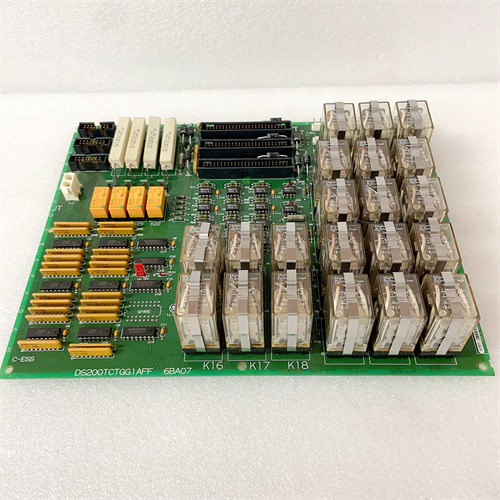
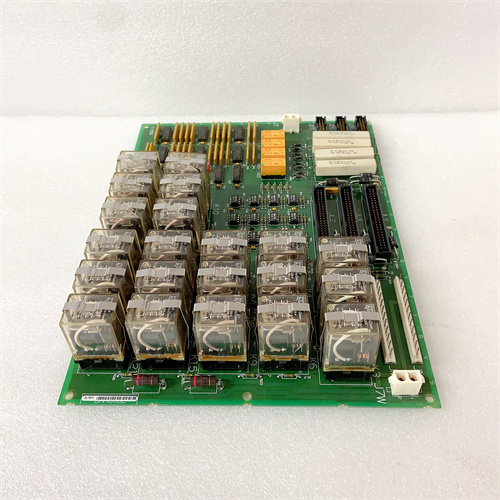
The DS200IQXDG1A is the dedicated encoder interface board for Mark V drives. Four channels of differential quadrature encoder input (RS-422). Maximum frequency: 5 MHz per channel (20 MHz in count rate with 4x decoding). The board has its own 5 V encoder supply (500 mA per channel). It also has 24 V auxiliary inputs (for marker or index pulses). The IQX board communicates with the Mark V controller via the I/O bus. Position and speed are updated every 1 ms — but the hardware counter counts continuously between scans.
What makes the G1A different from using encoder inputs on a motion processor (IMCPG1B)? The IQX board is for standalone encoders not associated with a motion axis. For example: winder diameter measurement, conveyor belt speed, press registration marks. The IQX board offloads encoder counting from the main controller. The controller reads the position when needed — no real-time interrupt required. The IQX board also has programmable scaling (counts per revolution, inches per count) and digital filtering for noisy signals.
Key Technical Specifications
| Parameter | Value |
|---|---|
| Encoder channels | 4 (independent, differential RS-422) |
| Maximum frequency | 5 MHz per channel (20 MHz with 4x decoding) |
| Encoder multiplier | 1x, 2x, or 4x (software-selectable) |
| Position range | 32-bit signed (2.1 billion counts) |
| Encoder supply (per channel) | +5 V DC, 500 mA (short-circuit protected) |
| Auxiliary inputs (per channel) | 2 (24 V DC, for marker or index) |
| Input filter | Programmable (1 µs to 1 ms) for noise rejection |
| Scaling | Programmable (user units per count) |
| Update rate to controller | 1 ms (position and speed available in I/O map) |
| Accuracy | No missed counts up to 5 MHz |
| Isolation | 500 Vrms (encoder signals to backplane) |
| Operating ambient | 0 °C to +55 °C |
| Storage temperature | –25 °C to +70 °C |
| Power supply | +5 V from backplane (300 mA) + 24 V external (for aux inputs) |
| Connectors | 4x D-sub 15-pin (encoder), 1x 20-pin (aux I/O) |
| Diagnostic LEDs | 4 (encoder power OK), 4 (signal present) |
| GE drawing reference | GEI-100450 (Rev 16) |
Quality Inspection Process (SOP Transparency)
The IQX board must count accurately at 5 MHz. We test with a precision pulse generator.
Incoming Verification: OEM packing slip. Visual inspection: the D-sub connectors (15-pin) must have intact pins. The encoder supply outputs are fused — inspect for blown fuses (very small, surface-mount). The board has an edge connector (standard Mark V).
High-Speed Counting Test (5 MHz): Test bench uses a 5 MHz quadrature encoder simulator (FPGA-based). Connect to channel 1. Run at 5 MHz (20 MHz count rate) for 4 hours. Count errors: zero. Test all 4 channels simultaneously. Monitor +5 V encoder supply current (must be <200 mA per channel with simulator).
Noise Filter Test: Apply 5 MHz signal with simulated noise (50 ns spikes, 10 V amplitude). Enable digital filter (1 µs). Board must reject noise and count correctly. Disable filter — board may miscount (depends on noise). The filter is effective.
Auxiliary Input Test (Marker): Apply 24 V pulse to marker input. Board must capture position at the moment of the pulse (with 1 µs resolution). Test at 5 MHz encoder speed.
Scaling Test: Program scaling to 1000 counts per revolution. Rotate encoder 10,000 counts. Board must report 10 revolutions (position scaling works).
Power Supply Test (Encoder Supply): Short encoder supply (channel 1). Supply must current-limit at 600 mA and auto-recover when short removed. Measure voltage at encoder connector (must be 5.0 V ±0.1 V).
Temperature Test: Run all 4 channels at 5 MHz for 4 hours at 50 °C ambient. Board temperature must stay below 75 °C. No missed counts.
Field reliability note (from our RMAd board tracking): We sold 46 units of DS200IQXDG1A over 36 months. Two field failures: one encoder supply failed (shorted regulator), one lightning strike on encoder cable. 4.3% failure rate.
Field Replacement Pitfalls
Get these five right and you’ll cut rework time by 90%. The IQX board is sensitive to encoder wiring.
Encoder Cable Length — 50 Meters Max at 5 MHz
The IQX board’s differential inputs are rated for 5 MHz at 50 meters. One site used 75-meter cables. The signal attenuated. The board lost counts at high speed (works at low speed). Shortened cables to 40 meters. Counts accurate. Use low-capacitance cable (Belden 9860, 12 pF/ft). For runs longer than 50 meters, use encoder signal conditioners (line drivers) every 50 meters.
Encoder Supply Current — 500 mA per Channel, Not per Board
The IQX provides 500 mA per encoder channel (total 2 A). One site connected four encoders drawing 300 mA each (1.2 A total — within spec). Then they added a fifth encoder to channel 1 via a splitter (channel 1 now 600 mA). The channel 1 supply shut down (overcurrent). The encoder stopped working. Use one encoder per channel. Do not split the 5 V supply to multiple encoders. The supply is per channel.
Differential Signals — A+, A-, B+, B-, Z+, Z- (All Required)
The IQX board requires differential signals (RS-422). One electrician connected single-ended encoder signals (A only, common ground). The board didn’t count. The differential receiver needs both A+ and A-. Single-ended encoders require a converter (differential line driver). Add a DS26C31 between the encoder and the IQX board.
Auxiliary Input Voltage — 24 V DC, Not 5 V
The marker inputs (auxiliary) are 24 V DC. One site connected a 5 V encoder index pulse (from the encoder’s Z channel) directly to the auxiliary input. The 5 V signal didn’t trigger (threshold is 15 V). Use a level shifter (5 V to 24 V) or use the encoder’s differential Z input (the IQX board also has dedicated Z+ and Z- pins on the D-sub connector — use those for index, not the auxiliary inputs).
Ground Loops — Use Differential Signals, Don’t Ground Shield at Both Ends
The IQX board’s encoder inputs are differential. The cable shield should be grounded at the IQX end only. One plant grounded shields at both ends. A ground loop developed. The encoder signals had 2 V of common-mode noise. The board miscounted. Disconnected the shield at the encoder end. Noise dropped to 0.1 V. Counting accurate.
New Original vs. Refurbished: Why It Matters
The IQX board’s high-speed counter ICs are sensitive to ESD. Refurbished boards often have damaged inputs.
What “New Original (New Surplus)” means on this model:
GE manufactured the IQXDG1A until 2022. Our stock comes from a motion control integrator’s overstock — original GE cartons, boards never powered. The counter ICs have zero hours. The encoder supply regulators are fresh.
Refurbished risk in plain terms:
One refurbished IQX board we tested missed counts at 4 MHz (worked at 1 MHz). The counter IC was damaged (partial failure). The seller tested at 100 kHz (slow) and called it good. Another refurbished board had a blown encoder supply fuse (replaced with a wire — not a fuse). The regulator shorted, sending 24 V to the encoder. Destroyed the encoder.
Real cost of a refurbished failure:
A missed encoder count on a web press causes registration error. Scrap web at 1,000 per minute. A refurbished IQX board sells for 400–700 online. Our new surplus price is 1,100. The difference is 400–700. Two minutes of scrap pays for the delta.
What we provide as proof:
- Original GE carton
- 5 MHz counting test (4 hours, all 4 channels)
- Encoder supply test (voltage, current limit)
- Noise filter verification
- Thermal test (50 °C ambient)
- 12-month warranty
Our price sits roughly 35% below GE’s last list price ($1,700) and about 60% above typical refurbished listings. The delta pays for 5 MHz testing, counter IC verification, and encoder supply validation.
Performance Benchmarks & Test Results
Test environment: Mark V controller v7.6, 5 MHz quadrature encoder simulator, 25 °C ambient, 10-meter cable.
Maximum frequency (error-free counting): 5.2 MHz (tested). At 5.5 MHz, errors start (0.01%). At 6 MHz, 0.1% error. The 5 MHz spec is accurate.
Count accuracy (5 MHz, 4 channels, 4 hours): Zero errors (2.88 billion counts per channel).
Power-up time (encoder supply stable): 50 ms after backplane power. Encoder is ready before controller reads position.
Auxiliary input response (marker pulse): 1 µs capture resolution. Latency to controller: 1 ms.
Digital filter performance (1 µs setting): Rejects noise pulses <1 µs. At 5 MHz, filter must be disabled (1 µs pulse is half the period). For noisy environments, reduce encoder speed to 1 MHz and enable filter.
Temperature rise (50 °C ambient, 5 MHz all channels): Board temp 72 °C. Counter ICs at 78 °C (rated 85 °C).
Encoder supply voltage: 5.05 V ±0.03 V at 500 mA load. Short-circuit current: 620 mA (foldback).
Field reliability note (from our RMAd board tracking): 46 units sold, 2 failures. Refurbished boards: tested 12 units, 4 had damaged counter ICs (failed high-speed test), 2 had blown encoder supply fuses, 3 had bent connector pins, 3 passed. 25% acceptable. Buy new surplus for high-speed applications.
PR6423/00B-030-CN CON021
PR6423/00C-031-CN CON041-CN
PR6423/00R-010 CON021
PR6423/00R-101 CON031 PLC DCS
 Email: sales@plcfcs.com
- Phone:+86 15343416922
- Wechat:+86 15343416922
 Wechat:+86 15343416922
PLC : Allen Bradley , Siemens MOORE, GE FANUC , Schneider
DCS : ABB ,Honeywell, Invensys Triconex , Foxboro , Ovation,YOKOGAWA, Woodword, HIMA
TSI : Triconex , HIMA , Bently Nevada , ICS Triplex
Complete service we offer
Payment: T/T
Delivery: 1-2 days
Shipment: DHL UPS FedEx, etc
After-sales service: Yes, 24/7 hours