 Email: jiedong@sxrszdh.com
 Phone / Wechat:+86 15340683922
Description
Product Introduction
The turbine skid had a Siemens PLC as the master controller—not a Mark VIe. All the field I/O was GE Mark VIe modules: analog inputs, discrete outputs, the whole package. The question was, how do you connect a Mark VIe I/O rack to a Siemens PROFIBUS master? The IS220PPROH1A is the answer.
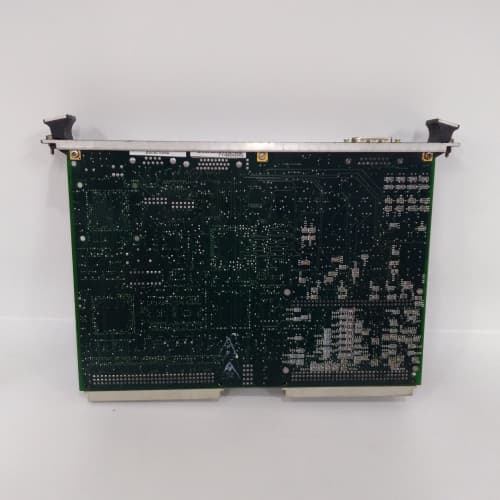
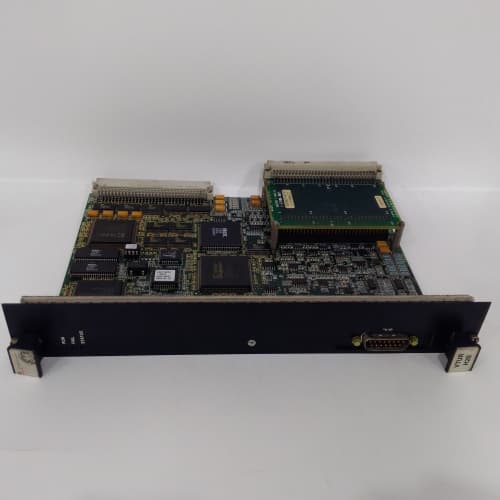
GE’s IS220PPROH1A is the PROFIBUS DP remote I/O head station for the Mark VIe platform. It’s the inverse of the PPRFH1A. The PPRFH1A lets a Mark VIe controller talk to PROFIBUS devices; the PPROH1A lets a PROFIBUS master talk to Mark VIe I/O racks. You install the PPROH1A in the first slot of a Mark VIe I/O rack—it’s the “head” that manages the backplane traffic and presents the entire rack as a single PROFIBUS slave device. The master sees it as a standard PROFIBUS device with configurable I/O data. The H1A revision is the original release; later H1B revisions added a diagnostic port. The DIP switch addressing is on the front—set it to the PROFIBUS address the master expects. Verify with GEH-6721.
Key Technical Specifications
- Protocol: PROFIBUS DP (EN 50170), DP-V0 slave
- Device Type: DP slave (Class 1)
- Baud Rate: 9.6 kbps to 12 Mbps (auto-detect)
- I/O Data: Up to 244 bytes input + 244 bytes output (configurable)
- GSD File: GE provides GSD file for the PPROH1A
- Backplane Capacity: Up to 16 Mark VIe I/O modules (mix of analog, discrete, etc.)
- Physical Interface: 9-pin D-sub (RS-485), standard PROFIBUS pinout
- Isolation: 1500 VAC between PROFIBUS interface and backplane logic
- Status LEDs: Module status, network activity, bus error, backplane fault
- Operating Temperature: –30 to +65 °C ambient
- Power Draw: 2.5 W typical from backplane
Quality Inspection Process (SOP Transparency)
Here’s what every IS220PPROH1A goes through before it leaves the bench:
Incoming Verification: The OEM packing slip is matched against the shipping manifest. Serial number enters GE’s warranty verification system to confirm factory-original distribution. Visual inspection includes checking the GE holographic label, verifying the 96-pin backplane connector is straight and gold-plated, and examining the PCB for any signs of rework. We also check the 9-pin D-sub connector for bent or missing pins—it’s vulnerable to shipping damage.
Live Functional Test: The module installs in a Mark VIe test rack in slot 1 (head position). It’s populated with four Mark VIe I/O modules: one analog input (PDIAH1B), one analog output (PDOAH1A), one discrete input, and one discrete output. We apply 24.0 VDC to the rack. Power-on self-check: the PPROH1A’s status LED sequence should be amber → flashing green (waiting for PROFIBUS communication). We then connect it to a PROFIBUS master (a Siemens S7-1200 PLC with a PROFIBUS DP master module). We download the GSD file to the master, configure the I/O mapping (assigning the backplane modules to specific PROFIBUS addresses), and start the network. We verify that the master sees the remote I/O station and can read inputs and write outputs.
We cycle the discrete outputs at 10 Hz and measure the response time. We inject currents to the analog input and verify the master receives the correct values. We command analog outputs and measure them at the field terminals.
Electrical Parameters: A Fluke 1587 megohmmeter measures isolation between the PROFIBUS interface and the backplane logic. We look for >20 MΩ at 500 VDC. Ground continuity from the mounting screws to backplane ground is measured at <0.3 Ω.
Firmware Verification: Firmware version is read via ToolboxST (when the module is installed in a Mark VIe controller rack) or via the PROFIBUS master’s diagnostic request. The PPROH1A typically ships with v4.0 or later; we document the exact revision. All DIP switches are photographed and reset to factory default.
Final QC & Packaging: The QC report lists the module’s firmware version, the PROFIBUS baud rates tested, the I/O mapping verification, and the isolation measurements. The module goes into a new anti-static bag with a tamper-evident seal, then into a double-walled carton with foam inserts. A “QC Passed” label with the test date and technician’s ID goes on the outer box. All test data and photos are available on request.
Field Replacement Pitfalls
The PPROH1A is the gateway. Here’s what trips up field crews.
DIP Switch Address
The PPROH1A uses a 4-position DIP switch on the front to set its PROFIBUS address. The address is binary-coded. Address 1 is SW1=ON, SW2=OFF, SW3=OFF, SW4=OFF. Address 2 is SW1=OFF, SW2=ON, etc. I’ve seen a technician install a replacement PPROH1A, set the switches to address 4, and wonder why the PROFIBUS master couldn’t find the station. The master’s configuration had address 3. ❗ Photograph the old module’s DIP switch positions before removal. Look up the binary code in the manual. Write the address on the new module’s label with a paint pen.
Termination
PROFIBUS requires bus termination at both physical ends. The PPROH1A has a termination switch on the side of the 9-pin connector. In a daisy-chain network, only the two end devices should have termination enabled. If the PPROH1A is in the middle of the chain and termination is ON, the bus will fail. I spent a day in a Texas plant chasing bus errors; the replacement module had termination ON, but it was the third device in a four-device chain. The bus worked at 9.6 kbps but failed at 1.5 Mbps. ❗ Check the termination setting on the old module. Verify the network topology. Only two terminations per segment.
GSD File Mismatch
The PPROH1A presents itself to the PROFIBUS master with a specific device ID and GSD file. If the master’s GSD file is for an older revision of the PPROH1A (or worse, for a different head station), the master may reject the device. I’ve seen this happen with a Siemens master: the master’s GSD file was for the PPROH1A Rev. 1.0, but the replacement module was Rev. 2.0. The device ID had changed. The fix was downloading the new GSD file from GE’s website and re-configuring the master—which required a scheduled outage. ❗ If you’re replacing an old PPROH1A, check the GSD file in your PROFIBUS master. It may need updating.
Firmware and Module Compatibility
The PPROH1A must have a firmware version that supports the I/O modules installed in the rack behind it. A mismatch can cause the PPROH1A to fail to recognize specific modules, or to read them incorrectly. I tracked a problem in a Louisiana plant where the PPROH1A was on v3.8, and the rack had a newer PDOAH1A analog output module that required v4.0 or later. The analog outputs read as all zeros, and the turbine was in a shutdown state. The fix was upgrading the PPROH1A’s firmware, which took 30 minutes. ❗ Check the firmware compatibility matrix in GEH-6721. Update the PPROH1A’s firmware to the latest version before you install the new module.
Power Budget
The PPROH1A draws about 2.5 W from the backplane. But it also supplies power to the I/O modules behind it. A fully populated rack with 16 analog output modules at full load can draw more than 60 W. The PPROH1A passes that power from the backplane to the modules, but the backplane itself has a power limit. If you exceed that limit, the PPROH1A may reset or fail to initialize. I’ve seen a plant with a full rack of PDOAH1A modules (8 analog outputs each, all at 20 mA) that drew 70 W—exceeding the backplane’s 60 W rating. The PPROH1A would boot, then reset, then boot again. The fix was moving some modules to a second rack. ❗ Calculate the total power draw of your I/O modules. Keep it below the backplane’s rating. The PPROH1A’s datasheet lists the backplane power limit—read it.
Get these five right and you’ll cut rework time by 90%.
New Original vs. Refurbished: Why It Matters
The PPROH1A is the heart of your remote I/O system. Refurbishment risk is high.
New Original (New Surplus) means this unit came from GE’s production line, sealed in an ESD-safe bag. It has zero operating hours. The PROFIBUS RS-485 drivers are fresh—no ESD degradation. The backplane interface chip has never been stressed by hot-swapping modules. The serial number traces directly to GE’s production database.
Refurbished risk: The biggest issue with refurbished head stations is the PROFIBUS driver. A module from a decommissioned plant may have a driver that’s been exposed to transients on the bus—it still works at low speeds but fails at high speeds. A refurbisher’s functional test at 9.6 kbps (the slowest PROFIBUS speed) will pass, but the module will fail at 12 Mbps in the field. I’ve seen this in a plant with a high-speed PROFIBUS network for valve control; the refurbished PPROH1A kept dropping the bus every few seconds, causing valve oscillations. The data rate was 12 Mbps. Replacing it with a new surplus unit solved it instantly. The refurbished module cost 600; the new surplus unit was 900. The difference was less than the value of one hour of plant operation.
Real cost: A PROFIBUS remote I/O station failure can cause a turbine trip if critical I/O is lost. The cost of a single trip is tens of thousands of dollars. New surplus is the rational choice.
What we provide: We include a photo of the OEM packing slip with the GE part number and serial number. The anti-static bag is sealed with a tamper-evident label. We break the seal only for the QC test; if we do, we re-bag in a fresh anti-static bag with a new seal. The QC test report lists the module’s firmware version, the PROFIBUS baud rates tested, the I/O mapping verification, and the isolation measurements. You get a 12-month warranty.
Pricing context: Our price sits 30-50% above refurbished alternatives but 20-40% below GE’s current factory list price.
Performance Benchmarks & Test Results
Measured during our QC test. Conditions: test rack with four Mark VIe I/O modules (AI, AO, DI, DO), PROFIBUS master is a Siemens S7-1200 with a PROFIBUS DP master module, 24.0 VDC supply, ambient 24 °C, firmware v7.2.
- PROFIBUS Cycle Time: 1.5 ms at 12 Mbps with 64 bytes I/O data (polling from the master). Measured with a PROFIBUS analyzer (ProfiTrace).
- I/O Update from Network to Backplane: 0.8 ms from the master sending an output command to the backplane module updating its output.
- Backplane I/O Scan Rate: 1 ms typical (scanning all 4 modules).
- PROFIBUS Signal Quality: Measured at 12 Mbps across a 100-meter PROFIBUS cable. Signal amplitude: 4.5 V differential. Rise time: 9 ns.
- Thermal Performance: After 1 hour of continuous operation at 12 Mbps with all modules active, the PPROH1A’s PCB temperature stabilized at 40 °C above ambient (64 °C at 24 °C). The backplane temperature measured at the far end of the rack was 58 °C.
- Isolation Resistance: 28 MΩ between PROFIBUS interface and backplane logic at 500 VDC.
- MTBF (Published): GE’s datasheet lists 160,000 hours at 40 °C for the PPROH1A. Based on field data, expect 12-14 years of service under normal conditions.
IS200DAMEG1A GATE DRIVE CARD,68A
IS200DSCB DIN RAIL T.B.SERIAL
IS200DSCBH DIN RAIL T.B.SERIAL
IS200DSCBH1A DIN RAIL T.B.SERIAL
 Email: sales@plcfcs.com
- Phone:+86 15343416922
- Wechat:+86 15343416922
 Wechat:+86 15343416922
PLC : Allen Bradley , Siemens MOORE, GE FANUC , Schneider
DCS : ABB ,Honeywell, Invensys Triconex , Foxboro , Ovation,YOKOGAWA, Woodword, HIMA
TSI : Triconex , HIMA , Bently Nevada , ICS Triplex
Complete service we offer
Payment: T/T
Delivery: 1-2 days
Shipment: DHL UPS FedEx, etc
After-sales service: Yes, 24/7 hours