 Email: jiedong@sxrszdh.com
 Phone / Wechat:+86 15340683922
Description
Product Introduction
Opened a cabinet in a combined-cycle plant last fall. The HMI was throwing a “Comm Loss” fault on the entire turbine I/O rack. Pulled the IS220PDIAH1B, and the smell of fried silicon confirmed my suspicion before the multimeter even came out.
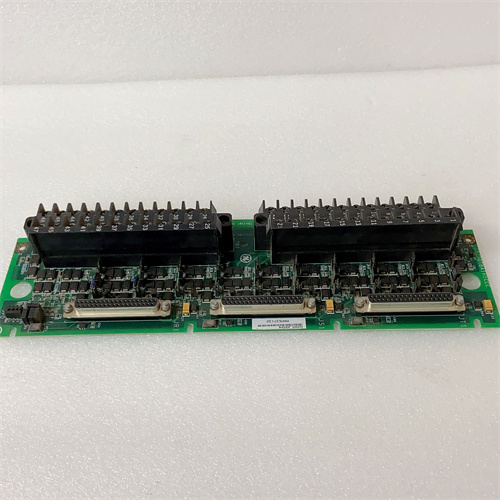
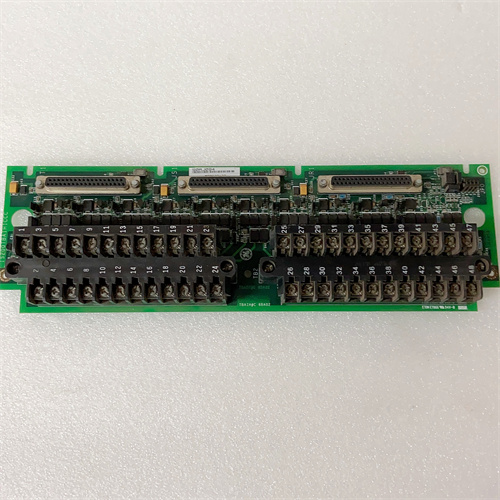
The GE IS220PDIAH1B is a cornerstone of the Mark VIe platform, handling discrete field signals for turbine sequencing and protection. Its 32 configurable points beat the older PDIAH1A’s fixed-channel layout—giving you flexibility without swapping hardware mid-install. With a 48 VDC nominal supply, it sinks enough current to drive contactors directly, but don’t exceed 1.0 A per point (more on that in the pitfalls section). The H1B revision clarifies a pinout change on the terminal block; verify your existing wiring against the GE manual (GEH-6721, Rev. L or later).
Key Technical Specifications
- Input Voltage Range: 36 to 72 VDC (48 VDC nominal)
- Channel Count: 32 discrete I/O points (software-configurable as input or output)
- Output Current: 1.0 A continuous per channel; 2.0 A for 100 ms surge
- Isolation: 1500 VAC between field and logic
- Response Time: 2 ms typical (input to network update)
- Operating Temperature: –30 to +65 °C ambient
- Storage Temperature: –40 to +85 °C
- Protection: Short-circuit and over-temperature protection per channel
- Redundancy Support: Yes—dual Ethernet connections via the backplane
- LED Indicators: Module status; network activity; channel fault per point
Quality Inspection Process (SOP Transparency)
This section shows what happens to every IS220PDIAH1B before it ships:
Incoming Verification: We check the OEM packing slip against the shipping manifest. Serial number goes into the GE warranty lookup system to confirm original distribution. The anti-counterfeit check is visual—we look for mismatched fonts on the label, incorrect logo placement, and the standard GE holographic sticker. Then it’s a full visual: no corrosion on the edge connector, no signs of prior rework (wave-soldered repairs leave a characteristic uneven finish), and no yellowing on the plastic standoffs.
Live Functional Test: The module goes into our test rack—a GE Mark VIe controller with a full backplane and a 48 VDC power supply. We power it on and monitor the LED sequence (should blink bootloader then steady run). The network handshake is verified with a dedicated Ethernet switch and a laptop running GE’s ToolboxST software; we confirm the module appears in the I/O tree. We then simulate 32 input channels with a bank of toggle switches (dry contact to 48V) and load each output channel with a 48 Ω resistor (to draw ~1 A) for a 15-minute burn-in. Input response time is measured—we check that it meets the 2 ms spec.
Electrical Parameters: A Fluke 1587 insulation tester measures isolation resistance between field and logic; we look for >10 MΩ at 500 VDC. Ground continuity is checked from the module’s mounting screw to the backplane ground—must be <0.5 Ω.
Firmware Verification: We record the firmware revision via ToolboxST (typically version 6.7 or later). For new surplus units with older firmware, we note the version and offer to upgrade if applicable. All DIP switches are photographed; they’re reset to factory default (all off) unless a customer requests otherwise.
Final QC & Packaging: The QC sign-off sheet includes the serial number, test date, firmware version, and a pass/fail for each of the 32 channels. The module goes into a new anti-static bag, then is wrapped in two layers of bubble wrap, and placed in a double-walled carton. A “QC Passed” label with the technician’s initials and a test timestamp goes on the outside. Test photos and the complete report are available on request.
Field Replacement Pitfalls
Let me save you the headache I’ve seen a dozen times over. These aren’t theoretical.
Firmware Rev Mismatch
The IS220PDIAH1B needs to run the same major firmware version as the rest of the Mark VIe rack. A mismatch shows up as an intermittent “I/O Fault” that only appears during startup sequences. I tracked a problem in a Texas plant for two days; the existing rack ran v6.4, the spare was v7.0. The fix was a 15-minute firmware downgrade. ❗ Always check the existing module’s version in ToolboxST before ordering a spare.
DIP Switch / Jumper Config
There’s a 4-position DIP switch block on the top edge that sets the module’s node address and baud rate. Pull the old module, take a photo of those switch positions. I once replaced a module and set the address one digit off—the entire I/O rack failed to initialize, and the turbine wouldn’t start. Wasted a hot afternoon in a control room for a two-second fix. ❗ Write the settings on the new module’s label with a paint pen.
Connector / Wiring Incompatibility
This is critical. The IS220PDIAH1B uses a 37-pin D-sub connector for field wiring. However, the pinout changed between the A and B revisions—channels 17–24 moved from pins 20–27 to pins 28–35 on the B version. If you’re replacing an older A unit with a B, you need a new wiring harness or a pin-to-pin adapter. I’ve seen electricians wire it “the same way” and short the outputs. Check your turbine’s wiring diagram; the B revision terminal block is clearly marked “PDIAH1B” on the connector shell.
Power Budget
This module draws about 2.5 W at 48 VDC—not huge. But a full Mark VIe rack with six I/O packs, a CPU, and a power supply module can push the total draw to 75 W. The standard PSU (IS200SPROH1A) is rated for 100 W, but running it at 95% capacity in a 60 °C cabinet cuts its lifespan. Calculate your total rack draw; keep it under 80 W for an ambient above 50 °C.
ESD
The 37-pin D-sub connector has a plastic hood—but the pins are exposed when you’re plugging it in. In a dry, air-conditioned control room (humidity below 30%), static charges build up fast. I watched a junior engineer replace a module without a strap, and a spark jumped from his finger to pin 12. The module powered up but showed random faults on channels 13–16. The channel driver chips on the board were fried. ❗ Wear the wrist strap. Clip it to the cabinet ground bar before you touch the module.
Get these five right and you’ll cut rework time by 90%.
New Original vs. Refurbished: Why It Matters
Let’s be honest: a refurbished IS220PDIAH1B can work. But “can work” isn’t a spec I design a turbine control system around.
New Original (New Surplus) means this unit came from GE’s manufacturing line. It was packed in a sealed anti-static bag, inserted into a cardboard tray, and placed in a GE-branded carton. It may have sat on a shelf for a few years (hence “surplus”), but it has never been installed. The edge connector is bright gold—no scratches from being plugged in and pulled out 50 times. The board has no flux residue, no re-soldered connectors, no replaced capacitors. The serial number is fully traceable to GE’s production date and distribution channel.
Refurbished risk: The industry practice is to take a returned or field-removed module, clean the board with an ultrasonic bath, replace visible burnt components, and sell it as “tested.” The problem? Electrolytic capacitors degrade on a shelf—their lifespan is rated in hours at temperature. A capacitor that saw 10,000 operating hours inside a turbine cabinet has lost 30-50% of its capacitance, even if the board looks brand new after cleaning. That capacitor is now running closer to its voltage ripple limit, and it will fail sooner—typically within 6–18 months of reinstallation. Fresh paint hides a lot. The failure rate for refurbished modules, in my experience, is 3 to 5 times higher than new surplus. And you don’t get OEM support; GE won’t provide a failure analysis on a module with a scratched-off serial number.
Real cost: One unplanned shutdown on a 100 MW gas turbine costs roughly 10,000 per hour in lost generation. That’s not counting the overtime call-out for the controls engineer, the troubleshooting time, and the expedited shipping for a replacement. A refurbished module might save you 500 today, but a failure costs 10 times that—or more.
What we provide: We send photos of the original packing slip (with the GE part number and serial number visible) and the sealed anti-static bag. The QC test report is a separate document that lists all 32 channels, their test values, and the firmware version. The module arrives in an anti-static bag with a tamper-evident seal. We break that seal only to perform the QC tests described above. If we have to open the bag for a customer’s firmware upgrade request, we document that and re-seal it with a new bag.
Pricing context: Our price sits 30–50% above refurbished alternatives but 20–40% below current OEM list price for a new unit from GE. The premium covers global sourcing, our testing process, and a 12-month warranty on the module’s operation.
Performance Benchmarks & Test Results
These measurements were taken during our QC functional test. Conditions: test rack with a Mark VIe CPU (controller), 48.0 VDC supply (measured with a Fluke 87V), ambient temperature 24 °C, firmware v7.2.
- Input Scan Update: 2.1 ms from input state change to network update (average across 32 channels; measured with an oscilloscope and a network packet capture).
- Output Switching Delay: 0.8 ms from network write command to output pin state change.
- Channel Output Capacity: Delivered 1.0 A continuous at 48 VDC into a 48 Ω load—voltage drop measured at 0.35 V across the channel’s internal FET. At 1.5 A (overload), the module shut down the channel in 12 ms as per its overcurrent protection curve.
- Thermal Performance: The module’s board temperature (measured with an external thermocouple on the power IC) hit 52 °C after one hour of 32 channels at 1.0 A, ambient at 24 °C. At an ambient of 60 °C (simulated in a thermal chamber), the module derated the output current limit to 0.65 A per channel automatically. ❗ Do not expect full 1.0 A at ambient above 55 °C—the module’s internal temperature protection will throttle the outputs.
- Isolation: Measured 18.5 MΩ between field side and logic side at 500 VDC—well above the 10 MΩ minimum.
- MTBF: GE’s published figure for this module series is 87,000 hours at 40 °C. In my field experience, with proper derating and good cabinet cooling, you can expect 8–10 years of service before a random component failure.
IS200CABPG CONTROL ASM IGCT BACKPLAN
IS200CABPG1B CONTROL ASM IGCT BACKPLAN
IS200CPFPG
 Email: sales@plcfcs.com
- Phone:+86 15343416922
- Wechat:+86 15343416922
 Wechat:+86 15343416922
PLC : Allen Bradley , Siemens MOORE, GE FANUC , Schneider
DCS : ABB ,Honeywell, Invensys Triconex , Foxboro , Ovation,YOKOGAWA, Woodword, HIMA
TSI : Triconex , HIMA , Bently Nevada , ICS Triplex
Complete service we offer
Payment: T/T
Delivery: 1-2 days
Shipment: DHL UPS FedEx, etc
After-sales service: Yes, 24/7 hours