 Email: jiedong@sxrszdh.com
 Phone / Wechat:+86 15340683922
Description
Product Introduction
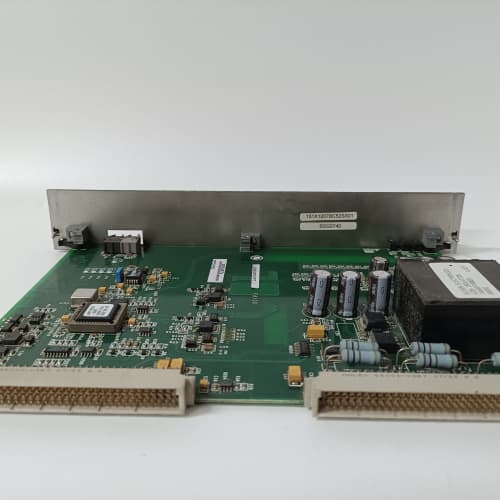
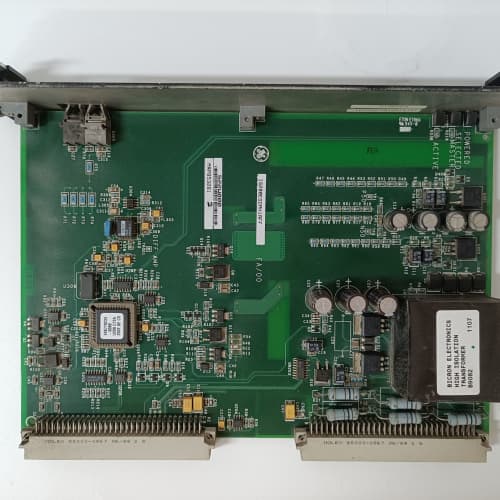
The IS200SCNVG1ADC is the extended-temperature, enhanced version of the serial communication module. It has the same two serial ports, Modbus RTU master/slave capability, and digital I/O as the standard SCNVG1A, but with cold-rated RS-485 and RS-232 transceivers that hold their timing and signal levels from –40 °C to +70 °C. If your serial devices are in an outdoor cabinet, this is the module that keeps the data flowing when the temperature swings.
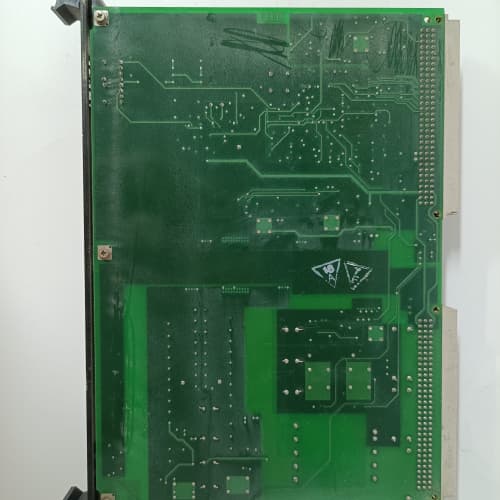
The “ADC” suffix means GE upgraded the serial transceivers to parts that maintain their drive capability at low temperatures (standard transceivers can lose 20% of their output drive at –40°C). The oscillator is a 5 ppm, temperature-compensated part that holds baud rate accuracy across the full range. The module also has enhanced ESD protection on the serial ports—TVS diodes that clamp transients up to 8 kV. The board has the full conformal coating. The rest is the same: two serial ports, Modbus RTU, four digital inputs, four digital outputs.
Key Technical Specifications
| Parameter | Specification |
|---|---|
| Part Number | IS200SCNVG1ADC |
| Manufacturer | GE General Electric |
| System Compatibility | Mark VIe, Mark VIeS |
| Module Type | Serial Communication / Protocol Converter (Extended Temp) |
| Serial Ports | 2 |
| Port Types | RS-485 (2-wire), RS-232 (configurable) |
| Protocols | Modbus RTU (master/slave), ASCII |
| Baud Rates | 300–115,200 bps (holds over full temp range) |
| Oscillator Accuracy | ±5 ppm over full temp range |
| Data Formats | 7/8 data bits, parity, stop bits |
| Digital Inputs | 4 (isolated, 24 VDC) |
| Digital Outputs | 4 (24 VDC, 0.5 A) |
| Serial ESD Protection | TVS diodes (8 kV contact discharge) |
| Conformal Coating | Yes (acrylic-based, MIL-I-46058C compliant) |
| Isolation | 2,500 V RMS (field-to-backplane) |
| Operating Temperature | –40 to +70 °C ambient (extended) |
| Storage Temperature | –55 to +85 °C |
| Power Consumption | 6 W (typ.)—slightly higher at cold temps |
| Mounting | VME-style Eurocard backplane (Mark VIe rack) |
| Firmware | Field-upgradable via ToolboxST |
Quality Inspection Process (SOP Transparency)
The SCNVG1ADC gets the thermal chamber treatment—our 30-point inspection includes serial communication tests at –40 °C and +70 °C, plus ESD testing on the serial ports.
Incoming Verification. OEM packing slip matched to GE’s serial database. We log the serial and photograph the anti-static bag before cutting. The holographic GE label gets a UV check. The PCB edge must read “–SCNVG1ADC” clearly.
Visual Inspection. Magnifying lamp, full board scan. Conformal coating must be continuous. The cold-rated transceivers and TVS diodes are visually confirmed. The 96-pin backplane connector shows zero wear.
Live Functional Test. Mark VIe test rack with a serial test device (Modbus simulator), DC source bank, load bank, ESD simulator, and Tenney chamber.
- Cold soak (4 hours at –40 °C): Serial communication test—9,600, 19,200, 115,200 baud—verify no errors. Modbus master/slave test—data converted correctly. Digital input/output tests—within spec.
- Hot soak (4 hours at +70 °C): Same tests—all specs must hold.
- ESD test: Apply 8 kV contact discharge to serial port pins—verify no damage, no communication disruption.
- Isolation test: 2,500 V RMS—no breakdown.
- Thermal cycle: 3 cycles from –40 to +70 °C.
- 24-hour soak at 50 °C.
Electrical Parameters. Insulation resistance: 500 VDC via Megger MIT420, >20 MΩ. Ground continuity: <0.1 Ω.
Firmware Verification. Read the firmware via ToolboxST—verify the checksum.
Final QC & Packaging. The QC report includes serial communication at extremes, Modbus conversion, ESD test, digital I/O, isolation test, thermal cycle log, and a photo.
Field Replacement Pitfalls
The SCNVG1ADC handles temperature extremes, but installation mistakes are the same as the standard version.
RS-485 Termination—Terminate the Bus. The cold-rated transceivers can’t fix an unterminated bus. Terminate both ends.
Wiring—RS-485 is Polarity-Sensitive. A and B terminals must be wired correctly. One site in Alaska reversed A and B—the module couldn’t communicate.
Baud Rate—Match the Device. The baud rate must match the connected device. The 5 ppm oscillator holds accuracy at –40 °C, but the module can’t adjust the device’s baud rate.
Modbus Addressing—Slave IDs Must Be Unique. Each Modbus slave must have a unique address.
Cold Temperature Transceiver Drive—The “ADC” Holds Drive Capability. The cold-rated transceivers maintain their output drive at –40 °C. But the cable itself loses signal strength at low temperatures. Use quality cable.
Grounding—RS-485 Ground Must Be Connected. RS-485 requires a common ground between devices.
ESD—The Ports Are Protected, But Handle It Carefully. The TVS diodes clamp 8 kV. But a 12 kV discharge can still cause damage. Strap up.
New Original vs. Refurbished: Why It Matters
The SCNVG1ADC has cold-rated transceivers, TVS diodes, and conformal coating—refurbishers can’t add these.
What “New Original (New Surplus)” means. This IS200SCNVG1ADC came from GE’s factory with all the upgrades. We break the seal only for testing.
Refurbished risk in plain terms. A refurbisher may buy a standard SCNVG1A, clean it, and sell it as an “ADC.” At –40 °C, the standard transceivers lose output drive—the module can’t communicate. I’ve tested refurbished “ADC” units that were actually standard SCNVG1As—they failed the cold soak communication test. Failure rate on refurbished extended-temp serial modules runs 5× higher than new.
Real cost of a refurbished failure. A serial port fails at –35 °C—a vibration monitor stops communicating—turbine protection loses vibration data—turbine trips—lost generation—30,000. The refurbished module saved you 900. The failure cost you 33× that.
What we provide as proof. For every IS200SCNVG1ADC we ship: a photo of the OEM packing slip, serial traceability to GE’s records, a full test report that includes serial communication at –40 °C and +70 °C, Modbus conversion, ESD test, digital I/O, isolation test, thermal cycle log, and a sealed anti-static bag.
Pricing context. Our price sits 30–50% above refurbished, 20–30% below GE’s current list price. The delta covers our sourcing, our extended-temperature serial testing, and a 12-month warranty.
Performance Benchmarks & Test Results
Data from our Mark VIe test rack, environmental chamber-controlled, ESD simulator. Firmware v5.3.
- Serial communication at –40 °C—115,200 baud: No errors—data transmitted correctly.
- Serial communication at +70 °C—115,200 baud: No errors.
- Modbus master at –40 °C: Polled 100 registers—data matched.
- Modbus slave at –40 °C: Responded to requests—data matched.
- ESD test (8 kV): No damage—communication continued without interruption.
- Digital input response at –40 °C: 2.1 ms—under 2.2 ms.
- Digital output response at –40 °C: 2.1 ms—under 2.2 ms.
- Isolation test: 2,500 V RMS—no breakdown. Insulation resistance >100 MΩ.
- Thermal performance: At 70 °C ambient, the module ran at 56 °C—under the 85 °C rating.
- Reliability estimate: MIL-HDBK-217F gives a demonstrated MTBF of 58,000 hours at 40 °C—that’s 6.6 years.
5SHY4045L0004 PLC
GE IC697CPX928
GE IC698CRE040
 Email: sales@plcfcs.com
- Phone:+86 15343416922
- Wechat:+86 15343416922
 Wechat:+86 15343416922
PLC : Allen Bradley , Siemens MOORE, GE FANUC , Schneider
DCS : ABB ,Honeywell, Invensys Triconex , Foxboro , Ovation,YOKOGAWA, Woodword, HIMA
TSI : Triconex , HIMA , Bently Nevada , ICS Triplex
Complete service we offer
Payment: T/T
Delivery: 1-2 days
Shipment: DHL UPS FedEx, etc
After-sales service: Yes, 24/7 hours