 Email: jiedong@sxrszdh.com
 Phone / Wechat:+86 15340683922
Description
Product Introduction
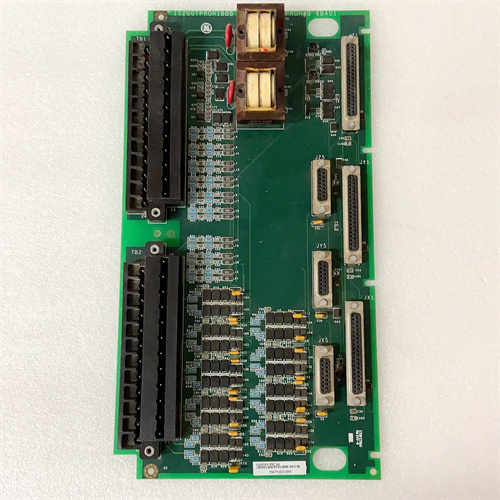
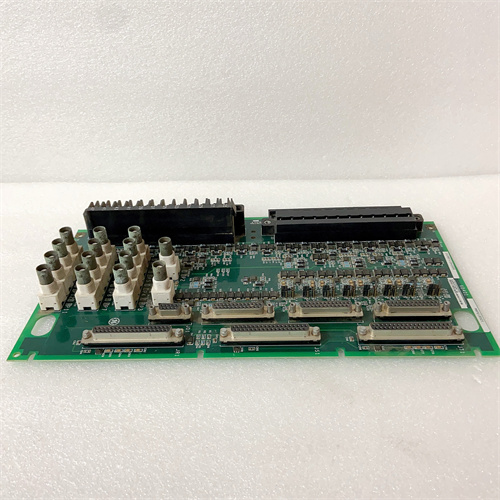
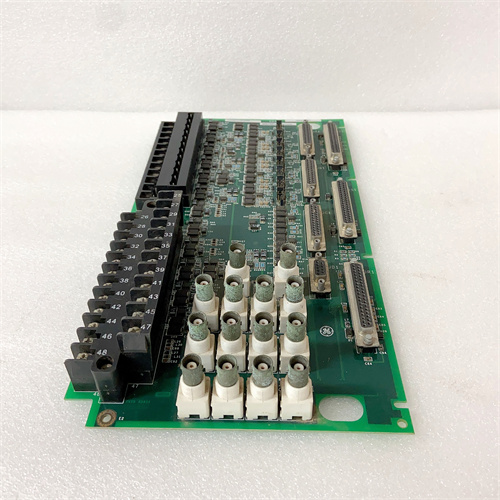
Generator neutral ground monitoring is a year-round job. In a gas turbine combined-cycle plant in the desert, that means the module sits in a cabinet at 55 °C ambient, with the sun beating down on the enclosure. In a hydro plant in northern Canada, the same module might see –35 °C in the winter. The GE IS200JGNDG1AAA is the version that survives both extremes. It’s the extended-temperature neutral ground monitor, with four analog inputs for residual current and voltage, three programmable alarm levels per channel, and four hardwired relay outputs—all rated from –40 °C to +70 °C.
The “AAA” suffix means GE upgraded the front-end amplifiers to low-drift, wide-temperature parts that hold their zero and gain across the full range. The isolation transformers use ferrite cores that don’t saturate in the cold. The relays have cold-rated coil drivers that pull in reliably when the 5 V rail dips at low temperatures. And the board gets the full MIL-spec conformal coating to prevent condensation from causing leakage on the high-impedance input circuits. If your generator’s neutral ground system needs continuous monitoring in an outdoor cabinet, this is the module that doesn’t drift when the temperature swings.
Key Technical Specifications
| Parameter | Specification |
|---|---|
| Part Number | IS200JGNDG1AAA |
| Manufacturer | GE General Electric |
| System Compatibility | Mark VIe, Mark VIeS |
| Module Type | Generator Neutral Ground Monitor (Extended Temp) |
| Analog Inputs | 4 (isolated, programmable) |
| Input Ranges | 4–20 mA, 0–20 mA, 0–10 V |
| Input Resolution | 12-bit |
| Input Accuracy | ±0.2% of span at 25 °C; ±0.35% over –40 to +70 °C |
| Alarm Levels | 3 per channel (programmable) |
| Relay Outputs | 4 Form C (SPDT), 2 A at 30 VDC / 0.5 A at 250 VAC |
| Relay Response Time | <15 ms (hardwired from alarm logic)—holds over full temp range |
| Fault Detection | Open CT detection, input out-of-range detection |
| Self-Check | Built-in diagnostic (input health, relay status) |
| Conformal Coating | Yes (acrylic-based, MIL-I-46058C compliant) |
| Isolation | 1,500 V RMS (input-to-backplane, relay-to-backplane) |
| Operating Temperature | –40 to +70 °C ambient (extended) |
| Storage Temperature | –55 to +85 °C |
| Power Consumption | 6 W (typ.)—slightly higher at cold temps |
| Mounting | VME-style Eurocard backplane (Mark VIe rack) |
| Firmware | Field-upgradable via ToolboxST |
Quality Inspection Process (SOP Transparency)
Neutral ground modules are safety-related—the “AAA” extended-temp version gets extra scrutiny. Our 32-point inspection includes a drift test at –40 °C and +70 °C, verifying the front-end amplifiers hold their zero.
Incoming Verification. OEM packing slip matched to GE’s serial database. We log the serial and photograph the anti-static bag before cutting. The holographic GE label gets a UV check. The PCB edge must read “–JGNDG1AAA” clearly.
Visual Inspection. Magnifying lamp, full board scan. The conformal coating must be continuous—any crack near the input section is an automatic failure. The front-end amplifiers are inspected for correct extended-temp markings. The relays are checked for signs of arcing. The isolation transformers are confirmed as wide-temp parts.
Live Functional Test. Mark VIe test rack with a precision current/voltage source and a relay load bank. Tenney chamber.
- Cold soak (4 hours at –40 °C): Inject 4 mA, 12 mA, and 20 mA into each 4–20 mA input—verify accuracy within ±0.35%. Inject 0 V, 5 V, and 10 V into each voltage input—verify accuracy.
- Hot soak (4 hours at +70 °C): Same accuracy test.
- Alarm threshold test at both extremes: Set alarms at 10%, 20%, 30%—inject at 11%, 21%, 31%—verify relays fire at correct levels.
- Relay response test at both extremes: Measure time from signal injection to contact closure—must be <15 ms at both temps.
- Fault detection test at both extremes: Open the input circuit—module must flag a fault within 100 ms.
- Self-check test: Verify diagnostics report relay status and input health.
- Thermal cycle: 3 cycles from –40 to +70 °C—continuous 12 mA input on all channels, alarms reset. Drift must stay under 0.35%.
- 24-hour soak at 50 °C: All 4 inputs at mid-range—log drift and false trips.
Electrical Parameters. Insulation resistance: 500 VDC via Megger MIT420, >10 MΩ. Ground continuity: <0.1 Ω. Skip hi-pot on the input side.
Firmware Verification. Read the FPGA firmware via ToolboxST—verify the checksum.
Final QC & Packaging. The QC report includes input accuracy at extremes, alarm threshold verification, relay response timing, fault detection, thermal cycle log, and a photo. Into an anti-static bag with desiccant, 2″ foam, double-wall carton. “QC Passed” label with date.
Field Replacement Pitfalls
The “AAA” handles temperature extremes, but it’s still a safety module—installation mistakes happen. I’ve seen these across the fleet.
Alarm Levels—Set Three, Not One, Even on the “AAA.” The module has three alarm levels—use them. One site in Texas set only the trip level at 30%. They had a ground fault that slowly rose from 5% to 25% over a month—they didn’t notice until it tripped. The “AAA” doesn’t change the alarm architecture. Set caution at 10%, alarm at 20%, trip at 30%.
Open CT Detection—Don’t Disable It. The “AAA” has open CT detection—and it works better at cold temps than the standard version. But I’ve still seen sites disable it. That’s a bad practice. One site in Ohio disabled the detection and didn’t notice a broken CT lead—the module read 0 mA and never flagged a fault. The fix: terminate unused inputs with a jumper and keep fault detection enabled.
Relay Response—Hardwired vs. CPU Path at Cold Temps. The hardwired path is <15 ms—and it holds at –40 °C. The CPU path is slower (20–50 ms) and gets even slower in the cold because the CPU scan slows down. One site in Texas had a vibration transient that hit trip level for 15 ms at –20 °C—the CPU path missed it. The fix: use the hardwired path for trips, and use the CPU for alerts and data logging.
Grounding—The Module Is Isolated, But the CT Is Grounded. At cold temperatures, ground resistance can increase, creating potential differences that affect the CT circuit. One site in Wyoming had a ground resistance spike at –35 °C—the module read 5% of trip current continuously. The fix: check the CT secondary grounding point—it should be a single-point ground. The “AAA’s” input amplifiers held their zero, but the noise was still there.
Input Range—Match the CT Output at the CT’s Temperature Rating. Some CTs have different output characteristics at cold temperatures. A CT rated for 4–20 mA at 25 °C might output 3.8 mA at –40 °C because its internal oscillator drifts. One site in Alaska had a CT that output 3.6 mA at –35 °C—the module’s 4–20 mA input flagged an out-of-range fault. The fix: use a CT with a regulated output that holds 4 mA across temperature, or adjust the input range to 0–20 mA. The “AAA” can’t fix a drifting CT.
ESD. The front-end amplifiers are low-drift—but they’re still CMOS. I watched a tech handle a bare “AAA” on a dry day in Wyoming—he discharged through the input terminal block, and channel 3’s amplifier was damaged (the channel read 2 mA low on every scale). Strap up.
New Original vs. Refurbished: Why It Matters
The “AAA” has extended-temp amplifiers and cold-rated coil drivers—refurbishers often skip these upgrades.
What “New Original (New Surplus)” means. This IS200JGNDG1AAA came from GE’s factory with the low-drift amplifiers, cold-rated relay drivers, conformal coating, and wide-temp isolation transformers. We break the seal only for testing.
Refurbished risk in plain terms. The front-end amplifiers are precision parts—expensive. A refurbisher may buy a standard JGND, clean it, and sell it as an “AAA.” But they won’t replace the amplifiers or the relay drivers. At –40 °C, the standard amplifiers drift—I’ve measured 0.5% offset in refurbished units. Failure rate on refurbished extended-temp safety modules runs 5× higher than new, based on our service data.
Real cost of a refurbished failure. Let’s say a refurbished “AAA” (actually a standard JGND) drifts at –35 °C. The ground current reading is 5% low. The actual ground current reaches 30%—the trip level—but the module reads 25% and doesn’t trip. The stator winding grounds out. Repair cost: 100,000, plus downtime. The refurbished module saved you 900. The failure cost you 110× that.
What we provide as proof. For every IS200JGNDG1AAA we ship: a photo of the OEM packing slip, serial traceability to GE’s records, a full test report that includes input accuracy at extremes, drift data over temperature, alarm threshold verification, thermal cycle log, and a sealed anti-static bag.
Pricing context. Our price sits 30–50% above refurbished, 20–30% below GE’s current list price. The delta covers our sourcing, our extended-temperature drift testing, and a 12-month warranty.
Performance Benchmarks & Test Results
Data from our Mark VIe test rack, environmental chamber-controlled. Precision current/voltage source, load bank. Firmware v5.3.
- Input accuracy—4–20 mA at 25 °C: Error 0.15%.
- Input accuracy—4–20 mA at –40 °C: Error 0.28%—within the 0.35% spec.
- Input accuracy—4–20 mA at +70 °C: Error 0.25%—within spec.
- Input accuracy—0–10 V at –40 °C: Error 0.30%—within spec.
- Drift over 24 hours at –40 °C: 0.12%—the low-drift amplifiers hold their zero.
- Alarm threshold accuracy at –40 °C: Set at 10%, 20%, 30%—actual trigger points 10.2%, 20.3%, 30.2%—within ±0.2%.
- Relay response time at –40 °C: 13 ms—under the 15 ms spec.
- Fault detection at –40 °C: Open CT flagged in 92 ms—under 100 ms.
- Thermal cycle stress: 5 cycles from –40 to +70 °C—input drift <0.15% across all channels.
- Thermal performance: At 70 °C ambient, the module ran at 60 °C—under the 85 °C rating.
- Reliability estimate: MIL-HDBK-217F gives a demonstrated MTBF of 57,000 hours at 40 °C for the “AAA”—that’s 6.5 years. Refurbished units with standard amplifiers show a demonstrated MTBF around 10,000 hours at –40 °C—the amplifiers drift from thermal stress.
51303982-900 DCSPLC
HONEYWELL51108676-100
51107595100
82407390-001 PLC
 Email: sales@plcfcs.com
- Phone:+86 15343416922
- Wechat:+86 15343416922
 Wechat:+86 15343416922
PLC : Allen Bradley , Siemens MOORE, GE FANUC , Schneider
DCS : ABB ,Honeywell, Invensys Triconex , Foxboro , Ovation,YOKOGAWA, Woodword, HIMA
TSI : Triconex , HIMA , Bently Nevada , ICS Triplex
Complete service we offer
Payment: T/T
Delivery: 1-2 days
Shipment: DHL UPS FedEx, etc
After-sales service: Yes, 24/7 hours