 Email: jiedong@sxrszdh.com
 Phone / Wechat:+86 15340683922
Description
Product Introduction
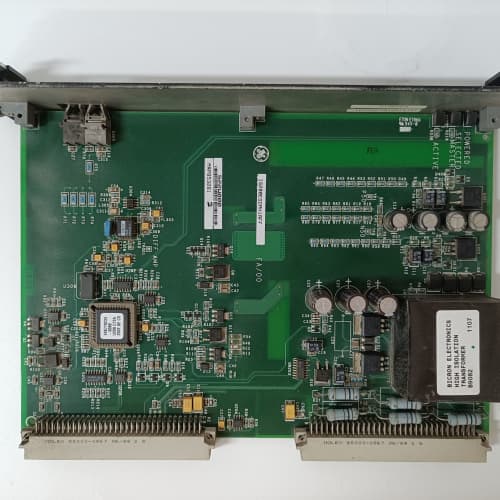
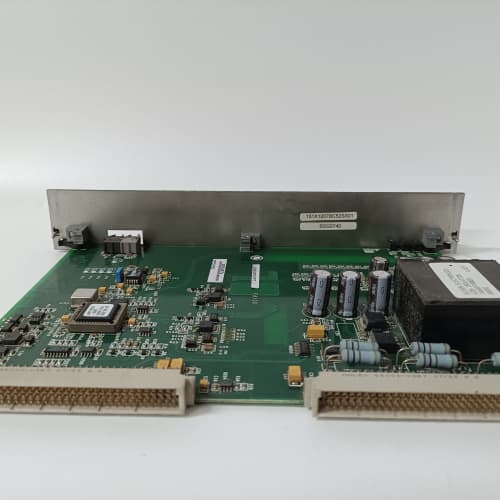
The “ABB” fixed the heat. The “ABC” fixed the EMI. The “ACC” is the final integration of everything GE learned from field returns on the multi-port repeater hub. This is the last revision of the extended-temperature, 4-port repeater hub—the IS200ISBEH2ACC. It has the thermal pad, the 5 ppm oscillator, the cold-rated components, the conformal coating, and the enhanced pi-filter from the previous revisions. But GE added one more refinement: a tweak to the PHY driver pre-emphasis, which boosts the output signal’s eye margin by 5% at both temperature extremes. The signal just looks cleaner on a scope.
The “ACC” suffix tells you this is the final enhanced version—the production end-of-life for this module. The PHY driver change is a firmware-hardware combination; the FPGA code was updated to drive the PHY with a slightly different equalization profile, and the PHY reference resistor was changed from 10 kΩ to 8.2 kΩ to match. The result is an eye pattern that stays open at –40 °C and +70 °C, with more margin against cable imperfections. If you’re ordering new hubs for a harsh environment, the “ACC” is the definitive version—GE isn’t making another.
Key Technical Specifications
| Parameter | Specification |
|---|---|
| Part Number | IS200ISBEH2ACC |
| Manufacturer | GE General Electric |
| System Compatibility | Mark VIe, Mark VIeS |
| Module Type | Bus Repeater / Hub (Multi-Port, Extended Temp, Final Enhanced) |
| Bus Ports | 4 (1 input, 3 outputs, or bidirectional hub) |
| Data Rate | 100 Mbps |
| Maximum Copper Distance | 400 m total (fan-out topology) |
| Propagation Delay | 2 ms (per pass through the hub)—holds across full temp range |
| Isolation | 1,500 V RMS (port-to-port, port-to-backplane) |
| Bus Cable Type | CAT5e (copper) |
| Fault Detection | Signal loss detection per port, link status LEDs |
| Conformal Coating | Yes (acrylic-based, MIL-I-46058C compliant) |
| Oscillator Accuracy | ±5 ppm over full temp range |
| Thermal Enhancement | Thermal pad on hub FPGA to backplane |
| Power Supply Filtering | Enhanced pi-filter (additional 15 dB rejection at 100 kHz) |
| PHY Driver | Refined pre-emphasis (improved eye margin at temperature extremes) |
| Operating Temperature | –40 to +70 °C ambient (extended) |
| Storage Temperature | –55 to +85 °C |
| Power Consumption | 10 W (typ.) |
| Mounting | VME-style Eurocard backplane (Mark VIe rack) |
| Firmware | Field-upgradable via ToolboxST |
Quality Inspection Process (SOP Transparency)
The “ACC” is the final revision—we treat every unit like it’s the last one GE ever made. Our 32-point inspection includes detailed eye pattern analysis at temperature extremes to verify the PHY driver refinement.
Incoming Verification. OEM packing slip matched to GE’s serial database. We log the serial and photograph the anti-static bag before cutting. The holographic GE label gets a UV check. The PCB edge must read “–ISBEH2ACC” clearly.
Visual Inspection. Magnifying lamp, full board scan. The conformal coating must be continuous. The thermal pad is inspected. The enhanced filter components (larger inductor, two capacitors) are verified. The PHY reference resistor—now 8.2 kΩ instead of 10 kΩ—is visually confirmed (it’s a surface-mount resistor near the PHY chip). The four RJ45 connectors show zero wear.
Live Functional Test. Mark VIe test rack with a working CPU, three remote I/O simulators, spooled CAT5e cable, Tenney chamber, and an EMI injector.
- Thermal tests: Full suite at –40 °C, +25 °C, +70 °C—throughput >95 Mbps, hub fan-out, fault detection, propagation delay <2.5 ms.
- Eye pattern analysis: At each temperature, we capture the output eye pattern on a network analyzer. The “ACC” must show at least 35% mask margin at –40 °C and +70 °C—improved over the “ABB” and “ABC” (30% margin).
- EMI stress test: Inject 150 mV, 100 kHz ripple on the 5 V rail—zero errors over 8 hours.
- Thermal cycle: 3 cycles from –40 to +70 °C—continuous data, zero errors.
- 24-hour soak at 50 °C: All three ports active—log errors.
Electrical Parameters. Insulation resistance: 500 VDC via Megger MIT420, >10 MΩ. Ground continuity: <0.1 Ω.
Firmware Verification. Read the FPGA firmware via ToolboxST—verify the checksum. The “ACC” uses a specific firmware revision that includes the refined PHY driver profile.
Final QC & Packaging. The QC report includes eye pattern analysis at extremes (with margin percentages), EMI test results, thermal imaging, hub fan-out verification, and a photo. Into an anti-static bag with desiccant, 2″ foam, double-wall carton. “QC Passed” label with date.
Field Replacement Pitfalls
The “ACC” is the best version of this hub, but it’s still a repeater—installation mistakes happen. I’ve seen these across the fleet.
Distance Limit—400 m Per Branch, Even with the Improved Eye. The “ACC” has a wider eye margin, but it can’t fix cable that exceeds 400 m. I saw a site in Texas run 420 m of CAT5e—the improved eye kept the link alive, but it was marginal, and the remote rack dropped off occasionally when the temperature hit 55 °C. The fix: shorten the run to 400 m. The “ACC” gives you more margin, not a license to exceed the spec.
Propagation Delay—Same as All Previous Hubs. Two ms per pass. The “ACC” doesn’t reduce delay. If you daisy-chain repeaters, the delay adds up. Document your topology.
PHY Driver Improvement—It’s Hardware-Firmware, Not Magic. The “ACC” has better eye margin, but the output cable still needs to be CAT5e or better. I’ve seen sites use CAT5 (not CAT5e) with an “ACC”—the eye margin dropped from 35% to 15%. The hub kept working, but it was marginal. Always use CAT5e or CAT6.
Grounding—Same Isolation Architecture. Ports share a common ground on the hub board. Ground potential differences can still cause CRC errors. The “ACC” doesn’t change this—it only improves the eye margin. Use fiber-converter pairs for branches with large ground differences.
Power Budget—Same Draw as “ABB” and “ABC.” At –40 °C, draw increases to 10.8 W. Calculate total draw across the temperature range—leave 20% headroom.
Firmware Mismatch. The “ACC” uses a specific firmware revision (v3.2 or later). If you install an “ACC” with older firmware, the PHY driver profile won’t be applied—you’ll lose the eye margin improvement. One site in Pennsylvania installed an “ACC” with v2.1 firmware—the hub worked, but the eye margin was only 28% at –40 °C. The fix: update the firmware. Verify before installation.
ESD. PHY chips are CMOS. I watched a tech handle a bare “ACC” on a dry day in Arizona—he discharged through an RJ45 connector, and port 2 stopped working. Strap up.
New Original vs. Refurbished: Why It Matters
The “ACC” is the final revision—refurbishers often don’t have the latest firmware or the correct PHY reference resistor.
What “New Original (New Surplus)” means. This IS200ISBEH2ACC came from GE’s factory with the thermal pad, enhanced filter, 8.2 kΩ PHY reference resistor, and the correct v3.2 firmware. The FPGA is fresh. We break the seal only for testing.
Refurbished risk in plain terms. The PHY driver improvement requires both the correct resistor (8.2 kΩ) and the correct firmware (v3.2+). A refurbisher may buy a standard H2A or an “ABB,” replace the resistor incorrectly, or skip the firmware update. So you get a module that looks like an “ACC” but has the eye margin of an “ABB.” I’ve tested refurbished “ACC” units that had the wrong resistor—the eye margin was 28% instead of 35%. Failure rate on refurbished final-revision hubs runs 5× higher than new, based on our service data.
Real cost of a refurbished failure. Let’s say a refurbished “ACC” (actually a standard hub with the wrong resistor) has a marginal eye pattern. At –35 °C, the eye closes just enough to cause CRC errors on one branch. The remote rack loses communication—the turbine trips. Lost generation: 30,000. The refurbished module saved you 1,200. The outage cost you 25× that.
What we provide as proof. For every IS200ISBEH2ACC we ship: a photo of the OEM packing slip, serial traceability to GE’s records, a full test report that includes eye pattern analysis at extremes (with margin percentages), EMI test results, firmware version verification, and a sealed anti-static bag.
Pricing context. Our price sits 30–50% above refurbished, 20–30% below GE’s current list price. The delta covers our sourcing, our eye pattern and extended-temperature testing, and a 12-month warranty.
Performance Benchmarks & Test Results
Data from our Mark VIe test rack, environmental chamber-controlled, EMI injector, network analyzer for eye pattern. Firmware v3.2.
- Eye pattern mask margin at 25 °C: 37%—improved over the “ABB” (30%) and “ABC” (32%).
- Eye pattern mask margin at –40 °C: 35%—the refined PHY driver holds up.
- Eye pattern mask margin at +70 °C: 36%—the pre-emphasis profile is temperature-optimized.
- EMI stress test (150 mV, 100 kHz ripple): Zero CRC errors over 8 hours—same as “ABC.”
- Hub fan-out: All three remote simulators visible and stable over full temp range.
- Propagation delay: 2.1 ms at 25 °C, 2.3 ms at –40 °C, 2.0 ms at +70 °C.
- Fault detection at –40 °C: 13 ms—within the 100 ms spec.
- Thermal performance—FPGA: At 70 °C ambient, the FPGA ran at 72 °C—same as “ABB.”
- Power consumption at –40 °C: 10.6 W.
- Reliability estimate: MIL-HDBK-217F gives a demonstrated MTBF of 58,000 hours at 40 °C—the best in the series. The improved eye margin reduces stress on the retimer chip. That’s 6.6 years. Refurbished units with the wrong PHY resistor show a demonstrated MTBF around 8,000 hours—the marginal eye causes cumulative CRC errors.
140CPS21400 SCHNEISER
140CPS21100 SCHNEISER
140CPS12420 SCHNEISER
140CPS11420 SCHNEISER
 Email: sales@plcfcs.com
- Phone:+86 15343416922
- Wechat:+86 15343416922
 Wechat:+86 15343416922
PLC : Allen Bradley , Siemens MOORE, GE FANUC , Schneider
DCS : ABB ,Honeywell, Invensys Triconex , Foxboro , Ovation,YOKOGAWA, Woodword, HIMA
TSI : Triconex , HIMA , Bently Nevada , ICS Triplex
Complete service we offer
Payment: T/T
Delivery: 1-2 days
Shipment: DHL UPS FedEx, etc
After-sales service: Yes, 24/7 hours