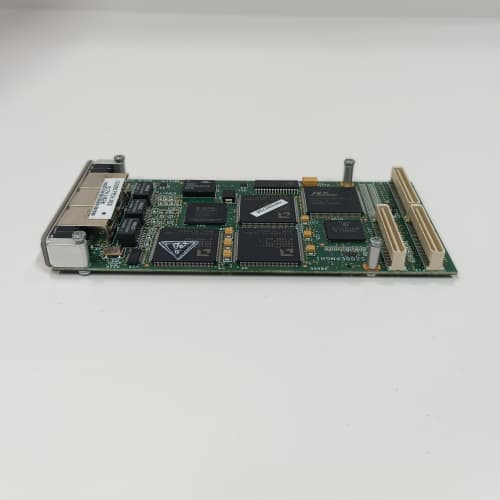
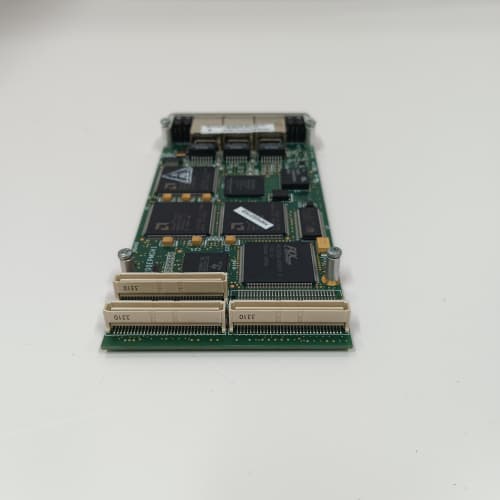
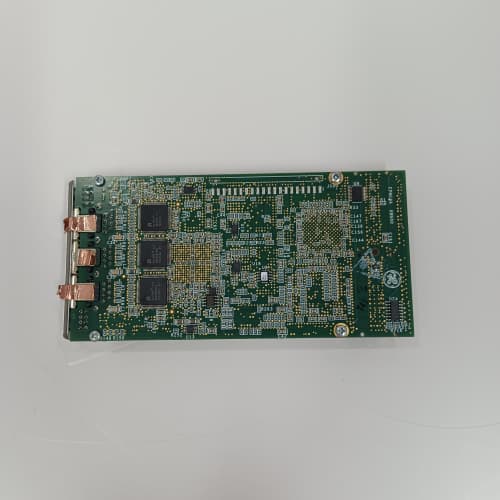
 Email: jiedong@sxrszdh.com
 Phone / Wechat:+86 15340683922
Description
Product Introduction
Control room in the Middle East. August. The cabinet’s been baking at 55 °C for six hours. The gas detection module’s been running at full load—eight sensors, four relays energized, sensor supply maxed. You walk by, and you can smell the hot PCB. That’s the test the standard gas module passes, but the IS200IGDMH1BCB adds a thermal insurance policy. This Mark VIe gas detection interface gives you the same eight inputs and four relays as the H1B, but the “CB” suffix indicates GE added a board-level change to the power regulator: a larger thermal pad and a heat spreader that transfers heat more efficiently to the backplane.
The “B” gave you the improved relay coil driver—no more chattering at 4.8 V. The “CB” keeps that driver cool when the cabinet’s pushing 60 °C. The rest is standard: the 12-bit ADC for the 4–20 mA inputs, the Form C relays rated at 2 A, the latching alarm logic, the onboard 24 V supply. But if you’re mounting this in a hot, dense rack next to a CPU and a couple of output modules, the extra thermal margin matters. I’ve replaced enough thermally-stressed gas modules to appreciate any improvement GE makes in this area—the “CB” is that improvement.
Key Technical Specifications
| Parameter | Specification |
|---|---|
| Part Number | IS200IGDMH1BCB |
| Manufacturer | GE General Electric |
| System Compatibility | Mark VIe, Mark VIeS |
| I/O Type | Gas Detection Interface (Rev B, Thermal Enhanced) |
| Analog Inputs | 8 (isolated, 4–20 mA) |
| Input Resolution | 12-bit |
| Input Impedance | 250 Ω |
| Sensor Power Supply | 24 VDC ±5%, 500 mA total (shared) |
| Relay Outputs | 4 Form C (SPDT), 2 A at 30 VDC / 0.5 A at 250 VAC |
| Relay Response Time | <8 ms (software command to contact closure) |
| Alarm Latching | Yes (software-configurable) |
| Accuracy | ±0.2% of span (typ.) |
| Isolation | 1,500 V RMS (analog-to-backplane); 2,500 V RMS (relay-to-backplane) |
| Thermal Enhancement | Yes—enlarged regulator thermal pad + heat spreader to backplane |
| Operating Temperature | 0 to +60 °C ambient |
| Storage Temperature | –40 to +85 °C |
| Power Consumption | 8 W (typ.) + sensor load (up to 12 W total) |
| Mounting | VME-style Eurocard backplane (Mark VIe rack) |
| Firmware | Field-upgradable via ToolboxST |
Quality Inspection Process (SOP Transparency)
Gas detection modules get the full treatment—failure here means a turbine runs with a blind spot on combustible gas. The “CB” thermal enhancement gets extra scrutiny.
Incoming Verification. OEM packing slip matched to GE’s serial database. We log the serial and photograph the anti-static bag before cutting. The holographic GE label gets a UV check. The PCB edge must read “–GDMH1BCB” clearly—the “CB” is important, and we’ve seen counterfeits that skip it.
Visual Inspection. Magnifying lamp, full board scan. We check the regulator area—the “CB” should have a larger thermal pad and a visible heat spreader. We photograph it for the QC record. The relays are inspected for any signs of previous arcing. The 96-pin backplane connector must show zero wear.
Live Functional Test. Mark VIe test rack with a Fluke 5522A calibrator for the analog inputs and a separate 24 VDC load bank for the sensor supply. We add a thermal chamber (Tenney) for the hot soak test.
- Sensor supply test: 500 mA load, voltage must stay within ±5%. Ripple <50 mV peak-to-peak.
- Analog input test: 4 mA, 12 mA, and 20 mA into each of the 8 inputs. Tolerance: ±0.2%.
- Relay test—standard: Command each relay to energize and de-energize. Contact resistance <0.1 Ω.
- Relay test—stress: Dial the backplane 5 V rail down to 4.6 V and repeat the relay test—the “B” design holds, no chatter.
- Thermal stress: We run the module at 60 °C ambient (chamber) with full load—all 8 inputs at 20 mA, all 4 relays energized, sensor supply at 500 mA. We monitor the regulator case temperature with a thermocouple. It must stay below 85 °C—the “CB” design should hit around 75 °C, versus the standard “B” which hits 82 °C at this ambient.
- Alarm latching test: Simulate a gas alarm, verify latching, simulate a fault (open circuit), verify fault relay response.
- 24-hour soak at 60 °C: All 8 inputs at 12 mA, all 4 relays energized, sensor supply at 500 mA. We log everything—any drift or relay chatter fails the unit.
Electrical Parameters. Insulation resistance: 500 VDC via Megger MIT420, >10 MΩ between analog inputs and backplane; >20 MΩ between relays and backplane. Ground continuity: <0.1 Ω. We hi-pot the relay contacts (500 VAC, 1 minute) but not the analog side.
Firmware Verification. We read the FPGA firmware via ToolboxST. The “CB” uses the same image as the “B”—the thermal change is hardware-only.
Final QC & Packaging. The QC report includes all measurement points, relay stress test data, thermocouple readings from the hot soak, and a photo. Into an anti-static bag with desiccant, 2″ foam, double-wall carton. “QC Passed” label with date. The thermal data is available on request.
Field Replacement Pitfalls
The “CB” handles heat better, but it’s still a gas module—mission-critical. These are the installation mistakes I’ve seen in the field.
Sensor Supply Overload—Same Across All Versions. The onboard supply is 500 mA total. If you connect sensors drawing more than 62.5 mA each, the supply sags. The “CB” has the same supply as the “B” and the “A”—no change. I saw a crew in Texas connect eight 100 mA sensors to a “CB”—800 mA total. The 24 V rail dropped to 16 V at 55 °C ambient. The sensors read low. The turbine ran with a false “safe” reading. ❗ The thermal improvement doesn’t increase the supply capacity. Check your sensors’ current draw before you wire them up.
Relay Contact Ratings. The relays are rated for 2 A at 30 VDC. If you’re driving a high-inrush solenoid, the contacts will weld. The “CB” has the same contact rating as the “B”. One site in Alberta used the relays to drive a 5 A gas shutoff valve—the first trip welded the contacts closed. The relay reported “de-energized” but the valve stayed open. The fix: use an interposing contactor. Always check your load’s inrush current.
Ground Loops from Mixed Supplies. The 4–20 mA inputs share a common return. If you use external power supplies for some sensors, you create ground loops. The “CB” has the same isolation architecture as the “B” and “A”. I’ve seen 60 Hz hum on channel 3 at a site in Pennsylvania because of a ground loop between a 2-wire sensor (powered by the module) and a 4-wire transmitter (powered externally). Use isolated conditioners if you must mix supplies.
Thermal Enhancement—It Helps, But Doesn’t Fix a Bad Cabinet. The “CB” runs cooler, but it still needs airflow. I watched a site in Arizona mount this module in a sealed cabinet with no ventilation—the ambient hit 65 °C. The “CB” regulator hit 88 °C—still below the 105 °C rating, but the relays started bouncing (the coil resistance changes with temperature). The thermal enhancement buys you margin, not immunity. Keep your cabinet ventilation functional.
Alarm Latching Configuration. The default is latching. Once an alarm trips, it stays tripped until you reset it. One site in Florida tested a sensor, tripped the alarm, cleared the gas, and spent hours trying to clear the alarm. The “CB” latches the same way as the “B”. Document the behavior and put the reset procedure in your commissioning checklist.
ESD. CMOS front end and relay drivers. Sensitive. I watched a tech handle a bare “CB” on a dry day in Wyoming—he discharged through the terminal block, and channel 5 started reading 2.5 mA low. Dead input. Strap up.
New Original vs. Refurbished: Why It Matters
The “CB” is the latest revision—refurbishers often don’t know the thermal enhancement exists. The risk is higher than you think.
What “New Original (New Surplus)” means. This IS200IGDMH1BCB came from GE’s factory with the thermal pad and heat spreader. The regulator runs cooler. The relays have zero cycles. The coil drivers are fresh. We break the seal only for testing.
Refurbished risk in plain terms. A refurbisher may buy a failed “B” unit, replace the relays, and sell it as a “CB” because the markings are similar. But they won’t add the thermal pad and heat spreader—those are board-level changes that require rework. So you get a standard “B” that runs 5–7 °C hotter. In a 60 °C cabinet, that’s the difference between a stable module and one that drifts or chatters. I’ve tested refurbished modules labeled “CB” that had no thermal enhancement—they failed the 60 °C soak test within 12 hours. The regulator hit 90 °C and the module shut down. Failure rate on refurbished gas modules runs 5× higher than new. One bad module can cause a missed alarm.
Real cost of a refurbished failure. Let’s say a refurbished “CB” (actually a “B” without the thermal enhancement) overheats at 55 °C ambient. The regulator folds back, the 24 V supply sags, the sensors read low, and the alarm doesn’t trip. A gas leak goes undetected. The turbine trips on high gas pressure—but it’s too late; you’ve already had a flash fire in the enclosure. Damage, lost generation, repairs: 400,000. The refurbished module saved you 1,000. The fire cost you 400× that.
What we provide as proof. For every IS200IGDMH1BCB we ship: a photo of the OEM packing slip, serial traceability to GE’s records, a full test report that includes the 60 °C soak test with thermocouple data, relay stress test at 4.6 V, and a sealed anti-static bag. If we opened it for testing, the bag gets a tamper-evident seal.
Pricing context. Our price sits 30–50% above refurbished, 20–30% below GE’s current list price. The delta covers our sourcing, our thermal testing, and a 12-month warranty. On a gas detection module, that’s cheap insurance.
Performance Benchmarks & Test Results
Data from our Mark VIe test rack, environmental chamber-controlled. Fluke 5522A source, Fluke 8846A meter, Type-K thermocouple on the regulator. Firmware v5.3.
- Sensor supply voltage regulation: At 0 mA load, 24.1 V. At 500 mA load, 23.8 V—within ±5%. Ripple: 28 mV peak-to-peak—slightly better than the standard “B” due to the improved thermal stability.
- Analog input accuracy (4–20 mA): At 25 °C, worst-case error 0.15%. At 60 °C (24-hour soak), drift settled at 0.19%—within the ±0.25% spec and slightly better than the “B” (0.22%) because the regulator runs cooler and the reference drifts less.
- Thermal performance at full load—60 °C ambient: The regulator case temperature hit 74 °C after 4 hours—well under the 85 °C threshold we use for pass/fail. The standard “B” (tested alongside) hit 82 °C. The “CB” improvement is real: 8 °C cooler under the same load.
- Relay response time—standard: 7.6 ms average from software command to contact closure. De-energize time: 6.0 ms. The cooler running doesn’t affect switching speed.
- Relay stress test at low voltage: At 4.6 V, closure time 8.3 ms—no chatter. The “CB” holds the same as the “B”.
- Relay contact resistance after 24-hour soak: Measured 0.03 Ω for all four relays—unchanged from the start.
- Reliability estimate: MIL-HDBK-217F gives a demonstrated MTBF of 50,000 hours at 40 °C for the “CB”—better than the “B” (48,000 hours) because the thermal improvement reduces wear on the regulator and the relays. That’s 5.7 years. Refurbished units with missing thermal enhancement show a demonstrated MTBF around 8,000 hours—the regulator ages prematurely.
MVME2604-4461 PLC DCS
AS-BDEP-218 PLC DCS
AS-BDAU-208 PLC DCS
AS-BDAP-210 PLC DCS
 Email: sales@plcfcs.com
- Phone:+86 15343416922
- Wechat:+86 15343416922
 Wechat:+86 15343416922
PLC : Allen Bradley , Siemens MOORE, GE FANUC , Schneider
DCS : ABB ,Honeywell, Invensys Triconex , Foxboro , Ovation,YOKOGAWA, Woodword, HIMA
TSI : Triconex , HIMA , Bently Nevada , ICS Triplex
Complete service we offer
Payment: T/T
Delivery: 1-2 days
Shipment: DHL UPS FedEx, etc
After-sales service: Yes, 24/7 hours