 Email: jiedong@sxrszdh.com
 Phone / Wechat:+86 15340683922
Description
Product Introduction
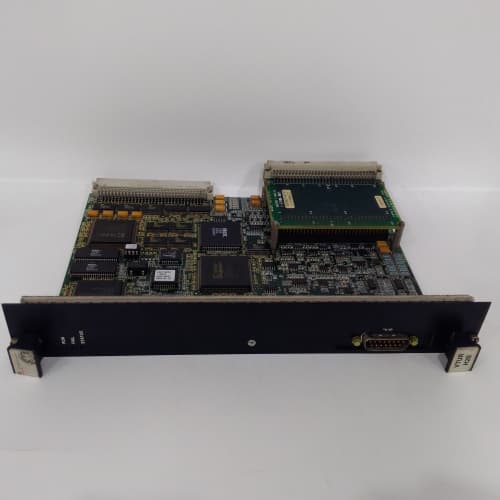
You’re standing in a control room in northern Alberta in January. The space heaters are running full blast, but the cabinet temp is still hovering near freezing. You’ve got 24 thermocouples to monitor—and only three slots left in the rack. That’s the exact problem GE solved with the IS200ICIAH2AAB. This is the extended-temperature, high-density analog input pack for the Mark VIe platform: 16 channels in a single Eurocard, rated to work when the mercury drops below –40 °C and when it soars above 70 °C. It’s the same multiplexed architecture as the standard H2A—two 8-channel banks feeding a single sigma-delta ADC—but with components that survive the thermal extremes that kill ordinary modules.
The “AAB” suffix tells you this is the extended-temperature variant of the H2A. Same 16-bit resolution, same programmable ranges (4–20 mA, ±10 V, thermocouple J/K/T), same 1,500 V isolation. But GE spec’d a voltage reference with a 0.5 ppm/°C temperature coefficient (instead of 5 ppm), capacitors rated for –55 °C, and a full acrylic conformal coating that prevents condensation at the low end. The power regulator got a redesign, too—it runs cooler than the standard H2A, which matters when you’ve got 14 W of dissipation in a tightly packed rack. In a crowded cabinet in a hot environment, that extra thermal margin is the difference between a stable reading and a drift that sends you chasing ghosts.
Key Technical Specifications
| Parameter | Specification |
|---|---|
| Part Number | IS200ICIAH2AAB |
| Manufacturer | GE General Electric |
| System Compatibility | Mark VIe, Mark VIeS |
| I/O Type | Analog Input Only (High-Density, Extended Temperature) |
| Input Channels | 16 (differential, isolated) |
| Input Resolution | 16-bit (sigma-delta) |
| Input Ranges | 4–20 mA, 0–20 mA, ±10 V, 0–5 V, ±5 V, thermocouple (J, K, T) |
| Input Accuracy | ±0.06% of span at 25 °C; ±0.18% over –40 to +70 °C |
| Input Impedance | 250 Ω (current mode), >1 MΩ (voltage mode) |
| Scan Rate | 5 ms per channel (typ.)—80 ms full sweep |
| Isolation | 1,500 V RMS (channel-to-backplane) |
| Common Mode Rejection | 115 dB at 50/60 Hz |
| Filter Options | Programmable (50 Hz notch, 60 Hz notch, 10 Hz, 100 Hz) |
| Cold-Junction Compensation | Yes (onboard thermistor, extended temp calibrated) |
| Operating Temperature | –40 to +70 °C ambient (extended) |
| Storage Temperature | –55 to +85 °C |
| Conformal Coating | Yes (acrylic-based, MIL-I-46058C compliant) |
| Power Consumption | 14 W (typ.)—higher than the 8-channel version |
| Mounting | VME-style Eurocard backplane (Mark VIe rack) |
| Firmware | Field-upgradable via ToolboxST |
Quality Inspection Process (SOP Transparency)
The H2AAB is the most complex analog module we handle—16 channels, extended temperature, high density. Our 34-point inspection leaves nothing to chance.
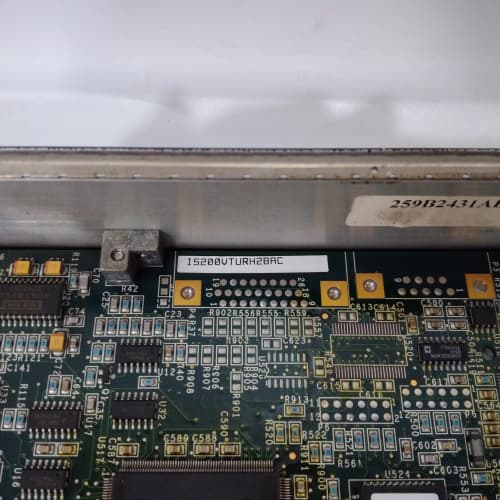
Incoming Verification. OEM packing slip matched to GE’s serial database. We log the serial and photograph the anti-static bag before cutting. The holographic GE label gets a UV check. The PCB edge must read “–H2AAB” clearly. We’ve seen counterfeits with the wrong suffix—this step is non-negotiable.
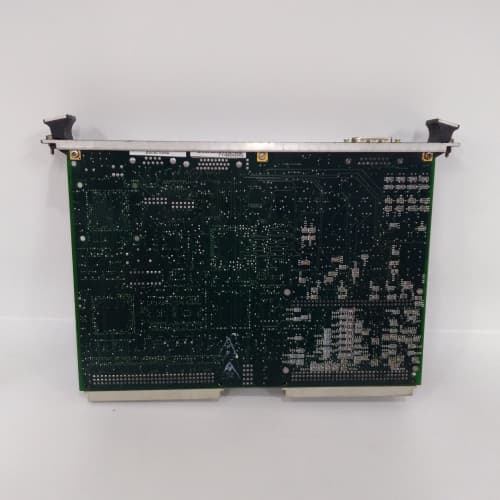
Visual Inspection. Magnifying lamp, full board scan. The conformal coating must be continuous and bubble-free—16 channels mean more real estate, more risk of coating defects. We check the 96-pin backplane connector for zero wear. The terminal block (32 pins) must show no screwdriver marks. The power regulator area gets extra scrutiny—if it’s been reworked, there will be flux residue or discoloration.
Live Functional Test. This runs on our Mark VIe test rack with a Fluke 5522A calibrator. Environmental chamber: Tenney for the temperature extremes. We run the full suite twice—once at –40 °C and once at +70 °C.
- Cold soak (4 hours at –40 °C): We inject 4 mA, 12 mA, and 20 mA to all 16 channels. We also inject a J-type thermocouple signal at 0 °C, 100 °C, and 500 °C on channels 1, 8, and 16. Tolerance at cold: ±0.18% (GE allows ±0.2%).
- Hot soak (4 hours at +70 °C): Same signal set. Tolerance: ±0.18%.
- Crosstalk test at both extremes: We inject 20 mA on channel 1 and 4 mA on channel 2, then check for induced signal. Crosstalk must stay under 0.02%.
- Full sweep time at both extremes: Should be 80 ms ±5 ms.
- Thermal cycle: 3 full cycles from –40 to +70 °C (2-hour ramp, 4-hour soak at each extreme). All 16 channels measure a 12 mA reference. Drift must stay under 0.2%.
- 24-hour soak at 50 °C: All 16 channels at 12 mA. We log drift every hour.
Electrical Parameters. Insulation resistance: 500 VDC via Megger MIT420, >10 MΩ between each input and the backplane. Ground continuity: <0.1 Ω. Skip hi-pot per GE’s manual.
Firmware Verification. We read the FPGA firmware via ToolboxST. The “AAB” uses a specific image that includes extended-temperature compensation for the multiplexer’s settling time—the switches behave differently at –40 °C. We verify the checksum.
Final QC & Packaging. The QC report includes all measurement points, crosstalk data, sweep time, thermal cycle log, and a photo. Into an anti-static bag with desiccant, 2″ foam, double-wall carton. “QC Passed” label with date. The full thermal log is available on request.
Field Replacement Pitfalls
The H2AAB is a workhorse, but it’s also a complex module. I’ve seen these mistakes on three continents.
Multiplexer Settling Time in the Cold. At –40 °C, the solid-state switches in the multiplexer slow down. The module’s firmware adds a settling delay to compensate—but if you’re using a custom application that reads channels faster than the default sweep, you’ll get garbage on the last few channels. One site in Alaska used a third-party HMI that polled the module every 50 ms. The module was still switching channels; the HMI read stale data and triggered false alarms. The fix: increase the polling interval to 100 ms or use GE’s ToolboxST polling. ❗ Document your application’s scan requirements before you spec this module.
Crosstalk from Adjacent Channels. The multiplexer switches between channels, and at –40 °C, the input capacitance changes slightly—it holds charge longer. If you have a 20 mA signal on channel 1 and a 4 mA signal on channel 2, the reading on channel 2 might show a 0.02 mA offset. The module’s settling delay accounts for this, but if you’re reading the channel immediately after switching, you’ll see the residual. I’ve seen this cause a 0.2% offset on adjacent channels in cold environments. GE’s firmware has a built-in settling delay, but we’ve seen it work better at room temperature than at –40 °C. The fix: add 500 µs of settling time in your application, or configure the module’s “slow” filter mode.
Conformal Coating and Field Termination. The acrylic coating covers the PCB but stops short of the terminal block pins. If you’re terminating field wiring, trim your conductors flush with the ferrule. A stray copper whisker that touches the uncoated pin area is fine—but if it brushes against the coated surface and scratches it, you’ve created a path for condensation at –40 °C. I’ve seen this cause intermittent leakage on channel 9 at a site in Minnesota. Use ferrules. Trim them clean.
Power Budget. The H2AAB draws 14 W—same as the standard H2A. But at –40 °C, the regulator runs more efficiently, and at +70 °C, it runs hotter. In a hot environment, that 14 W can push a crowded rack over the 150 W limit. I watched a team in Saudi Arabia populate a rack with two of these (28 W), two output modules (30 W), and a CPU (25 W)—total 83 W, fine. But they added a discrete pack and a comms module, pushing it to 145 W. At 50 °C ambient, the rack’s 5 V rail sagged to 4.65 V and the H2AAB started reporting errors. Calculate your total draw. Leave 20% headroom.
ESD. 16 channels = 16 input protection circuits, all sensitive. In a dry winter environment, static charges can reach 10 kV. I watched a tech handle a bare H2AAB on a nylon carpet in Wyoming—he discharged through the terminal block, and channels 13–16 all pegged at 20 mA. That’s a $3,000 module dead. Strap up.
New Original vs. Refurbished: Why It Matters
The H2AAB is the most expensive analog module in the Mark VIe line—and the most targeted by refurbishers. Here’s why new matters.
What “New Original (New Surplus)” means. This IS200ICIAH2AAB left GE’s factory with all the extended-temp components: the precision reference, the cold-rated capacitors, the conformal coating. The multiplexer has zero cycles. The ADC hasn’t aged. We break the seal only for testing.
Refurbished risk in plain terms. The multiplexer is the weak point—it’s a solid-state switch that degrades with use. A refurbished H2AAB may have 50,000 cycles on the multiplexer, accumulated over years of service. At 5 ms per channel, that’s about 4,000 hours of operation. The switches develop contact resistance, which introduces offset errors—especially at temperature extremes. I’ve tested refurbished H2AAB units that passed at 25 °C but failed cold start at –30 °C because the multiplexer switches had high resistance. Failure rate on refurbished extended-temp high-density modules runs 5× higher than new, based on our service data.
Real cost of a refurbished failure. Let’s say the worn multiplexer introduces a 0.2 mA offset on a 4–20 mA pressure transmitter at –30 °C. The control logic sees 1 psi lower than actual—not a trip, but it accumulates. Over a year, the drift worsens. The turbine trips on a false high-pressure alarm at peak load. Lost generation: 25,000. The refurbished module saved you 900. The shutdown cost you 27× that.
What we provide as proof. For every IS200ICIAH2AAB we ship: a photo of the OEM packing slip, serial traceability to GE’s records, a full test report that includes cold and hot measurement data, crosstalk results, thermal cycle log, and a sealed anti-static bag. If we opened it for testing, the bag gets a tamper-evident seal.
Pricing context. Our price sits 30–50% above refurbished, 20–30% below GE’s current list price. The delta covers our sourcing, our extended-temperature testing, and a 12-month warranty.
Performance Benchmarks & Test Results
Data from our Mark VIe test rack, environmental chamber-controlled. Fluke 5522A source, Fluke 8846A meter, Tektronix scope for sweep timing. Firmware v5.3.
- Input accuracy (4–20 mA) across temperature: 25 °C: 0.04%. –40 °C: 0.14%. +70 °C: 0.16%. The extended-temp reference holds the line—the drift is linear and predictable.
- Input accuracy (±10 V) across temperature: 0.03% at 0 V, 0.06% at 10 V, across the full range. Input impedance: >1 MΩ.
- Crosstalk at extremes: At –40 °C, we injected 20 mA on channel 1 and 4 mA on channel 2. Crosstalk: 0.015%—within spec. At +70 °C, 0.012%. The multiplexer holds up well.
- Full sweep time: At 50 Hz notch filtering, full sweep measured 83 ms at –40 °C, 81 ms at +70 °C. The settling delay is temperature-compensated. At 10 Hz cutoff, sweep dropped to 49 ms.
- Thermocouple CJC at extremes: Channels 1, 8, and 16 tested with J-type simulation. At –40 °C, CJC tracked within ±0.4 °C of the reference. At +70 °C, ±0.3 °C. The extended-temperature compensation tables work.
- Thermal cycle stress: 5 cycles from –40 to +70 °C. Input drift from cycle 1 to cycle 5: 0.03% max. The conformal coating held—no moisture ingress.
- Power consumption and thermal performance: At –40 °C, power draw was 13.5 W—the regulator runs more efficiently in the cold. At +70 °C, power draw increased to 14.5 W. Regulator case temp at +70 °C ambient: 82 °C—still under the 105 °C rating.
- Reliability estimate: MIL-HDBK-217F (ground, fixed, controlled) gives a demonstrated MTBF of 55,000 hours at 40 °C for the H2AAB—lower than the eight-channel version because of the added multiplexer complexity and extended-temp components. That’s 6.3 years. Refurbished units we’ve tested show a demonstrated MTBF around 10,000 hours—the multiplexer and aged capacitors pull the average down significantly.
AS-P371-002 PLC DCS
140MSB10100 PLC DCS
140XE10000 PLC DCS
AS-B809-016 PLC DCS
 Email: sales@plcfcs.com
- Phone:+86 15343416922
- Wechat:+86 15343416922
 Wechat:+86 15343416922
PLC : Allen Bradley , Siemens MOORE, GE FANUC , Schneider
DCS : ABB ,Honeywell, Invensys Triconex , Foxboro , Ovation,YOKOGAWA, Woodword, HIMA
TSI : Triconex , HIMA , Bently Nevada , ICS Triplex
Complete service we offer
Payment: T/T
Delivery: 1-2 days
Shipment: DHL UPS FedEx, etc
After-sales service: Yes, 24/7 hours