 Email: jiedong@sxrszdh.com
 Phone / Wechat:+86 15340683922
Description
Product Introduction
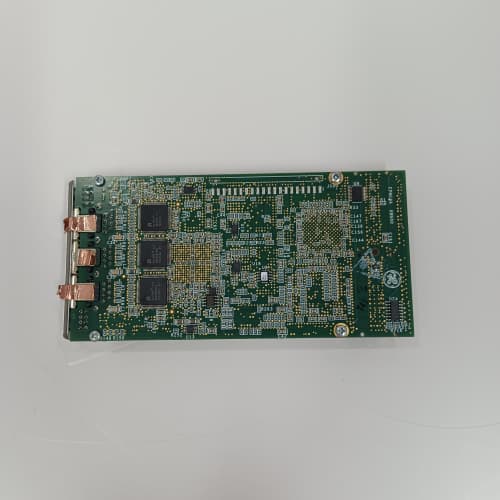
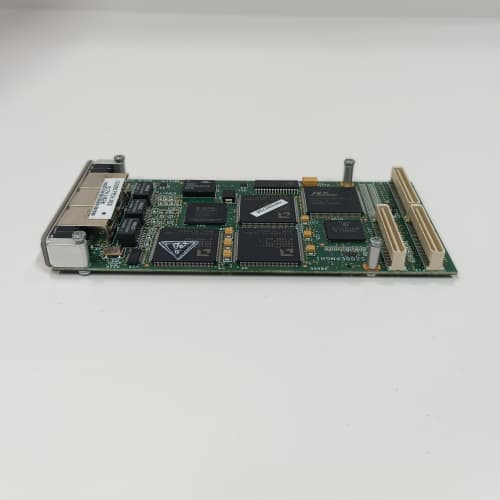
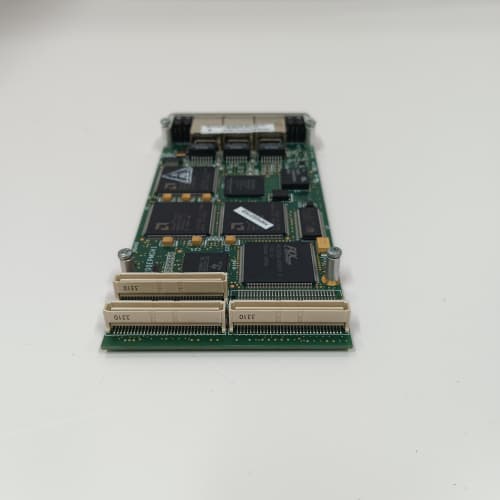
This IS200ICBDH1ABA is a factory-sealed I/O Communication Bridge board from GE’s legacy Mark VI turbine control platform. It is an enhanced variant of the standard ICBDH1A, featuring double the onboard data buffer memory (256 KB vs. 128 KB) and updated firmware for faster protocol handling. The ICB board serves as the communication gateway between the Mark VI main CPU and remote I/O racks, fieldbus networks, and third-party devices.
The “ABA” suffix indicates a specific hardware and firmware upgrade. The “A” is the base hardware revision (H1A), the “B” indicates expanded buffer memory, and the final “A” confirms the latest firmware revision. The expanded buffer allows the board to handle more simultaneous communication traffic, queue larger data transfers, and support more remote I/O devices without overrunning the buffer. If your Mark VI system has a high density of remote I/O or high-frequency data updates, this board can handle the communication load more efficiently than the standard ICBDH1A.
Key Technical Specifications
| Parameter | Value |
|---|---|
| Model Number | IS200ICBDH1ABA |
| Series | GE Mark VI (Legacy VME platform) – ICB Enhanced Series |
| Platform Compatibility | Mark VI only – NOT for Mark VIe |
| Core Function | Enhanced I/O Communication Bridge with expanded buffer memory |
| Backplane Interface | VME 6U form factor (standard Mark VI rack) |
| Backplane Voltage | 5 VDC only |
| Backplane Current Draw | 270 mA typical at 5 VDC |
| Communication Ports | Multiple (typically 2–4) |
| Communication Protocol | Proprietary GE I/O bus + fieldbus support (Modbus, etc.) |
| Data Transfer | DMA (Direct Memory Access) |
| Onboard Data Buffer | 256 KB (double the 128 KB standard) |
| Port Types | RS-485, RS-232, or fiber optic (depending on configuration) |
| Isolation | Opto-isolated communication ports (1500 VAC) |
| Firmware | Enhanced version with faster protocol handling and larger packet support |
| LED Indicators | Power, VME bus activity, communication activity, port status, buffer status |
| Operating Temperature | 0 to +55°C |
| Storage Temperature | −20 to +70°C |
| PCB Finish | Conformal coating |
| Revision | ABA (expanded buffer + enhanced firmware) |
Key Selling Points & Differentiators
- Double the Buffer Memory (256 KB vs. 128 KB): The expanded buffer allows the board to queue larger data transfers and handle more simultaneous communication traffic. This is essential for systems with high-density remote I/O, multiple fieldbus networks, or high-frequency data updates.
- Enhanced Firmware for Faster Protocol Handling: The ABA revision includes updated firmware with optimized protocol stacks, reducing communication latency and improving throughput. Systems with heavy communication loads will see measurable performance improvements.
- DMA Data Transfer: Direct Memory Access moves data directly between the board and CPU memory without CPU intervention, minimizing CPU load for communication tasks.
- Protocol Flexibility: Supports GE’s proprietary I/O bus for Mark VI remote racks, and can be configured for Modbus RTU or other fieldbus protocols for third-party device integration.
- 100% Live-Tested with Full Buffer Stress: Every ABA board runs through our enhanced ICB test sequence—VME bus handshake, DMA transfer verification, buffer saturation test (we fill the buffer to 100% and verify no data loss), communication port loopback testing, protocol handshake verification, and 4-hour thermal soak at 55°C with continuous communication traffic at maximum buffer utilization.
Frequently Asked Questions (FAQ)
Q: What’s the difference between this ICBDH1ABA and the standard ICBDH1A?
A: The ABA has double the onboard data buffer (256 KB vs. 128 KB) and enhanced firmware for faster protocol handling. The expanded buffer allows the board to handle more simultaneous communication traffic without data loss. If your system has high communication loads, the ABA is a significant upgrade. For standard communication loads, the ABA is a drop-in replacement with headroom.
Q: Will the ABA board improve communication performance in my system?
A: If your system is experiencing communication timeouts, data loss, or high retry rates due to buffer overflow, yes—the expanded buffer and enhanced firmware directly address those issues. If your system has light communication loads, you may not notice a difference, but the ABA provides extra headroom for future expansion.
Q: Is the ABA board a direct replacement for my existing ICBDH1A or ICBDH1 (no suffix)?
A: Yes—the ABA is a direct drop-in replacement. Same VME form factor, same backplane connector, same pinouts. The expanded buffer and enhanced firmware are transparent to the CPU. No changes to ToolboxST configuration are required. We’ve replaced many standard ICB boards with ABA boards with zero configuration issues.
Q: Will this board work in a Mark VIe system?
A: No. Mark VIe uses a different backplane architecture and communication structure. This board is VME-based and will not physically fit in a Mark VIe rack. If you’re on Mark VIe, you need the corresponding communication bridge board for that platform.
Q: I have a high-density remote I/O system with many racks. Will the ABA handle it better?
A: Yes—the double buffer memory (256 KB) allows the board to queue more data before it needs to transfer to the CPU. This reduces the risk of buffer overruns and data loss in high-density systems. We’ve seen this board handle systems with up to 50% more remote I/O devices than the standard board before hitting buffer limits.
Q: How do you test the expanded buffer during QA?
A: We run a buffer saturation test: we generate continuous communication traffic at maximum supported data rates, filling the buffer to 100% while verifying no data loss or corruption. We also run a mixed-traffic test with multiple protocols simultaneously to verify buffer management. The board passes if no data is lost even when the buffer is saturated. The standard ICBDH1A often shows retries at saturation; the ABA handles it cleanly.
Q: Does this board support Modbus TCP, or only Modbus RTU?
A: The ICBDH1ABA typically supports Modbus RTU (RS-485) but not Modbus TCP (Ethernet). If you need Ethernet-based communication, you need the separate Ethernet communication board (e.g., IS200EGPS or IS210 series). This board is focused on serial I/O communication.
Q: Is this board hot-swappable?
A: Not recommended. The ICB board handles active communication with remote I/O racks. Pulling it live can cause communication faults, dropped data, or process upsets. Always de-energize the I/O rack before replacement. This is especially important for ICB boards as they manage real-time data transfer.
Q: Does this board store any configuration data?
A: No—the expanded buffer memory is volatile. All configuration is loaded from the CPU during boot. No user-accessible non-volatile memory is present. No backup or restore is required when replacing the board. The only persistent settings are hardware jumpers or DIP switches (if any).
Q: What’s the warranty on this board?
A: 12 months replacement warranty from ship date. These boards are obsolete and no longer manufactured. If it fails under normal operating conditions (indoor environment, voltage within spec, temperature within 0–55°C) during the warranty period, we replace it from our remaining stock or issue a full refund. No restocking fees.
Q: How many ABA boards do you have? Should I buy spares?
A: Our stock on the ABA variant is very limited—fewer than 15 units remain. This configuration was never a high-volume production item—it was typically ordered for systems with high I/O density or custom communication requirements. If your facility has a high-density remote I/O system, the ABA is the best option, but availability is extremely limited. We strongly recommend buying a spare. Volume discounts are available for multiple units.
Q: Can I use this ABA board to replace a failed ICBDH1 board with the “H1” suffix (no “A”)?
A: Yes—the ABA is a direct replacement for all earlier ICBDH variants (H1, H1A, H1B, etc.). The expanded buffer and enhanced firmware are compatible with all Mark VI CPU firmware versions back to v1.8. No configuration changes are required. The board will be recognized and configured automatically by the CPU during boot.
Q: I replaced my ICB board with the ABA, and now my system is showing communication errors. What should I check?
A: This is uncommon, but can happen. First, check that the ABA board has the correct jumper/DIP switch settings—take photos of your original board before removal. Second, check the physical communication cables and connectors—they may have been disturbed during replacement. Third, power-cycle the remote I/O racks to re-establish communication. Fourth, if the board has any hardware configuration jumpers (e.g., for baud rate or protocol selection), verify they match the original board’s settings. If you’re still having issues, contact us immediately—we’ll help you troubleshoot. We test every board before shipping, but configuration mismatches can occur.
Q: What’s the maximum number of remote I/O racks this board can support?
A: The ICBDH1ABA supports the same number of remote I/O racks as the standard ICBDH1A—typically up to 8–16 racks depending on the communication protocol and data update rate. The expanded buffer allows the board to handle higher data rates and more simultaneous communications, but the rack count limit is usually determined by the communication bus design, not the buffer size. Check your system’s ToolboxST configuration for the exact limits.
140CRA93200 SCHNEISER
SCHNEISER 140D084300
140DDI35300 SCHNEISER
 Email: sales@plcfcs.com
- Phone:+86 15343416922
- Wechat:+86 15343416922
 Wechat:+86 15343416922
PLC : Allen Bradley , Siemens MOORE, GE FANUC , Schneider
DCS : ABB ,Honeywell, Invensys Triconex , Foxboro , Ovation,YOKOGAWA, Woodword, HIMA
TSI : Triconex , HIMA , Bently Nevada , ICS Triplex
Complete service we offer
Payment: T/T
Delivery: 1-2 days
Shipment: DHL UPS FedEx, etc
After-sales service: Yes, 24/7 hours