 Email: jiedong@sxrszdh.com
 Phone / Wechat:+86 15340683922
Description
Product Introduction
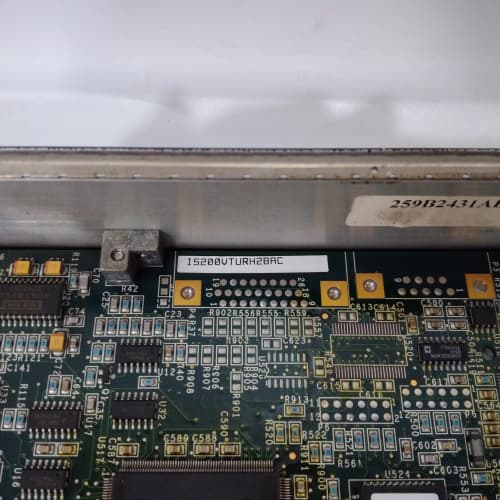
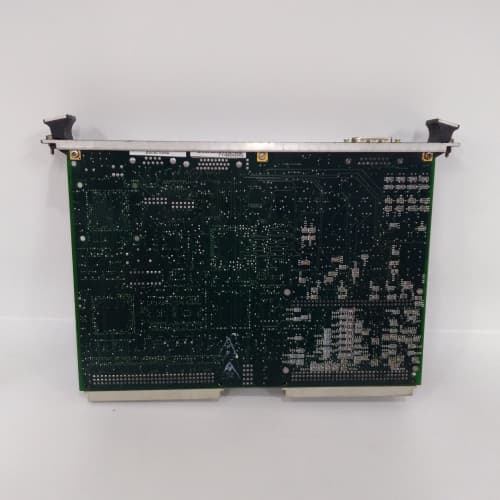
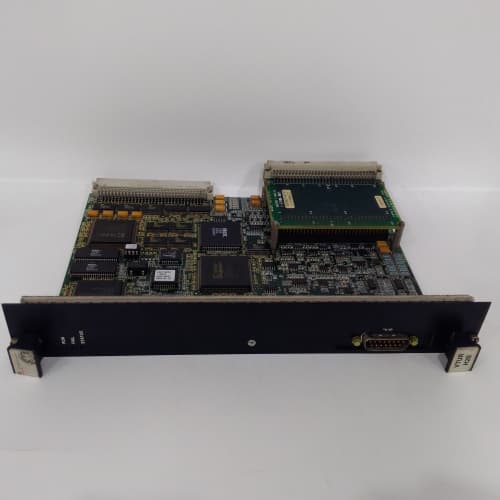
This IS200HSLAH2A is a factory-sealed High-Speed I/O interface board from GE’s legacy Mark VI turbine control platform. The HSLAH series is designed for critical control signals that require deterministic, low-latency response times—typically faster than the standard I/O scan rates. Applications include speed sensing, overspeed protection, flame detection, valve position feedback, and other time-critical turbine control functions that cannot tolerate the latency of the standard I/O bus.
The “H2A” designation indicates this is the latest revision of the HSLAH series. The H2A features updated logic devices for improved timing accuracy and signal integrity compared to earlier H1A and H1B variants. This board operates on an interrupt-driven architecture—when a critical input changes state, the board generates a VME interrupt that the CPU handles immediately, bypassing the normal I/O scan cycle. Response times are typically under 1 ms, making this board essential for overspeed protection and other safety-critical functions.
Key Technical Specifications
| Parameter | Value |
|---|---|
| Model Number | IS200HSLAH2A |
| Series | GE Mark VI (Legacy VME platform) – HSIO Series |
| Platform Compatibility | Mark VI only – NOT for Mark VIe |
| Core Function | High-Speed I/O interface for critical time-sensitive signals |
| Backplane Interface | VME 6U form factor (standard Mark VI rack) |
| Backplane Voltage | 5 VDC only |
| Backplane Current Draw | 380 mA typical at 5 VDC |
| I/O Type | Configurable high-speed digital inputs/outputs |
| Response Time | < 1 ms (interrupt-driven) |
| Input Protection | Opto-isolated (1500 VAC isolation) |
| Input Voltage Range | 24 VDC nominal (18–32 VDC range) |
| Output Current | 0.5 A max per output point (sourcing) |
| Number of Channels | Configurable (typically 16–32 channels, depending on configuration) |
| Interrupt Capability | VME interrupt generation on selected inputs |
| Communication Interface | High-speed parallel bus to CPU |
| LED Indicators | Power, VME bus activity, channel status, interrupt activity |
| Operating Temperature | 0 to +55°C |
| Storage Temperature | −20 to +70°C |
| PCB Finish | Conformal coating |
| Firmware | Factory-loaded HSIO firmware (H2A-specific) |
| Revision | H2A (latest production revision) |
Key Selling Points & Differentiators
- Critical Safety Signal Processing: Handles overspeed protection, flame detection, and valve position feedback with deterministic <1 ms response. Standard I/O boards scan at 10–100 ms—too slow for these functions. This board is mission-critical.
- Interrupt-Driven Architecture: When an input changes state, the board generates a VME interrupt. The CPU responds immediately, bypassing the normal I/O scan cycle. This deterministic response is essential for safety systems.
- H2A Revision – Latest and Most Reliable: The H2A revision includes updated logic devices with improved timing accuracy, better signal integrity, and revised noise filtering compared to earlier H1A and H1B variants. This is the board you want for the most reliable performance.
- Opto-Isolated Inputs (1500 VAC): Full isolation between field wiring and the VME backplane protects the CPU from surges and transient voltage spikes.
- Configurable I/O: Channel configuration can be set in ToolboxST for input, output, or special functions (e.g., pulse counting, frequency measurement). This flexibility reduces the need for multiple dedicated boards.
- 100% Live-Tested on HSIO Simulator: Every HSLAH2A board runs our full HSIO test sequence—all channels toggled at maximum speed (1 ms cycle), interrupt generation verified, thermal soak at 55°C for 4 hours, and VME bus handshake validation. We also test the board with a simulated speed sensor input to verify interrupt timing.
Frequently Asked Questions (FAQ)
Q: What’s the difference between this HSLAH2A and the standard Mark VI I/O boards?
A: Standard Mark VI I/O boards are scan-based—the CPU reads them at fixed intervals (typically 10–100 ms). This HSLAH board is interrupt-driven—when an input changes, it generates a VME interrupt that the CPU handles immediately, bypassing the scan cycle. Response time is under 1 ms. This is essential for functions like overspeed protection and flame detection where a 10 ms delay is unacceptable.
Q: What’s the difference between the H2A and the earlier H1A or H1B revisions?
A: The H2A revision includes updated programmable logic devices (PLDs) with improved timing accuracy, better signal integrity, and revised noise filtering on the input stages. The H2A also has a slightly lower power draw and improved thermal characteristics. Functionally, the H2A is a direct replacement for H1A and H1B boards, but we recommend updating to the H2A if possible—it’s the most reliable version GE produced.
Q: Can this board be used for speed sensing or overspeed protection?
A: Yes—that’s exactly what it’s designed for. The HSLAH2A can accept speed sensor inputs (magnetic pickups or proximity sensors) and generate interrupts on each pulse. The Mark VI CPU can then calculate speed and respond to overspeed conditions in under 1 ms. This is one of the primary applications for this board.
Q: Will this board work in a Mark VIe system?
A: No. Mark VIe uses a different backplane architecture and I/O structure. This board is VME-based and will not physically fit in a Mark VIe rack. If you’re on Mark VIe, you need the corresponding HSIO board for that platform (typically part of the IS220 series).
Q: Is this board hot-swappable?
A: Not recommended. While the VME backplane supports live insertion, the HSLAH2A handles critical safety signals. Pulling it live could cause the CPU to miss an interrupt, potentially leading to a safety system fault or worse. Always de-energize the I/O rack before replacement. This is a hard rule for HSIO boards.
Q: Does this board have any non-volatile configuration memory?
A: No—the board’s configuration is loaded from the Mark VI CPU during boot. The only settings that persist are hardware jumper or DIP switch settings (if any). No backup is required when replacing the board.
Q: I have a HSLAH1A board that’s failing. Is the H2A a direct replacement?
A: Yes—the H2A is a direct drop-in replacement. Same VME form factor, same backplane connector, same pinouts. No changes to ToolboxST configuration are required. The H2A’s improved timing and noise filtering are transparent to the CPU. We’ve replaced dozens of H1A and H1B boards with H2A boards with zero configuration issues.
Q: How do you test this board during QA?
A: We use a Mark VI HSIO simulator that generates high-speed pulse trains and toggles digital inputs at rates up to 1 kHz. The test sequence includes: (1) VME bus handshake verification, (2) interrupt generation test—we generate over 100,000 interrupts and verify every one reaches the CPU, (3) full channel I/O test at maximum speed, (4) thermal soak at 55°C for 4 hours with continuous interrupt generation, and (5) input noise rejection test—we inject AC noise on the field inputs and verify the board still reports states correctly. If any interrupt is missed or any state is misreported, the board is rejected.
Q: Does this board support pulse counting or frequency measurement?
A: Yes—the HSLAH2A can be configured for frequency measurement and pulse counting. This is typically used for speed sensing from magnetic pickups or proximity sensors. The board can measure frequencies up to 10 kHz with high accuracy. Configuration is done in ToolboxST.
Q: What’s the warranty on this board?
A: 12 months replacement warranty from ship date. These boards are obsolete and no longer manufactured. If it fails under normal operating conditions (indoor environment, voltage within spec, temperature within 0–55°C) during the warranty period, we replace it from our remaining stock or issue a full refund. No restocking fees.
Q: How many HSLAH2A boards do you have? Should I buy spares?
A: Our stock on the HSLAH series is very limited—fewer than 25 units remain. The H2A revision is even rarer. These boards are critical for turbine safety systems, and when they fail, the turbine may be forced to shut down. We strongly recommend buying a spare if your facility runs Mark VI systems with HSIO boards. Volume discounts are available for multiple units. These boards are not repairable in the field—when they fail, replacement is the only option.
Q: I replaced my HSLAH board and now the turbine won’t start. What happened?
A: This is rare, but it can happen if the replacement board has a different jumper or DIP switch configuration than the original. Before replacing, take photos of the jumper positions and any DIP switch settings on the old board. The H2A should be a direct drop-in with the same settings, but if your old board was a custom configuration with hardware jumpers, you need to replicate those on the new board. If you’re unsure, contact us before installation. We can provide the standard factory settings and help you verify your configuration.
Q: Can I use this board for flame detection signals?
A: Yes—flame detectors often generate a 4–20 mA or discrete flame-on/flame-off signal that requires fast response. The HSLAH2A can accept these signals and generate interrupts on state changes. However, if you’re using a UV or IR flame sensor with a specific signal conditioning requirement, you may need a separate signal conditioner. The board accepts 24 VDC digital inputs and can be configured for pulse counting if needed.
Q: What’s the maximum frequency this board can measure?
A: The HSLAH2A can measure pulse frequencies up to approximately 10 kHz with the standard configuration. If you need higher frequencies, contact us—we may be able to adjust the configuration in ToolboxST or advise on alternative hardware. Most turbine speed sensors operate well below this frequency.
SCHNEISER 140CRP93100
SCHNEISER 140ACI04000
140AC013000 SCHNEISER
140CP167160 SCHNEISER
 Email: sales@plcfcs.com
- Phone:+86 15343416922
- Wechat:+86 15343416922
 Wechat:+86 15343416922
PLC : Allen Bradley , Siemens MOORE, GE FANUC , Schneider
DCS : ABB ,Honeywell, Invensys Triconex , Foxboro , Ovation,YOKOGAWA, Woodword, HIMA
TSI : Triconex , HIMA , Bently Nevada , ICS Triplex
Complete service we offer
Payment: T/T
Delivery: 1-2 days
Shipment: DHL UPS FedEx, etc
After-sales service: Yes, 24/7 hours