 Email: jiedong@sxrszdh.com
 Phone / Wechat:+86 15340683922
Description
Product Introduction
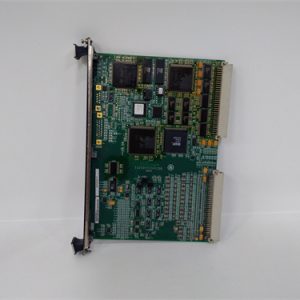
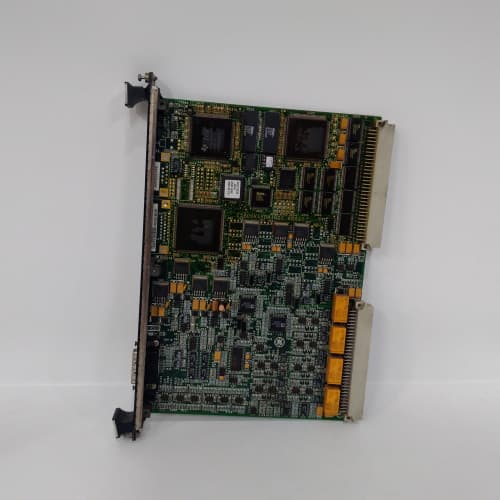
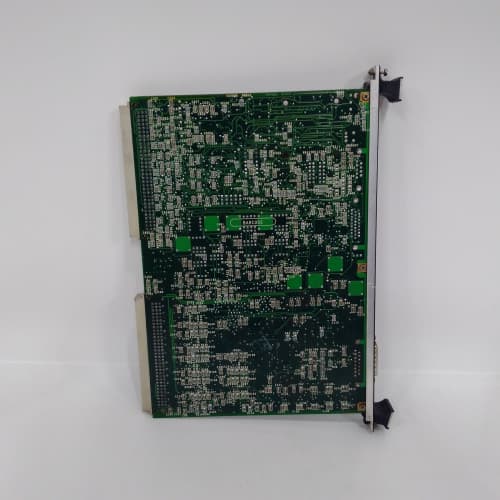
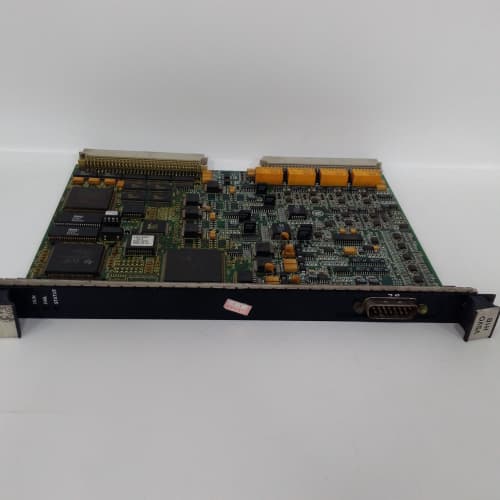
The GE IS200CVMBG1A is a VME-based controller board that serves as the processing engine for Mark VIe distributed control systems in gas and steam turbine applications. This board executes the turbine control logic, manages I/O scanning across VME-connected I/O packs, and provides communication interfaces to operator workstations and plant DCS networks. It is a direct alternative to the CTBC series controllers with a different memory architecture and communication profile.
What distinguishes the CVMBG1A from the CTBC family is its VME-centric design and the G1A revision’s improved processing capabilities. In plants with extensive VME-based I/O infrastructure, this board offers a straightforward replacement path without re-cabling or re-termination. The G1A revision provides a faster processor and expanded memory over earlier CVM variants, making it suitable for applications with up to 400 I/O points at scan rates down to 10 ms. For facilities running legacy Mark VIe installations with VME backplanes, this board extends equipment life without forcing a full system overhaul.
Key Technical Specifications
| Parameter | Value |
|---|---|
| Model Number | IS200CVMBG1A |
| Series | Mark VIe IS200 |
| Processor | 400 MHz (upgraded from 266 MHz in earlier CVM revisions) |
| RAM | 128 MB SDRAM |
| Flash Storage | 64 MB onboard |
| Communication Ports | 2 x 10/100 Ethernet (auto-negotiating) |
| Serial Interfaces | 2 x RS-232/RS-485 configurable |
| I/O Bus Interface | VME backplane (standard IEEE 1014) |
| Minimum Scan Rate | 10 ms typical application load (configurable) |
| Maximum I/O Capacity | 400 points typical (depends on application complexity) |
| Operating Temperature | 0°C to 55°C (ambient, forced air required) |
| Power Supply | 5 V DC from backplane, 2.0 A typical |
| Firmware | Requires ToolboxST/ToolboxEX version 6.0 or higher |
| Battery Backup | Onboard lithium battery for clock retention (replace every 5 years) |
| LED Indicators | CPU run, Ethernet activity, fault, user status |
| Mounting | Standard VME rack slot (6U form factor) |
Key Selling Points & Differentiators
- VME backplane compatibility – directly replaces earlier CVM boards in existing Mark VIe racks. No backplane changes, no adapter cards, no termination modifications. Swap takes under 15 minutes.
- 400 MHz processor upgrade – delivers 50% more processing power than earlier 266 MHz CVM variants. Handles larger applications and faster scan rates for more responsive turbine control.
- Dual 10/100 Ethernet ports – supports redundant network communication to operator HMIs and plant DCS. Reduces single points of failure in critical control networks.
- Rigorous functional testing – each board undergoes 48-hour burn-in with VME bus traffic simulation and full network load testing. We verify Ethernet throughput, serial communication, and backplane handshaking under worst-case conditions.
- Firmware baseline logging – we record the firmware revision on every unit and include a verification certificate. No surprises when you install the board and find mismatched firmware.
- 3-year warranty on hardware, backed by our in-house repair depot with an average 48-hour turnaround. Dedicated VMB swap-pool ensures rapid replacement.
Frequently Asked Questions (FAQ)
Can I hot-swap this IS200CVMBG1A into a running Mark VIe system?
No. This is a VME controller board – removing it while powered will crash the system and likely trip the turbine. The VME bus does not support true hot-swap. Schedule a controlled outage, de-energize the VME rack, and perform the swap during a planned maintenance window. We have seen teams try to do this quickly during shift changes, and it always ends badly.
What is the difference between the IS200CVMBG1A and the IS200CTBCG1A?
The CVMBG1A is VME-based with a different memory architecture (128 MB RAM, 64 MB flash) and 10/100 Ethernet ports. The CTBCG1A uses a higher-performance processor (600 MHz vs. 400 MHz), has more memory (256 MB RAM, 512 MB flash), and 1 GbE ports. The CVMB is suitable for smaller applications up to 400 I/O points; the CTBC handles larger, more demanding installations. If you already have a VME infrastructure, the CVMB is your drop-in. If you are building new, the CTBC offers more headroom.
I currently have an IS200CVMBG1 (non-A). Is the G1A a drop-in replacement?
Physically, yes – same VME form factor, same slot, same connectors. However, the G1A has a faster processor and different firmware. Your existing application compiled for the G1 will not run on the G1A without recompilation. You will need to recompile your application in ToolboxST for the G1A target. We provide a migration guide with step-by-step instructions. The recompilation takes about 10-15 minutes.
What firmware version do I need for this G1A board?
You need ToolboxST version 6.0 or higher. Earlier versions (5.x) do not recognize the G1A processor. If your engineering workstation is on a legacy version, you will need to upgrade ToolboxST first. We can verify compatibility if you send us your current version.
How do I transfer my existing application from the old CVM board to this G1A?
Use ToolboxST to export the application from your current board as a .pkg file. Then, open the project, change the hardware target to CVMBG1A, and recompile. Then download to the new board. The recompilation is mandatory – the G1A’s memory map differs from the older G1. If you do not have the original project files, you may need to extract from the running system. That is doable but requires careful execution.
Will I lose my tuning parameters and setpoints when I swap?
Your tuning parameters are stored in the application code in flash. If you properly export, recompile, and download, all your PID gains, setpoints, and configuration come across intact. However, runtime data – trend logs, event histories, accumulated run hours – will not transfer. Take full data snapshots from your HMI before the swap. We include a pre-swap checklist with every order.
What is the battery life, and what happens when it dies?
The lithium battery has a 5-year typical life. It maintains the real-time clock and some volatile settings. Your application code is in flash and is not battery-dependent. When the battery dies, the clock resets, and time-stamped events show incorrect dates. We install fresh batteries on our refurbished units before shipping. Recommend preventive replacement every 4 years.
How do I verify this is a genuine GE board and not a clone?
We source exclusively from GE-authorized liquidations and maintain full traceability. Our verification includes serial number cross-check against GE records, PCB inspection for GE-specific markings, and component-level validation. We also run the VME bus timing test – clones often fail because they use incorrect bus drivers. We provide photographs of your specific board upon request.
What happens if the board fails within the warranty period?
We cross-ship a tested replacement from our dedicated CVMB swap-pool the same business day. You return the failed board within 15 days. Our repair depot has an average 48-hour turnaround. We test your repaired board back to full specification. No restocking fees. No hidden clauses. We maintain a separate pool for G1A specifically, so you receive the same revision.
Can I use this board with my existing Mark VI VME I/O modules?
Yes. This is the key advantage of the CVMB series. If you have Mark VIe VME I/O packs – typically those that interface through the VME backplane – the CVMBG1A works directly. However, if you are migrating from Mark VI, you need to verify your I/O modules are Mark VIe compatible. Some older Mark VI VME modules do not support the later Mark VIe backplane revisions. Send us your I/O module list, and we can verify compatibility.
The specifications mention 10/100 Ethernet ports. Can I upgrade to 1 GbE?
No. The CVMBG1A has fixed 10/100 ports on the board. If you require 1 GbE connectivity, you need the CTBC series (which has 1 GbE ports) or an external switch. We have seen plants use external switches to bridge between the 10/100 ports and a 1 GbE plant network. That works, but adds latency and a potential failure point. For new installations, we typically recommend the CTBC series.
My application runs at 5 ms scan rate on my current CVM board. Will the G1A handle it?
The G1A’s 400 MHz processor will generally handle 5 ms scan rates, but it depends on application complexity. We have verified 5 ms operation with up to 300 I/O points and moderate logic. If you have a particularly complex application (many floating-point calculations or complex sequencing), you may see scan times extend. We can review your application size if you send us a snapshot. For applications already running at 5 ms on the older 266 MHz CVM, the G1A will handle it without issue.
TRICON 8311 PLC
TRICON 4108 PLC
TRICON 8310 PLCCPU
 Email: sales@plcfcs.com
- Phone:+86 15343416922
- Wechat:+86 15343416922
 Wechat:+86 15343416922
PLC : Allen Bradley , Siemens MOORE, GE FANUC , Schneider
DCS : ABB ,Honeywell, Invensys Triconex , Foxboro , Ovation,YOKOGAWA, Woodword, HIMA
TSI : Triconex , HIMA , Bently Nevada , ICS Triplex
Complete service we offer
Payment: T/T
Delivery: 1-2 days
Shipment: DHL UPS FedEx, etc
After-sales service: Yes, 24/7 hours