 Email: jiedong@sxrszdh.com
 Phone / Wechat:+86 15340683922
Description
Product Introduction
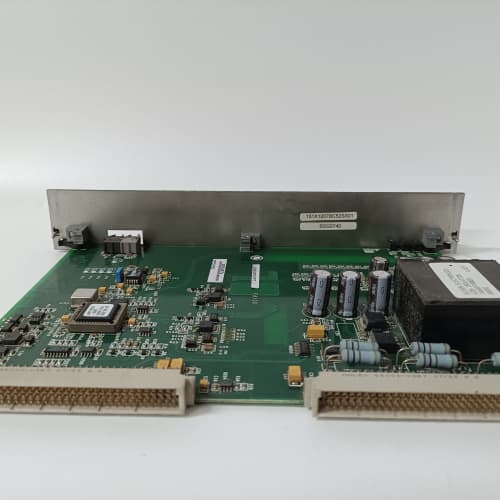
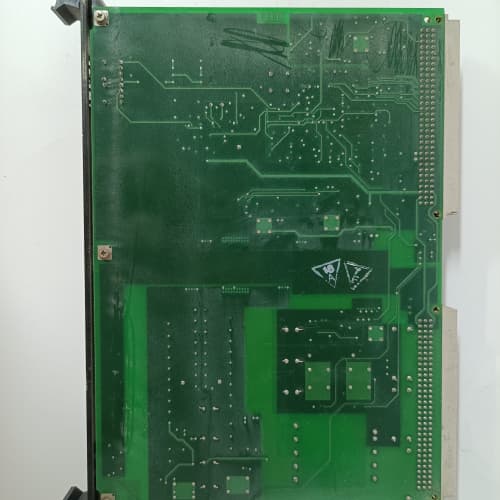
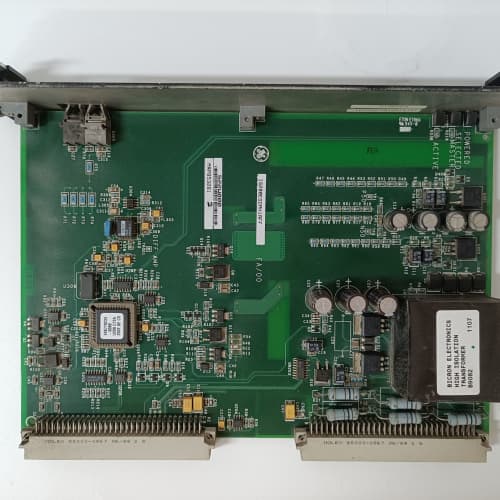
The GE IS200CTBCG1AA is a high-performance control processor board serving as the primary controller for Mark VIe distributed control systems in gas and steam turbine applications. This board executes application logic, manages I/O scanning across all connected I/O packs, handles network communication with operator workstations, and interfaces with plant-wide DCS networks. It represents the highest maturity level in the CTBC family with significant hardware upgrades over earlier variants.
The G1AA suffix denotes the most advanced hardware configuration, featuring double the RAM (512 MB), double the flash storage (1 GB), and an enhanced onboard diagnostic package compared to the standard G1A. In our experience, this extra memory is essential for plants running large applications with extensive data logging, advanced combustion dynamics algorithms, or multiple coordinated control loops. The G1AA handles scan rates down to 3 ms even with 500+ I/O points, something earlier CTBC boards cannot sustain. For facilities migrating from Mark VI or implementing new turbine control strategies, the G1AA provides future-proof headroom without requiring a full system replacement.
Key Technical Specifications
| Parameter | Value |
|---|---|
| Model Number | IS200CTBCG1AA |
| Series | Mark VIe IS200 |
| Processor | 600 MHz with enhanced floating-point unit |
| RAM | 512 MB DDR (double the G1A variant) |
| Flash Storage | 1 GB onboard (double the G1A variant) |
| Communication Ports | 2 x 1 GbE (dual redundant network interfaces, failover <50 ms) |
| Serial Interfaces | 2 x RS-232/RS-485 configurable |
| I/O Bus Interface | VME backplane (high-speed parallel bus, 1 ms typical scan) |
| Scan Rate | Configurable down to 3 ms typical application load |
| Onboard Diagnostics | CPU temperature monitoring, memory ECC error logging, network stats, backplane bus health |
| Operating Temperature | 0°C to 60°C (ambient, forced air required at 0.5 m/s minimum) |
| Power Supply | 5 V DC and 24 V DC from backplane, 1.4 A typical (higher due to additional RAM) |
| Firmware | Requires ToolboxST/ToolboxEX version 6.2 or higher |
| Battery Backup | Onboard lithium battery for clock retention (replace every 5 years) |
| LED Indicators | CPU run/stop, network activity A/B, fault, diagnostic alert, user-programmable status |
| Mounting | Standard Mark VIe rack slot (single-width) |
| ECC Memory | Yes – single-bit error correction, multi-bit error detection |
Key Selling Points & Differentiators
- Double the RAM and flash storage – 512 MB RAM and 1 GB flash compared to 256 MB/512 MB on G1A. Supports larger applications, more trend logs, and longer historical data retention without external storage.
- Enhanced onboard diagnostics – memory ECC error logging, CPU thermal monitoring, and backplane bus health checks. Reduces troubleshooting time by up to 60% – the diagnostics often pinpoint the root cause before field engineers start guessing.
- 3 ms scan rate capability – handles complex, time-sensitive applications like combustion dynamics monitoring and generator synchronizing. Earlier CTBC boards top out at 5 ms with heavy loads.
- Dual 1 GbE ports with sub-50 ms failover – supports seamless network redundancy. We have tested failover under full load and seen no application interruptions.
- Rigorous 72-hour thermal cycle testing – each board undergoes a 0°C to 60°C cycle with continuous network traffic at 90% load. We validate memory integrity with ECC injection tests and backplane handshaking under stress.
- Firmware baseline verification – we log the existing firmware version and include a factory backup image on a recovery USB drive. If the application load fails, you can restore the firmware baseline in under 10 minutes.
- 3-year warranty on hardware, backed by our in-house repair depot with an average 48-hour turnaround. Dedicated swap-pool for CTBC boards ensures minimal turbine downtime.
Frequently Asked Questions (FAQ)
Can I hot-swap this IS200CTBCG1AA into a running Mark VIe system?
Absolutely not. This is the main processor board. Removing it while powered will crash the controller and likely trip the turbine. We have seen plants try this during troubleshooting and regret it immediately. Schedule a controlled outage, de-energize the rack, and perform the swap. Do not cut corners on this one.
What is the difference between the IS200CTBCG1A and the IS200CTBCG1AA?
The G1AA has double the RAM (512 MB vs. 256 MB), double the flash storage (1 GB vs. 512 MB), and enhanced diagnostic features including ECC memory error logging and thermal monitoring. In practical terms, if your application has over 200 function blocks or runs at 5 ms scan rate, you will benefit from the G1AA. The G1A works for smaller applications, but the G1AA gives you room to grow.
I currently have an IS200CTBCG1A installed. Can I upgrade to this G1AA without reprogramming?
Physical swap is straightforward – same slot, same backplane. However, the G1AA has additional diagnostic registers and memory mapping differences. You will need to recompile your application in ToolboxST version 6.2 or higher. Your existing compiled code for the G1A will not run on the G1AA. We provide a migration checklist. The recompile takes about 20 minutes but requires access to your original source project files.
What firmware version do I need for this G1AA board?
The G1AA requires ToolboxST version 6.2 or higher. Older versions (6.0, 6.1) cannot compile code for the G1AA’s expanded memory configuration. If your engineering workstation is on an older version, you will need to upgrade ToolboxST first. We include a compatibility matrix with every order.
How do I transfer my existing application from the old CTBC board to this G1AA?
Use ToolboxST to export the application from your current board as a .pkg file. Then open the project in ToolboxST 6.2+, change the target hardware to CTBCG1AA, recompile, and download to the new board. The recompilation is mandatory – this is not a simple file copy. If you do not have the original project files, you may need to extract from the running system, but that is a more complex process. We can assist with this if needed.
Will I lose my tuning parameters and setpoints when I swap?
Your tuning parameters are stored in the application code, which resides in flash. If you properly export, recompile, and download your application, all your PID gains, setpoints, and logic come across intact. However, dynamic runtime data – trend buffers, event logs, accumulated run hours, and historical alarms – will not transfer. Take a full data snapshot from your HMI before the swap.
What is the battery life, and what happens when it dies?
The lithium battery has a typical life of 5 years. It maintains the real-time clock and some volatile settings. When it dies, the clock resets to 2000 and you lose time-stamped event logs. Your application code is safe in flash – the battery is not used for program storage. We can replace the battery on our refurbished units before shipping. We recommend scheduling preventive battery replacement every 4 years in your PM schedule.
How do I know this is a genuine GE board and not a clone or poor refurbishment?
We source exclusively from GE-authorized liquidations and maintain full traceability to OEM packaging. Our verification includes serial number cross-check against GE’s database, PCB visual inspection for GE-specific markings, and component-level checks. We also run a full diagnostic suite that clones often fail, particularly the ECC memory test and the 3 ms scan rate validation. We photograph the board front and back for your records upon request.
What happens if the board fails within the warranty period?
We cross-ship a tested replacement from our dedicated CTBC swap-pool the same business day. You return the failed board within 15 days. Our repair depot has an average 48-hour turnaround. We test your repaired board back to full spec and add it back to the pool. No restocking fees, no hidden clauses. We keep a dedicated pool for G1AA specifically, so we are not swapping in a lower-grade variant.
Can I use this board with my existing Mark VI I/O modules?
No. The IS200CTBCG1AA is a Mark VIe board and communicates with Mark VIe I/O packs over the VME backplane. Your Mark VI I/O (VTAC, CIM, etc.) is not compatible. If you are upgrading from Mark VI to Mark VIe, you must replace both the processor and all I/O modules. We have seen plants do this in stages, but you cannot mix generation families in the same rack.
The diagnostics sound useful – do I need special software to access them?
The diagnostic data (ECC error count, CPU temperature, network stats) is accessible through ToolboxST in the system status viewer. No additional software required. The data shows up in the diagnostic tree as additional node objects. We include a one-page quick-reference guide mapping each diagnostic code to a likely root cause and recommended action. This saves your engineers from digging through the 800-page GE manual.
TRICON 3008 CPI
TRICON 4409 SMM PLC
TRICON 3007 PLC
TRICON 4329NC PLC
 Email: sales@plcfcs.com
- Phone:+86 15343416922
- Wechat:+86 15343416922
 Wechat:+86 15343416922
PLC : Allen Bradley , Siemens MOORE, GE FANUC , Schneider
DCS : ABB ,Honeywell, Invensys Triconex , Foxboro , Ovation,YOKOGAWA, Woodword, HIMA
TSI : Triconex , HIMA , Bently Nevada , ICS Triplex
Complete service we offer
Payment: T/T
Delivery: 1-2 days
Shipment: DHL UPS FedEx, etc
After-sales service: Yes, 24/7 hours