 Email: jiedong@sxrszdh.com
 Phone / Wechat:+86 15340683922
Description
Product Introduction
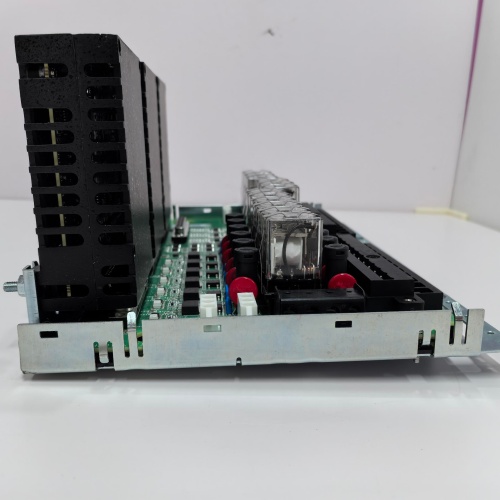
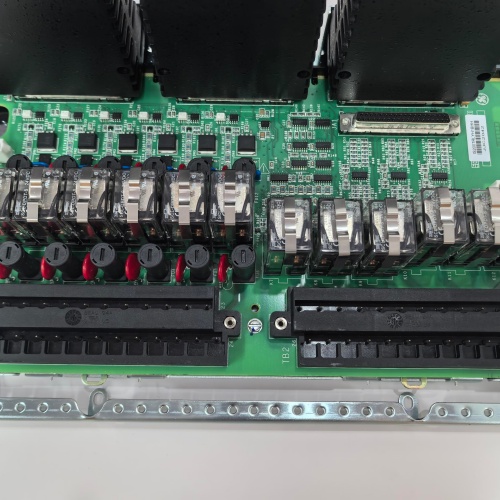
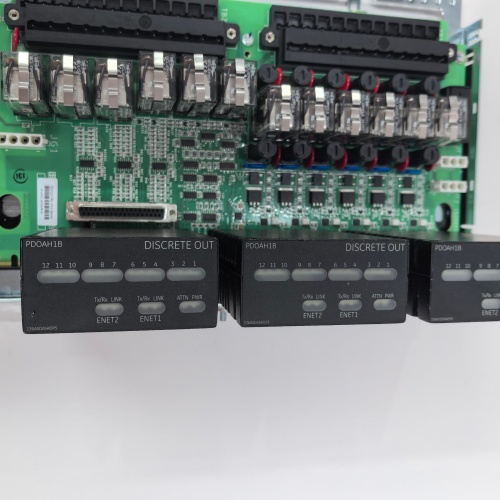
The GE IS200BAIAH1B functions as the Base Analog Input Adapter (BAIA) module within the Mark VIe control platform, providing fundamental analog input interface for turbine control and monitoring applications. This module interfaces with the Mark VIe controller via ISBus communication and offers 8 analog inputs for basic analog signal acquisition from field devices.
The model number breaks down as: IS200 (Mark VIe platform), BAIA (Base Analog Input Adapter), H1 (High-Accuracy), B (Extended Temperature Range -40 to +70°C). The primary differentiator is the combination of reliable analog input capability and extended temperature range—the BAIA H1B provides essential analog input functionality for outdoor, offshore, and extreme climate turbine installations.
Key Technical Specifications
| Parameter | Value |
|---|---|
| Model Number | IS200BAIAH1B |
| Manufacturer | GE Energy (now GE Vernova) |
| Series | Mark VIe |
| Function | Base Analog Input Adapter – Fundamental Analog Input Interface |
| Input Voltage | 24 V DC ±10% (via UPL or external supply) |
| Typical Current Draw | 200 mA at 24 V |
| Analog Inputs | 8 channels, individually configurable |
| Analog Input Types | 0-20 mA, 4-20 mA, 0-10 V, ±10 V |
| Analog Input Resolution | 16-bit (0.0015% of full scale) |
| Analog Input Accuracy | ±0.15% of full scale at 25°C, ±0.4% over full temperature range |
| Input Impedance | 250 Ω (current mode), >1 MΩ (voltage mode) |
| Signal Conditioning | Built-in filtering, scaling |
| Loop Power Supply | +24 V DC, 100 mA total (for external transmitters) |
| Diagnostic Reporting | Per-channel status, open-circuit detection, out-of-range detection (via ISBus) |
| Communication | ISBus (500 kbps) |
| Operating Temperature | -40 to +70°C (ambient, no derating required) |
| Storage Temperature | -55 to +85°C |
| Humidity Tolerance | 5 to 100% condensing |
| Mounting | DIN-rail mount (standard 35 mm) |
| Terminals | Spring-clamp (push-in), accepts 0.5-2.5 mm² (24-12 AWG) |
| LED Status | Power, ISBus Active, Fault, Analog Input 1-8 Status, Temperature Warning |
Key Selling Points & Differentiators
- Fundamental Analog Input: 8 analog inputs for basic signal acquisition—provides essential analog monitoring capability.
- Extended Temperature Range: -40 to +70°C operation—designed for outdoor, offshore, arctic, and extreme climate installations.
- High Accuracy: 16-bit resolution with ±0.15% accuracy—ensures reliable analog measurement.
- Flexible Input Types: Configurable for 4-20 mA or 0-10 V—compatible with a wide range of sensors and transmitters.
- Integrated Loop Power: +24 V loop power supply for 2-wire transmitters—eliminates the need for external loop power supplies.
- Full Live Test Certification: Each unit undergoes a 72-hour burn-in with temperature cycling (-40 to +70°C, five cycles), full analog simulation (8 channels), accuracy verification, and ISBus communication testing. We log the MAC ID, calibration data, thermal cycling data, and diagnostic baselines for complete traceability.
- Direct Drop-In Replacement: Form-fit-function compatible with IS200BAIAH1A and earlier BAIA revisions. Existing wiring and terminal assignments remain unchanged.
- 90-Day Warranty: Includes technical support and cross-ship replacement within 24 hours if the module fails to provide analog input, accuracy degrades, diagnostics report false faults, or temperature specifications are not met.
Frequently Asked Questions (FAQ)
Q1: What’s the difference between the IS200BAIAH1B and the IS200BAIAH1A?
The H1B variant has extended temperature range (-40 to +70°C). The H1A variant is standard temperature (-25 to +60°C). Functionally, both modules provide the same 8 inputs and specifications. Choose the H1B for harsh environments—outdoor, offshore, arctic, or extreme climate installations. Choose the H1A for indoor, climate-controlled applications.
Q2: What types of sensors can the BAIA interface with?
The BAIA can interface with: (1) 4-20 mA transmitters—pressure, temperature, flow, level, (2) 0-10 V sensors—position, vibration, (3) ±10 V sensors, (4) 0-20 mA transmitters. The module provides 8 inputs for monitoring various analog sensors. The BAIA is a fundamental analog input module for basic monitoring applications.
Q3: The BAIA shows a temperature warning at 55°C ambient—is that normal?
A temperature warning at 55°C ambient is expected—the module’s thermal warning triggers at 80°C internal. At 55°C ambient, the internal temperature could be 65-70°C, so a warning is plausible. The module will continue to operate normally—the warning is a heads-up to check cabinet cooling. The extended-temperature components are rated for 70°C ambient, so the module is within specification. The module will not derate until internal temperature exceeds 95°C.
Q4: The BAIA shows a signal quality warning on channel 3—what does that mean?
A signal quality warning indicates that the analog signal on channel 3 is degraded—typically noisy, out of range, or intermittent. The BAIA monitors signal characteristics and compares them to expected values. Possible causes: (1) Electrical noise on the cable, (2) A sensor that is failing, (3) A loose or corroded connection, (4) The signal is out of range. Access the diagnostic data in ToolboxST to identify the specific condition. The warning is a heads-up—the module will still provide data, but its quality may be degraded.
Q5: What’s the maximum cable length for analog inputs?
For 4-20 mA signals, the maximum cable length is limited by the voltage drop and the transmitter’s compliance voltage. With 1.5 mm² cable, you can typically run up to 300 meters. For 0-10 V signals, the maximum cable length is limited by voltage drop and noise pickup—typically 50-100 meters. For longer runs, we recommend using 4-20 mA signals. The BAIA’s built-in filtering helps reduce noise pickup on long cable runs.
Q6: The BAIA shows an out-of-range detection on an analog input—what could be the cause?
An out-of-range detection indicates that the signal is outside the expected range. For 4-20 mA inputs, this typically means below 4 mA or above 20 mA. For 0-10 V inputs, this means below 0 V or above 10 V. Possible causes: (1) The sensor or transmitter is in fault mode, (2) The sensor is not powered, (3) The sensor has failed, (4) There is a wiring issue. Access the diagnostic data in ToolboxST to identify the specific condition. Investigate the sensor, transmitter, wiring, and power supply.
Q7: What’s the typical lead time for the IS200BAIAH1B, and do you recommend stocking spares?
The IS200BAIAH1B is a specialized, moderate-volume module—we maintain 3-5 units in inventory. Standard lead time for orders of 1-3 units is 4-6 weeks due to the specialized extended-temperature component sourcing, thermal cycling validation, and calibration. For critical analog input applications in harsh environments, we strongly recommend stocking one spare module per site. If you have a fleet of 5+ turbines, a 20% spare ratio is standard practice. If you need immediate delivery and the H1B variant is out of stock, consider the H1A variant as a temporary substitute—it provides the same functionality but lacks the extended temperature range. Call our support line for expedited options.
VMIVME-6005 GE PLC
VMIVME5565 GE PLCPLC
DS200IMCPG1B GE PLC
 Email: sales@plcfcs.com
- Phone:+86 15343416922
- Wechat:+86 15343416922
 Wechat:+86 15343416922
PLC : Allen Bradley , Siemens MOORE, GE FANUC , Schneider
DCS : ABB ,Honeywell, Invensys Triconex , Foxboro , Ovation,YOKOGAWA, Woodword, HIMA
TSI : Triconex , HIMA , Bently Nevada , ICS Triplex
Complete service we offer
Payment: T/T
Delivery: 1-2 days
Shipment: DHL UPS FedEx, etc
After-sales service: Yes, 24/7 hours