 Email: jiedong@sxrszdh.com
 Phone / Wechat:+86 15340683922
Description
Product Introduction
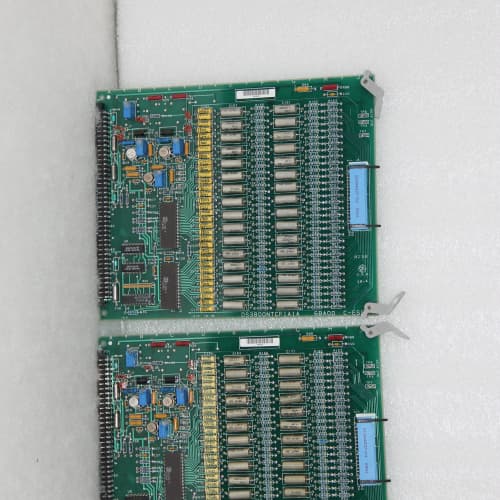
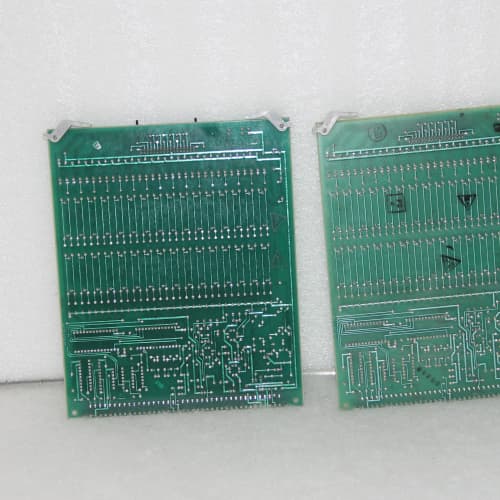
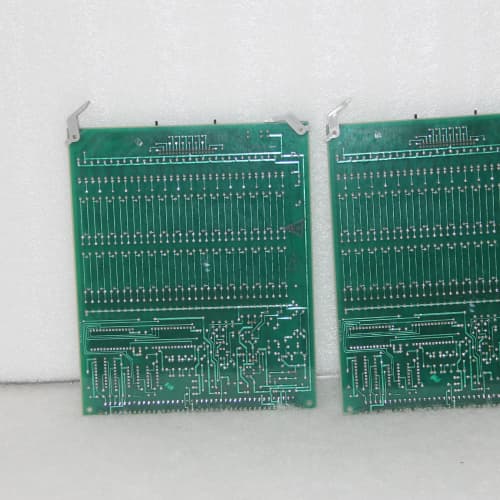
The GE DS3820STBA is a thermocouple input module for the Speedtronic Mark V turbine control system, providing eight isolated channels for precise temperature measurement from a wide range of thermocouple types. This board mounts directly into the Mark V rack and interfaces with the backplane, converting thermocouple millivolt signals into accurate digital temperature readings for the CPU.
The STBA is the primary temperature measurement module for high-temperature applications in the Mark V system—exhaust gas temperatures (EGT), turbine inlet temperatures, combustion monitoring, and high-temperature process measurements. Each channel supports multiple thermocouple types (J, K, T, E, R, S, B), with automatic cold junction compensation that eliminates the need for external reference junctions. The 16-bit resolution provides 0.1°C accuracy over the full range. This module is widely used in gas and steam turbine applications requiring reliable, high-accuracy temperature measurements from thermocouple sensors.
Key Technical Specifications
| Parameter | Value |
|---|---|
| Manufacturer | GE (General Electric) |
| Model Number | DS3820STBA |
| Series | Speedtronic Mark V |
| Number of Channels | 8 (isolated) |
| Supported Thermocouple Types | J, K, T, E, R, S, B (user-configurable per channel) |
| Temperature Range | J: -210 to +1200°C; K: -270 to +1372°C; T: -270 to +400°C; E: -270 to +1000°C; R/S: -50 to +1768°C; B: +50 to +1820°C |
| Resolution | 16-bit (0.1°C typical) |
| Accuracy | ±0.2% of reading ±0.5°C (reference junction included) |
| Input Impedance | >10 MΩ (differential) |
| Common Mode Rejection | 120 dB at 50/60 Hz |
| Normal Mode Rejection | 80 dB at 50/60 Hz |
| Cold Junction Compensation | Integrated, automatic (on-board sensor) |
| Cold Junction Accuracy | ±0.2°C (at 25°C ambient) |
| Open Thermocouple Detection | Yes (detects open circuit, broken wire) |
| Isolation Voltage | 2500 VDC (field-to-backplane) |
| Update Rate | 10 Hz (all channels scanned) |
| Status Indicators | 8 green LEDs (valid measurement), 1 red LED (system fault), 1 yellow LED (open TC detected) |
| Operating Temperature | 0 to +60°C (ambient, forced air required) |
| Storage Temperature | -40 to +85°C |
| Dimensions | 8.5″ x 4.2″ x 1.5″ (standard Mark V 1-slot width) |
| Connector | 96-pin DIN 41612 (Type C, male) + external terminal block (copper thermocouple-grade terminals) |
Key Selling Points & Differentiators
- 8 isolated thermocouple channels in a single slot. Dedicated isolation per channel eliminates ground-loop errors and protects the CPU from field faults.
- Support for 7 thermocouple types. Software-configurable per channel for J, K, T, E, R, S, or B types. No hardware jumpers or component changes required.
- Integrated cold junction compensation. The on-board compensation sensor automatically corrects for ambient temperature variations at the terminal block—no external reference junction required.
- Open thermocouple detection. The board continuously monitors each channel for open-circuit conditions and reports faults to the CPU. A yellow LED illuminates when any channel detects a broken thermocouple.
- Copper thermocouple-grade terminals. The external terminal block uses copper alloy terminals specifically designed for thermocouple connections, minimizing thermal EMF errors at the connection point.
- 48-hour burn-in with accuracy verification. Every unit is tested with precision millivolt sources across the entire operating range. Accuracy verified at 0°C, 100°C, 500°C, and 1000°C (simulated) with cold junction compensation tested at 25°C and 50°C.
- 18-month warranty covering accuracy and channel integrity. If any channel drifts more than ±1°C from calibration, we replace the board.
Frequently Asked Questions (FAQ)
Q: What thermocouple types does the DS3820STBA support, and how do I configure each channel?
A: The STBA supports seven thermocouple types: J, K, T, E, R, S, and B. Each of the 8 channels can be independently configured for a different type through the Mark V software. For example, Channel 1 could be Type K for exhaust gas measurement, Channel 2 Type T for bearing temperature, and Channel 3 Type B for high-temperature combustion monitoring. The configuration is stored in the CPU’s non-volatile memory and applied at power-up. There are no jumpers or dip switches on the board.
Q: What is the maximum temperature I can measure with the STBA?
A: The maximum temperature depends on the thermocouple type: Type K goes to 1372°C, Type R/S to 1768°C, and Type B to 1820°C. These are the maximum continuous operating temperatures for the thermocouple wire itself. The STBA can read these full ranges with 16-bit resolution. For gas turbine exhaust measurements, we commonly see Type K and Type N (the STBA doesn’t support Type N; use Type K or R for those applications). For steam turbines, Type J and Type T are common for bearing and winding temperatures.
Q: The STBA has integrated cold junction compensation. How does this work, and do I need to do anything special?
A: The board has a precision temperature sensor mounted on the terminal block that measures the ambient temperature at the point where the thermocouple wires connect. The CPU uses this measurement to calculate the reference junction temperature and apply the appropriate correction to the thermocouple reading. All of this is automatic—there is no adjustment or configuration required. However, you must ensure the terminal block is not exposed to direct airflow or heat sources that could make the sensor read incorrectly. If you place the Mark V cabinet near a heat source, the cold junction sensor will compensate for it, but if the terminal block itself gets uneven heating (one side hot, one side cold), the compensation will be less accurate. GE’s recommendation: keep the cabinet in a stable temperature environment.
Q: What is the accuracy of the STBA, and how does cold junction compensation affect it?
A: The STBA’s accuracy is ±0.2% of reading ±0.5°C, including the cold junction compensation error. The cold junction compensation itself is accurate to ±0.2°C at 25°C ambient. Over the full operating temperature range (0°C to 60°C), the cold junction error is about ±0.5°C. The thermocouple itself typically has a tolerance of ±1°C to ±2°C for Type K, so the STBA’s accuracy exceeds the thermocouple’s accuracy. In practice, the limiting factor is usually the thermocouple wire quality and installation, not the board.
Q: The STBA has a yellow LED. What does it indicate?
A: The yellow LED illuminates when the board detects an open thermocouple (broken wire) on any channel. This detection is continuous—the board injects a tiny test current (microamps) to check continuity. If the LED is on, check the field wiring for loose connections, broken wires, or oxidation. In our experience, open thermocouple conditions are the most common issue with the STBA—thermocouple wires can break due to vibration or thermal cycling. The yellow LED gives you a quick visual indication of which channel is affected (the corresponding green LED may also turn off). Check the channel indicated in the CPU diagnostics.
Q: Can I use 2-wire thermocouples with this board, or do I need a special connection?
A: Standard thermocouples are 2-wire devices—two wires of different metals joined at the sensing junction. The STBA accepts 2-wire thermocouples directly. The board also supports 3-wire and 4-wire configurations if you’re using extension wire with a shield or multiple junctions, but typically 2-wire is sufficient. The board has dedicated terminals for each channel labeled TC+ and TC-. Connect the thermocouple wires directly—ensure the correct polarity (Type K: yellow is positive, red is negative). The terminal block is copper alloy, compatible with all thermocouple types.
Q: The STBA has 8 channels. Can I mix grounded and ungrounded thermocouples?
A: Yes—the STBA’s isolation per channel allows mixing grounded and ungrounded thermocouples in the same board. Grounded thermocouples have the junction electrically connected to the sheath, which can create ground loops if multiple channels share a common ground. The STBA’s 2500V isolation per channel prevents ground-loop errors, so you can use grounded and ungrounded sensors interchangeably. However, we recommend using ungrounded thermocouples in turbine applications to avoid ground fault paths.
Q: What is the update rate of the STBA? How fast does it sample each channel?
A: The STBA scans all 8 channels sequentially at a rate of 10 Hz (100ms per full scan). Each channel is sampled and converted to temperature every 100ms. For most temperature monitoring applications (exhaust gas, bearing, winding), 100ms response is more than sufficient. If you need faster sampling (e.g., for combustion monitoring with rapid temperature changes), you may need a higher-speed module—the STBA is designed for process monitoring.
Q: I have an STBA board with a red LED. What does it indicate?
A: The red LED indicates a system fault on the board—either the ADC, reference voltage, cold junction sensor, or backplane communication is faulty. If you see a red LED, the board is not providing valid readings to the CPU. Power-cycle the board. If the LED remains on, replace the board. We rarely see STBA red LEDs—they’re reliable boards. The most common cause is physical damage (bent pins on the DIN connector) or a power supply issue in the cabinet.
Q: Can I use the STBA with extension wire that has different alloy composition?
A: Yes, but you must use the correct thermocouple extension wire for the thermocouple type. For example, Type K extension wire (chromel-alumel) is specific to Type K thermocouples. Using copper wire or the wrong extension will introduce a measurement error due to the additional thermocouple junction at the connection point. The STBA’s terminal block is designed for thermocouple-grade connections, but it can’t correct for mismatched extension wire. Use thermocouple-grade extension wire from the sensor to the cabinet, and use the correct polarity. If you’re connecting a long cable run, use the correct wire type.
Q: Does the STBA support thermocouple averaging across channels?
A: The board itself does not average—it provides individual channel readings. The Mark V CPU software can perform averaging if you need it (e.g., average of multiple exhaust gas thermocouples). In the CPU’s logic, you can configure averaging across channels, or you can use the values individually. The board’s 16-bit resolution provides enough precision for both individual and averaged readings. Most turbine applications use individual readings for thermal mapping and alarms.
A-B 1756-RM
GE IC695CPE310
ABB PHARPS32200000
ABB CI858K01 3BSE018135R1
 Email: sales@plcfcs.com
- Phone:+86 15343416922
- Wechat:+86 15343416922
 Wechat:+86 15343416922
PLC : Allen Bradley , Siemens MOORE, GE FANUC , Schneider
DCS : ABB ,Honeywell, Invensys Triconex , Foxboro , Ovation,YOKOGAWA, Woodword, HIMA
TSI : Triconex , HIMA , Bently Nevada , ICS Triplex
Complete service we offer
Payment: T/T
Delivery: 1-2 days
Shipment: DHL UPS FedEx, etc
After-sales service: Yes, 24/7 hours