 Email: jiedong@sxrszdh.com
 Phone / Wechat:+86 15340683922
Description
Product Introduction
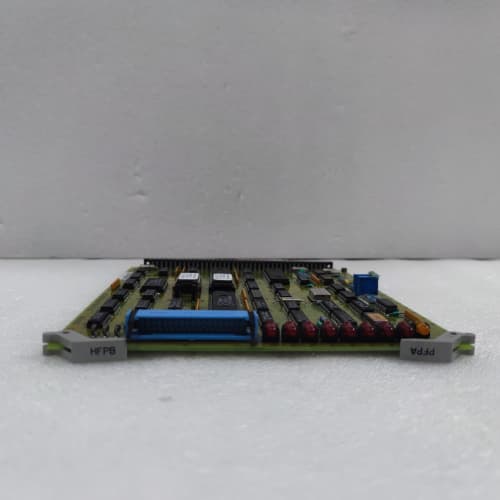
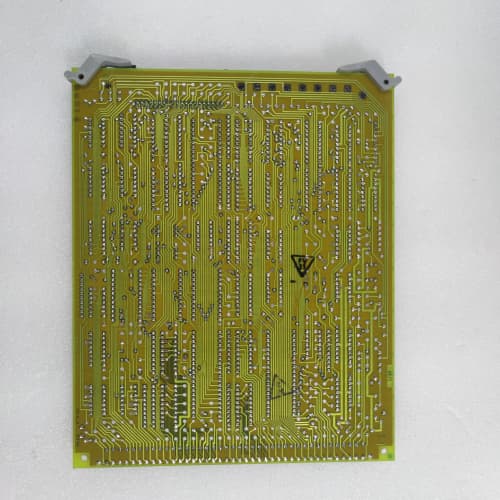
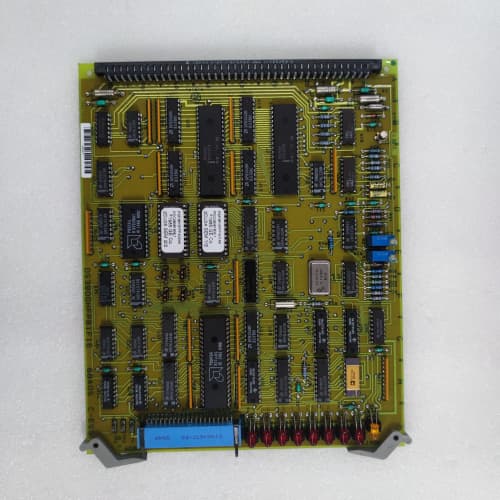
The GE DS3820SMTU is a high-power servo output module for the Speedtronic Mark V turbine control system, providing two isolated, high-resolution analog output channels designed for direct drive of electro-hydraulic actuators that require higher current capability than standard servo modules. This board mounts directly into the Mark V rack and interfaces with the backplane, converting digital position commands into accurate analog signals.
The “SMTU” designation indicates “Servo Module, Twin—Universal”—the key differentiator being the higher-output drive capability (50 mA on ±10V, versus 10 mA on standard SMTD/SMTS boards). This higher drive allows the SMTU to drive low-impedance electro-hydraulic servo valves, torque motors, and positioning devices directly without an external amplifier. The SMTU also includes a configurable 4-20 mA feedback input option for actuators that use current-loop position feedback rather than LVDT/RVDT signals. This is the board of choice for demanding actuator applications, such as large fuel control valves, steam admission valves, and extraction controls.
Key Technical Specifications
| Parameter | Value |
|---|---|
| Manufacturer | GE (General Electric) |
| Model Number | DS3820SMTU |
| Series | Speedtronic Mark V |
| Number of Channels | 2 (fully isolated) |
| Output Signal Types | ±10V (50 mA max) or 4-20 mA (selectable per channel) |
| Output Resolution | 16-bit (0.3 mV for ±10V; 0.25 µA for 4-20 mA) |
| Output Accuracy | ±0.1% of full scale at 25°C; ±0.25% over full temperature range |
| ±10V Output Load | 200Ω minimum (50 mA drive capability) |
| 4-20 mA Output Load | 0-600Ω |
| Feedback Inputs | 2 (one per channel, differential, ±10V DC or 4-20 mA) |
| Feedback Resolution | 14-bit (1.2 mV for voltage; 2 µA for current) |
| Feedback Accuracy | ±0.2% of full scale |
| Feedback Excitation | 2.5 kHz, 3V RMS (integrated oscillator for LVDT/RVDT) |
| Control Loop Update Rate | 500 Hz (2 ms per channel) |
| Construction | Through-hole and surface-mount hybrid |
| Isolation Voltage | 2500 VDC (field-to-backplane) |
| Status Indicators | 2 green LEDs (channel active), 2 yellow LEDs (position error warning), 1 red LED (system fault) |
| Operating Temperature | 0 to +60°C (ambient, forced air required) |
| Storage Temperature | -40 to +85°C |
| Dimensions | 8.5″ x 4.2″ x 1.5″ (standard Mark V 1-slot width) |
| Connector | 96-pin DIN 41612 (Type C, male) + external terminal block |
Key Selling Points & Differentiators
- 50 mA output drive capability. The SMTU delivers five times the current of standard servo modules, allowing direct drive of low-impedance actuators without external power amplifiers.
- Flexible feedback inputs. Each channel accepts either ±10V DC (LVDT/RVDT) or 4-20 mA feedback signals, configurable per channel. This accommodates actuators with either voltage or current position feedback.
- 2 channels with high-power drive. The SMTU focuses drive capability in fewer channels—ideal for applications with fewer but higher-power actuators.
- 16-bit output resolution with 500 Hz update rate. High-resolution, high-speed control for demanding valve positioning applications.
- On-board diagnostics. Continuous monitoring of output drive and feedback integrity with position error and command saturation alarms.
- 48-hour burn-in with high-load testing. Every unit is tested at full 50 mA output drive with a 200Ω resistive load, verifying the board’s ability to deliver rated current without overheating or clipping.
- 18-month warranty covering output drive capability and feedback integrity. If the board fails to deliver 50 mA output drive or the feedback accuracy degrades, we replace it under warranty.
Frequently Asked Questions (FAQ)
Q: The SMTU has 50 mA output drive versus 10 mA on standard SMTD boards. Why would I need 50 mA?
A: Some electro-hydraulic servo valves and torque motors have low-impedance input coils—typically 100-200Ω. At ±10V, a 200Ω coil draws 50 mA. Standard servo modules (SMTD, SMTS) can only deliver 10 mA, so they cannot drive these low-impedance loads directly; you’d need an external current amplifier. The SMTU eliminates the need for an external amplifier, saving cabinet space, reducing cost, and improving reliability by removing a component that can fail.
Q: My actuator uses a 4-20 mA command signal. Can the SMTU handle that?
A: Yes—the SMTU’s output can be configured for ±10V or 4-20 mA per channel. In 4-20 mA mode, the board sources current directly, so no external loop supply is needed for most applications. The 4-20 mA output has the same 600Ω maximum load as standard modules. This is particularly useful for actuators with 4-20 mA input but also requiring the higher drive capability of the SMTU’s output stage.
Q: The SMTU has only 2 channels, while the SMTD and SMTS have 4 channels. Why the reduction?
A: The SMTU prioritizes drive capability over channel density. The high-current drive transistors (50 mA) require larger PCB area and more robust heat sinking. GE determined that fitting four 50 mA channels on a single board would generate too much heat for the Mark V cabinet’s cooling capacity (approximately 3-4W per channel at full output). By reducing to 2 channels, the SMTU stays within the thermal budget while delivering the required current. If you need 4 channels with 50 mA drive, you’d need two SMTU boards.
Q: I have a DS3820SMTD in my cabinet and need to drive a low-impedance actuator. Can I replace the SMTD with this SMTU?
A: Yes, but there are implications. The SMTU has only 2 channels compared to the SMTD’s 4 channels. If you’re using all 4 channels on your SMTD, you’d need to either (a) consolidate your actuators or (b) install two SMTU boards to get 4 channels. The pinout and backplane interface are identical—the SMTU is a direct drop-in for any SMTD slot. But you’ll lose half the channels. Also, the software configuration in the Mark V will need to be updated to reflect the reduced channel count. If you’re replacing a failed SMTD with an SMTU on a channel that’s not used, no problem. If you need all channels, plan accordingly.
Q: The SMTU has flexible feedback inputs (±10V or 4-20 mA). Is this configured per channel?
A: Yes—each of the 2 channels can be independently configured for feedback type. This is done through the Mark V software. There are no physical jumpers on the board. This means you can have Channel 1 using LVDT feedback (±10V) and Channel 2 using 4-20 mA feedback, if your actuators have different feedback types.
Q: What is the maximum loop resistance for the 4-20 mA output and feedback?
A: For the 4-20 mA output, maximum load is 600Ω. This includes the actuator input impedance, cable resistance, and any series protection components. For the 4-20 mA feedback input, the board presents a 250Ω load, and the feedback device (usually a 4-20 mA position transmitter) must be loop-powered and capable of driving that load. Most 4-20 mA transmitters are specified for loads of 500-600Ω, so 250Ω is well within capability.
Q: The SMTU has 50 mA drive on ±10V. Can I also use it for 4-20 mA at the same time?
A: No—the output is one or the other per channel. Each channel can be set to either ±10V or 4-20 mA. You cannot simultaneously output both. The configuration is software-selectable, so you choose based on your actuator’s input requirement. If you have mixed actuator types (some voltage, some current), you can configure each channel independently (e.g., Channel 1 = ±10V, Channel 2 = 4-20 mA).
Q: What happens if the SMTU’s output is shorted to ground or to another voltage?
A: The SMTU has short-circuit protection on the output. If the output is shorted, the board will limit current to 60 mA (±10V mode) and will not be damaged. However, sustained output short-circuit will heat the board—we recommend clearing shorts as soon as possible. For 4-20 mA mode, the output is also short-circuit protected. The board will not be damaged by temporary short circuits. If the short persists, the board may eventually overheat and enter thermal shutdown. The red LED will illuminate if a fault is detected.
Q: Can the SMTU drive two actuators in parallel with one output?
A: Not recommended. The total load impedance must be 200Ω or higher (drawing 50 mA max). If you parallel two actuators, the impedance halves—so two 400Ω actuators in parallel = 200Ω total, which is okay. Two 200Ω actuators in parallel = 100Ω total, which exceeds the 50 mA drive capability (would draw 100 mA). We recommend one actuator per channel. If you need to drive multiple actuators, use external interposing relays or amplifiers.
Q: The SMTU has an integrated LVDT oscillator. Does it support RVDT (Rotary Variable Differential Transformer) feedback as well?
A: Yes—the LVDT/RVDT excitation oscillator supports both linear (LVDT) and rotary (RVDT) variable differential transformers. The board’s feedback section has built-in phase-sensitive demodulation that works with either. The primary difference between LVDT and RVDT is the mechanical construction; the electrical interface is identical. So the SMTU’s oscillator and demodulator work with both.
Q: Does the SMTU’s 50 mA output drive generate excessive heat in the Mark V cabinet?
A: At full output (50 mA at ±10V), each channel dissipates approximately 0.5W in the output stage. Two channels = 1W total, plus the rest of the board (about 1W). Total board dissipation is about 2W—well within the cabinet’s cooling capacity. The heat is spread across the PCB and the board’s thermal pad, which is standard for Mark V modules. The board runs warm but not hot. In our testing at 50°C ambient, the board’s surface temperature stayed below 65°C with the standard forced-air cooling in the Mark V cabinet. No special cooling is required.
Q: What is the difference between the SMTU and the SMTU1A1A variants?
A: The SMTU1A1A variant includes conformal coating (first “1A”) and gold-alloy contacts on any relays (second “1A”)—but the SMTU doesn’t have relays (it’s all solid-state), so the second “1A” in this context usually refers to upgraded precision resistors. The SMTU1A1A is the coated, higher-precision variant for harsh environments. The standard SMTU (without suffix) is the base model. If you’re in a coastal, desert, or high-humidity installation, we recommend the SMTU1A1A if available. Contact us for availability—these variants are rarer.
Q: Are these SMTU boards refurbished or new?
A: We carry only new surplus DS3820SMTU boards—original GE stock that was never installed, still in OEM anti-static packaging. The boards are tested to verify functionality before shipment. We do not offer refurbished SMTU boards due to the precision nature of the high-current drive circuitry—refurbishment of these boards is difficult and often results in degraded performance. If you want a guaranteed new board, the SMTU is the board to buy.
PROSOFT MVI56-MNET
BERGHOF CDIO 16/16-0.5-SC-T2-1131
TRICON 3503E
RELIANCE S-D4007-K
 Email: sales@plcfcs.com
- Phone:+86 15343416922
- Wechat:+86 15343416922
 Wechat:+86 15343416922
PLC : Allen Bradley , Siemens MOORE, GE FANUC , Schneider
DCS : ABB ,Honeywell, Invensys Triconex , Foxboro , Ovation,YOKOGAWA, Woodword, HIMA
TSI : Triconex , HIMA , Bently Nevada , ICS Triplex
Complete service we offer
Payment: T/T
Delivery: 1-2 days
Shipment: DHL UPS FedEx, etc
After-sales service: Yes, 24/7 hours