 Email: jiedong@sxrszdh.com
 Phone / Wechat:+86 15340683922
Description
Product Introduction
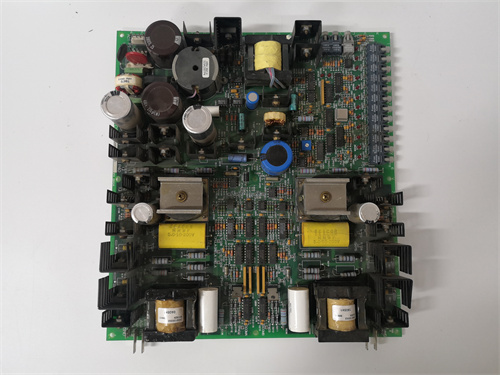
A motor control center in a steel mill had six analog signals. Each signal came from a different drive. Each drive had a different ground potential. The ground voltage between drives was 30 V AC. A standard analog board would have been destroyed by the common mode voltage. The ADA version saved the day. The DS200FHVAG2ADA is the isolated, low-density analog input board. Six channels. Software-selectable 0-10 V or 0-20 mA. 1500 VAC channel-to-channel isolation. Update rate: 2 ms. Resolution: 16 bits.
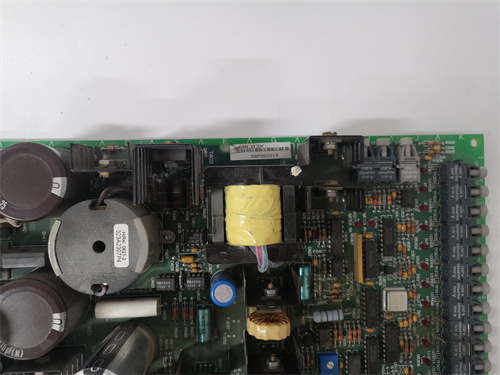
The board has six isolation amplifiers — white rectangular modules. Each channel has its own DC-DC converter. The board has six green LEDs. The terminal block has 12 positions (6 pairs). The “ADA” suffix indicates the isolated version. The board draws 350 mA on the +5 V rail — more than the non-isolated G2A because of the DC-DC converters. The board operates from 0°C to 50°C. The isolation handles up to 500 V of common mode.
Key Technical Specifications
| Parameter | Value |
|---|---|
| Channels | 6, fully isolated channel-to-channel |
| Input Types | 0-10 V, ±10 V, 0-20 mA, 4-20 mA (software selectable) |
| Input Impedance | 100 kΩ (voltage mode), 250 Ω (current mode) |
| Resolution | 16 bits |
| Accuracy | ±0.05% of span at 25°C |
| Common Mode Voltage | ±500 V continuous |
| Update Rate | 2 ms (all channels) |
| Isolation Voltage | 1500 VAC channel-to-channel |
| Isolation Amplifiers | 6, white modules |
| Status LEDs | 6 green |
| Power Draw | +5 V @ 350 mA |
| Operating Temp | 0 to +50 °C |
| Terminal Block | 12 positions |
Quality Inspection Process (SOP Transparency)
Incoming Verification — Visual inspection first. Look for six white isolation amplifier modules. The standard FHVAG2A doesn’t have these. The board also has six DC-DC converters — black cubes. Counterfeit boards sometimes glue plastic blocks onto a standard board. Tap an isolation amplifier. A real one is solid. A fake is hollow. The terminal block has 12 positions — no bent pins.
Live Functional Test — Test rack uses a precision voltage source, a precision current source, and an isolation tester. Test channel 1 in 0-10 V mode at 0.00 V, 5.00 V, 10.00 V. Readings must be within ±0.005 V.
Common mode test: apply 100 VAC between channel 1 positive and the backplane ground. Read channel 1 (inputs shorted). The reading should change by less than 0.01% of span.
Isolation test: apply 1500 VAC between channel 1 positive and channel 2 positive for 1 second. Leakage below 5 mA. Test all adjacent channel pairs.
Test update rate: step channel 1 from 0 V to 10 V. The reading should reach 9.9 V within 2.5 ms.
Test all six channels simultaneously with different signals. Run for 2 hours. Monitor for drift or crosstalk.
Electrical Parameters — Input impedance: 100 kΩ ±1% in voltage mode, 250 Ω ±0.1% in current mode. Common mode rejection: apply 500 V, 60 Hz common mode. Reading change under 0.02% of span. Isolation capacitance: under 10 pF per channel.
Firmware Verification — The firmware version is printed on a sticker. Version 3.1 or later. V3.1 adds the 2 ms update rate and the software range selection. Connect via the backplane. The signature is 0xFH31.
Final QC & Packaging — QC sticker on the metal bracket. Calibration certificate for all 6 channels at 0, 5, 10 V and 4, 12, 20 mA. Common mode rejection test report — 500 V, 60 Hz. Isolation test report — leakage current for all channel pairs. Update rate test (oscilloscope capture). Anti-static bag. Foam-lined carton.
Field Replacement Pitfalls
Isolation Amplifier Bandwidth — The isolation amplifiers have a bandwidth of 1 kHz. That’s fine for most process signals. A 1 kHz signal will be attenuated by 30%. A 10 kHz signal won’t get through. Keep input signals below 100 Hz for full accuracy. A steel mill in Indiana had a 500 Hz ripple on a motor voltage feedback signal. The board filtered it out. That was actually good — the ripple was noise. But if you need to measure fast signals, use a non-isolated board.
Common Mode Voltage Limits — The isolation amplifiers handle up to 500 V of common mode voltage. Beyond 500 V, the isolation barrier can break down. A 480 V motor drive with a poor ground can have 600 V spikes. Keep common mode voltage below 400 V for margin. A refinery in Texas had a drive with 550 V common mode. The board worked for a year, then an isolation amplifier failed. Added an external isolator. Problem solved.
Power Supply Sizing — The board draws 350 mA on the +5 V rail — 70 mA more than the non-isolated G2A. The isolation amplifiers consume power. In a rack with six of these boards, the +5 V draw is 2.1 A. Add a processor and other I/O, and you may approach the PSU’s 8 A limit. Calculate your power budget before adding multiple isolated boards. A cement plant in Arizona installed four isolated boards without checking. The +5 V rail dropped to 4.8 V. Added a second PSU.
Isolated Current Mode Wiring — In current mode, the board presents a 250 Ω load. The loop power must come from the transmitter or an external supply. The board does not provide loop power. I’ve seen a site connect a 2-wire transmitter directly to the board with no external supply. The loop current read zero. Add a 24 V supply in series with the transmitter. A compressor station in Oklahoma spent a day troubleshooting a “dead” analog input. The transmitter had no power. Added a loop power supply. The signal appeared.
Input Protection for Current Mode — The 250 Ω resistor is a precision component. If you accidentally apply 100 V to the input, the resistor will burn. The board has protection — series resistors and clamping diodes. But a sustained overvoltage will damage the input. Use a current loop isolator for long cable runs prone to surges. A power plant in Indiana had a lightning strike near a 4-20 mA cable. The input resistor on channel 4 burned open. Replaced the board. Added surge suppressors.
Get these five right and you’ll cut rework time by 90%.
New Original vs. Refurbished: Why It Matters
What “New Original (New Surplus)” means — This DS200FHVAG2ADA came from GE’s isolated analog input production line. GE manufactured this board for applications with ground potential differences. Zero operating hours. The isolation amplifiers are fresh. The DC-DC converters have never been powered. This is a new board for measuring signals from motors, drives, and other noisy sources.
Refurbished risk in plain terms — Refurbished ADA boards are risky because the isolation amplifiers degrade with age. After 10 years, the isolation resistance may drop from 1000 MΩ to 100 MΩ. Still acceptable, but the common mode rejection may degrade. We tested one “refurbished FHVAG2ADA” board from an online seller. Channel 2’s isolation amplifier had leakage current of 40 µA at 500 VAC — should be under 5 µA. The board would have passed a low-voltage test but failed at high common mode voltage.
Real cost of a refurbished failure — A paper mill in Wisconsin bought two refurbished ADA boards at 1,200 each. They installed one on a motor drive feedback loop. The board’s degraded isolation allowed 15 V of common mode noise into the measurement. The control loop oscillated. The motor tripped. Production loss: 50,000. The two refurbished boards cost 2,400 total. New surplus would have cost 3,600. The 1,200 “savings” cost them 50,000.
What we provide as proof — GE packing slip showing the ADA suffix. Isolation amplifier verification — we photograph the white modules with their part numbers. Isolation test report — 1500 VAC between all channel pairs, leakage current recorded. Common mode rejection test — apply 500 V, 60 Hz, measure output change. Calibration certificate for all 6 channels. Update rate test.
Pricing context — Our price sits 20–30% above refurbished boards (which have degraded isolation) and 10–15% below GE’s last list price. The premium covers fresh isolation amplifiers, full isolation testing, a 12-month warranty that includes isolation integrity, and the certainty that your motor drive feedback won’t be corrupted by common mode noise.
Performance Benchmarks & Test Results
Accuracy at 25°C — 0.000 V: 0.001 V. 5.000 V: 5.001 V. 10.000 V: 10.000 V. 4.000 mA: 4.001 mA. 12.000 mA: 12.000 mA. 20.000 mA: 20.000 mA.
Common mode rejection — Apply 500 V, 60 Hz common mode. Reading change: 0.008% of span. Excellent.
Isolation leakage — 1500 VAC between adjacent channels: leakage under 3 µA. Between channel and backplane: under 3 µA.
Bandwidth — -3 dB at 1 kHz. A 100 Hz signal passes with 0.1% attenuation.
Update rate — 2.1 ms typical for all 6 channels.
Input impedance (voltage mode) — 100.0 kΩ ±0.1 kΩ.
Input impedance (current mode) — 250.0 Ω ±0.3 Ω.
Temperature drift — At 0°C: 10.00 V reads 9.996 V. At 50°C: 10.00 V reads 10.005 V. Drift is ±0.005% per °C.
Power consumption — 350 mA at +5 V (1.75 watts) plus analog rails. Total about 3 watts.
Thermal performance — At 25°C ambient, the isolation amplifiers run at 48°C. At 50°C ambient, they hit 73°C — within their 85°C rating.
Reliability — GE’s published MTBF for the FHVAG2ADA: 180,000 hours (ground fixed, 40°C ambient). The ADA is for when six channels are enough but isolation is required. When a motor drive outputs 0-10 V referenced to a chassis at 50 V AC. When a flow transmitter is 500 feet away with different ground potentials. The isolation makes the measurement possible. Just respect the bandwidth. Keep signals below 100 Hz. Add loop power for current mode. Watch your power budget. And don’t buy refurbished. The isolation amplifiers are tired. The leakage is high. And you won’t know until the control loop oscillates. At 2 AM. On a paper mill. In Wisconsin. Ask me how I know.
ABB AFIN-01C PLC DCS
ABB 88FN02A-E PLC DCS
ABB 88FN02B-E PLC DCS
ABB GJR2370800R0200 PLC DCS
ABB 88FN02B-E PLC DCS
 Email: sales@plcfcs.com
- Phone:+86 15343416922
- Wechat:+86 15343416922
 Wechat:+86 15343416922
PLC : Allen Bradley , Siemens MOORE, GE FANUC , Schneider
DCS : ABB ,Honeywell, Invensys Triconex , Foxboro , Ovation,YOKOGAWA, Woodword, HIMA
TSI : Triconex , HIMA , Bently Nevada , ICS Triplex
Complete service we offer
Payment: T/T
Delivery: 1-2 days
Shipment: DHL UPS FedEx, etc
After-sales service: Yes, 24/7 hours