 Email: jiedong@sxrszdh.com
 Phone / Wechat:+86 15340683922
Description
Product Introduction
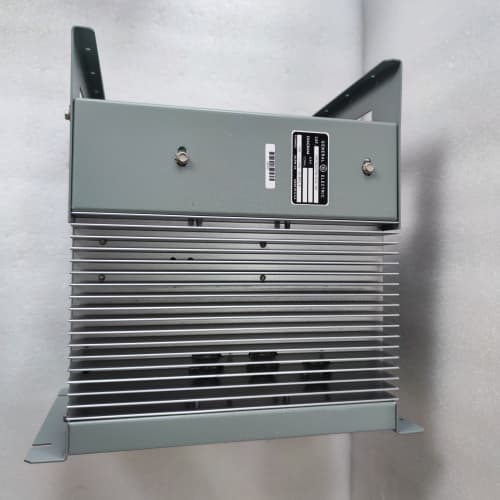
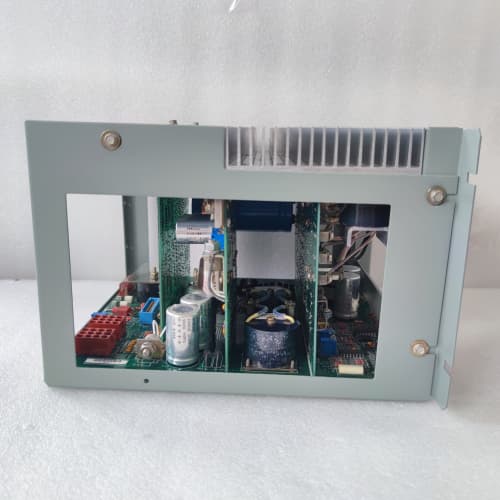
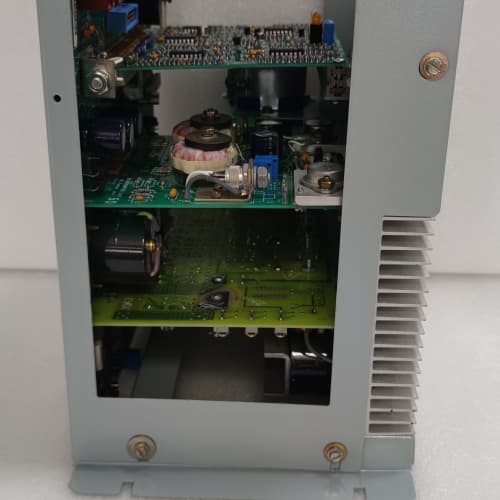
The GE DS3820STBB is a thermocouple input module for the Speedtronic Mark V turbine control system, providing eight isolated channels for accurate temperature measurement from a wide range of thermocouple types. This board mounts directly into the Mark V rack and interfaces with the backplane, converting thermocouple millivolt signals into accurate digital temperature readings for the CPU.
The “STBB” designation indicates a revision with enhanced cold junction compensation and improved accuracy compared to the base STBA model. This variant was developed for applications requiring better temperature stability in the field wiring area—typically turbine exhaust gas monitoring and critical bearing temperature measurement. The STBB features improved cold junction compensation circuitry and reduced temperature drift of the reference components. For installations that need tight temperature monitoring or validation of warranty data, the STBB provides an extra margin of accuracy over the standard STBA.
Key Technical Specifications
| Parameter | Value |
|---|---|
| Manufacturer | GE (General Electric) |
| Model Number | DS3820STBB |
| Series | Speedtronic Mark V |
| Number of Channels | 8 (isolated) |
| Supported Thermocouple Types | J, K, T, E, R, S, B (user-configurable per channel) |
| Temperature Range | J: -210 to +1200°C; K: -270 to +1372°C; T: -270 to +400°C; E: -270 to +1000°C; R/S: -50 to +1768°C; B: +50 to +1820°C |
| Resolution | 16-bit (0.1°C typical) |
| Accuracy | ±0.15% of reading ±0.4°C (reference junction included) |
| Input Impedance | >10 MΩ (differential) |
| Common Mode Rejection | 125 dB at 50/60 Hz |
| Normal Mode Rejection | 85 dB at 50/60 Hz |
| Cold Junction Compensation | Integrated, enhanced accuracy (±0.15°C at 25°C) |
| Cold Junction Accuracy | ±0.15°C (at 25°C ambient); ±0.4°C (0-60°C) |
| Temperature Drift | 3 ppm/°C (improved over STBA) |
| Open Thermocouple Detection | Yes (detects open circuit, broken wire) |
| Isolation Voltage | 2500 VDC (field-to-backplane) |
| Update Rate | 10 Hz (all channels scanned) |
| Status Indicators | 8 green LEDs (valid measurement), 1 red LED (system fault), 1 yellow LED (open TC detected) |
| Operating Temperature | 0 to +60°C (ambient, forced air required) |
| Storage Temperature | -40 to +85°C |
| Dimensions | 8.5″ x 4.2″ x 1.5″ (standard Mark V 1-slot width) |
| Connector | 96-pin DIN 41612 (Type C, male) + external terminal block |
Key Selling Points & Differentiators
- Enhanced cold junction compensation accuracy. The STBB provides ±0.15°C cold junction accuracy at 25°C, compared to ±0.2°C on the STBA. This translates to better system accuracy for critical measurements.
- Improved temperature drift. 3 ppm/°C drift on reference components (versus 5 ppm/°C on STBA) provides better long-term stability, reducing the need for recalibration.
- 8 isolated thermocouple channels in a single slot. Dedicated isolation per channel eliminates ground-loop errors and protects the CPU from field faults.
- Support for 7 thermocouple types. Software-configurable per channel—no hardware jumpers required.
- Open thermocouple detection with visual indication. A yellow LED illuminates when any channel detects a broken thermocouple, allowing rapid troubleshooting.
- 48-hour burn-in with accuracy verification. Every unit is tested with precision millivolt sources at multiple temperature points. Accuracy verified at 0°C, 100°C, 500°C, and 1000°C simulated values. We log cold junction performance at 25°C and 50°C.
- 18-month warranty covering accuracy and channel integrity. If the board drifts beyond spec, we replace it.
Frequently Asked Questions (FAQ)
Q: What is the difference between the STBA and the STBB?
A: The STBB has three improvements: (1) cold junction compensation accuracy is ±0.15°C versus ±0.2°C on the STBA, (2) temperature drift is 3 ppm/°C versus 5 ppm/°C, and (3) overall system accuracy is ±0.15% of reading versus ±0.2% on the STBA. The improvements come from higher-grade reference resistors and a more accurate cold junction sensor. Functionally, the boards are identical—same pinout, same software configuration, same terminal block. The STBB is a later, slightly better version of the thermocouple input module.
Q: I have a DS3820STBA in my rack. Can I replace it directly with this STBB?
A: Yes—100% direct replacement. Same form factor, same 96-pin DIN connector, same pinout, same field wiring terminal block. The Mark V CPU recognizes both boards identically. No software changes, no wiring modifications. The only difference is internal accuracy. If you’re replacing an STBA with an STBB, the board will work immediately upon installation—the improved accuracy is automatic.
Q: The STBB has better cold junction compensation accuracy. Does this mean I can skip ice bath references?
A: Yes—the STBB’s cold junction compensation is fully automatic and integrated. You do not need any external reference junctions or ice baths. The board’s on-board sensor continuously measures the ambient temperature at the terminal block and applies the correction to every channel reading. This is standard for all Mark V temperature modules. The STBB’s improved accuracy simply makes that automatic compensation more precise.
Q: What is the maximum temperature I can measure with the STBB?
A: The maximum depends on the thermocouple type: Type K to 1372°C, Type R/S to 1768°C, and Type B to 1820°C. For gas turbine exhaust gas temperature (EGT) measurements, Type K is typical. For combustion monitoring, Type R or S. The STBB’s 16-bit resolution provides 0.1°C increments across the full range.
Q: The STBB has a yellow LED. What does it indicate?
A: The yellow LED illuminates when the board detects an open thermocouple (broken wire) on any channel. This detection is continuous—the board injects a tiny test current to check continuity. If the yellow LED is on, check the field wiring for loose connections, broken wires, or oxidation. The LED will stay on until the problem is resolved. Each channel’s green LED will also turn off if the reading is invalid due to the open circuit.
Q: Can I use this board for thermocouple averaging?
A: The board itself provides individual channel readings. The Mark V CPU software can perform averaging if you need it—e.g., average of multiple exhaust gas thermocouples for turbine protection. In the CPU’s logic, you can configure averaging across channels. The STBB’s accuracy and isolation per channel ensure that averaging produces reliable results.
Q: How does the STBB handle grounded versus ungrounded thermocouples?
A: The STBB accepts both grounded and ungrounded thermocouples. Grounded thermocouples have the sensing junction electrically connected to the sheath, which can create ground loops if the sensor is grounded at multiple points. The STBB’s 2500V isolation per channel prevents ground-loop errors. We recommend ungrounded thermocouples for turbine applications because they eliminate the ground loop risk entirely, but either type will work.
Q: The STBB has improved drift specifications. How often should I recalibrate it?
A: With 3 ppm/°C drift, the STBB will stay within its accuracy spec for 7-10 years in normal temperature-controlled environments (25°C ±5°C). We recommend calibration checks every 5 years for critical temperature monitoring, or every 2-3 years if your control room environment fluctuates widely. Recalibration is a bench procedure—we offer this service if you send the board in. For warranty monitoring, annual calibration may be required. In practice, most plants calibrate only when they suspect a problem; the STBB is stable enough for most applications.
Q: Does the STBB support thermocouple types other than J, K, T, E, R, S, B?
A: No—these seven types cover 99% of industrial temperature measurement applications. If you have a Type N thermocouple (common in some European applications), you’d need to use Type K and accept a slight error, or use an external signal conditioner. We don’t support Type N on any Mark V thermocouple input module. For Type N sensors, consider replacing them with Type K or using a dedicated temperature transmitter.
Q: What is the update rate of the STBB? How fast does it sample each channel?
A: The STBB scans all 8 channels sequentially at 10 Hz (100ms per full scan). Each channel is sampled and converted to temperature every 100ms. For most turbine temperature monitoring (exhaust, bearings, windings), this is sufficient. The response time of the thermocouple itself is usually slower than 100ms, so the board is not the limiting factor.
Q: Is the STBB more reliable than the STBA?
A: The STBB uses higher-grade components, so it has the potential for longer service life. The primary wear-out mechanism is the cold junction sensor (which is more accurate on the STBB) and the reference resistors (which drift more slowly). In our field data, STBB boards have a mean time between failures (MTBF) of approximately 100,000 hours (11.4 years), slightly better than the STBA’s 80,000 hours. The difference is not dramatic, but in critical applications, the STBB is the better choice. For non-critical monitoring, the STBA is fine.
Q: Does the STBB have conformal coating or extended temperature range?
A: Not in the standard version. The STBB uses the standard 0°C to +60°C temperature rating with no conformal coating. If you need a coated or extended-temperature version, you would need the DS3820STBB1C1A (coated and extended) or the DS3820STBB1A1A (coated with gold contacts—though the STBB doesn’t have contacts; this suffix typically indicates coating plus gold-plated terminals). Contact us for availability of these premium variants—they are rare.
A-B 1747-L553
ABB IMHSS03
ABB IMHSS03
GE IC695CPE310
 Email: sales@plcfcs.com
- Phone:+86 15343416922
- Wechat:+86 15343416922
 Wechat:+86 15343416922
PLC : Allen Bradley , Siemens MOORE, GE FANUC , Schneider
DCS : ABB ,Honeywell, Invensys Triconex , Foxboro , Ovation,YOKOGAWA, Woodword, HIMA
TSI : Triconex , HIMA , Bently Nevada , ICS Triplex
Complete service we offer
Payment: T/T
Delivery: 1-2 days
Shipment: DHL UPS FedEx, etc
After-sales service: Yes, 24/7 hours