 Email: jiedong@sxrszdh.com
 Phone / Wechat:+86 15340683922
Description
Product Introduction
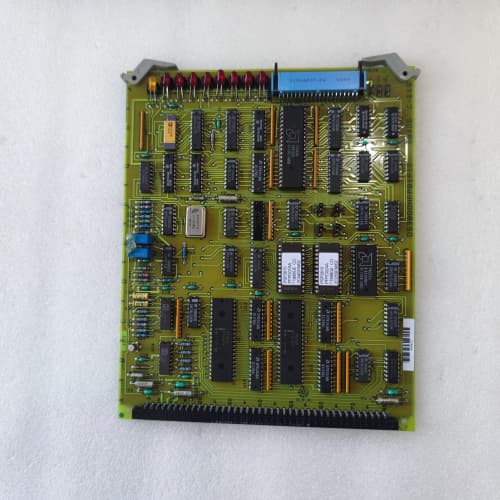
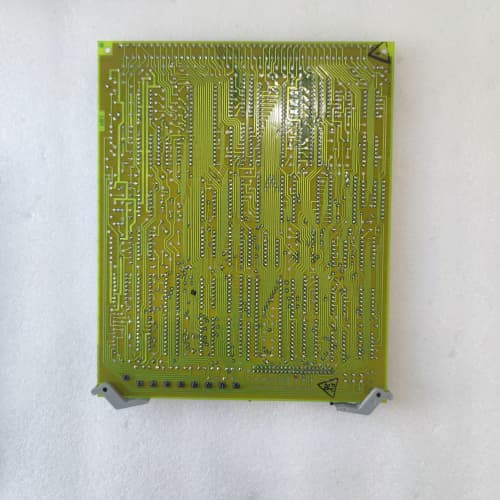
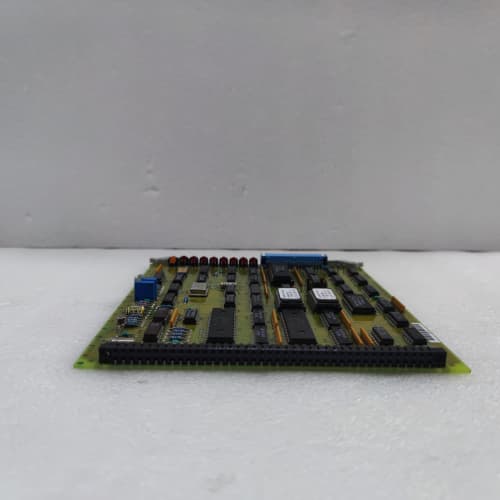
The GE DS3820SMTS is a servo output module for the Speedtronic Mark V turbine control system, providing four isolated, high-resolution analog output channels for precise control of electro-hydraulic and electro-pneumatic actuators. This board mounts directly into the Mark V rack and interfaces with the backplane, converting digital position commands from the CPU into accurate analog signals that drive valve positioners, inlet guide vanes, and other critical actuation devices.
The “SMTS” designation indicates “Servo Module, Technology-Enhanced” — specifically, this variant uses surface-mount technology (SMT) construction for improved reliability, reduced parasitic capacitance, and better temperature stability compared to through-hole variants. This SMT construction allows for tighter component matching, which results in lower offset drift and improved long-term accuracy of the servo loop. The SMTS also includes on-board diagnostics that monitor the health of the actuator and feedback wiring.
Key Technical Specifications
| Parameter | Value |
|---|---|
| Manufacturer | GE (General Electric) |
| Model Number | DS3820SMTS |
| Series | Speedtronic Mark V |
| Number of Channels | 4 (fully isolated) |
| Output Signal Types | ±10V (10 mA max) or 4-20 mA (selectable per channel) |
| Output Resolution | 16-bit (0.3 mV for ±10V; 0.25 µA for 4-20 mA) |
| Output Accuracy | ±0.05% of full scale at 25°C; ±0.15% over full temperature range |
| Output Load | ±10V: 1 kΩ minimum; 4-20 mA: 0-600Ω load |
| Feedback Inputs | 4 (one per channel, differential) |
| Feedback Input Range | ±10V DC (supports LVDT and RVDT) |
| Feedback Resolution | 14-bit (1.2 mV) |
| Feedback Accuracy | ±0.15% of full scale |
| Feedback Excitation | 2.5 kHz, 3V RMS (integrated oscillator) |
| Control Loop Update Rate | 500 Hz (2 ms per channel) |
| Construction | Surface-mount technology (SMT) components throughout |
| Temperature Drift | 5 ppm/°C (versus 15 ppm/°C on through-hole variants) |
| Isolation Voltage | 2500 VDC (field-to-backplane) |
| Status Indicators | 4 green LEDs (channel active), 4 yellow LEDs (position error warning), 1 red LED (system fault) |
| Operating Temperature | 0 to +60°C (ambient, forced air required) |
| Storage Temperature | -40 to +85°C |
| Dimensions | 8.5″ x 4.2″ x 1.5″ (standard Mark V 1-slot width) |
| Connector | 96-pin DIN 41612 (Type C, male) + external terminal block |
Key Selling Points & Differentiators
- SMT construction for superior reliability. Surface-mount components are less susceptible to vibration damage (no lead fatigue), have lower parasitic capacitance (faster response, less noise), and provide better thermal performance (lower thermal resistance between components and PCB).
- Tighter temperature stability. The SMTS achieves 5 ppm/°C drift on critical reference components, versus 15 ppm/°C on through-hole variants. This means output accuracy is 0.15% over the full temperature range, compared to 0.25% on older versions.
- On-board diagnostics. The SMTS continuously monitors feedback wiring integrity and actuator health, with diagnostics available for position error, feedback loss, and command saturation.
- Selectable ±10V or 4-20 mA outputs per channel. Flexibility to drive valve positioners with either analog voltage or current loop signals, individually configurable per channel.
- Integrated LVDT/RVDT excitation oscillator. On-board 2.5 kHz excitation eliminates need for external signal conditioners.
- 48-hour burn-in with temperature cycling. Every unit runs 24 hours at 25°C, then 24 hours at 50°C, with full servo loop operation at both extremes. Accuracy drift measured and logged.
- 18-month warranty covering output accuracy, feedback integrity, and SMT component reliability. If the board fails due to SMT component issues, we replace it under warranty.
Frequently Asked Questions (FAQ)
Q: What does “SMTS” stand for, and how is this different from the regular SMTD?
A: “SMTS” stands for “Servo Module, Technology-Enhanced” — it’s GE’s designation for the surface-mount construction variant. The primary differences are (1) SMT components throughout the board, (2) tighter temperature drift (5 ppm/°C vs. 15 ppm/°C), (3) slightly better accuracy (0.05% vs. 0.1% at 25°C), and (4) improved vibration resistance. Functionally, the SMTS and SMTD are identical in terms of pinout, field wiring, and software configuration. The SMTS is the later, more advanced version.
Q: I have a DS3820SMTD in my rack. Can I replace it directly with this SMTS?
A: Yes—100% direct replacement. The SMTS uses the same form factor, same 96-pin DIN connector, same pinout, and same field wiring terminal block. The Mark V CPU recognizes both boards identically. No software changes, no wiring modifications. If you’re replacing an older SMTD with an SMTS, the board will work immediately upon installation. The only difference is improved reliability and accuracy—you won’t need to adjust your control gains unless you specifically want to exploit the faster response.
Q: Is SMT construction really better for industrial control applications?
A: Yes, particularly for vibration-prone environments like gas turbine packages. Through-hole components have leads that can fatigue and break under constant vibration—we’ve seen this on older SMTB and SMTC boards in gas turbine applications after 15-20 years. SMT components have no leads; they’re soldered directly to the PCB surface, which is more resistant to vibration damage. Additionally, SMT construction reduces parasitic capacitance and inductance, which improves signal integrity. That said, SMT boards are more difficult to repair in the field (component replacement is more involved), but the reliability improvement means you shouldn’t need repairs anyway.
Q: The SMTS has better temperature drift specifications. Does this mean it will be more accurate than my existing board?
A: Yes, especially in control rooms with poor temperature regulation or cabinets that run hot. The SMTS’s 5 ppm/°C drift on the reference components means your output accuracy stays within ±0.15% from 0°C to 60°C. An older SMTD with 15 ppm/°C drift will drift three times more over the same temperature range. If your cabinet varies by 10°C during operation, the SMTD’s output might change by 0.02% (still within spec, but measurable), while the SMTS would change by only 0.006%. For most applications, both are acceptable, but the SMTS is better for high-precision control loops.
Q: Can I still repair an SMTS board if a component fails, or is it disposable?
A: It’s repairable, but it requires specialized equipment—hot-air rework stations, soldering paste, and technicians trained in SMT rework. The components are small (typically 0805 or 0603 sizes), and attempting field repairs with a standard soldering iron often damages the PCB pads. We recommend returning SMTS boards to us for repair. We have the equipment and the expertise to replace components on SMT boards—we do this on a case-by-case basis for out-of-warranty units. In our experience, SMT boards rarely need component repair; the primary failure mode is still relay/contact wear (for output modules) or capacitor aging (for power supplies). For servo output boards, failures are uncommon.
Q: The SMTS has the same output resolution and update rate as the SMTD. What’s the advantage, then?
A: The advantage is in stability and longevity, not speed or resolution. The SMTS will stay within its calibration spec for longer and is more resistant to environmental factors (vibration, temperature cycling, humidity). Think of it as the “premium” version—the same functional performance, but with better long-term reliability and lower drift. For new installations or replacements in critical applications, the SMTS is the better choice. For non-critical applications, the SMTD is still a good option.
Q: Can I use the SMTS to drive an actuator that uses a 10V command and a separate position feedback signal?
A: Yes—that’s exactly what the SMTS is designed to do. Each channel has a ±10V output command and a differential feedback input. You connect the command output to the actuator’s input and the actuator’s LVDT/RVDT feedback to the SMTS’s feedback input. The board performs the closed-loop control internally, using the CPU’s position setpoint. If your actuator uses a different feedback signal (e.g., 4-20 mA feedback), you’ll need a signal conditioner to convert it to ±10V—the SMTS only accepts ±10V DC feedback.
Q: Does the SMTS have any built-in self-test capabilities?
A: Yes, the board can perform a self-test on power-up. It checks the oscillator, ADC, DAC, and communication path to the backplane. If any test fails, the red LED illuminates and the board reports a fault to the CPU. Additionally, the board continuously monitors position error and will report a diagnostic if the error exceeds a threshold. You can also initiate a manual self-test from the Mark V software—the board will exercise the output and feedback circuits and report a pass/fail status.
Q: What are the main failure modes of the SMTS board?
A: In our experience with SMT boards, failures fall into three categories: (1) capacitor aging (rare on SMTS because it uses ceramic capacitors, not electrolytics), (2) connector damage (bent pins on the 96-pin DIN connector), and (3) ESD damage (surface-mount components are more susceptible to ESD than through-hole components). We recommend using ESD-protected handling procedures. Thermal damage is rare because the SMTS runs cool—it dissipates only about 2-3W total. Mechanical damage from improper insertion or removal of the board is the most common failure mode we’ve seen.
Q: The SMTS has on-board diagnostics. How can I read those diagnostics from the control room?
A: The Mark V CPU reads the diagnostics via the backplane. In your Mark V application software, you can map the diagnostic data to a display, alarm annunciator, or maintenance log. The diagnostics include: position error (per channel), feedback loss (per channel), command saturation (per channel), and a summary board-health status. Most plants configure the diagnostics to generate a maintenance alarm if any channel’s position error exceeds 3% for more than 30 seconds. This is a standard configuration in GE’s Mark V application templates.
Q: Can I use the SMTS to drive a two-wire 4-20 mA positioner?
A: Yes—the SMTS can drive a 4-20 mA loop in active mode, meaning it sources current to the positioner. The positioner connects in series with the SMTS output and the loop power supply (if required). However, some 4-20 mA positioners are “loop-powered” and require voltage from the current loop. The SMTS has a compliance voltage of approximately 18V, which is sufficient for most 4-20 mA loops. The maximum loop resistance is 600Ω, which includes the positioner impedance and cable resistance. Check your positioner’s datasheet—most 4-20 mA positioners have an input impedance of 250Ω, which leaves plenty of headroom.
TRICONEX 3503E
A-B 1747-L552
PROSOFT MVI56E-MNET
 Email: sales@plcfcs.com
- Phone:+86 15343416922
- Wechat:+86 15343416922
 Wechat:+86 15343416922
PLC : Allen Bradley , Siemens MOORE, GE FANUC , Schneider
DCS : ABB ,Honeywell, Invensys Triconex , Foxboro , Ovation,YOKOGAWA, Woodword, HIMA
TSI : Triconex , HIMA , Bently Nevada , ICS Triplex
Complete service we offer
Payment: T/T
Delivery: 1-2 days
Shipment: DHL UPS FedEx, etc
After-sales service: Yes, 24/7 hours