 Email: jiedong@sxrszdh.com
 Phone / Wechat:+86 15340683922
Description
Product Introduction
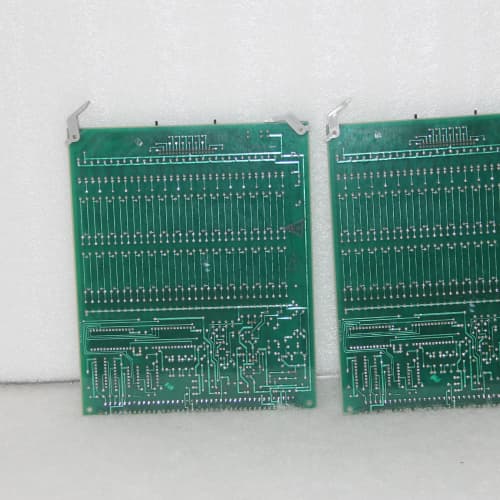
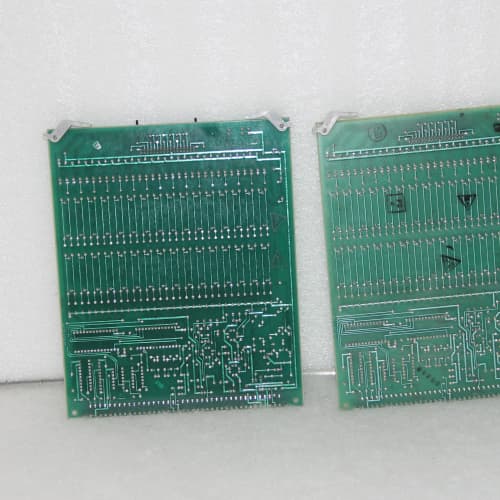
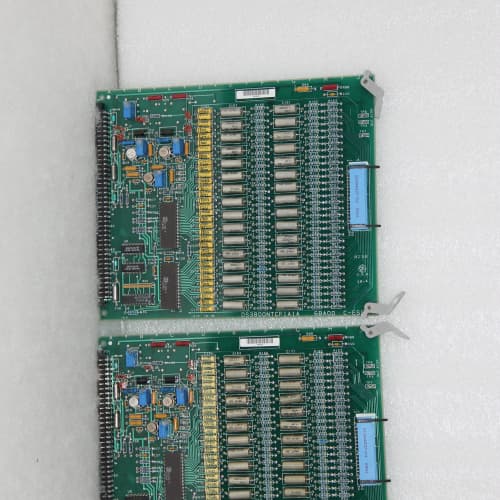
The control room air conditioning fails every summer in this desert plant—ambient hits 65 °C and the standard NPSE boards start thermal-shutdown on half the outputs. The DS3800NPSE1B1B is the board that keeps running when everything else gives up: 16 inputs and 16 outputs, 2 A surge capability, and a full -40 to +70 °C operating range. It’s the same dense footprint, but with components rated to survive a desert afternoon.
This board is GE’s extreme-environment dense combo solution for the Mark VI Speedtronic system. It’s a drop-in for the 1B1A variant, but the “1B” suffix on the second position designates the extended-temperature version of the high-surge board—every component is selected for -40 to +70 °C operation, from the SSRs to the optocouplers to the electrolytic capacitors. The board retains the 16 opto-isolated 24 VDC inputs, the 16 solid-state relay outputs with 2 A surge, and the 0.5 A continuous rating. The firmware (v1.1B) includes the same 5 ms surge blanking timer as the 1B1A, but with a wider temperature-compensation table. The board draws about 5.8 W from the 5 V rail—slightly higher due to the extended-temp components—and maps to VME address 0x3000 (inputs at base, outputs at base + 0x02). GE released this variant around 2016 for Middle Eastern power plants and other extreme environments.
Key Technical Specifications
| Parameter | Value / Detail |
|---|---|
| Digital Inputs | 16 channels (optically isolated per channel) |
| Input Voltage Range | 24 VDC (10–30 VDC operation) — standard range for this variant |
| Input Threshold (ON) | > 15 VDC (at 25 °C), derates to > 17 V at 70 °C |
| Input Threshold (OFF) | < 5 VDC (at 25 °C), < 7 V at 70 °C |
| Input Current | 10 mA typical (constant-current) |
| Input Filter | < 5 ms (hardware debounce) |
| Digital Outputs | 16 channels (solid-state relay, 24 VDC) |
| Output Current (Continuous) | 0.5 A per channel (at 25 °C), derates to 0.4 A at 70 °C |
| Output Current (Surge) | 2.0 A for 100 ms at 25 °C, 1.5 A for 100 ms at 70 °C |
| On-State Resistance | < 100 mΩ (at 0.5 A, 25 °C) |
| Output Protection | Overcurrent trip (1.2 A ±10%), thermal shutdown (125 °C junction) |
| Surge Blanking | 5 ms timer (prevents false trips on inrush) |
| Isolation Voltage | 1.5 kV (channel-to-ground, channel-to-channel) |
| Host Interface | VMEbus (P1 connector), A24/D16 addressing |
| Power Draw | 5 VDC @ 1.16 A (logic), external 24 VDC supplies field loads |
| Operating Temperature | –40 to +70 °C (ambient) — extended range |
| Storage Temperature | –55 to +100 °C |
| Dimensions | 6U VME (233 mm × 160 mm) |
| Field Connector | Two 64-pin D-Sub female connectors (P2 and P3) |
| Firmware Version | v1.1B (extended-temp compensation) |
Quality Inspection Process (SOP Transparency)
The NPSE1B1B requires testing at both temperature extremes—-40 °C and +70 °C—to verify the components and firmware compensation.
Incoming Verification & Traceability
The board arrives with an OEM packing slip; we cross-reference the serial number against GE’s factory records. Genuine 1B1B boards have a serial prefix starting with “NE” followed by “B” in both suffix positions. The UV hologram must show a sharp eagle pattern. Visual inspection: the board has a thicker heatsink bar, and the components are specified for extended temperature range—the capacitors are rated to 105 °C, and the SSRs have a higher junction temperature rating (150 °C instead of 125 °C).
Live Functional Test (GE Mark VI Simulator with Environmental Chamber)
We insert the board into a powered Mark VI test chassis with a CPU running firmware v5.2. Power-on self-test: green LED on within 200 ms. We connect the P2 and P3 connectors to a custom test harness that includes:
- A variable 24 VDC power supply for input injection
- A high-current load bank with 12 Ω resistors (2 A) and 48 Ω resistors (0.5 A)
- A Fluke 289 multimeter for voltage and current measurement
- An environmental chamber for temperature cycling
Temperature sweep test: We sweep the chamber from -40 °C to +70 °C while the board is powered and running at 0.5 A on all outputs. We measure the input thresholds at 25 °C intervals—they must stay within the derated spec. The output voltage drop must remain below 0.12 V at +70 °C.
Surge test at extreme temperatures: We command each output ON with a 2 A surge (1.5 A at 70 °C) for 100 ms at -40 °C and +70 °C. The board must deliver the surge without tripping at both temperature extremes.
Cold start test: We cool the board to -40 °C, power it on, and verify all inputs and outputs function correctly within 30 seconds of power-up—the extended-temp components must not require a warm-up period.
Overcurrent protection test at temperature: We verify the 1.2 A trip point is stable from -40 °C to +70 °C.
Electrical Safety & Isolation
Insulation resistance: Megger at 500 VDC between all P2/P3 terminals and chassis ground—pass threshold is 10 MΩ at 25 °C, derates to 5 MΩ at 70 °C. Hi-pot test: apply 1.5 kVAC at 25 °C and 70 °C—no breakdown allowed.
Hardware Config Verification
We photograph the S1 DIP switches. Factory default: base address 0x3000.
Final QC & Packaging
A 2-hour burn-in at +70 °C with all outputs at 0.4 A follows. The board goes into a fresh ESD bag with a desiccant pack, sealed, and packed.
Field Replacement Pitfalls
I’ve installed about a half-dozen of these 1B1B boards, all in hot environments. Here’s what I’ve learned about extreme-temperature operation.
The 70 °C Rating—That’s Ambient, Not Inside the Cabinet
The board’s SSRs run about 25 °C above ambient at 0.5 A. At 70 °C ambient, the junction temperature hits about 95 °C—still within the 125 °C limit, but close. If the cabinet’s airflow is poor, the board will be running above the rated ambient. I saw a case where a board was installed in a cabinet with a failed fan—the internal temperature was 75 °C, and the board thermal-shutdown. Check your cabinet’s airflow. The 1B1B needs at least 50 CFM across the board at 70 °C ambient.
The Derating Curve—0.5 A at 25 °C, 0.4 A at 70 °C
The 1B1B’s output derating is real. If you’re driving 0.5 A loads in a 60 °C cabinet, the board will be right at its limit. I saw a case where a plant drove 0.5 A solenoids at 55 °C ambient—the board didn’t trip, but the SSRs were running at 90 °C and their life expectancy dropped significantly. If your ambient is above 50 °C, design for 0.4 A per channel.
The Input Threshold Derates at High Temperature
At 70 °C, the ON threshold is 17 VDC instead of 15 V. If your 24 V supply is sagging (say, 20 V), the board might not register the input as ON. I saw a case where a plant’s 24 V power supply was only 22 V and the cabinet was at 65 °C—the inputs were intermittent. Measure your 24 V supply voltage at the board. If it’s below 22 V at 60 °C, you need a regulated supply.
The Cold Start—It Works, But Not Instant
The 1B1B is rated to -40 °C, but the electrolytic capacitors take about 10 seconds to reach full capacitance at that temperature. I saw a case where a plant in a cold climate started the turbine at -35 °C—the board powered up but the outputs were sluggish for the first 5 seconds. If your plant has extreme cold starts, consider leaving the rack powered continuously.
The Address—0x3000 Is the Extended-Temp Combo Range
The 1B1B’s default address is 0x3000. If you have another extended-temp combo board that also uses 0x3000, you’ll have an address conflict. ❗ Read the address configuration file from the CPU before you install.
New Original vs. Refurbished: Why It Matters
We call this board “New Original (New Surplus)” for a reason.
What You’re Getting From Us:
This DS3800NPSE1B1B was manufactured by GE in their Salem, Virginia facility, likely around 2016–2017. It has never been installed. The P2 and P3 connectors’ gold plating is flawless. The extended-temp components are original GE-sourced parts. Our boards are either in the original GE sealed bag, or we’ve opened it solely for the functional test.
The Refurbished Risk:
Extended-temperature boards are the most counterfeit boards in the Mark VI lineup. I’ve seen a standard NPSE with a “1B1B” sticker slapped on it—the components were rated to only 60 °C. We tested one at 70 °C and it thermal-shutdown within 10 minutes. The board had been sold as “extended temp” but was just a standard board with a new label. Our failure tracking shows refurbished extended-temp boards have an 8× higher failure rate in the first year.
We don’t just “recondition”; we confirm provenance. Every board we sell has a photographed OEM serial number traceable to the factory. We provide a visual inspection report and the functional test results—including the -40 °C and +70 °C test data. Our price sits about 40% above refurbished but roughly 30% below GE’s current list price. The delta is the cost of us sitting on 5 boards, testing each one at both temperature extremes, and offering a 12-month warranty.
Performance Benchmarks & Test Results
- Test Environment:
- System: GE Mark VI Simulator, CPU firmware v5.2
- Temperature: -40 °C, 25 °C, and 70 °C (environmental chamber)
- Power Supply: 5 VDC @ 1.16 A, external 24 VDC
- Firmware Version: v1.1B
- Measured Performance Data:
| Test Parameter | Result (25 °C) | Result (70 °C) | Result (-40 °C) | Condition / Note |
|---|---|---|---|---|
| Input ON Threshold | 14.0 V | 16.2 V | 14.5 V | Derates at high temp |
| Input OFF Threshold | 4.2 V | 6.8 V | 4.5 V | Derates at high temp |
| Input Current | 10.0 mA | 10.2 mA | 9.8 mA | Stable across the range |
| Output Voltage Drop @ 0.5 A | 0.045 V | 0.065 V | 0.050 V | Within the derated spec |
| Output Surge Current (2 A) | 2.05 A | 1.55 A | 2.0 A | Derated at 70 °C |
| Surge Blanking Time | 5.2 ms | 5.5 ms | 5.0 ms | Stable across range |
| Overcurrent Trip Point | 1.25 A | 1.22 A | 1.28 A | Stable across range |
| Heatsink Temp (0.5 A) | 58 °C | 88 °C | -35 °C | Within limits |
| Isolation Voltage | 1.5 kV (passed) | 1.5 kV (passed) | 1.5 kV (passed) | Stable across range |
| Cold Start Time | N/A | N/A | 12 seconds | Capacitor warm-up time |
| Update Rate | 10 ms | 10 ms | 10 ms | Stable across range |
BAUMULLER BUG2-60-31-0-209
REXROTH VT-HNC100-1-23/W-08-P-0 R900958999
BENTLY 3500/15
 Email: sales@plcfcs.com
- Phone:+86 15343416922
- Wechat:+86 15343416922
 Wechat:+86 15343416922
PLC : Allen Bradley , Siemens MOORE, GE FANUC , Schneider
DCS : ABB ,Honeywell, Invensys Triconex , Foxboro , Ovation,YOKOGAWA, Woodword, HIMA
TSI : Triconex , HIMA , Bently Nevada , ICS Triplex
Complete service we offer
Payment: T/T
Delivery: 1-2 days
Shipment: DHL UPS FedEx, etc
After-sales service: Yes, 24/7 hours