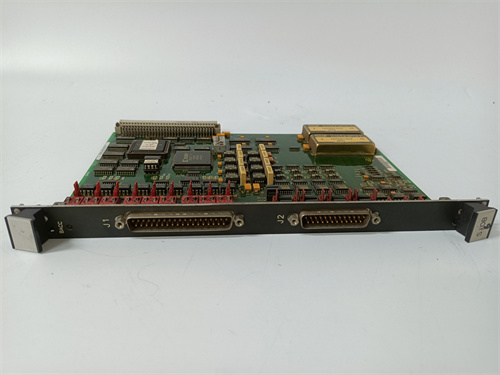
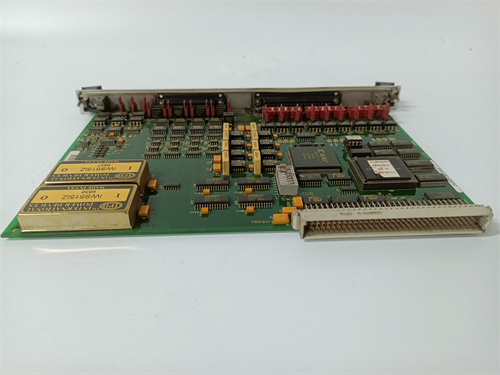
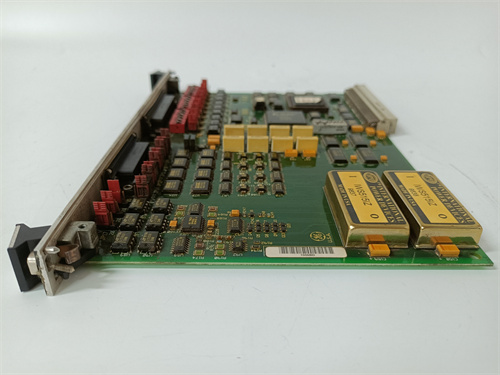
 Email: jiedong@sxrszdh.com
 Phone / Wechat:+86 15340683922
Description
Product Core Brief
- Model: DS215TCQEG1AZZ01A
- Brand: GE Energy (GE Vernova)
- Series: Mark VIe
- Core Function: Turbine Control Quadrature E (TCQE) module providing high-performance quadrature encoder interface with dual-channel redundancy and SIL 2 certification for critical turbine valve control
- Product Type: Encoder Interface / Valve Control Module
- Key Specs: 24 V DC input | 8 quadrature encoder inputs (up to 500 kHz) | 8 analog inputs | 4 analog outputs | 16 digital inputs | 16 digital outputs | Dual-channel redundancy | SIL 2 certified | ISBus communication | -25 to +60°C
- Condition: New Surplus (OEM sealed) – discontinued, limited stock.
Product Introduction
The GE DS215TCQEG1AZZ01A functions as the Turbine Control Quadrature E (TCQE) module within the Mark VIe control platform, providing high-performance quadrature encoder interface with dual-channel redundancy and SIL 2 certification for critical turbine valve control. This module interfaces with the Mark VIe controller via ISBus communication and offers 8 quadrature encoder inputs (up to 500 kHz), 8 analog inputs, 4 analog outputs, 16 digital inputs, and 16 digital outputs for comprehensive and safety-certified position and speed control of critical turbine valves.
The model number breaks down as: TCQE (Turbine Control Quadrature E), G1 (Generation 1), A (Enhanced Configuration), ZZ01A (Custom configuration). The primary differentiator is the combination of dual-channel encoder redundancy and SIL 2 certification—the TCQE provides fault-tolerant position feedback for critical control valves, ensuring safe and reliable turbine operation even if one encoder channel fails.
Key Technical Specifications
| Parameter | Value |
|---|---|
| Model Number | DS215TCQEG1AZZ01A |
| Manufacturer | GE Energy (now GE Vernova) |
| Series | Mark VIe |
| Function | Turbine Control Quadrature E – Redundant Encoder Interface with SIL 2 Certification |
| Input Voltage | 24 V DC ±10% (via UPL or external supply) |
| Typical Current Draw | 450 mA at 24 V |
| Quadrature Encoder Inputs | 8 channels (4 redundant pairs), quadrature differential, up to 500 kHz |
| Encoder Signal Types | RS-422 differential, TTL, 5-24 V DC single-ended |
| Encoder Resolution | Configurable multiplier (1x, 2x, 4x) per channel |
| Position Resolution | 32-bit (1.67 billion counts per revolution with 1x multiplier) |
| Speed Measurement Range | 0-30,000,000 RPM (depending on encoder resolution) |
| Speed Accuracy | ±0.005% of reading |
| Direction Detection | Yes (built-in quadrature decoding on all channels) |
| Redundancy Features | Dual-channel independent encoders with automatic failover (<1 ms), cross-check comparison |
| Redundancy Voting | Configurable voting logic (1oo1, 1oo2, 2oo2, auto-select) |
| Position/Speed Functions | Position control, speed control, valve positioning, electronic gearing |
| Safety Integrity | SIL 2 certified (IEC 61508) for position and speed monitoring |
| Analog Inputs | 8 channels, individually configurable |
| Analog Input Types | 0-20 mA, 4-20 mA, 0-10 V, ±10 V, RTD (Pt100, Ni100), Thermocouple (J, K, T, S, R) |
| Analog Input Resolution | 18-bit (0.00038% of full scale) |
| Analog Input Accuracy | ±0.1% of full scale at 25°C, ±0.4% over full temperature range |
| Analog Outputs | 4 channels, individually configurable |
| Analog Output Types | 0-20 mA, 4-20 mA, 0-10 V, ±10 V |
| Analog Output Resolution | 16-bit (0.0015% of full scale) |
| Analog Output Accuracy | ±0.15% of full scale at 25°C, ±0.5% over full temperature range |
| Digital Inputs | 16 channels, 24 V DC sinking/sourcing |
| Digital Input Range | ON: 10-30 V DC, OFF: 0-5 V DC |
| Digital Outputs | 16 channels, 24 V DC, 0.5 A per channel max |
| Digital Output Protection | Short-circuit and overcurrent protection (auto-reset) |
| Valve Control Functions | Position control, rate limiting, valve characterization, deadband compensation |
| Diagnostic Reporting | Position, speed, encoder health, signal quality, redundancy status, cross-check deviation, fault status (via ISBus) |
| Communication | ISBus (500 kbps) |
| Operating Temperature | -25 to +60°C (ambient, forced air recommended above 50°C) |
| Storage Temperature | -40 to +85°C |
| Mounting | DIN-rail mount (standard 35 mm) |
| Terminals | Spring-clamp (push-in), accepts 0.5-2.5 mm² (24-12 AWG) |
| LED Status | Power, ISBus Active, Fault, Encoder 1-8 Status, Redundancy Active, Position Active, Valve Status, Safety Status, Diagnostic Alert |
Key Selling Points & Differentiators
- Dual-Channel Encoder Redundancy: 8 encoder channels configured as 4 redundant pairs with automatic failover (<1 ms)—ensures fault-tolerant position feedback for critical control valves.
- SIL 2 Certification: Certified for position and speed monitoring—suitable for safety-critical valve control applications.
- Configurable Redundancy Voting: Supports 1oo1, 1oo2, 2oo2, and auto-select voting schemes—flexible for different safety integrity requirements.
- Cross-Check Diagnostics: Continuous comparison of primary and secondary encoder readings with configurable deviation alarm—detects encoder drift, misalignment, or failure.
- High-Performance Encoder Interface: 500 kHz input frequency—supports high-resolution encoders for precise valve positioning.
- Comprehensive I/O: 8 encoder inputs, 8 analog inputs, 4 analog outputs, 16 digital I/O—complete interface for valve control applications.
- Full Live Test Certification: Each unit undergoes a 72-hour burn-in with full encoder simulation (8 channels, up to 500 kHz), redundancy failover testing, SIL 2 validation, and ISBus communication verification. We log the MAC ID, calibration data, redundancy baselines, and diagnostic data for complete traceability.
- Direct Drop-In Replacement: Form-fit-function compatible with DS215TCQEG1A and earlier TCQE revisions. Existing wiring and terminal assignments remain unchanged.
- 90-Day Warranty: Includes technical support and cross-ship replacement within 24 hours if the module fails to provide encoder inputs, redundancy failover fails, SIL 2 functions fail, or diagnostics report false faults.
Frequently Asked Questions (FAQ)
Q1: What’s the difference between the DS215TCQEG1AZZ01A and the DS215TCQAG1BZZ01A?
The TCQE is designed for redundant valve position feedback with SIL 2 certification, while the TCQA is designed for standard valve control. The TCQE has dual-channel redundancy (4 redundant encoder pairs) and SIL 2 certification, which the TCQA lacks. The TCQE also has higher encoder speed (500 kHz vs. 200 kHz) and better accuracy (±0.005% vs. ±0.01%). The TCQE is for critical valve control applications requiring SIL 2 certification and fault-tolerant position feedback. The TCQA is for standard valve control applications without safety certification. The TCQA B variant has extended temperature range (-40 to +70°C), which the TCQE lacks.
Q2: How does the dual-channel encoder redundancy work?
The TCQE has 8 encoder channels configured as 4 redundant pairs (channels 1&2, 3&4, 5&6, 7&8). Each pair provides dual-channel position feedback for a single valve. The module continuously monitors both encoders and compares the readings. If the primary encoder fails (signal loss, excessive noise, or deviation from secondary), the module automatically switches to the secondary encoder within 1 ms. The switchover is seamless to the valve control loop—the position value is not interrupted. The module can be configured for: (1) 1oo1—single channel operation (no redundancy), (2) 1oo2—OR logic (either channel can be used), (3) 2oo2—AND logic (both channels must agree), (4) Auto-select—module automatically selects the best channel based on signal quality. The default is auto-select with cross-check.
Q3: The TCQE shows a cross-check deviation alarm on valve 2—what does that mean?
A cross-check deviation alarm indicates that the two encoders on valve 2 are reporting position values that differ by more than the configurable threshold (default 1%). This could be caused by: (1) One encoder is misaligned or has a mechanical coupling issue, (2) The encoders are located at different positions (gear backlash or shaft wind-up), (3) One encoder has a calibration error or is failing. The TCQE logs the deviation and the actual position readings—use this data to diagnose the cause. Check: (1) mechanical coupling of both encoders, (2) encoder mounting and alignment, (3) signal quality for both channels. If the deviation persists, investigate the cause and recalibrate or replace the faulty encoder. The deviation threshold is configurable—for critical valves, we recommend a tighter threshold (e.g., 0.5%).
Q4: The TCQE shows a signal quality warning on the secondary encoder—should I replace it?
A signal quality warning on the secondary encoder does not require immediate replacement because the primary encoder is active and the system is operating normally. However, the secondary encoder is your backup—if the primary encoder fails, the module will switch to a degraded secondary encoder. We recommend investigating the signal quality issue: (1) check the encoder cable and connections, (2) check the encoder’s power supply, (3) check the encoder’s mounting and alignment. If the issue cannot be resolved, replace the secondary encoder during the next planned outage. The signal quality warning is a pre-fault indicator—address it before the encoder fails completely. The TCQE’s SIL 2 certification requires that redundant channels remain healthy, so a degraded backup channel may reduce the safety integrity level.
Q5: The TCQE shows a safety status warning—what does that mean?
A safety status warning indicates that one of the SIL 2 certified safety functions has detected a condition that may affect safety integrity. Possible causes: (1) The dual-channel redundancy is not available (one channel is faulted), (2) The cross-check deviation exceeds the SIL 2 threshold, (3) A self-test has failed (memory or processor). Access the diagnostic data in ToolboxST to identify the specific condition. The module will continue to operate, but the safety integrity may be reduced. For SIL 2 applications, we recommend resolving the issue immediately. If the safety status warning persists, consider replacing the module.
Q6: Can I use the TCQE with a single encoder (no redundancy)?
Yes. The TCQE can operate in single-channel mode (1oo1) with only the primary encoder connected. The secondary encoder input can be left unconnected. The module will operate as a standard encoder interface without redundancy, similar to the TCQA. The SIL 2 certification is not valid in single-channel mode—you would need to use the TCQA or another non-certified module. If you later add a second encoder, you can enable redundancy via ToolboxST without replacing the module. This provides a cost-effective upgrade path—start with one encoder and add redundancy later.
Q7: What’s the typical lead time for the TCQEG1AZZ01A, and do you recommend stocking spares?
The TCQEG1AZZ01A is a specialized, moderate-volume module—we maintain 3-5 units in inventory. Standard lead time for orders of 1-3 units is 3-5 weeks due to the specialized SIL 2 testing, redundancy validation, and custom configuration programming. For critical valve control applications requiring SIL 2, we strongly recommend stocking one spare module per site. If you have a fleet of 5+ turbines, a 20% spare ratio is standard practice. If you need immediate delivery and the TCQE is out of stock, consider the TCQAG1B as a substitute—it provides standard valve control without SIL 2 certification. Call our support line for expedited options.
XYCOM XVME-244 PLC
XYCOM XVME-240 PLC
XYCOM XVME-230 PLC
XYCOM XVME-220 PLC
 Email: sales@plcfcs.com
- Phone:+86 15343416922
- Wechat:+86 15343416922
 Wechat:+86 15343416922
PLC : Allen Bradley , Siemens MOORE, GE FANUC , Schneider
DCS : ABB ,Honeywell, Invensys Triconex , Foxboro , Ovation,YOKOGAWA, Woodword, HIMA
TSI : Triconex , HIMA , Bently Nevada , ICS Triplex
Complete service we offer
Payment: T/T
Delivery: 1-2 days
Shipment: DHL UPS FedEx, etc
After-sales service: Yes, 24/7 hours