 Email: jiedong@sxrszdh.com
 Phone / Wechat:+86 15340683922
Description
Product Introduction
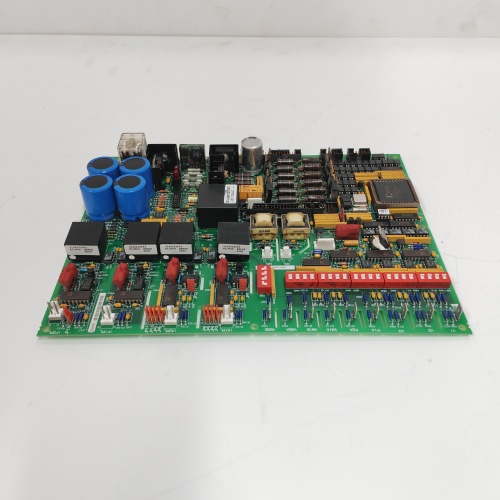
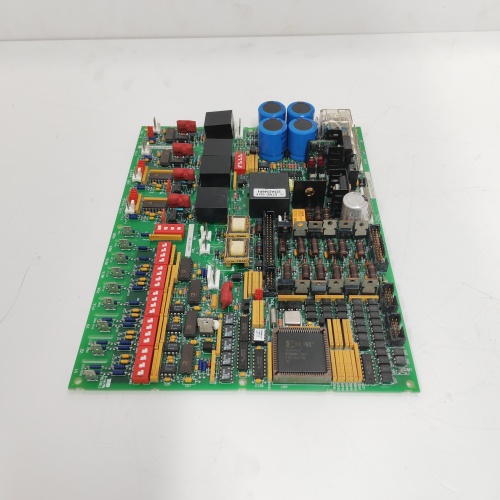
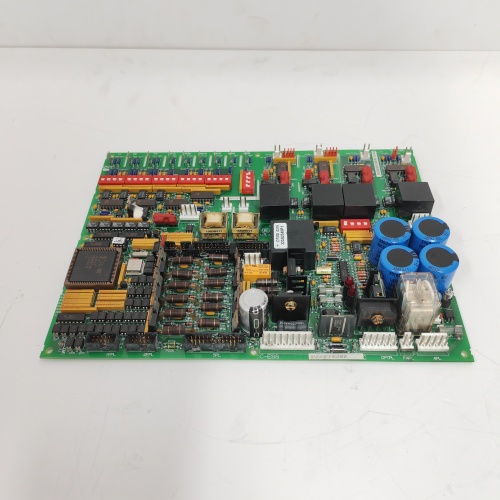
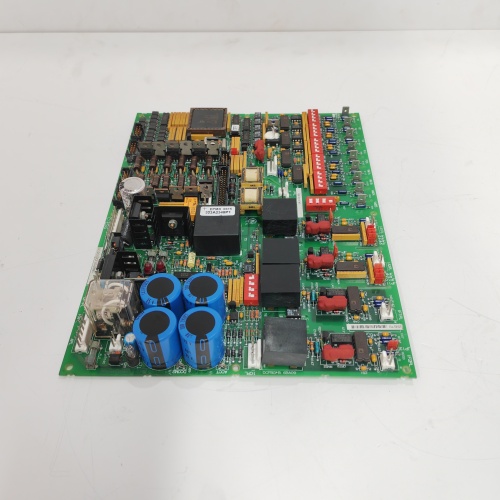
The GE DS215KLDCG1AZZ03A functions as the Key Lockout Distribution Control (KLDC) module within the Mark VIe control platform, providing advanced redundant trip, lockout, and sequential protection for critical turbine safety systems. This module interfaces with the Mark VIe controller via ISBus communication and offers 16 digital inputs, 16 digital outputs, and 8 analog inputs for comprehensive protection of turbine overspeed, over-temperature, emergency shutdown, and sequential trip functions with SIL 3 certification.
The model number breaks down as: KLDC (Key Lockout Distribution Control), G1 (Generation 1), A (Enhanced Configuration), ZZ03A (Custom configuration with sequential protection). The primary differentiator is the combination of SIL 3 certification, extended I/O capacity, and sequential protection logic—the KLDC provides the highest level of safety integrity in the Mark VIe family, with advanced features for complex turbine protection schemes.
Key Technical Specifications
| Parameter | Value |
|---|---|
| Model Number | DS215KLDCG1AZZ03A |
| Manufacturer | GE Energy (now GE Vernova) |
| Series | Mark VIe |
| Function | Key Lockout Distribution Control – Advanced Redundant Trip and Sequential Protection |
| Input Voltage | 24 V DC ±10% (via UPL or external supply) |
| Typical Current Draw | 350 mA at 24 V |
| Digital Inputs | 16 channels, 24 V DC sinking/sourcing |
| Digital Input Range | ON: 10-30 V DC, OFF: 0-5 V DC |
| Digital Input Diagnostics | Open-circuit detection, short-circuit detection, input status (via ISBus) |
| Digital Outputs | 16 channels, 24 V DC, 0.5 A per channel max |
| Digital Output Protection | Short-circuit and overcurrent protection (auto-reset) |
| Analog Inputs | 8 channels, individually configurable |
| Analog Input Types | 0-20 mA, 4-20 mA, 0-10 V, ±10 V, RTD, Thermocouple (J, K, T) |
| Analog Input Resolution | 18-bit (0.00038% of full scale) |
| Analog Input Accuracy | ±0.1% of full scale at 25°C, ±0.3% over full temperature range |
| Trip Logic | Configurable trip logic (AND, OR, voting, sequencing) with time delays |
| Sequential Protection | Configurable sequence of protection actions (e.g., load shedding, valve closure, fuel shut-off) |
| Lockout Functions | Configurable lockout logic, manual reset required, event logging |
| Response Time | 8 ms typical (trip input to trip output) |
| Redundancy Features | Triple processors (voting), redundant power supply inputs |
| Safety Integrity | SIL 3 certified (IEC 61508) for trip and lockout functions |
| Event Logging | 1000 events stored in onboard memory (trip, lockout, diagnostic events) |
| Diagnostic Reporting | Trip status, lockout status, processor health, event log, fault status (via ISBus) |
| Communication | ISBus (500 kbps) |
| Operating Temperature | -25 to +60°C (ambient, forced air recommended above 50°C) |
| Storage Temperature | -40 to +85°C |
| Mounting | DIN-rail mount (standard 35 mm) |
| Terminals | Spring-clamp (push-in), accepts 0.5-2.5 mm² (24-12 AWG) |
| LED Status | Power, ISBus Active, Fault, Trip 1-16 Status, Lockout 1-16 Status, Processor A/B/C Health, Event Log Active |
Key Selling Points & Differentiators
- SIL 3 Certification: Highest safety integrity level in the Mark VIe family—suitable for critical turbine protection functions requiring the highest reliability.
- Triple Processor Redundancy: Three independent processors with 2oo3 voting—ensures the highest level of safety and availability.
- Sequential Protection: Configurable sequence of protection actions (load shedding, valve closure, fuel shut-off)—enables sophisticated turbine protection schemes.
- Extended I/O Capacity: 16 digital inputs, 16 digital outputs, and 8 analog inputs—comprehensive protection for large turbines.
- Fast Response Time: 8 ms typical response time—ensures rapid protection for critical events.
- Configurable Trip and Lockout Logic: AND, OR, voting, and sequencing logic with time delays—flexible for different protection schemes.
- Event Logging: 1000 events stored in onboard memory—enables post-event analysis and diagnostics.
- Full Live Test Certification: Each unit undergoes a 72-hour burn-in with full trip and lockout logic simulation, triple-processor voting validation, SIL 3 validation, and ISBus communication testing. We log the MAC ID, processor calibration, and diagnostic baselines for traceability.
- Direct Drop-In Replacement: Form-fit-function compatible with DS215KLDCG1A and earlier KLDC revisions. Existing wiring and terminal assignments remain unchanged.
- 90-Day Warranty: Includes technical support and cross-ship replacement within 24 hours if the module fails to execute trip logic, lockout logic fails to latch, processors fail voting, or diagnostics report false faults.
Frequently Asked Questions (FAQ)
Q1: What’s the difference between the DS215KLDCG1AZZ03A and the DS215KLDBG1AZZ02A?
The KLDC has SIL 3 certification (vs. SIL 2), triple processor redundancy (vs. dual), sequential protection, extended I/O (16/16/8 vs. 8/8/4), and faster response time (8 ms vs. 10 ms). The KLDB is suitable for SIL 2 applications; the KLDC is for SIL 3 applications requiring the highest safety integrity and more I/O. Choose KLDC for SIL 3 critical turbines. Choose KLDB for SIL 2 applications with lower I/O requirements.
Q2: What is sequential protection, and when would I use it?
Sequential protection allows you to define a sequence of protection actions (load shedding, valve closure, fuel shut-off) that occur in a specific order during a trip event. For example: (1) First, shed 50% load, (2) After 50 ms, close the control valves, (3) After 100 ms, close the emergency shut-off valves, (4) After 200 ms, open the generator breaker. Sequential protection helps to prevent overspeed and over-temperature events during trip conditions. It is configurable via ToolboxST. Each step has configurable time delays and conditions.
Q3: How does the triple processor voting work?
The KLDC has three independent processors (A, B, and C) that execute the trip logic simultaneously. Each processor independently reads the inputs, executes the trip logic, and determines the output state. The module uses 2oo3 voting—if at least 2 processors agree on the output state, the output is activated. If only 1 processor agrees (or 0), the output remains in the fail-safe state. This ensures that a single processor failure does not cause a false trip (or a missed trip). The voting logic is continuous—the module reports the status of each processor via ISBus.
Q4: The KLDC shows a processor fault—what should I do?
A processor fault indicates that one of the three processors has failed self-test or is not responding. The KLDC can continue to operate on two processors (degraded mode), which is still SIL 3 certified (2oo3 voting becomes 2oo2). However, you’ve lost redundancy. We recommend: (1) checking the processor health status via ISBus to determine which processor failed, (2) cycling power to see if the fault clears, (3) if the fault persists, replace the module during the next scheduled outage. The KLDC’s safety functions will still operate on two processors, but the SIL 3 certification is still valid (2oo2 is SIL 3).
Q5: Can I use the KLDC for dual-channel trip monitoring (redundant sensors)?
Yes. The KLDC supports dual-channel and triple-channel trip monitoring for SIL 3 applications. For each trip condition, you can connect up to 3 independent sensors to the KLDC’s analog inputs. The module can be configured for: (1) 1oo1 (single sensor—lowest integrity), (2) 1oo2 (OR logic—higher availability), (3) 2oo2 (AND logic—higher safety integrity), (4) 1oo3 (OR logic with triple sensors), or (5) 2oo3 (majority voting—highest safety and availability). For SIL 3 applications, 2oo3 is typically required. The KLDC’s triple-processor voting ensures that the trip decision is made correctly even if one sensor fails.
Q6: The event log shows a trip event without a corresponding trip input—what’s the cause?
A trip event logged without a corresponding trip input indicates that the trip was triggered by a different source—likely: (1) a diagnostic fault (e.g., processor failure, sensor out-of-range), (2) a lockout reset event, or (3) a manual trip command. Check the event log details: the KLDC logs the trip source (which input or diagnostic triggered the trip) and the time. If the source is “diagnostic” or “manual,” the trip was not caused by an external trip input. The event log provides full traceability for post-event analysis.
Q7: What’s the typical lead time for the KLDCG1AZZ03A, and do you recommend stocking spares?
The KLDCG1AZZ03A is a specialized, lower-volume module—we maintain 2-4 units in inventory. Standard lead time for orders of 1-3 units is 3-5 weeks due to the specialized SIL 3 validation, triple-processor testing, and sequential protection configuration. For critical SIL 3 turbines, we strongly recommend stocking one spare KLDC per site. If you have a fleet of 5+ turbines, a 20% spare ratio is standard practice. If you need immediate delivery and the custom variant is out of stock, consider the KLDBG1AZZ02A as a substitute—it provides SIL 2 protection with lower I/O capacity. Call our support line for expedited options.
XYCOM 8100-0272A PLCCPU
XYCOM 70113-001
XYCOM 5015T-24V PLC
 Email: sales@plcfcs.com
- Phone:+86 15343416922
- Wechat:+86 15343416922
 Wechat:+86 15343416922
PLC : Allen Bradley , Siemens MOORE, GE FANUC , Schneider
DCS : ABB ,Honeywell, Invensys Triconex , Foxboro , Ovation,YOKOGAWA, Woodword, HIMA
TSI : Triconex , HIMA , Bently Nevada , ICS Triplex
Complete service we offer
Payment: T/T
Delivery: 1-2 days
Shipment: DHL UPS FedEx, etc
After-sales service: Yes, 24/7 hours