 Email: jiedong@sxrszdh.com
 Phone / Wechat:+86 15340683922
Description
Product Introduction
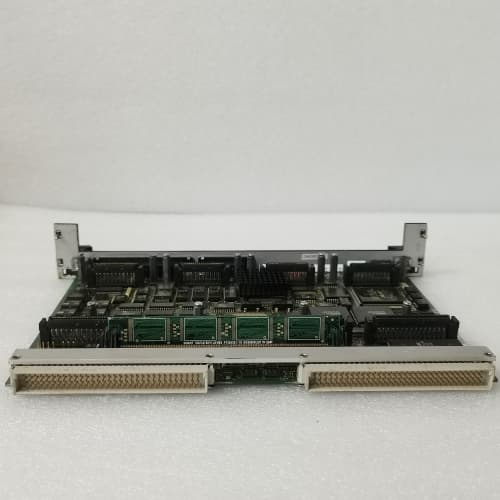
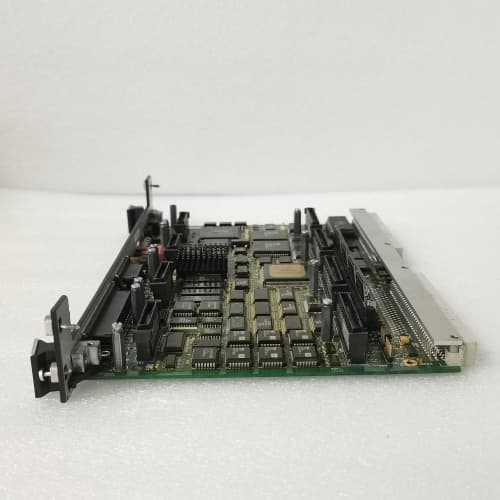
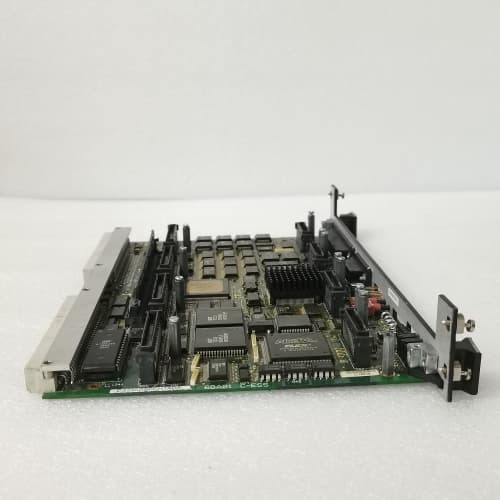
The GE DS215GHDCG5AZZ01A functions as the Gas Turbine High Density Control (GHDC) module within the Mark VIe control platform, providing ultra-high-density I/O and advanced control for large gas turbine applications. This module interfaces with the Mark VIe controller via ISBus communication and offers 16 analog inputs, 8 analog outputs, 32 digital inputs, 32 digital outputs, and 8 encoder inputs for comprehensive control of gas turbine fuel systems, combustion monitoring, and auxiliary equipment.
The model number breaks down as: GHDC (Gas Turbine High Density Control), G5 (Generation 5), A (Enhanced Configuration), ZZ01A (Custom configuration). The primary differentiator is the ultra-high-density I/O and advanced control capabilities—the GHDC provides the highest I/O density in the Mark VIe family, enabling control of large gas turbines with minimal cabinet space and reduced wiring complexity.
Key Technical Specifications
| Parameter | Value |
|---|---|
| Model Number | DS215GHDCG5AZZ01A |
| Manufacturer | GE Energy (now GE Vernova) |
| Series | Mark VIe |
| Function | Gas Turbine High Density Control – Ultra-High-Density I/O and Advanced Control |
| Input Voltage | 24 V DC ±10% (via UPL or external supply) |
| Typical Current Draw | 600 mA at 24 V |
| Analog Inputs | 16 channels, individually configurable |
| Analog Input Types | 0-20 mA, 4-20 mA, 0-10 V, ±10 V, Thermocouple (J, K, T, S, R, B) |
| Analog Input Resolution | 18-bit (0.00038% of full scale) |
| Analog Input Accuracy | ±0.1% of full scale at 25°C, ±0.3% over full temperature range |
| Analog Outputs | 8 channels, individually configurable |
| Analog Output Types | 0-20 mA, 4-20 mA, 0-10 V, ±10 V |
| Analog Output Resolution | 16-bit (0.0015% of full scale) |
| Analog Output Accuracy | ±0.15% of full scale at 25°C, ±0.4% over full temperature range |
| Digital Inputs | 32 channels, 24 V DC sinking/sourcing |
| Digital Input Range | ON: 10-30 V DC, OFF: 0-5 V DC |
| Digital Outputs | 32 channels, 24 V DC, 0.5 A per channel max |
| Digital Output Protection | Short-circuit and overcurrent protection (auto-reset) |
| Encoder Inputs | 8 channels, quadrature differential, up to 200 kHz |
| Fuel Control | Multiple fuel valve control (servo), fuel flow measurement, fuel blending |
| Combustion Monitoring | Flame detection (UV/IR), exhaust temperature monitoring, NOx/CO monitoring |
| Safety Functions | Flame-out detection, over-temperature protection, fuel shut-off |
| Advanced Diagnostics | Combustion stability monitoring, fuel valve health trending, predictive maintenance |
| Diagnostic Reporting | Fuel flow, combustion temperature, flame status, valve position, fault status (via ISBus) |
| Communication | ISBus (500 kbps) |
| Operating Temperature | -25 to +60°C (ambient, forced air recommended above 50°C) |
| Storage Temperature | -40 to +85°C |
| Mounting | DIN-rail mount (standard 35 mm) |
| Terminals | Spring-clamp (push-in), accepts 0.5-2.5 mm² (24-12 AWG) |
| LED Status | Power, ISBus Active, Fault, Fuel Valve Position, Flame Status, Temperature Alarms, Digital I/O Status, Encoder Status, Diagnostic Alert |
Key Selling Points & Differentiators
- Ultra-High I/O Density: 16 analog inputs, 8 analog outputs, 32 digital inputs, 32 digital outputs, and 8 encoder inputs in a single module—reduces cabinet space by up to 70% compared to discrete modules.
- Comprehensive Gas Turbine Control: Complete fuel control, combustion monitoring, and auxiliary control for large gas turbines—reduces system complexity and cost.
- Advanced Fuel Control: Supports multiple fuel valves (liquid, gas, dual-fuel), fuel flow measurement, and fuel blending—ideal for complex gas turbine applications.
- Versatile Analog Inputs: Thermocouple inputs (J, K, T, S, R, B) for high-temperature monitoring—direct connection to exhaust and combustion temperature sensors.
- High-Speed Control: <2 ms cycle time for critical control loops—ensures fast response for fuel control and safety functions.
- Advanced Diagnostics: Combustion stability monitoring, fuel valve health trending, and predictive maintenance—enables proactive maintenance of gas turbine systems.
- Full Live Test Certification: Each unit undergoes a 72-hour burn-in with full analog and digital I/O simulation, encoder testing, combustion simulation, safety function validation, and ISBus communication testing. We log the MAC ID, calibration data, and diagnostic baselines for traceability.
- Direct Drop-In Replacement: Form-fit-function compatible with DS215GHDCG5A and earlier GHDC revisions. Existing wiring and terminal assignments remain unchanged.
- 90-Day Warranty: Includes technical support and cross-ship replacement within 24 hours if the module fails to provide I/O, fuel control outputs, combustion monitoring fails, encoder inputs fail, or diagnostics report false faults.
Frequently Asked Questions (FAQ)
Q1: What’s the difference between the DS215GHDCG5AZZ01A and the DS215GGIAG1BZZ01B?
The GHDC has much higher I/O density (16 analog inputs vs. 8, 32 digital inputs vs. 16, 32 digital outputs vs. 16, 8 encoder inputs vs. 4) and faster control cycle (<2 ms vs. <5 ms). The GHDC is designed for large, complex gas turbines with extensive I/O requirements. The GGIA is for smaller or medium gas turbines with fewer I/O needs. The GHDC also has more analog output channels (8 vs. 6). The GGIA has integrated safety functions (SIL 2) and extended temperature capability, which the GHDC may not have. Choose GHDC for large, complex gas turbines. Choose GGIA for smaller or medium gas turbines.
Q2: What’s the maximum number of gas turbines can the GHDC control?
The GHDC is a single module that provides I/O and control for one gas turbine. For multiple turbines, you need multiple GHDC modules (one per turbine) or a combination of GHDC and other modules. The GHDC can control one turbine with multiple fuel systems, combustion zones, and auxiliary equipment. The module’s 32 digital outputs are sufficient for most gas turbine control systems. For very complex turbines, you may need additional digital output modules.
Q3: The GHDC shows a flame-out alarm during operation—what could be the cause?
A flame-out alarm during normal operation indicates a loss of flame detection. The GHDC logs the flame signal level and fuel valve position at the time of the alarm—use this data to diagnose the cause. Possible causes: (1) fuel flow dropped below minimum (check fuel valve position and fuel pressure), (2) flame sensor dirty or failed (check sensor window and output signal), (3) combustion instability (check fuel-air ratio and compressor outlet conditions), (4) exhaust temperature excursion causing flame blow-off (check temperature trends). The GHDC’s combustion stability monitoring can help identify the root cause.
Q4: What types of thermocouples are supported?
The GHDC supports J, K, T, S, R, and B thermocouple types, covering a wide range of temperatures: (1) J: -210 to 1200°C, (2) K: -270 to 1372°C, (3) T: -270 to 400°C, (4) S: -50 to 1768°C, (5) R: -50 to 1768°C, (6) B: 0 to 1820°C. The module includes built-in cold junction compensation (CJC) and linearization for accurate temperature measurement. Accuracy is ±1.5°C for J, K, T types, ±2.5°C for S, R types, and ±3°C for B types. For exhaust temperature monitoring, S or R thermocouples are typically used.
Q5: The GHDC has 32 digital inputs and 32 digital outputs—what’s the maximum total current from the outputs?
Each digital output is rated at 0.5 A, for a total of 16 A (32 × 0.5 A). However, the actual current is limited by the module’s internal power supply and the 24 V input capacity. The module’s total power consumption (including outputs) must not exceed 50 W. At 24 V, this is approximately 2.08 A total current. This means you cannot draw 0.5 A from all 32 outputs simultaneously—the total current is limited to approximately 2 A. For high-current applications, use external relays or contactors. The module includes thermal protection that will shut down outputs if the total power exceeds the limit.
Q6: What’s the control cycle time of the GHDC?
The GHDC has a control cycle time of <2 ms for critical control loops (fuel control, speed control, temperature control). This means the module can update outputs and read inputs every 2 ms, providing fast response for gas turbine control. The ISBus communication cycle with the controller is typically 5 ms. The GHDC’s fast cycle time ensures that critical control loops are executed in time, even with the large I/O count.
Q7: What’s the typical lead time for the GHDCG5AZZ01A, and do you recommend stocking spares?
The GHDCG5AZZ01A is a specialized, moderate-volume module—we maintain 3-5 units in inventory. Standard lead time for orders of 1-3 units is 2-4 weeks due to the specialized high-density I/O testing and custom configuration programming. For large gas turbines, we strongly recommend stocking one spare module per site. If you have a fleet of 5+ turbines, a 20% spare ratio is standard practice. If you need immediate delivery and the custom variant is out of stock, consider using multiple GGIAG1 modules (with lower I/O density) or the standard DS215GHDCG5A (which may have different I/O configuration). Call our support line for expedited options.
XYCOM XVME-293
XYCOM XVME-404 PLCPLC
XYCOM XVME-5004 PLC
 Email: sales@plcfcs.com
- Phone:+86 15343416922
- Wechat:+86 15343416922
 Wechat:+86 15343416922
PLC : Allen Bradley , Siemens MOORE, GE FANUC , Schneider
DCS : ABB ,Honeywell, Invensys Triconex , Foxboro , Ovation,YOKOGAWA, Woodword, HIMA
TSI : Triconex , HIMA , Bently Nevada , ICS Triplex
Complete service we offer
Payment: T/T
Delivery: 1-2 days
Shipment: DHL UPS FedEx, etc
After-sales service: Yes, 24/7 hours