 Email: jiedong@sxrszdh.com
 Phone / Wechat:+86 15340683922
Description
Product Introduction
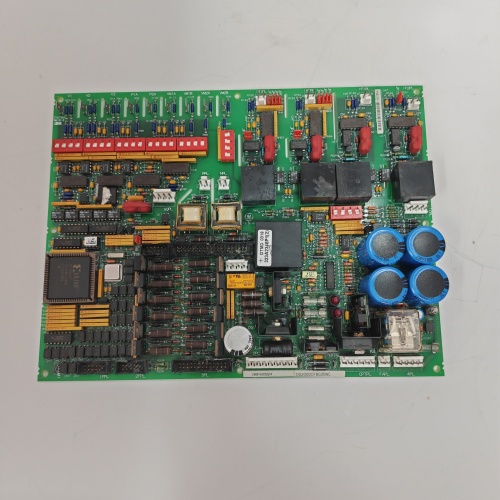
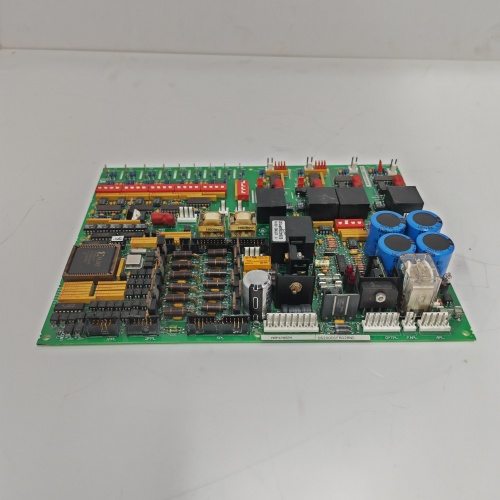
The GE DS2020SVSAG2 functions as the Servo Valve and Solenoid Adapter (SVSA) module within the Mark VIe control platform, providing precision control for hydraulic servo valves and solenoid valves in turbine governor and control applications. This module interfaces with the Mark VIe controller via ISBus communication and offers 4 servo valve outputs (configurable for current or voltage drive), 8 solenoid outputs (24 V DC, 0.5 A), and 4 analog inputs for position feedback and pressure monitoring.
The model number breaks down as: SVSA (Servo Valve and Solenoid Adapter), G2 (Generation 2). The primary differentiator is the high-resolution, low-drift servo valve control—the G2 provides 16-bit resolution on servo outputs with ±0.1% accuracy and temperature drift of <50 ppm/°C, ensuring precise control of turbine hydraulic systems. The G2 revision includes improved dither frequency control (configurable 50-500 Hz), enhanced diagnostics (valve current monitoring, solenoid health detection), and spring-clamp terminals for reliable field wiring.
Key Technical Specifications
| Parameter | Value |
|---|---|
| Model Number | DS2020SVSAG2 |
| Manufacturer | GE Energy (now GE Vernova) |
| Series | Mark VIe |
| Function | Servo Valve and Solenoid Adapter – Precision Servo and Solenoid Control |
| Input Voltage | 24 V DC ±10% (via UPL or external supply) |
| Typical Current Draw | 300 mA at 24 V (plus output loads) |
| Servo Valve Outputs | 4 channels, individually configurable |
| Servo Output Types | 4-20 mA, 0-20 mA, ±10 V, ±20 V, ±100 mA |
| Servo Output Resolution | 16-bit (0.0015% of full scale) |
| Servo Output Accuracy | ±0.1% of full scale at 25°C, ±0.3% over full temperature range |
| Servo Output Drift | <50 ppm/°C |
| Dither Frequency | 50-500 Hz, configurable per channel |
| Dither Amplitude | 1-20% of full scale, configurable per channel |
| Servo Diagnostics | Current feedback monitoring, output voltage monitoring, short-circuit detection, valve health trending |
| Analog Inputs | 4 channels, individually configurable |
| Analog Input Types | 0-20 mA, 4-20 mA, 0-10 V, ±10 V |
| Analog Input Resolution | 16-bit (0.0015% of full scale) |
| Analog Input Accuracy | ±0.1% of full scale at 25°C, ±0.3% over full temperature range |
| Solenoid Outputs | 8 channels, 24 V DC, 0.5 A per channel max |
| Solenoid Output Protection | Short-circuit and overcurrent protection (auto-reset), flyback diode protection |
| Solenoid Diagnostics | Current monitoring, open-circuit detection, short-circuit detection, cycle counting, coil resistance trending |
| Diagnostic Reporting | Per-channel servo status, solenoid health, fault status (via ISBus) |
| Communication | ISBus (500 kbps) |
| Operating Temperature | -25 to +60°C (ambient, forced air recommended above 50°C) |
| Storage Temperature | -40 to +85°C |
| Mounting | DIN-rail mount (standard 35 mm) |
| Terminals | Spring-clamp (push-in), accepts 0.5-2.5 mm² / 24-12 AWG |
| LED Status | Power, ISBus Active, Fault, Servo 1-4 Active, Solenoid 1-8 Status |
Key Selling Points & Differentiators
- High-Resolution Servo Control: 16-bit resolution with ±0.1% accuracy and <50 ppm/°C drift—ensures precise, repeatable positioning of hydraulic servo valves for turbine governor and control valves.
- Configurable Dither: Per-channel dither frequency (50-500 Hz) and amplitude (1-20%)—optimizes valve response, reduces stiction, and extends valve life.
- Integrated Solenoid Control: 8 solenoid outputs with flyback protection and diagnostics—drives trip solenoids, shut-off valves, and control solenoids directly.
- Comprehensive Diagnostics: Servo current monitoring, valve health trending, solenoid coil resistance trending, cycle counting—enables predictive maintenance of hydraulic components.
- Multiple Output Modes: Each servo channel supports current (4-20 mA, 0-20 mA, ±100 mA) or voltage (±10 V, ±20 V)—compatible with most industrial servo valves and hydraulic actuators.
- Flexible Analog Inputs: 4 analog inputs for position feedback (LVDT, potentiometer) and pressure monitoring—reduces need for additional I/O modules.
- Full Live Test Certification: Each unit undergoes a 36-hour burn-in with full servo and solenoid output simulation, accuracy verification, dither validation, and diagnostic testing. We log the MAC ID, calibration data, and diagnostic baselines for traceability.
- Direct Drop-In Replacement: Form-fit-function compatible with DS2020SVSAG1 and earlier SVSA revisions. Existing wiring and terminal assignments remain unchanged.
- 90-Day Warranty: Includes technical support and cross-ship replacement within 24 hours if the module fails to provide servo outputs, solenoid outputs, reports incorrect analog values, or diagnostics report false faults.
Frequently Asked Questions (FAQ)
Q1: What’s the difference between the DS2020SVSAG2 and the DS2020SVSAG1?
The G2 has three major improvements: (1) improved servo accuracy (±0.1% vs. ±0.2%), (2) configurable dither frequency and amplitude (G1 had fixed dither), (3) enhanced solenoid diagnostics (coil resistance trending, cycle counting), and (4) spring-clamp terminals (vs. screw terminals on G1). The G2 also has improved thermal drift (<50 ppm/°C vs. 100 ppm/°C). Both modules provide 4 servo channels and 8 solenoid outputs. The G2 is the preferred choice for applications requiring higher precision and predictive maintenance.
Q2: What types of servo valves are compatible with the SVSA?
The SVSA supports a wide range of servo valves including: (1) 4-20 mA current-driven valves (most common), (2) ±10 V or ±20 V voltage-driven valves, (3) ±100 mA high-current valves, and (4) 0-20 mA valves. The module’s output type is configurable per channel. The SVSA also provides dither for valves that require it to reduce stiction. Most industrial servo valves (Moog, Rexroth, Parker, Vickers) are compatible. Check your valve’s datasheet for the required input type and range.
Q3: The servo output shows a drift of 0.3% over 6 months—is that normal?
A drift of 0.3% over 6 months is within the SVSA’s specification (drift of <50 ppm/°C translates to approximately 0.1-0.2% over 6 months in a 40°C ambient environment). This could be caused by: (1) temperature changes (the module’s drift is temperature-dependent), (2) aging of the valve’s coil (increasing resistance), or (3) a gradual change in the valve’s characteristics. We recommend checking the valve’s health using the SVSA’s diagnostic data. If the valve’s coil resistance is trending upward, the valve may need maintenance. The SVSA’s drift is typically stable—if you see sudden drift, check for temperature changes or valve issues.
Q4: How do I configure the dither frequency for a specific valve?
Dither configuration is done through ToolboxST using the SVSA configuration block. For each servo channel, you can set: (1) dither frequency (50-500 Hz) and (2) dither amplitude (1-20% of full scale). The optimal dither frequency depends on the valve’s design—typically 100-300 Hz for standard servo valves. Start with the valve manufacturer’s recommended settings. The dither amplitude should be just enough to overcome stiction—too much amplitude can cause valve wear and reduce control accuracy. We recommend starting with 5% amplitude and adjusting based on valve response.
Q5: The solenoid output tripped on channel 5, but the solenoid is still connected. What’s the cause?
The solenoid output protection trips for two reasons: (1) overcurrent—the solenoid draws more than 0.5 A (e.g., a shorted coil), or (2) short-circuit—the output is shorted to ground or 24 V. The SVSA’s auto-reset feature will attempt to restart the output after 5 seconds. If the fault persists, it will cycle. First, check the solenoid’s resistance—if it’s below 50 Ω at 24 V, the solenoid may be shorted (normal resistance for a 0.5 A solenoid is 48-52 Ω). If the resistance is normal, check the wiring for shorts. The module reports the fault type via ISBus—the “overcurrent” vs. “short-circuit” distinction can help diagnose the issue.
Q6: Can I use the SVSA’s analog inputs for LVDT position feedback?
Yes. The SVSA’s analog inputs support 4-20 mA and 0-10 V signals, which are compatible with most LVDT position sensors (with appropriate signal conditioning). Many LVDT sensors provide 4-20 mA or 0-10 V outputs. For sensors that provide AC output (e.g., some older LVDTs), you’ll need an external converter. The SVSA’s analog inputs have 16-bit resolution and ±0.1% accuracy, which is sufficient for position feedback in turbine control loops.
Q7: What’s the typical lead time for the SVSAG2, and do you recommend stocking spares?
The SVSAG2 is a commonly stocked module—we maintain 8-12 units in inventory. Standard lead time for orders of 1-10 units is 1-2 business days for shipping after QC verification. For critical turbines with hydraulic controls, we recommend stocking one spare SVSAG2 per site. If you have a fleet of 10+ turbines, a 10% spare ratio is standard practice. For volume orders, contact our support line for expedited delivery and pricing options.
XYCOM 83382CA 1824 PLC
XYCOM 83595-101-B 83594BA PLC
XICOM 84296A 1862
 Email: sales@plcfcs.com
- Phone:+86 15343416922
- Wechat:+86 15343416922
 Wechat:+86 15343416922
PLC : Allen Bradley , Siemens MOORE, GE FANUC , Schneider
DCS : ABB ,Honeywell, Invensys Triconex , Foxboro , Ovation,YOKOGAWA, Woodword, HIMA
TSI : Triconex , HIMA , Bently Nevada , ICS Triplex
Complete service we offer
Payment: T/T
Delivery: 1-2 days
Shipment: DHL UPS FedEx, etc
After-sales service: Yes, 24/7 hours