 Email: jiedong@sxrszdh.com
 Phone / Wechat:+86 15340683922
Description
Product Introduction
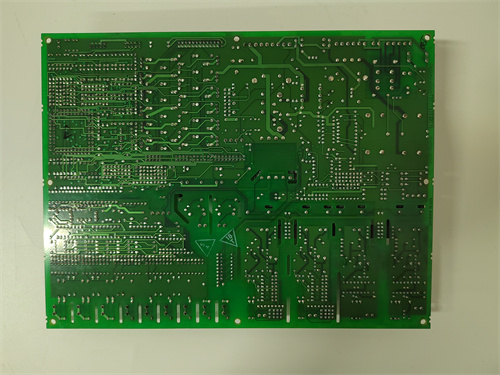
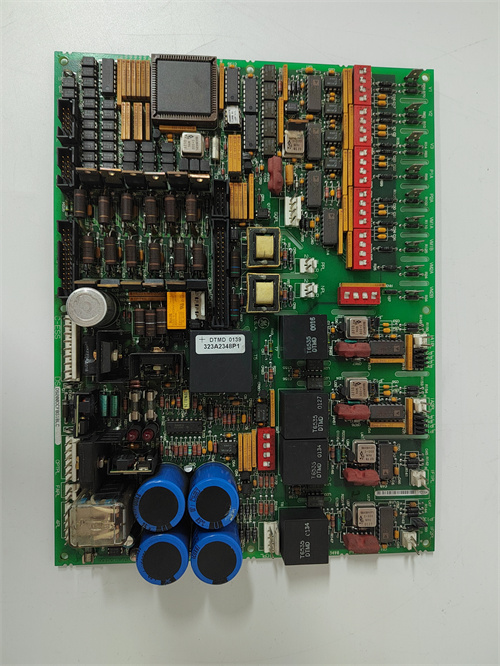
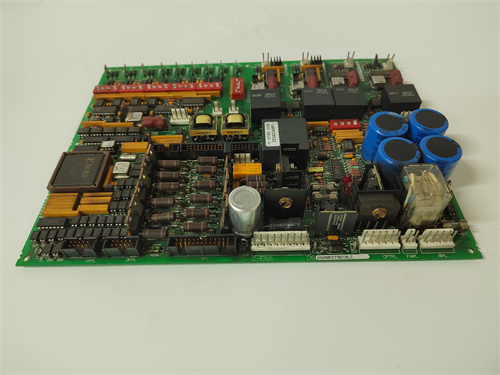
The GE DS2020FEANRP050A functions as the Field Excitation and Analog (FEAN) module within the Mark VIe control platform, providing integrated field excitation control and analog I/O for generator excitation systems. This module interfaces with the Mark VIe controller via ISBus communication and offers 4 configurable analog inputs, 2 analog outputs, and dedicated field excitation outputs for controlling generator field current, voltage, and reactive power.
The model number breaks down as: FEAN (Field Excitation and Analog), RP050 (50 A field excitation output rating), A (Revision A). The primary differentiator is the integrated field excitation power stage—the FEAN includes a built-in 50 A excitation output (SCR-based) with integrated protection and diagnostics, eliminating the need for a separate excitation power module. This reduces cabinet space, simplifies wiring, and improves reliability for small to medium-sized generator excitation systems (up to 50 A field current).
Key Technical Specifications
| Parameter | Value |
|---|---|
| Model Number | DS2020FEANRP050A |
| Manufacturer | GE Energy (now GE Vernova) |
| Series | Mark VIe |
| Function | Field Excitation and Analog – Integrated Excitation Control and Analog I/O |
| Input Voltage | 24 V DC ±10% (via UPL or external supply) |
| Typical Current Draw | 500 mA at 24 V |
| Analog Inputs | 4 channels, individually configurable |
| Analog Input Types | 0-20 mA, 4-20 mA, 0-10 V, ±10 V, RTD (Pt100, Ni100) |
| Analog Input Resolution | 16-bit (0.0015% of full scale) |
| Analog Input Accuracy | ±0.15% of full scale at 25°C, ±0.4% over full temperature range |
| Analog Outputs | 2 channels, individually configurable |
| Analog Output Types | 0-20 mA, 4-20 mA, 0-10 V |
| Analog Output Resolution | 14-bit (0.006% of full scale) |
| Analog Output Accuracy | ±0.2% of full scale at 25°C, ±0.5% over full temperature range |
| Field Excitation Output | 50 A continuous (SCR-based, 3-phase controlled rectifier) |
| Excitation Output Voltage | 0-600 V DC (depending on AC input) |
| Excitation Control | Voltage regulator, current regulator, power factor control (configurable) |
| Excitation Protection | Overcurrent, overvoltage, under/over frequency, field loss detection |
| Field Diagnostics | Field current monitoring, field voltage monitoring, bridge health, SCR health |
| Excitation Input Power | 3-phase, 400-480 V AC (45-65 Hz) |
| Diagnostic Reporting | Field current, field voltage, excitation bridge health, fault status (via ISBus) |
| Communication | ISBus (500 kbps) |
| Operating Temperature | -25 to +60°C (ambient, forced air recommended above 50°C) |
| Storage Temperature | -40 to +85°C |
| Mounting | DIN-rail mount (standard 35 mm) |
| Terminals | Screw terminals (accepts 0.5-6 mm² / 24-10 AWG) |
| LED Status | Power, ISBus Active, Fault, Field Active, Field Overcurrent, Field Overvoltage, Bridge Health |
Key Selling Points & Differentiators
- Integrated Excitation Power Stage: 50 A field excitation output with built-in SCR bridge and protection—eliminates the need for a separate excitation power module, reducing cabinet space and cost.
- Combined Excitation and Analog I/O: Integrated 4 analog inputs and 2 analog outputs—provides sensor inputs (field current, voltage, temperature) and control outputs (setpoints, alarms) without additional I/O modules.
- Comprehensive Field Protection: Overcurrent, overvoltage, under/over frequency, and field loss detection—provides complete protection for the generator field and prevents damage to the excitation system.
- Flexible Control Modes: Voltage regulator, current regulator, and power factor control modes—adapts to different excitation system requirements.
- Field Diagnostics: Field current and voltage monitoring, bridge health assessment, and SCR health monitoring—enables predictive maintenance of the excitation system.
- High Current Capacity: 50 A continuous output—suitable for small to medium-sized generators (typically up to 50 MW) with field current requirements up to 50 A.
- Full Live Test Certification: Each unit undergoes a 48-hour burn-in with full field output simulation (50 A), analog I/O verification, ISBus communication testing, and protection feature validation. We log the MAC ID, calibration data, and diagnostic baselines for traceability.
- Direct Drop-In Replacement: Form-fit-function compatible with DS2020FEANRP050 and earlier FEAN revisions. Existing wiring and terminal assignments remain unchanged.
- 90-Day Warranty: Includes technical support and cross-ship replacement within 24 hours if the module fails to provide excitation output, reports incorrect analog values, protection circuits fail to operate, or diagnostics report false faults.
Frequently Asked Questions (FAQ)
Q1: What’s the difference between the DS2020FEANRP050A and a standard ERCA module?
The FEAN includes an integrated 50 A excitation power stage (SCR bridge) to directly drive the generator field. The ERCA is a control-only module that provides the excitation control signals (firing pulses) to an external excitation power stage. The FEAN is suitable for small to medium-sized generators (up to 50 A field current) where you want to minimize cabinet space by eliminating a separate power module. The ERCA is used with larger generators (above 50 A field current) or when you need the flexibility to use an external power stage.
Q2: What’s the maximum generator size (MW) for the FEANRP050A?
The maximum generator size depends on the field current requirement at rated load. The RP050 provides 50 A continuous. For a typical generator, field current at rated load is approximately 1-2 A per MW (for brushless excitation systems) or 2-4 A per MW (for static excitation systems). As a general guideline, the RP050 is suitable for generators up to 25-50 MW, depending on the excitation system type and field current requirement. Always check the generator’s nameplate field current at rated load before specifying.
Q3: The field overcurrent protection tripped during startup—what could be the cause?
Field overcurrent during startup is typically caused by: (1) a field winding short circuit (low resistance) causing excessive current, (2) incorrect excitation control parameters (e.g., too high a voltage setpoint during commissioning), or (3) a faulty SCR bridge causing a partial short. First, check the field resistance (should match the generator nameplate). If the resistance is low, the field winding may be shorted—check the generator. If the resistance is normal, review the excitation parameters in ToolboxST—the voltage regulator gain and ramp rate may be too aggressive. Reduce the gain or increase the ramp time. If the problem persists, check the SCR bridge health diagnostics—an SCR may be misfiring.
Q4: Does the FEAN require external field suppression or crowbar protection?
The FEAN includes internal overvoltage clamping on the field output (protects against field circuit switching transients). However, for generator field suppression (de-excitation during a fault), you typically need an external field suppression circuit (e.g., a DC contactor with a discharge resistor). The FEAN provides a digital output to control the field suppression contactor. The overvoltage clamping in the FEAN is designed to protect the internal SCR bridge, not to replace the generator’s field suppression requirements. Always follow the generator manufacturer’s recommendations for field suppression.
Q5: Can I use the FEAN’s analog inputs for vibration sensors or other high-frequency signals?
The analog inputs are general-purpose (4-20 mA, 0-10 V, RTD) and are sampled at a relatively low rate (approximately 5 Hz per channel). They are not suitable for high-frequency vibration signals (which require 1 kHz or higher sampling). For vibration monitoring, use the VPBL module (vibration protection board). The FEAN’s inputs are intended for excitation system feedback (field current, voltage, temperature, reactive power).
Q6: The FEAN shows a bridge health warning—what does that mean, and how urgent is it?
A bridge health warning indicates that the SCR bridge in the FEAN is showing signs of degradation—typically caused by: (1) one or more SCRs have increased leakage current (degrading), (2) the bridge temperature is higher than normal (fan may be blocked), or (3) there is an imbalance in the AC input voltage. In most cases, the warning means the bridge has approximately 70-80% remaining life. Schedule a maintenance inspection within the next 3-6 months: check the cooling fan, inspect the AC input voltage quality, and consider replacing the bridge if the warning persists. We’ve seen bridge health warnings advance to failure within 12-18 months if not addressed.
Q7: What’s the typical lead time for the FEANRP050A, and do you recommend stocking spares?
The FEANRP050A is a specialized module—we maintain 3-5 units in inventory. Standard lead time for orders of 1-3 units is 2-3 weeks due to the specialized 50 A bridge testing and calibration. For critical generators using the FEAN, we recommend stocking one spare module per site. If you have a fleet of 5+ turbines, a 20% spare ratio is standard practice due to the criticality of the module—a failed FEAN will cause the generator to lose excitation. If you need immediate delivery and the RP050 is out of stock, consider using a separate ERCA controller with an external 50 A excitation power module—though this requires cabinet space and wiring. Call our support line for expedited options.
XYCOM XVME-630
xYCom XVME-601 PLC
XYCOM XVME-601
XYCOM XVME-600
 Email: sales@plcfcs.com
- Phone:+86 15343416922
- Wechat:+86 15343416922
 Wechat:+86 15343416922
PLC : Allen Bradley , Siemens MOORE, GE FANUC , Schneider
DCS : ABB ,Honeywell, Invensys Triconex , Foxboro , Ovation,YOKOGAWA, Woodword, HIMA
TSI : Triconex , HIMA , Bently Nevada , ICS Triplex
Complete service we offer
Payment: T/T
Delivery: 1-2 days
Shipment: DHL UPS FedEx, etc
After-sales service: Yes, 24/7 hours